
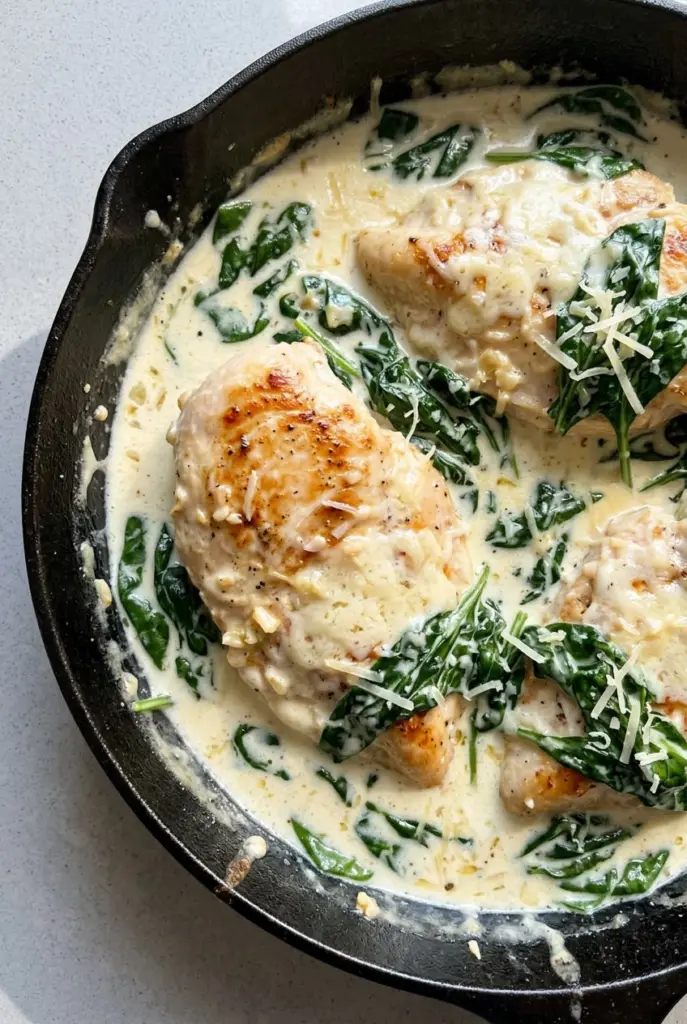
Creamy Chicken Florentine
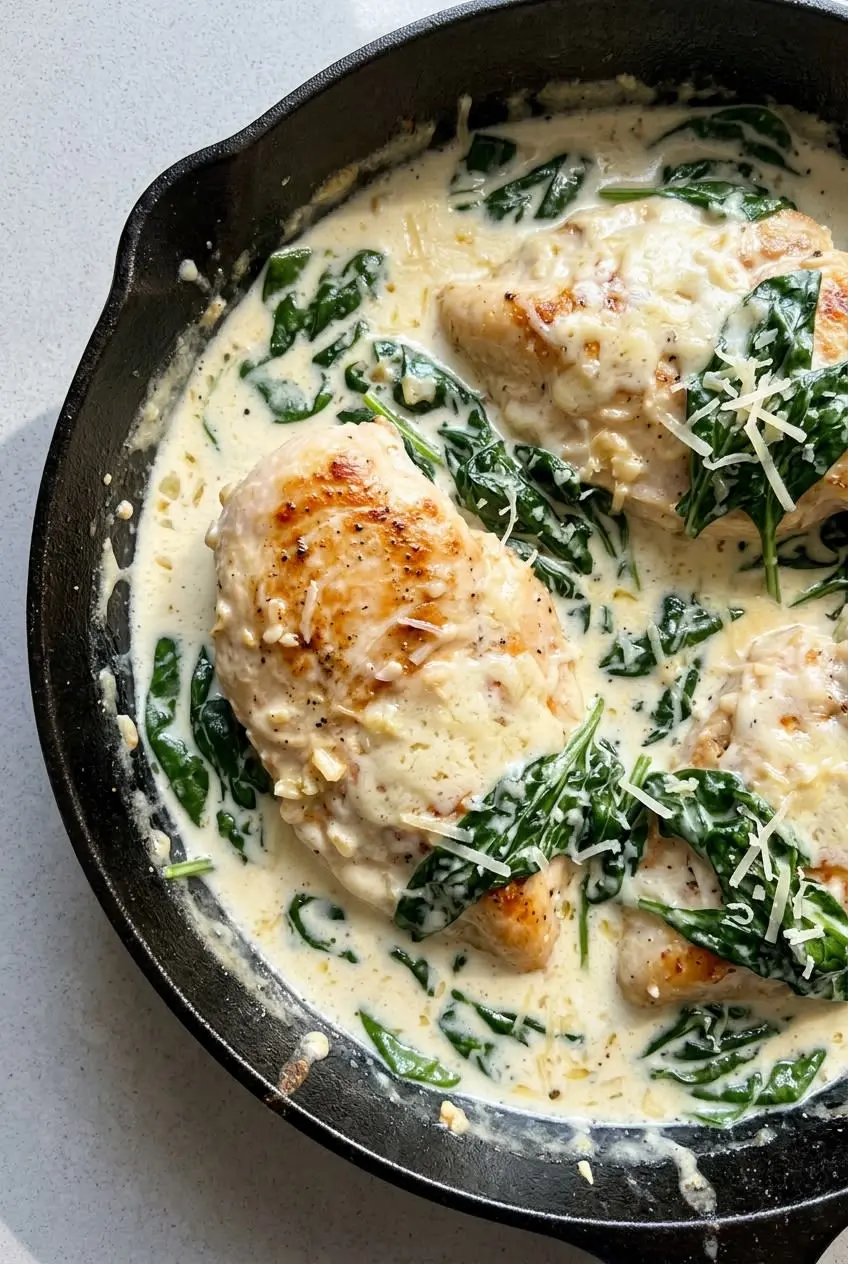
Creamy Chicken Florentine lands on the table with golden chicken, a garlicky cream sauce, and spinach that melts into every bite without turning muddy or heavy. The sauce clings to…
Tip: save now, cook later.Creamy Chicken Florentine lands on the table with golden chicken, a garlicky cream sauce, and spinach that melts into every bite without turning muddy or heavy. The sauce clings to the cutlets instead of sliding off the plate, which is exactly what you want from a skillet dinner that still feels polished enough for company.
The trick is starting with thin, evenly pounded chicken breasts so they sear fast and stay juicy. From there, the sauce builds in the same pan, which means the browned bits from the chicken become the backbone of the flavor instead of getting washed away. A little white wine sharpens the cream, and freshly grated Parmesan melts in smoothly if the heat stays low enough.
Below, I’ll show you how to keep the cream sauce from turning grainy, what to do if you want to add sun-dried tomatoes, and how to reheat the leftovers without drying out the chicken.
The sauce thickened right up and stayed silky even after I added the spinach. Pounding the chicken thin made it cook evenly, and the leftovers reheated without getting rubbery.
Creamy Chicken Florentine with tender cutlets and a glossy spinach sauce is the kind of skillet dinner that feels special without extra work. Pin it for a quick Italian-style meal that reheats beautifully. #ChickenFlorentine #SkilletDinner #CreamSauce
The Secret to Keeping the Sauce Silky After the Cheese Goes In
Most cream sauces break for one of two reasons: the pan is too hot, or the cheese goes in before the liquid has settled. Parmesan wants gentle heat. If the sauce is bubbling hard when you add it, the fat can separate and the texture turns sandy instead of smooth.
The other mistake is crowding too much liquid into the pan too fast. Let the wine reduce first, then add the broth and cream so the sauce has a chance to concentrate before the cheese thickens it. That gives you a glossy finish that coats the chicken instead of thinning out around it.
What Each Ingredient Is Actually Doing in This Dish
- Chicken breasts — Slicing them into cutlets and pounding them to even thickness is what keeps them juicy. Thick, uneven pieces cook at different speeds and leave you with dry edges before the center is done.
- Heavy cream — This is the body of the sauce. Half-and-half can work in a pinch, but it won’t give you the same plush texture or the same resistance to breaking when the Parmesan goes in.
- Dry white wine — Wine adds brightness and helps lift the browned bits from the pan. Use something dry and drinkable; sweet wine will make the sauce taste flat.
- Parmesan cheese — Freshly grated Parmesan melts cleanly. The bagged kind often has anti-caking agents that make the sauce grainy, especially once it hits heat.
- Baby spinach — Fresh spinach wilts fast and disappears into the sauce without turning stringy. Mature spinach works too, but the stems need trimming and it takes a little longer to soften.
- Shallot and garlic — Shallot gives a gentle sweetness that keeps the sauce from tasting one-note, and garlic carries the Florentine flavor. If you only have onion, use a little less and cook it longer so it softens fully.
How to Build the Sauce Without Losing the Chicken’s Flavor
Season and Flatten the Cutlets
Start by slicing the chicken breasts horizontally, then pound them to an even thickness. You want cutlets that are uniform enough to cook through in the same time, with no thick ridge left in the middle. Season them well before they hit the pan so the meat itself tastes like something, not just the sauce around it.
Get a Deep Sear Before You Touch the Sauce
Heat the oil and a little butter until the fat shimmers, then lay the chicken in without crowding the pan. You’re looking for a golden crust that releases cleanly when it’s ready; if it sticks, give it another minute. Pull the chicken out as soon as it’s cooked through, because it finishes later in the sauce and you don’t want it overdone.
Cook the Aromatics Until They Smell Sweet
Drop the heat to medium before the shallot and garlic go in. Shallots should soften and turn translucent, not brown aggressively, and the garlic only needs a short minute to turn fragrant. If the garlic starts taking on color, the pan is too hot and the sauce will pick up a bitter edge.
Reduce, Then Enrich
Pour in the wine and scrape the pan until the browned bits dissolve into the liquid. Let it reduce by about half so the sharp alcohol cooks off and the flavor concentrates. Add the broth and cream, simmer until the sauce thickens enough to coat a spoon, then whisk in the butter and Parmesan off the heat or over very low heat so the sauce stays smooth.
Wilt the Spinach at the End
Add the spinach in handfuls and stir until it collapses into the sauce. It will look like too much at first, then shrink fast. Once it’s wilted, return the chicken and spoon the sauce over the top so the cutlets warm through without sitting on the burner long enough to dry out.
How to Adapt This for Different Tables and Different Schedules
Dairy-Free Version That Still Feels Creamy
Use full-fat coconut cream instead of heavy cream and skip the Parmesan, then finish with a little extra salt and a squeeze of lemon. The sauce won’t taste identical, but it will still be rich and coat the chicken well. Keep the heat low, because coconut cream can separate if it boils hard.
Add Sun-Dried Tomatoes for a Sharper, Sweeter Sauce
Stir in a small handful of chopped oil-packed sun-dried tomatoes after the garlic cooks. They bring sweetness and acidity that cut through the cream, and they make the dish feel a little more substantial. Drain them well so the sauce doesn’t turn greasy.
Gluten-Free and Naturally Low-Carb
This recipe is already gluten-free as written as long as your broth is certified gluten-free. It’s also naturally low in carbs, which makes it easy to serve with roasted vegetables or cauliflower mash instead of pasta. The sauce has enough body on its own that you won’t miss flour.
Storage and Reheating
- Refrigerator: Store leftovers in an airtight container for up to 3 days. The sauce will thicken as it chills.
- Freezer: This freezes better than many cream sauces, but the texture softens a bit on thawing. Freeze in portions for up to 2 months and thaw overnight in the fridge.
- Reheating: Warm slowly in a covered skillet over low heat with a splash of broth or cream. High heat can split the sauce and overcook the chicken before the center is hot.
The Things That Trip People Up With This Dish
Creamy Chicken Florentine
Ingredients
Equipment
Method
- Slice the boneless skinless chicken breasts horizontally into cutlets, then pound to about 1.5 cm thickness. Season generously with salt, black pepper, and dried Italian seasoning.
- Heat the olive oil and 1 tbsp of the unsalted butter in a large skillet over medium-high heat until shimmering. Cook the chicken for 4–5 minutes per side until golden and cooked through, then remove and set aside.
- Reduce heat to medium and sauté the shallot for 2 minutes in the same pan. Add the minced garlic cloves, red pepper flakes, and cook for 1 minute until fragrant.
- Pour in the dry white wine and scrape up the browned bits from the pan. Let it reduce by half, about 2 minutes, then add chicken broth and heavy cream and stir to combine.
- Simmer the sauce for 5 minutes until it thickens slightly. Stir in the remaining 1 tbsp unsalted butter and the Parmesan cheese, letting the cheese melt into the sauce.
- Add the fresh baby spinach in handfuls and stir until fully wilted, about 2 minutes. Taste and adjust seasoning with salt and black pepper.
- Return the seared chicken to the pan and spoon the sauce over it. Let it warm through for 2 minutes before serving.