
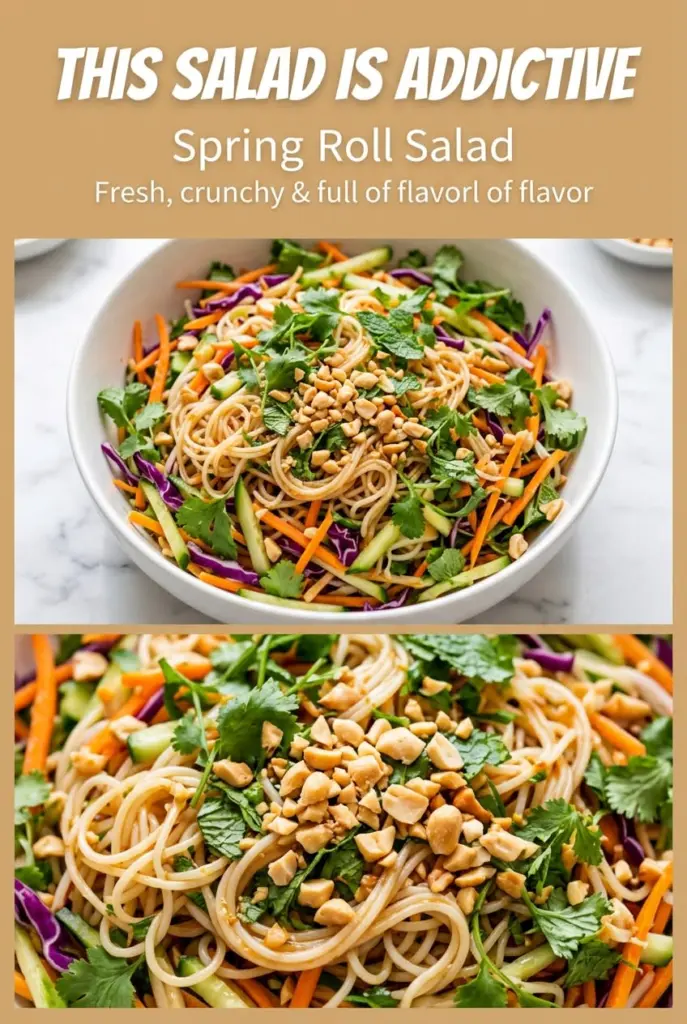
Spring Roll Salad with Spicy Ginger Dressing
Crisp vegetables, slippery rice noodles, and a punchy ginger dressing make this spring roll salad feel bright and substantial at the same time. It gives you all the fresh, herb-heavy…
Tip: save now, cook later.Crisp vegetables, slippery rice noodles, and a punchy ginger dressing make this spring roll salad feel bright and substantial at the same time. It gives you all the fresh, herb-heavy crunch of a good spring roll without the fiddly rolling, which is exactly why it ends up on repeat for lunch and quick dinners. The crispy wrapper pieces on top are the part people remember first, but it’s the mix of cool cucumber, sweet carrot, and that sharp dressing that keeps every bite interesting.
The trick is keeping each component separate until the last minute. Rice noodles should be cooked just until tender, then rinsed cold so they stay springy instead of clumping into a heavy tangle. The dressing needs enough lime, soy, and ginger to coat the vegetables without drowning them, and the chili paste gives it a slow heat that plays well with the mint and cilantro.
Below, you’ll find the small details that make the texture stay crisp, plus a few smart swaps if you want to make it vegetarian, gluten-free, or ahead for the week.
The dressing soaked into the noodles just enough, and the crispy wrapper pieces stayed crunchy right up to the last bite. I made it for lunch and ended up eating the leftovers cold straight from the fridge.
Pin this spring roll salad with spicy ginger dressing for a fresh no-cook lunch that stays crunchy and bold.
The Reason This Salad Doesn’t Turn Soggy by Lunch
The biggest mistake with a salad like this is treating it like a bowl of mixed vegetables instead of a composed dish. Wet noodles, damp herbs, and a heavy hand with the dressing all work against you. When that happens, the crisp textures collapse fast and the whole thing starts eating flat.
What keeps this one lively is restraint. The noodles are cooled completely, the vegetables are cut thin enough to blend with the herbs, and the dressing is strong enough to season but not swamp the bowl. Crispy wrapper pieces go in at the end for contrast, because once they sit in the dressing, they lose the whole point.
- Rice noodles — These give the salad its soft, slippery backbone. Thin rice vermicelli works best because it picks up dressing without turning heavy. Rinse them under cold water right after cooking and drain them well, or they’ll clump and dilute the dressing.
- Spring roll wrappers — These are the texture trick that makes the salad feel like the real thing. Crisp them separately and add them only when serving so they stay shattery instead of chewy. If you don’t want to fry them, baked wrapper strips will still give you a dry, crunchy finish.
- Fresh herbs — Cilantro and mint are not garnish here. They carry the fresh spring-roll flavor, so use generous handfuls and tear them just before tossing to keep the leaves from bruising.
- Chili paste — This is what gives the dressing its heat and depth. Start with the lower amount if yours is salty or aggressive, then add more after tasting. Sriracha works in a pinch, but it’s sweeter and less rounded than a thicker chili paste.
What the Dressing Needs So It Tastes Sharp, Not Harsh
[[[IMAGE BLOCK]]]
The dressing is built from balance, not volume. Soy sauce gives salt and umami, lime juice brings brightness, rice vinegar sharpens the edges, honey smooths the acid, and ginger keeps everything tasting alive. If one of those pieces is missing, the dressing can taste thin or one-note instead of layered.
- Lime juice — Fresh lime gives the dressing its cleanest, brightest finish. Bottled juice works in an emergency, but it can taste dull and slightly bitter. Zest from the same lime adds an extra pop if you want the flavor to stand out more.
- Fresh ginger — Grated fresh ginger matters here because dried ginger won’t give you the same perfume or heat. Use a fine grater so it disappears into the dressing instead of leaving little fibrous bits behind. If your ginger is old and dry, it won’t blend smoothly, so peel away the woody exterior first.
- Soy sauce — This brings salt and depth, but it also darkens the dressing and ties the sweet and sour ingredients together. Use tamari if you need a gluten-free version. Coconut aminos will work, though the result will be milder and a little sweeter.
- Honey — Honey softens the lime and vinegar so the dressing tastes balanced instead of bracing. If you want a vegan version, use maple syrup, but expect a slightly deeper sweetness and a less floral finish.
How to Build the Bowl So the Crunch Survives
Cook and cool the noodles first
Cook the rice noodles just until tender, then rinse them under cold water until they stop steaming. That rinse is what keeps them from turning gluey, especially once they hit the dressing. Drain them well and shake off extra water before you add anything else, because excess moisture is the fastest way to dull the whole bowl.
Slice the vegetables thin enough to eat with the noodles
Use thin ribbons and matchstick-style cuts so the vegetables mix evenly with the noodles instead of sitting in separate piles. You want bite-sized pieces that catch dressing and still keep some snap. If the cucumber is watery, scrape out the seeds before slicing so the salad doesn’t pool liquid at the bottom.
Whisk the dressing until the honey disappears
Stir the dressing until the honey, chili paste, and soy sauce are fully blended and no streaks remain. That matters because a half-mixed dressing lands unevenly on the salad and makes some bites too salty while others taste flat. Taste it before you toss it in — it should hit sweet, salty, sour, and spicy at once.
Add the herbs and wrapper pieces at the end
Toss the noodles, vegetables, and dressing first, then fold in the herbs gently. Save the crispy wrapper pieces for the top and add them right before serving. If they go in too early, they soften fast and you lose the contrast that makes this salad feel special.
How to Adapt This for Lunch Prep, Gluten-Free Eating, or More Heat
Make it gluten-free without losing the punch
Use tamari instead of soy sauce and check that your chili paste is gluten-free. Rice noodles already fit the job well, so you won’t lose the slippery texture that makes the salad work.
Turn it into a fuller meal with protein
Add shredded chicken, seared shrimp, or thinly sliced tofu. The key is keeping the protein seasoned simply so it doesn’t fight the ginger dressing; this salad tastes best when the topping supports the herbs instead of taking over.
Dial the heat up or down
Use less chili paste for a lighter, brighter dressing, or add more if you want it to lean bold and spicy. If your chili paste is especially hot, build the dressing slowly and taste as you go so the ginger and lime still come through.
Storage and Reheating
- Refrigerator: Store the dressed salad without the crispy wrapper pieces for up to 2 days. The noodles soften a bit, but the flavors get stronger overnight.
- Freezer: Don’t freeze this salad. The vegetables and herbs lose their texture, and the noodles turn mushy when thawed.
- Reheating: This salad is best eaten cold or at room temperature. If it has chilled fully, let it sit out for 15 to 20 minutes and add the wrapper pieces only right before serving so they stay crisp.
Questions I Get Asked About This Recipe
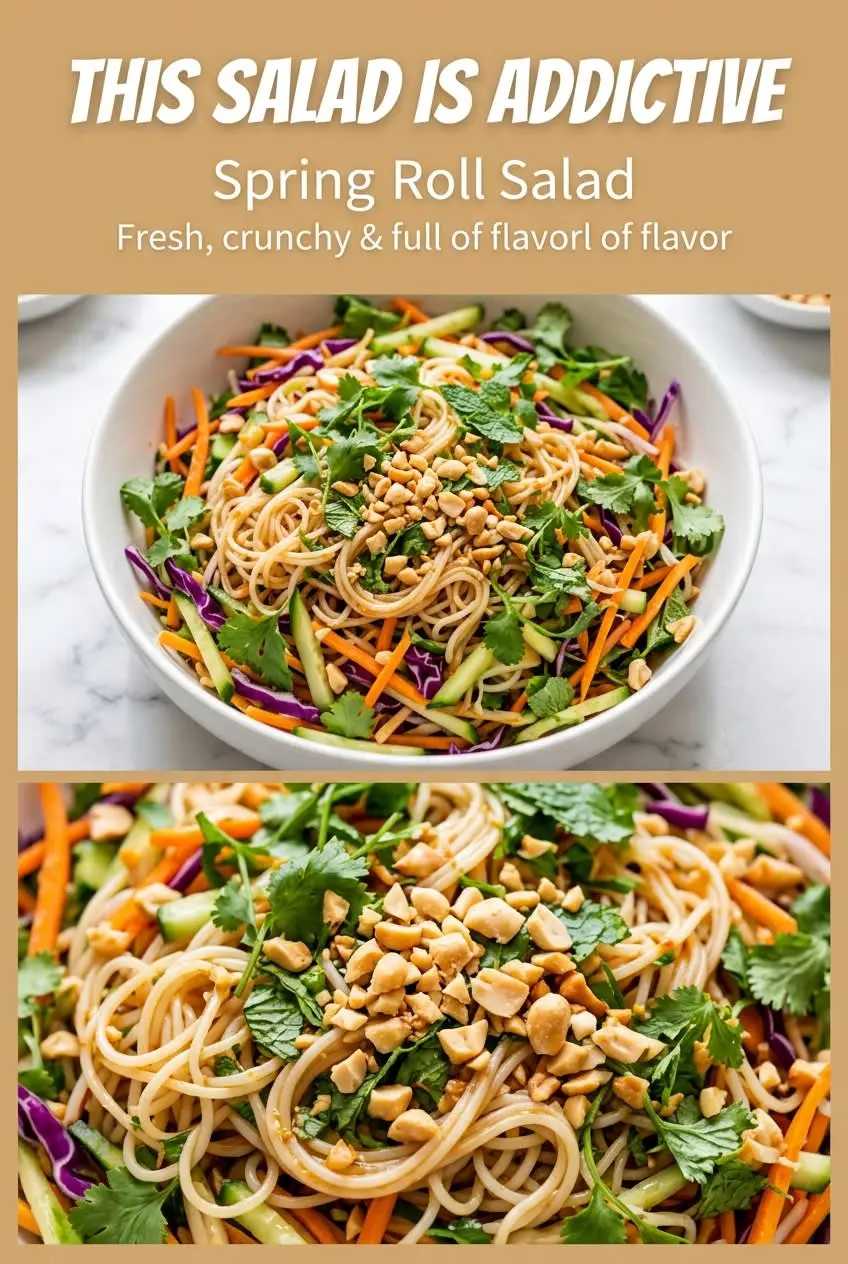
Spring Roll Salad with Spicy Ginger Dressing
Ingredients
Method
- Cook the rice noodles according to package instructions until tender but not mushy. Drain well after cooking.
- Rinse the cooked rice noodles with cold water and drain thoroughly. This keeps them springy for tossing.
- Slice the purple cabbage, carrots, cucumber, and red bell pepper thinly for a light texture. Keep the shapes consistent so every forkful has crunch.
- Crush the roasted peanuts and set aside with the bean sprouts, cilantro, and mint. This prevents herbs from getting wilted while you assemble.
- Whisk together soy sauce, lime juice, rice vinegar, honey, grated ginger, minced garlic, sesame oil, and chili paste until smooth. Taste and adjust chili paste for your preferred heat level.
- In a large bowl, combine the drained noodles with the cabbage, carrots, cucumber, bell pepper, and bean sprouts. Toss gently so vegetables stay crisp.
- Pour the spicy ginger dressing over the salad and toss gently to coat. Make sure noodles are fully slicked but not broken.
- Add cilantro, mint, and crushed peanuts, then toss lightly again. Keep the herbs near the top so they look fresh.
- Top with crispy spring roll wrapper pieces just before serving. The added crunch stays crisp instead of softening.