
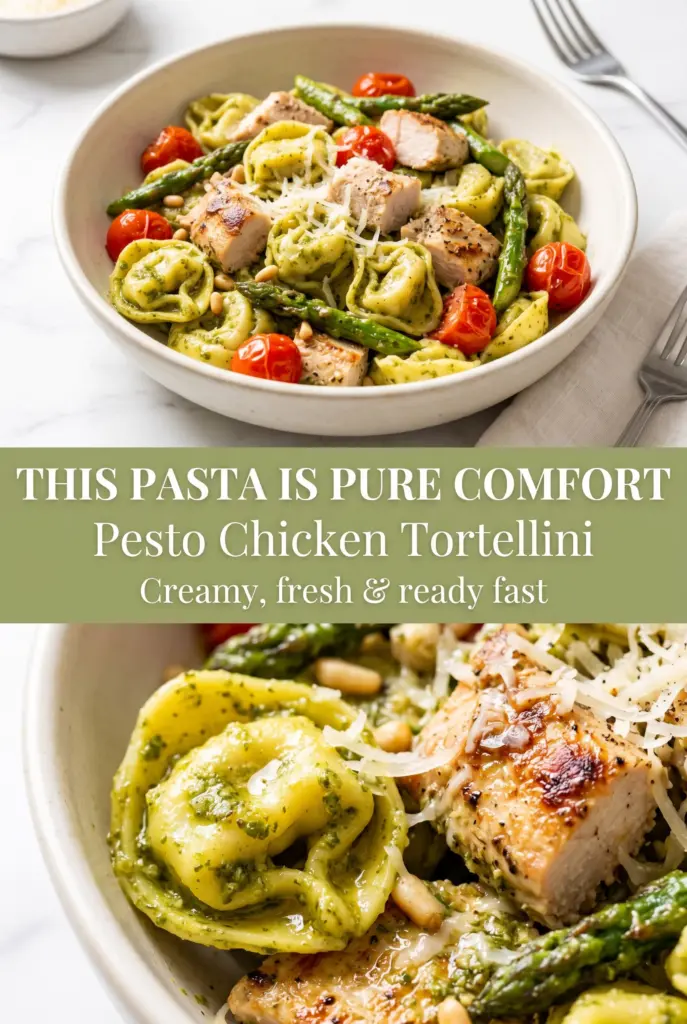
Pesto Chicken with Tortellini and Veggies
Pesto chicken with tortellini and veggies hits that sweet spot between comforting and fresh. The tortellini turn it hearty, the chicken gives it enough substance for dinner, and the pesto…
Tip: save now, cook later.Pesto chicken with tortellini and veggies hits that sweet spot between comforting and fresh. The tortellini turn it hearty, the chicken gives it enough substance for dinner, and the pesto pulls everything together with a bright, savory finish that clings to every bite. What makes this version worth keeping around is the balance: nothing gets drowned, and nothing gets left plain.
The trick is to cook each part just enough before bringing it all together. Tortellini need to be tender, not bloated. Chicken should be browned first so it has flavor before the pesto goes in. And the vegetables get added in stages, which keeps the asparagus with a little bite and the tomatoes juicy instead of collapsed.
Below, I’ve included the ingredient details that matter, the point in the process where people usually rush, and a few smart ways to adapt this when you need to work with what’s in the fridge.
The pesto coated everything without getting greasy, and the tortellini stayed tender instead of falling apart. My kids even ate the asparagus because it picked up all that garlic and parmesan.
Save this pesto chicken with tortellini for a fast skillet dinner with creamy pesto, tender pasta, and crisp-tender vegetables.
The Reason the Pesto Stays Bright Instead of Turning Muddy
Pesto is one of those sauces that gets ruined by too much heat. If it goes into a screaming-hot pan and sits there, the basil dulls down fast and the oil can separate, leaving you with something heavy instead of fresh. That’s why this dish works best when the pesto is tossed in after the chicken is cooked and the pan has had a minute to calm down.
The other thing that matters here is moisture. Tortellini bring their own softness, so the pan doesn’t need much extra liquid. If you add a splash of pasta water, keep it small. You’re loosening the sauce just enough to coat, not making soup.
- Cheese tortellini — Fresh or refrigerated tortellini cook quickly and hold their shape better than a very soft dried pasta. They also bring enough richness that the dish doesn’t need a cream sauce.
- Basil pesto — This is the main flavor, so use one you actually like. Homemade gives the cleanest basil taste, but a good refrigerated pesto works fine. If yours is thick, loosen it with a spoonful of pasta water before tossing it through.
- Chicken breasts — Diced chicken cooks evenly and gives you more browned edges than whole pieces. Thighs work too if you want a little more richness and less risk of drying out.
- Asparagus and cherry tomatoes — These two vegetables do different jobs. Asparagus adds bite; tomatoes add juiciness and a little acidity. If asparagus isn’t in season, use zucchini or green beans cut small enough to cook fast.
Building the Pan So Nothing Overcooks
Cooking the Tortellini First
Boil the tortellini until they’re just tender and still hold their shape. If they go too far, they’ll split when you toss everything together later. Drain them well so they don’t water down the pesto in the pan.
Getting Color on the Chicken
Cook the diced chicken in olive oil over medium heat until the pieces are golden on the outside and no longer pink in the middle. Crowding the pan is the fastest way to steam the chicken, so give the pieces a little room. If the pan looks dry before the chicken is done, add a small drizzle of oil rather than turning up the heat.
Adding the Vegetables in the Right Order
Garlic goes in only long enough to smell fragrant. After that, add the asparagus first because it needs a head start. The tomatoes go in later and only need enough time to soften and release a little juice. If you add them too soon, they collapse into the sauce and lose the fresh pop that makes this dish work.
Tossing Everything with the Pesto
Once the pan comes together, add the tortellini and pesto off the heat or over very low heat. That keeps the basil flavor clean and stops the sauce from getting oily. Finish with parmesan while everything is still hot so it melts lightly into the coating instead of sitting on top in clumps.
How to Adapt This for What’s in Your Fridge
Make it dairy-free
Use dairy-free tortellini if you can find them, or swap in a short pasta like orecchiette or fusilli and finish with a dairy-free pesto. You’ll lose the cheesy richness from the tortellini, but the dish still holds together because the pesto and vegetables carry the flavor.
Make it gluten-free
Use gluten-free tortellini if your store carries it, or replace the tortellini with gluten-free pasta shells or rotini. Cook them just to al dente, because gluten-free pasta gets soft faster once it hits the hot skillet.
Swap the vegetables without losing the balance
Zucchini, spinach, broccoli florets, or green beans all work here. Use quick-cooking vegetables if you want the same fast finish, and add tender greens at the very end so they don’t turn swampy in the pan.
Storage and Reheating
- Refrigerator: Store leftovers in an airtight container for up to 3 days. The tortellini will absorb some of the sauce, so the dish gets a little thicker by day two.
- Freezer: Freezing isn’t my first choice here. Tortellini and pesto both lose some of their texture after thawing, and the tomatoes turn soft. If you do freeze it, expect a looser, less fresh result after reheating.
- Reheating: Warm it gently in a skillet over low heat with a splash of water to loosen the pesto. The common mistake is blasting it in the microwave until the tortellini turn rubbery and the pesto separates.
Answers to the Questions Worth Asking
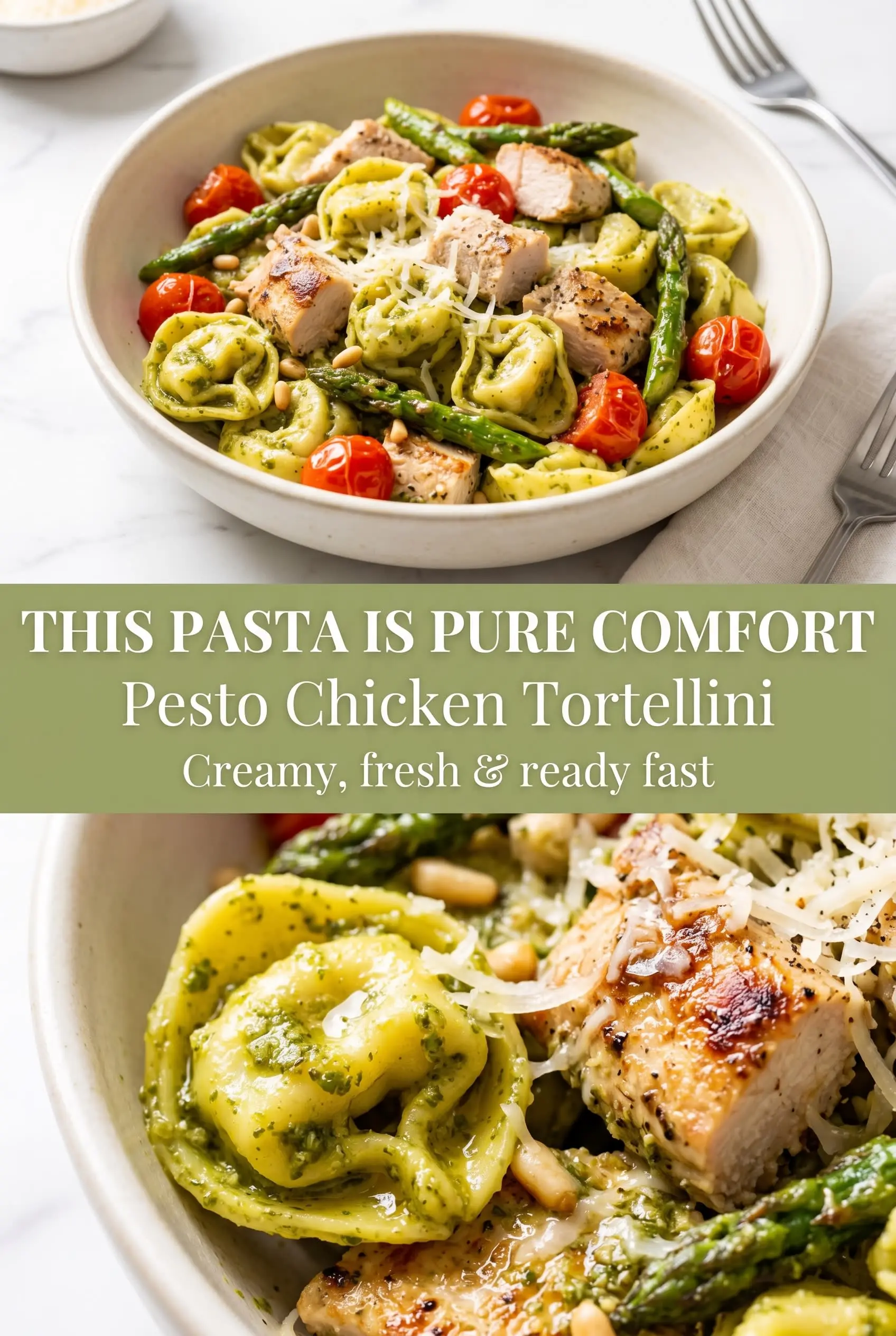
Pesto Chicken with Tortellini and Veggies
Ingredients
Equipment
Method
- Cook cheese tortellini according to package instructions, using enough water to keep pieces separated. Drain and set aside.
- Heat olive oil in a large pan over medium heat until shimmering. Add chicken and cook until golden and fully cooked.
- Season the chicken with salt and black pepper. Stir and cook briefly to distribute the seasoning.
- Add minced garlic and cook for 30 seconds until fragrant. Keep it moving so it doesn’t brown.
- Add asparagus and cook for 3–4 minutes until slightly tender. Stir occasionally so it cooks evenly.
- Add halved cherry tomatoes and cook briefly until softened. Stir just until they begin to burst and release juices.
- Add cooked tortellini and basil pesto to the pan. Toss until everything is well coated.
- Sprinkle grated parmesan on top and serve immediately. Keep the dish hot so the pesto clings to the pasta and chicken.