
Slow Cooker Texas Beef Brisket for a Crowd
Slow cooker Texas beef brisket turns into the kind of meal people hover around before it even hits the table. The meat goes deeply savory on the outside, then softens…
Tip: save now, cook later.Slow cooker Texas beef brisket turns into the kind of meal people hover around before it even hits the table. The meat goes deeply savory on the outside, then softens into sliceable, pull-apart tenderness after hours in the slow cooker. What you get at the end is brisket with a real bark-like crust from the sear, smoky-sweet pan juices, and enough richness to feed a crowd without standing over the stove all day.
The trick is building flavor in layers instead of hoping the slow cooker does all the work. A hard sear gives you the deep browned edges that brisket needs, and the sauce brings together vinegar, ketchup, Worcestershire, and a little brown sugar for that Texas-style balance of tang and smoke. The onions and garlic melt into the braising liquid as it cooks, which keeps the sauce from tasting flat or one-note.
Below, I’ll show you how to keep the brisket tender instead of stringy, how to reduce the cooking juices into a glossy sauce, and what to do if you need to stretch this for sandwiches, sliced platter servings, or a bigger crowd.
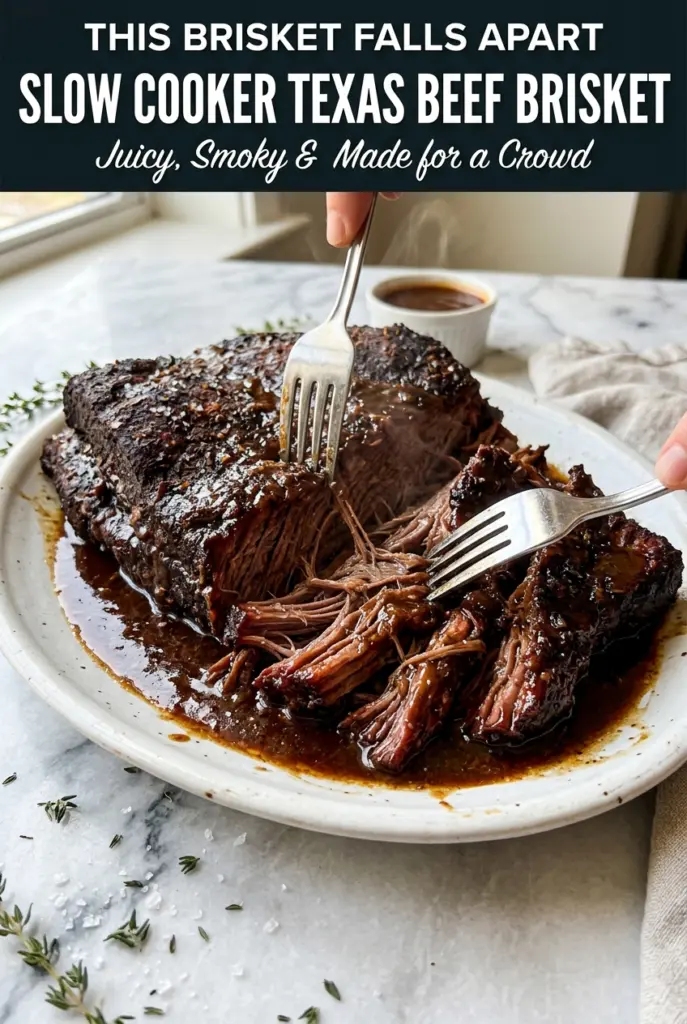
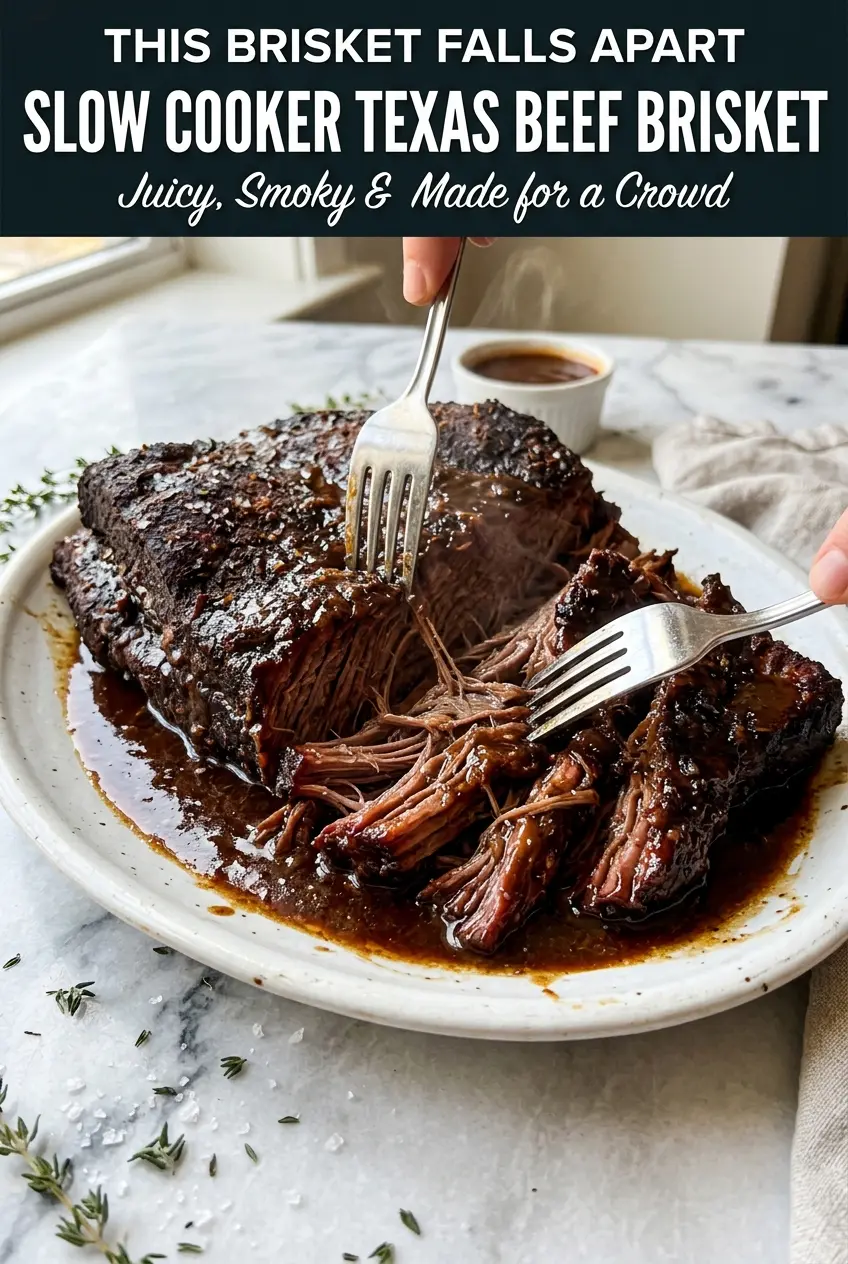
The brisket sliced cleanly after resting, and the sauce reduced into this shiny, tangy gravy that soaked right into the bread. I cooked it on low all day and it was tender without falling apart into shreds.
Save this slow cooker Texas brisket for the kind of day when you want smoky, fork-tender beef with almost no hands-on time.
The Seared Crust Is What Keeps Brisket from Tasting Flat
Slow cooker brisket can go wrong in a sneaky way. If you skip the sear, the meat still gets tender, but the flavor stays one-dimensional and the finished sauce tastes like broth with ketchup in it. That first blast of heat builds the deep brown crust that gives the whole dish its backbone.
Brisket also needs the fat cap trimmed to about a quarter inch. Leave too much on and the sauce gets greasy. Trim it too aggressively and the meat dries out during the long cook. A modest layer of fat protects the meat while still letting the spice rub and sear do their job.
The other thing that matters here is slicing against the grain after resting. Brisket fibers are long, and cutting across them shortens each bite. If you slice with the grain, even perfectly cooked brisket can feel chewy.
What Each Ingredient Is Actually Doing in This Dish
- Beef brisket flat — The flat cut slices neatly and feeds a crowd well. It doesn’t have as much built-in fat as the point, which is why the sear, the braising liquid, and the resting time matter so much. If you use a whole packer brisket, expect more fat and a looser texture.
- Smoked paprika, cayenne, garlic powder, onion powder, black pepper — This rub gives the brisket its outer seasoning and a little heat without overwhelming the beef. Smoked paprika carries a lot of the barbecue note, so don’t swap it for plain paprika unless you’re willing to lose that smoky edge.
- Apple cider vinegar — This is the sharp counterweight to the brown sugar and ketchup. It keeps the sauce from turning cloying and helps the meat taste beefy instead of muddy. White vinegar works in a pinch, but cider vinegar brings a rounder tang.
- Worcestershire sauce — This adds the savory depth the slow cooker can’t create on its own. It’s one of the few ingredients here that gives the sauce that long-cooked, meaty backbone fast. There isn’t a perfect substitute, but a splash of soy sauce plus a little extra vinegar can cover part of the gap.
- Liquid smoke — Use it lightly. One teaspoon is enough to suggest barbecue without making the brisket taste artificial. If you’re sensitive to it, skip it and lean harder on the sear and smoked paprika.
- Onion rings and smashed garlic — These melt into the braising liquid and help it taste finished instead of thin. Sliced onions are better than diced here because they hold their shape long enough to flavor the sauce without disappearing immediately.
Building the Braise So the Brisket Stays Tender
Seasoning and resting the meat
Rub the spice mixture over both sides of the brisket and press it in so it sticks. That 20 to 30 minute rest at room temperature lets the salt start working and keeps the meat from going straight from cold fridge temperature into a hot pan. If the surface is wet, the rub slides off and the crust turns patchy, so pat the brisket dry first.
Getting the sear without steaming the pan
Heat the oil until it shimmers before the brisket goes in. You want a deep brown crust in 4 to 5 minutes per side, not a pale gray exterior. If the skillet looks crowded or the meat sticks hard when you try to flip it, the pan isn’t hot enough yet. Let it release on its own; forcing it tears off the crust you just built.
Layering the slow cooker correctly
Onions and garlic go on the bottom so they lift the brisket slightly and perfume the liquid as it cooks. Set the brisket fat-side up so the rendered fat bastes the meat while it braises. Pour the sauce around and over the meat, but don’t drown it — the liquid should come about halfway up the sides, not cover the brisket completely.
Knowing when it’s done
Cook on low if you can. The longer, gentler heat breaks the connective tissue down more evenly and gives you that fork-tender texture without shredding the meat to nothing. The brisket is ready when a fork slides in easily at the thickest part and the muscle fibers pull apart with only slight resistance. If it still feels springy, give it more time; brisket that isn’t fully tender is just brisket that hasn’t finished cooking yet.
Three Ways to Make This Brisket Work for Different Tables
Gluten-free version
This recipe is already close to gluten-free, but Worcestershire sauce can be the catch. Use a gluten-free Worcestershire and confirm your beef broth is gluten-free as well. The texture and cook time stay the same, and you won’t lose any of the bold, savory edge.
Lower-sugar version
Cut the brown sugar down to 1 tablespoon and use a no-sugar-added ketchup if you want a sauce that leans more tangy than sweet. The sauce will still reduce nicely, but it won’t have quite the same glossy barbecue-style finish. If you go this route, taste after reducing and add a small splash more vinegar if the sauce feels too heavy.
Serving it as sandwiches
Pull the brisket a little more instead of slicing it cleanly if you’re planning to pile it into buns. Mix a few spoonfuls of the reduced sauce back into the meat so every bite stays juicy. This works especially well for a crowd because it stretches further and stays moist on a buffet table.
Storage and Reheating
- Refrigerator: Store the sliced brisket with some of the sauce in an airtight container for up to 4 days. The flavor gets even deeper by day two, and the sauce helps keep the meat from drying out.
- Freezer: It freezes well. Wrap portions tightly with sauce in freezer-safe containers or bags and freeze for up to 3 months. Thaw overnight in the fridge so the meat reheats evenly.
- Reheating: Reheat covered in a 300°F oven with a splash of the sauce or broth until hot. The biggest mistake is blasting it in the microwave without liquid, which tightens the meat and dries out the edges.
Answers to the Questions Worth Asking
Slow Cooker Texas Beef Brisket for a Crowd
Ingredients
Equipment
Method
- In a small bowl, combine kosher salt, black pepper, smoked paprika, garlic powder, onion powder, and cayenne pepper.
- Rub the spice mixture all over both sides of the brisket, pressing firmly so it adheres.
- Let the brisket rest at room temperature for 20–30 minutes.
- Heat olive oil in a large skillet over medium-high heat until shimmering.
- Sear the brisket fat-side down for 4–5 minutes until a deep golden-brown crust forms, then flip.
- Sear the other side for 3–4 minutes to build more crust.
- While the brisket sears, whisk together beef broth, apple cider vinegar, ketchup, Worcestershire sauce, brown sugar, Dijon mustard, liquid smoke, and chili powder until smooth.
- Scatter sliced yellow onion and smashed garlic across the bottom of a 7–8 quart slow cooker.
- Place the seared brisket on top, fat-side up.
- Pour the braising sauce over and around the brisket so the liquid comes about halfway up the sides.
- Cover and cook on LOW for 9–10 hours, until the brisket is fork-tender and pulls apart easily at the thickest point.
- If using HIGH, cook for 5–6 hours until fork-tender at the thickest point.
- Carefully remove the brisket to a cutting board and let it rest for 15–20 minutes.
- Slice against the grain, then arrange the brisket on a large platter.
- Skim excess fat from the cooking juices in the slow cooker.
- Pour the juices into a saucepan and simmer over medium heat for 10 minutes to reduce into a rich glossy sauce.
- Spoon the reduced sauce generously over the brisket before serving.