
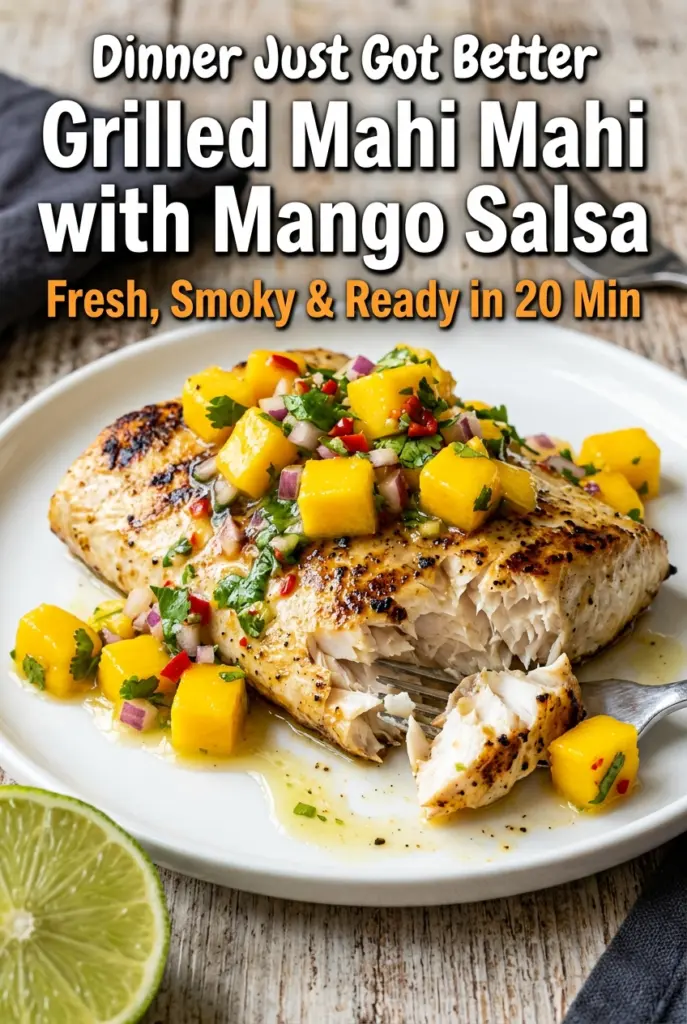
Grilled Mahi Mahi with Mango Salsa
Grilled mahi mahi earns its keep when the fish stays juicy inside and picks up those clean, smoky grill marks outside. The mango salsa does more than garnish the plate;…
Tip: save now, cook later.Grilled mahi mahi earns its keep when the fish stays juicy inside and picks up those clean, smoky grill marks outside. The mango salsa does more than garnish the plate; it cuts through the char with sweet heat, lime, and a little crunch from red onion. Put them together and you get a dish that tastes bright without feeling fussy, which is exactly why it ends up on repeat.
The trick is treating mahi mahi like a sturdy fish, not a delicate one. It can take direct heat, but only if it’s patted dry, lightly coated, and left alone long enough to release from the grates. The salsa works because the mango is diced small enough to spoon easily over the fish, and the lime juice wakes everything up without turning it watery. Smoked paprika adds a grill-house note even if you’re cooking on a grill pan.
Below, I’ve included the detail that keeps the fish from sticking, plus a few swaps if your mango is underripe or you want to dial the heat up or down. That little bit of planning makes the whole plate come together fast.
The fish released from the grill so cleanly, and the mango salsa had the perfect sweet-tangy balance. I loved that the paprika and lime on the mahi didn’t get lost under the topping.
Save this grilled mahi mahi with mango salsa for the nights when you want smoky fish and a bright, juicy topping without a long cleanup.
The Reason Mahi Mahi Sticks Before It Browns
Mahi mahi is firm enough for grilling, but it still needs a dry surface and a hot grate to sear instead of cling. If the fish goes on wet, the outside steams first and the crust tears when you try to flip it. That’s why the paper towel step matters more than it looks.
The other mistake is moving it too soon. Fish that is ready to flip will release on its own and show clear grill marks. If it’s tugging at the grate, give it another minute. Forcing it loose leaves half the crust behind and usually breaks the fillet.
What Each Ingredient Is Actually Doing in This Dish
- Mahi mahi fillets — This fish is sturdy, lean, and ideal for direct heat. Thinner fillets cook fast and can dry out, so choose pieces that are roughly the same thickness for even grilling.
- Olive oil — The oil helps the seasonings cling and protects the surface from sticking. A neutral oil also works, but olive oil adds a rounder flavor that fits the salsa.
- Smoked paprika and cumin — These two do the heavy lifting on flavor before the fish even hits the grill. Smoked paprika brings that charred note without needing a blazing fire, and cumin adds a warm backbone that keeps the fish from tasting flat.
- Mango — Use ripe mangoes that yield slightly when pressed. If they’re underripe, the salsa will taste harsh and the texture will be crunchy instead of juicy.
- Red onion and jalapeño — The onion adds bite, and the jalapeño gives the salsa its little spark. If you want less heat, remove all the seeds and most of the white ribs.
- Lime juice — Fresh lime is what ties the fish and salsa together. Bottled lime juice tastes flatter here and won’t brighten the mango the same way.
- Cilantro — This gives the salsa a fresh, herbal finish. If cilantro tastes soapy to you, flat-leaf parsley is the best swap, though the salsa will lose some of its sharp green edge.
The 10 Minutes That Turn Fish and Salsa Into Dinner
Coating the Fish for a Fast Sear
Mix the oil, spices, salt, pepper, and lime juice into a thin paste, then brush it over both sides of the mahi mahi. You want an even coating, not a thick crust of seasoning, because heavy spice can burn before the fish cooks through. Dry fish takes seasoning better than damp fish, so don’t skip the paper towels. Let the coated fillets sit while the grill heats; that short pause helps the surface settle before it meets the heat.
Building the Salsa Before the Fish Hits the Grates
Combine the mango, onion, jalapeño, cilantro, lime juice, and salt in a bowl and stir gently. If you mash the mango while mixing, the salsa turns soft and saucy instead of staying bright and chunky. Taste it now, not at the table. If the mango is very sweet, it may need a little more lime; if it tastes sharp, a pinch more salt rounds it out.
Grilling Until the Fish Releases Cleanly
Heat the grill or grill pan over medium-high and oil the grates lightly. Place the fillets down and leave them alone for 3 to 4 minutes; they should develop defined grill marks and pull free without resistance. If they stick, they’re not ready yet. Flip once and cook just until the fish is opaque and flakes easily with a fork, because mahi mahi goes from juicy to dry quickly once it’s past that point.
Finishing With the Salsa at the Right Moment
Spoon the mango salsa over the fish after it comes off the grill, not before. If you top it too early, the heat softens the mango and the fish loses the contrast that makes the dish work. A final squeeze of lime can wake everything up if the salsa has been sitting for a few minutes. Serve right away while the edges of the fish are still warm and the salsa is cool and crisp.
How to Adapt This for Different Kitchens and Different Tastes
Dairy-Free and Naturally Gluten-Free
This recipe already fits both needs as written, which is part of why it’s such an easy weeknight fish dinner. Just keep an eye on your spice blends if you swap ingredients, since some packaged seasonings sneak in fillers or starches. The clean, fresh finish depends on simple ingredients doing their job.
When Your Mango Isn’t Perfectly Ripe
If the mango is a little firm, add a second squeeze of lime and let the salsa sit for 10 to 15 minutes before serving. The acid softens the edges of the fruit and helps the flavors meld, though it won’t replace the sweetness of a ripe mango. In a pinch, diced pineapple gives you a brighter, sharper salsa with less mellow sweetness.
Turning Up or Cooling Down the Heat
Leave the jalapeño fully seeded for a mild salsa, or add a few of the ribs back in if you want a sharper bite. If you like a bigger kick, swap in serrano pepper for part or all of the jalapeño. The fruit will still carry the salsa, but the finish will be hotter and a little less sweet.
Cooking Indoors on a Grill Pan
A hot grill pan gives you the same flavor cues if the weather won’t cooperate. Preheat it until a drop of water skitters across the surface, then oil it lightly before the fish goes down. The marks will be a little softer than on an outdoor grill, but the fish will still pick up that browned edge if you resist moving it early.
Storage and Reheating
- Refrigerator: Store the fish and salsa separately for up to 2 days. The salsa will soften and release juice, but it still tastes good chilled.
- Freezer: The grilled fish freezes fairly well for up to 1 month, but the mango salsa does not freeze well and turns watery after thawing. Freeze the fish plain, then make fresh salsa when you’re ready to serve.
- Reheating: Reheat the fish gently in a low oven or in a covered skillet over low heat just until warmed through. High heat dries mahi mahi out fast, so don’t blast it in the microwave unless you’re fine with a firmer texture.
Answers to the Questions Worth Asking
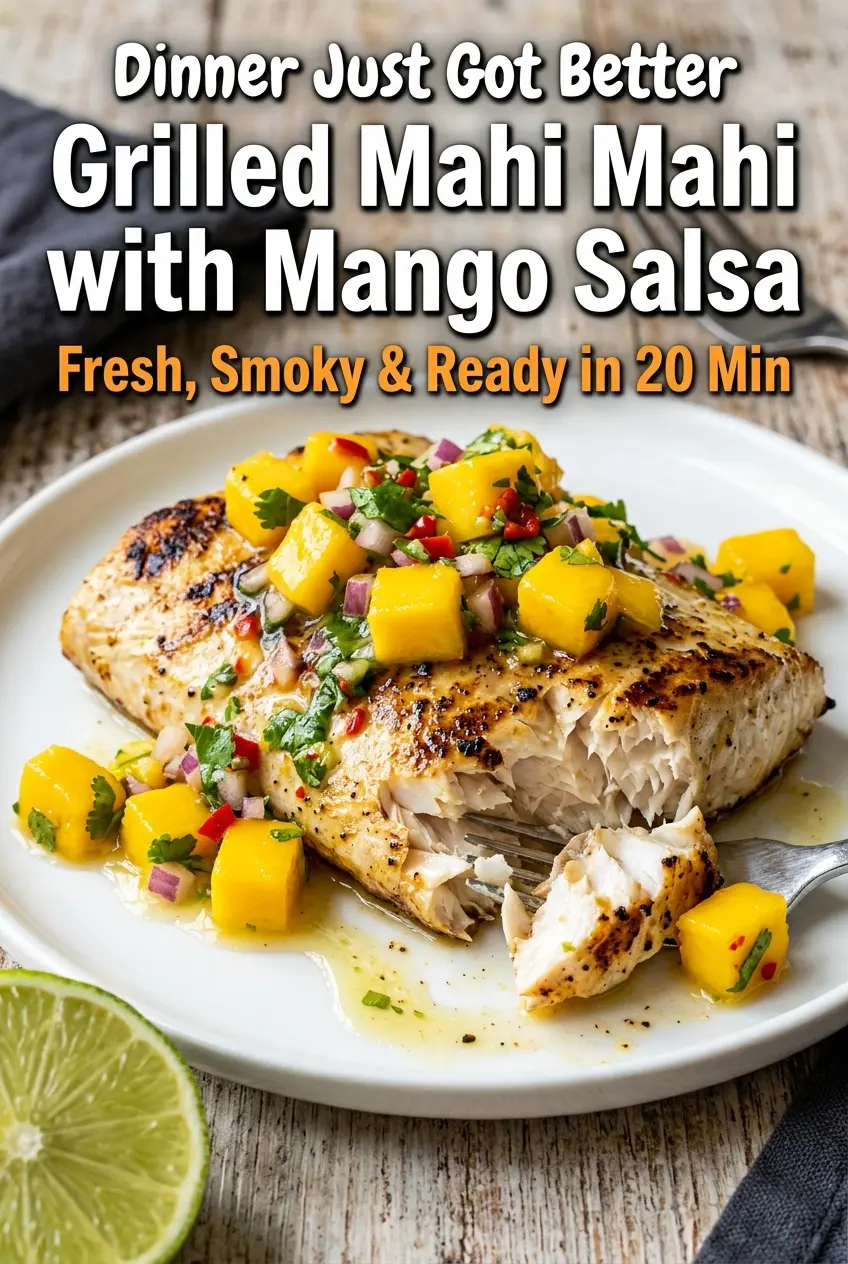
Grilled Mahi Mahi with Mango Salsa
Ingredients
Equipment
Method
- Pat the mahi mahi fillets dry with paper towels so they sear instead of steam.
- In a small bowl, mix olive oil, garlic powder, smoked paprika, cumin, salt, black pepper, and lime juice.
- Brush the seasoned mixture evenly over both sides of each fillet.
- In a medium bowl, combine diced mango, red onion, jalapeño, cilantro, lime juice, and salt.
- Stir gently to combine, then taste and adjust salt or lime as needed.
- Set the mango salsa aside while you preheat the grill.
- Preheat your grill or grill pan over medium-high heat.
- Lightly oil the grates.
- Place the fillets on the grill and cook undisturbed for 3–4 minutes until the fish releases easily and has golden grill marks.
- Flip the fillets and cook another 3–4 minutes until the fish flakes easily with a fork and is opaque throughout.
- Transfer the fillets to a plate and spoon the mango salsa generously over each piece.
- Serve immediately with extra lime wedges and rice or a simple green salad on the side.