
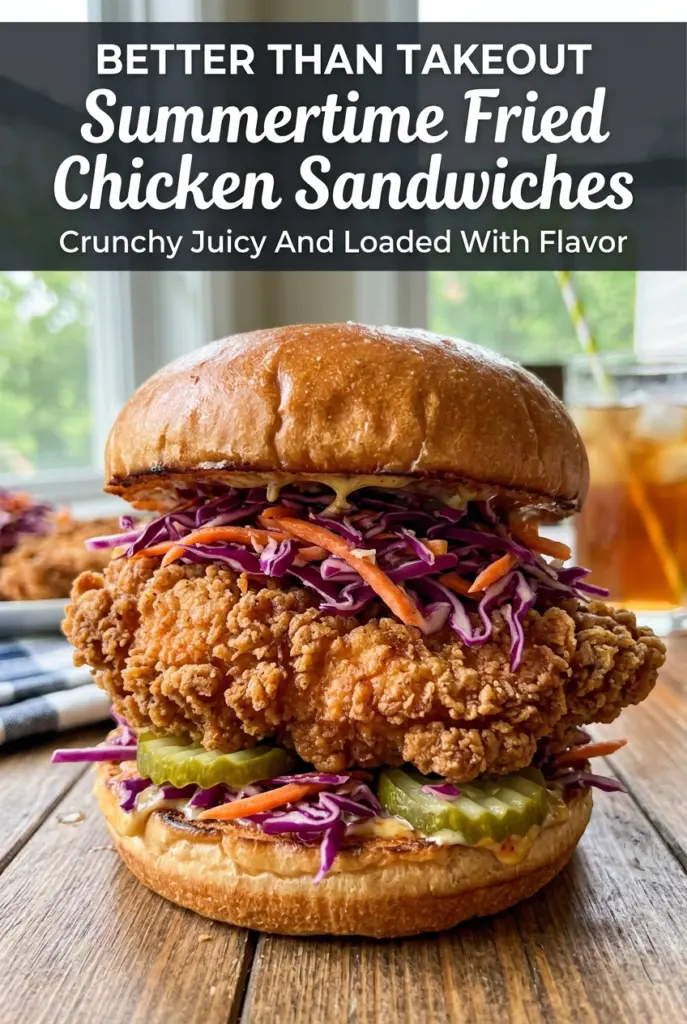
Summertime Fried Chicken Sandwiches With Tangy Slaw
Crispy fried chicken piled onto a toasted brioche bun with crunchy tangy slaw is the kind of sandwich that disappears fast and never leaves anyone wishing it were lighter. The…
Tip: save now, cook later.Crispy fried chicken piled onto a toasted brioche bun with crunchy tangy slaw is the kind of sandwich that disappears fast and never leaves anyone wishing it were lighter. The chicken stays juicy under a shattering golden crust, and the slaw cuts through the richness with enough vinegar and honey to keep every bite balanced. It feels like cookout food, but it eats like something worth stopping everything for.
What makes this version work is the buttermilk marinade and the way the chicken is handled before it hits the oil. Pounding the breasts to an even thickness keeps the meat cooking at the same pace, which matters more than people think with sandwich-sized chicken. The flour coating also needs to be complete and craggy so the crust has something to grab onto; if it looks too smooth before frying, it usually bakes into a thin, patchy shell instead of a proper crunch.
Below, I’ve included the timing that keeps the chicken crisp, the slaw ratio that keeps it bright instead of watery, and a few swaps that still hold up when you want to make these sandwiches your own.
The chicken stayed crispy even after I assembled the sandwiches, and the slaw had just enough tang to cut through the richness without making the bun soggy. My husband said the crust was better than our favorite takeout place.
Save these fried chicken sandwiches with tangy slaw for the days when you want a crunchy, juicy sandwich that tastes like it came straight off the picnic table.
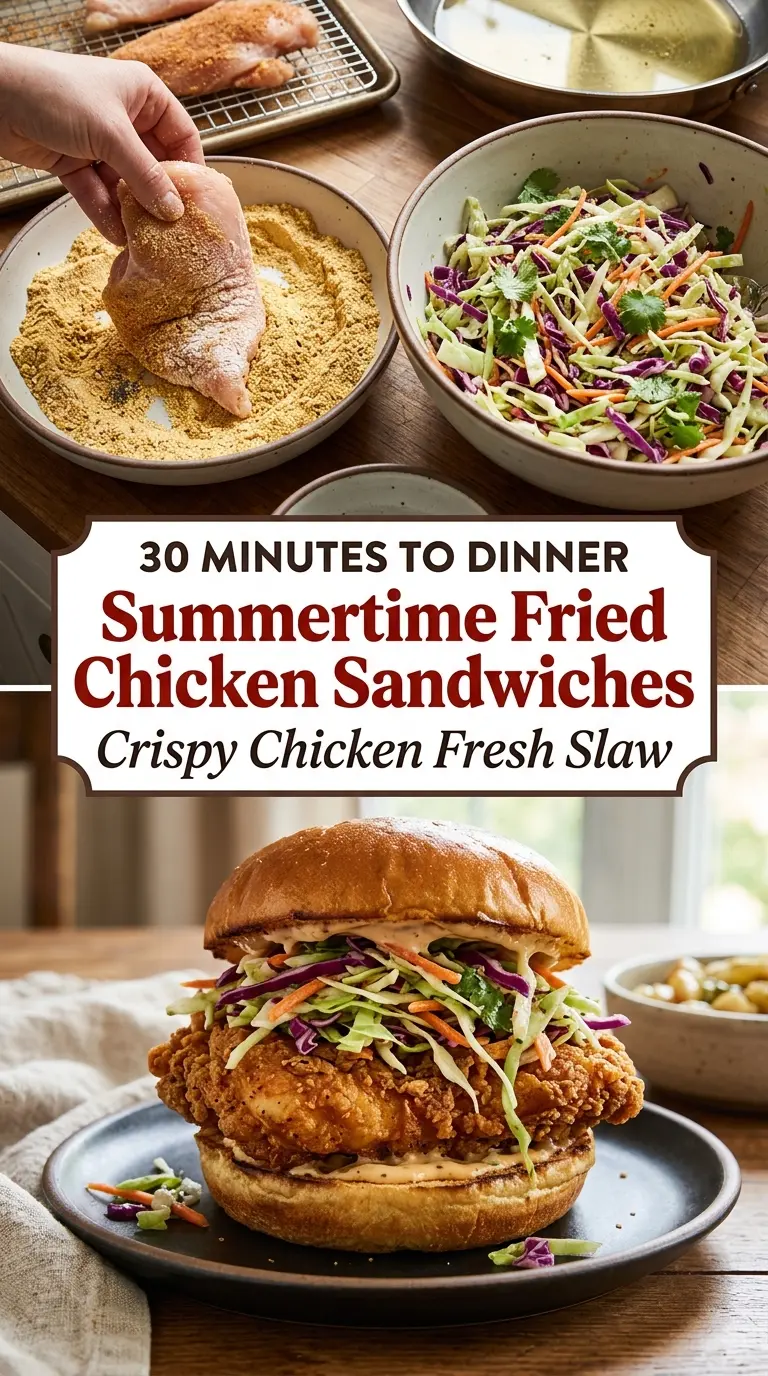
The Crunch Factor Starts Before the Oil Does
The biggest mistake with fried chicken sandwiches is rushing the coating. If the chicken goes into the flour before the buttermilk has had a minute to cling, the crust turns uneven and sandy instead of crisp and substantial. That wet layer is what helps the flour form those little rough edges that fry up into shattery bits.
Oil temperature matters just as much. Too cool, and the coating drinks oil and turns heavy. Too hot, and the crust darkens before the chicken cooks through. The sweet spot is 350°F, and the chicken should sound steady when it hits the pan — not frantic, not silent.
- Buttermilk — This does two jobs: it seasons the meat and gives the flour something sticky to cling to. If you don’t have it, mix plain milk with a little vinegar or lemon juice and let it sit for 5 minutes.
- Brioche buns — Soft, lightly sweet buns hold the chicken and slaw without fighting them. Regular sandwich buns work, but toast them so they don’t collapse under the filling.
- Mayonnaise — In the slaw, mayo gives body and keeps the cabbage from tasting sharp and raw. Greek yogurt can stand in, but the slaw will be tangier and less rich.
- Apple cider vinegar and honey — This is the balance point in the slaw. The vinegar keeps it bright, and the honey takes the edge off so it still tastes like something you want on a fried sandwich.
Building the Chicken, Then Keeping It Crisp
Evening Out the Chicken
Pound the chicken breasts to an even thickness so the thinner edges don’t dry out before the center is done. You want a cutlet that cooks at the same pace from end to end. If the pieces are wildly uneven, the outside will be done before the middle is safe.
Coating for a Rugged Crust
Work the seasoned chicken into the flour until every surface is coated, then press the flour on with your hands. That extra pressure creates those rough patches that fry into crisp ridges. If the flour looks damp and pasty, it’s fine — that is what leads to a sturdy crust.
Frying to the Right Color
Slide the chicken into oil that holds around 350°F and let the crust set before you move it. The first few minutes are about structure, not color, so leave the pieces alone until the edges turn golden and the bubbling starts to calm. Drain them on a wire rack, not paper towels, so steam doesn’t soften the bottom.
Assembling Without Losing the Crunch
Toast the buns lightly, then build the sandwich right before serving. Put the chicken down first, then the pickles, then the slaw on top so the bun stays as dry as possible. If the slaw sits on the chicken too long before serving, it will soften the crust in spots.
Three Ways to Make These Sandwiches Work for Different Tables
Make it gluten-free
Swap the all-purpose flour for a good 1:1 gluten-free flour blend. The crust will still be crisp, though a little less delicate than the wheat version, so press the coating on well and let it rest a minute before frying.
Turn it into spicy fried chicken sandwiches
Add cayenne, hot paprika, or a spoonful of your favorite hot sauce to the buttermilk. The heat stays under the crust instead of on top of it, so every bite gets a little kick without changing the texture of the slaw.
Use chicken thighs for extra juiciness
Boneless thighs give you a richer, more forgiving sandwich and stay juicy even if they go a minute long in the oil. Keep the pieces close to the same size so they fry evenly, since thighs can vary more than breasts.
Storage and Reheating
- Refrigerator: Store the fried chicken, slaw, and buns separately for up to 3 days. The crust softens a little in the fridge, but the flavor holds up well.
- Freezer: The fried chicken freezes well. Cool it completely, wrap it tightly, and freeze for up to 2 months. Don’t freeze the slaw; it turns watery when thawed.
- Reheating: Reheat the chicken in a 400°F oven or air fryer until hot and crisp again. The common mistake is using the microwave, which steams the crust and turns it leathery.
Answers to the Questions Worth Asking
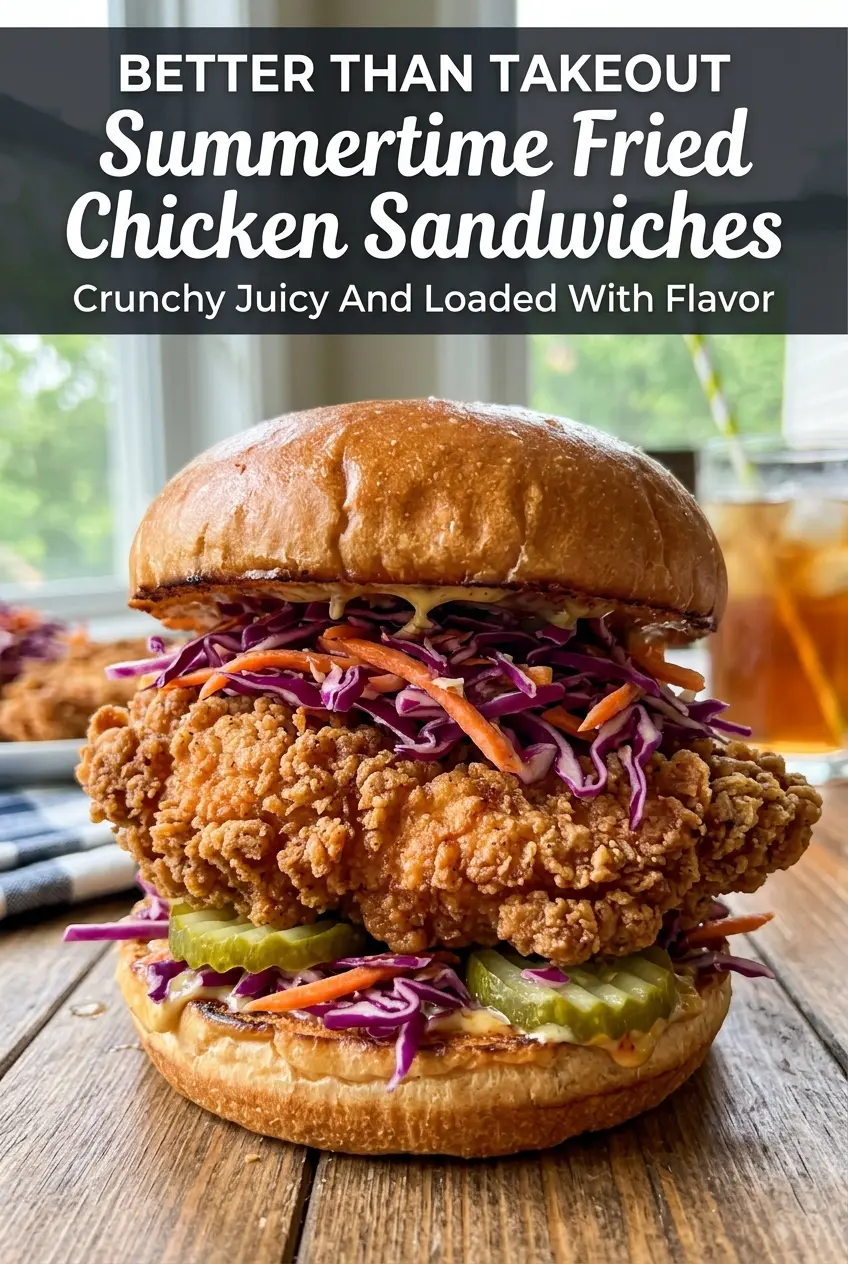
Summertime Fried Chicken Sandwiches With Tangy Slaw
Ingredients
Equipment
Method
- Pound the boneless skinless chicken breasts evenly between sheets of plastic wrap until they’re uniform in thickness.
- Combine buttermilk, salt, black pepper, paprika, and garlic powder in a bowl.
- Marinate the chicken in the buttermilk mixture for at least 30 minutes.
- Mix all-purpose flour with a pinch of salt and black pepper for dredging.
- Dredge the marinated chicken thoroughly in the seasoned flour, coating all sides.
- Heat the vegetable oil to 350°F (175°C) in a Dutch oven.
- Fry the chicken for 5–6 minutes per side until golden and cooked through.
- Drain the fried chicken on a wire rack to keep the coating crisp.
- Combine shredded cabbage, carrot, mayonnaise, apple cider vinegar, honey, salt, and black pepper in a bowl.
- Toss until evenly coated and the slaw looks glossy.
- Toast the brioche buns lightly until warm and lightly golden.
- Assemble sandwiches with fried chicken, dill pickle slices, and tangy slaw, using extra slaw for topping.
- Serve immediately for the crispiest chicken and freshest crunch.