
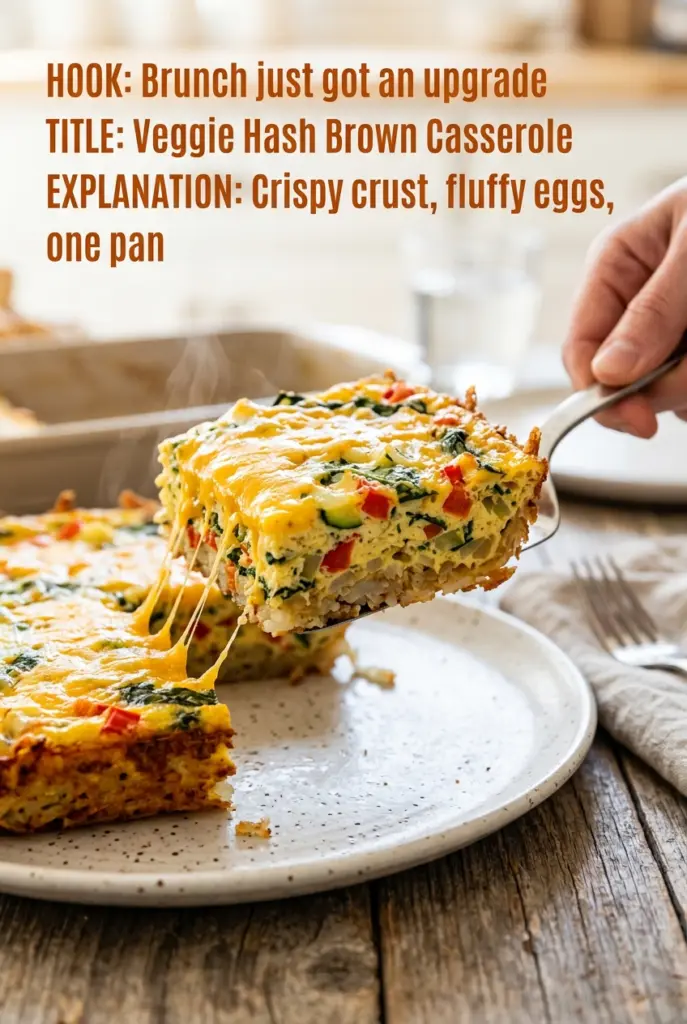
Vegetable Breakfast Casserole with Hash Brown Crust
Golden hash browns on the bottom, fluffy eggs on top, and just enough melted cheddar to tie everything together — that’s what makes this vegetable breakfast casserole disappear fast. The…
Tip: save now, cook later.Golden hash browns on the bottom, fluffy eggs on top, and just enough melted cheddar to tie everything together — that’s what makes this vegetable breakfast casserole disappear fast. The crust stays crisp if you get the potatoes dry and give them their first bake on their own, and the filling comes out tender instead of watery because the vegetables are cooked before they go into the pan.
That contrast matters. Raw vegetables release moisture as the casserole bakes, which can leave you with a soft bottom instead of a clean slice. Squeezing the hash browns dry and sautéing the peppers, zucchini, onion, and spinach first keeps the texture where it should be: crunchy underneath, set in the middle, and easy to cut once it rests.
Below, I’ll walk through the part that changes everything — how to keep the crust from going soggy — plus the small ingredient choices that make this brunch casserole hold together beautifully when you need to feed a crowd.
The hash brown crust actually stayed crisp on the edges, and the center sliced clean after a short rest. I’ve made a lot of breakfast casseroles, and this was the first one that didn’t get soggy under the eggs.
Save this hash brown crust breakfast casserole for the mornings when you want a crisp base, colorful vegetables, and a make-ahead brunch that slices clean.
The Reason the Crust Stays Crisp Instead of Turning Mushy
The crust is the part that decides whether this casserole feels special or just heavy. Frozen hash browns hold a lot of water, and if that moisture stays in the pan, it steams under the eggs and softens into a layer that never really sets. Squeezing the potatoes dry and baking the crust before the filling goes in gives you a firm, browned base that can stand up to the custard.
The second place people run into trouble is the vegetables. If they go in raw, the zucchini and onion release enough liquid to thin the eggs and loosen the whole casserole. A quick sauté fixes that. You’re cooking off the extra moisture and concentrating the flavor before anything hits the baking dish.
What Each Ingredient Is Actually Doing in This Dish

- Frozen shredded hash browns — These are the backbone of the crust. Thaw them fully, then squeeze them in a clean kitchen towel until they feel dry and fluffy instead of damp. That step matters more than the butter or seasoning.
- Unsalted butter — Butter helps the potatoes brown and gives the crust richer flavor than oil alone. If you use salted butter, reduce the added salt a little so the casserole doesn’t taste flat and over-salty at the edges.
- Red bell pepper, zucchini, onion, and spinach — This mix brings color, sweetness, and enough moisture control to keep the filling balanced. The sautéed zucchini softens without turning watery, and the spinach only needs a minute at the end so it doesn’t clump into wet strands.
- Eggs and whole milk — These create the custard that sets around the vegetables. Whole milk gives a softer, richer texture than skim milk. If you use half-and-half, the filling will be a little more luxurious; if you use lower-fat milk, the result will be slightly less tender.
- Cheddar cheese — Sharp cheddar gives the casserole enough bite to stand up to the potatoes and vegetables. Pre-shredded cheese works, but it won’t melt quite as smoothly as cheese you shred yourself.
Building the Casserole So the Bottom Bakes Before the Top Sets
Pressing and Prebaking the Crust
Mix the thawed hash browns with melted butter, salt, and pepper, then press them firmly into the baking dish. Get the layer even, including a little way up the sides, so the filling has a base to sit in. Bake it at 425°F until the edges turn deep gold and the top looks dry, not pale or wet. If the potatoes still look shiny, give them a few more minutes; that shine means the moisture hasn’t cooked off yet.
Softening the Vegetables First
Cook the bell pepper, zucchini, and onion in olive oil until the onion turns translucent and the zucchini loses its raw edge. Stir in the spinach just until it wilts. If the pan starts pooling liquid, keep cooking for another minute or two until that moisture evaporates. This is the difference between a casserole that slices cleanly and one that leaks on the plate.
Pouring the Custard and Baking to the Center
Whisk the eggs, milk, garlic powder, salt, and pepper until the mixture looks uniform and slightly frothy. That air helps the casserole puff a little in the oven. Pour it evenly over the vegetables, scatter the remaining cheese on top, and bake until the center is set and no longer sloshes when you nudge the dish. A knife in the middle should come out clean, but the casserole should still feel gently springy when you press the center.
Letting It Rest Before Slicing
Give the casserole 5 to 10 minutes on the counter before you cut into it. If you slice it straight from the oven, the eggs will still be loose and the layers will slide apart. Resting lets the custard finish setting and gives you neat squares instead of a soft pile on the plate.
How to Adapt This for a Smaller Brunch or a Different Diet
Make It Dairy-Free Without Losing the Texture
Use plant-based butter in the crust and swap the cheddar for a dairy-free shred that melts well. The flavor will be a little less sharp, but the casserole still bakes up with a crisp bottom and a set center. Choose an unsweetened milk alternative so the custard doesn’t taste off.
Swap the Vegetables You Already Have
Mushrooms, chopped broccoli, or diced asparagus all work well as long as they’re cooked first to drive off moisture. The key is keeping the filling dry enough to set properly. Avoid piling in wet vegetables like tomatoes unless you seed them first and cook off the juice.
Make a Half Batch in an 8×8 Pan
Cut everything in half and use a smaller baking dish. Start checking a few minutes early, because a smaller casserole often sets faster in the center. The crust still needs that separate prebake, even in a smaller pan.
Storage and Reheating
- Refrigerator: Store covered for up to 4 days. The crust softens a little, but the slices still hold together well.
- Freezer: Freeze baked squares individually wrapped and tucked into a freezer bag for up to 2 months. The texture of the eggs changes a bit after freezing, but it’s still a good make-ahead breakfast.
- Reheating: Warm in a 325°F oven until heated through, about 12 to 15 minutes for slices. The microwave works in a pinch, but it softens the crust faster, so use short bursts instead of one long blast.
Answers to the Questions Worth Asking
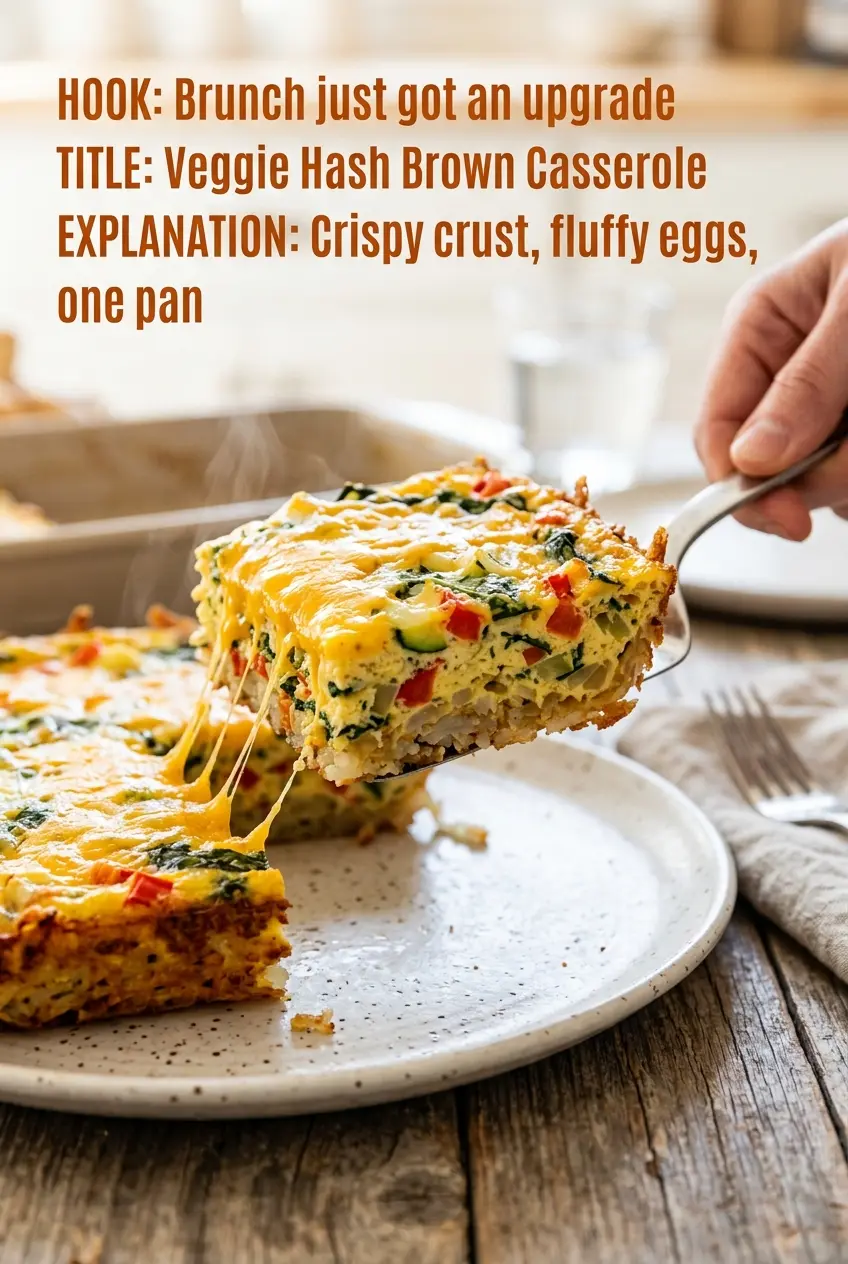
Vegetable Breakfast Casserole with Hash Brown Crust
Ingredients
Equipment
Method
- Preheat the oven to 425°F. Grease a 9x13-inch baking dish generously with butter or nonstick spray.
- In a bowl, mix thawed squeezed-dry frozen shredded hash browns with melted unsalted butter, salt, and black pepper. Press evenly into the bottom and slightly up the sides of the baking dish.
- Bake at 425°F for 20 minutes, until the edges turn golden and crisp.
- Heat olive oil in a skillet over medium heat. Add diced red bell pepper, diced small zucchini, and finely diced yellow onion; cook 5–6 minutes until softened.
- Stir in roughly chopped baby spinach just until wilted, about 1 minute. Remove from heat.
- In a large bowl, whisk large eggs, whole milk, garlic powder, salt, and black pepper until fully combined and slightly frothy.
- Reduce the oven to 375°F. Spread the sautéed vegetables evenly over the baked hash brown crust and sprinkle 1 cup of shredded cheddar cheese on top.
- Pour the egg mixture evenly over everything, then scatter the remaining 1/2 cup shredded cheddar cheese on top.
- Bake at 375°F for 28–32 minutes, until the eggs are puffed, set in the center, and the top is golden; a knife inserted in the middle should come out clean.
- Let the casserole rest for 5–10 minutes before slicing to help it firm up for clean squares. Garnish with chopped fresh chives and serve.