
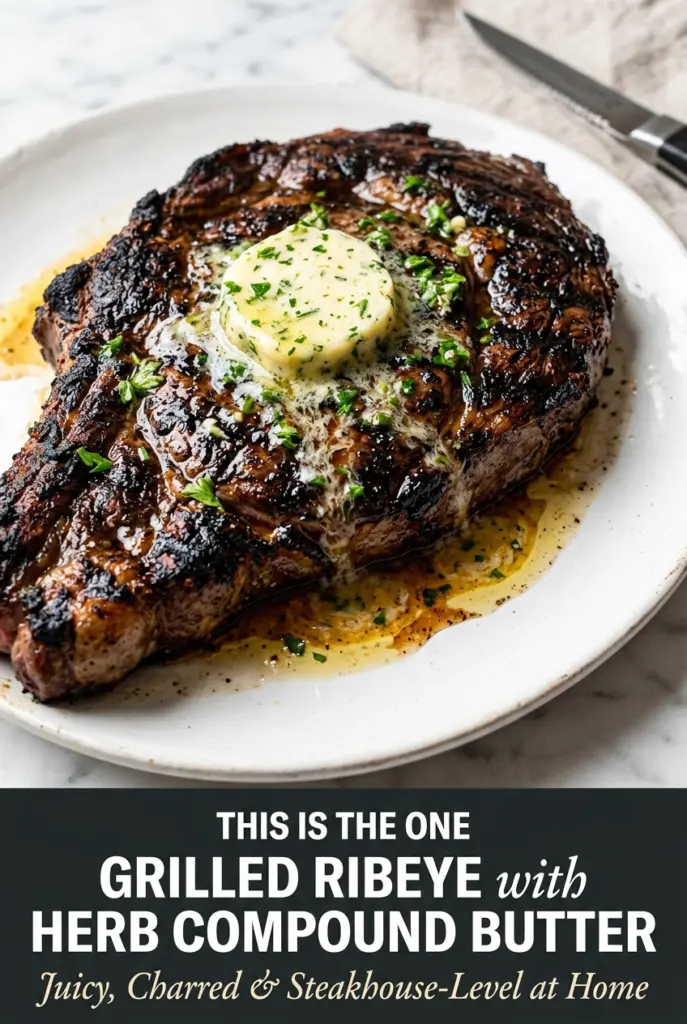
Grilled Ribeye with Herb Compound Butter
Grilled ribeye gets its reputation the right way: by showing up with a hard, peppery crust, a juicy center, and enough beefy flavor to stand on its own. The herb…
Tip: save now, cook later.Grilled ribeye gets its reputation the right way: by showing up with a hard, peppery crust, a juicy center, and enough beefy flavor to stand on its own. The herb compound butter doesn’t cover that up. It slips into the ridges of the seared surface, melts into the meat as it rests, and leaves every bite richer without turning greasy.
What makes this version work is the balance between a dry steak and a soft, aromatic finish. Patting the ribeye dry first matters more than almost anything else here, because moisture on the surface turns into steam and keeps the crust from forming. The seasoned butter is chilled into a log ahead of time, so you get clean slices that melt slowly instead of disappearing into the board before the steak is ready.
Below, I’ll walk through the exact grill timing, the best way to handle the butter, and the little details that keep the steak juicy from the first slice to the last.
The butter melted into every ridge of the crust and the steak stayed juicy after resting. I used the grill marks as my cue and the medium-rare center came out perfect at 130 degrees.
Save this grilled ribeye with herb compound butter for the nights when you want a steakhouse-style crust and a butter finish that melts right into the meat.
The Crust Lives or Dies on a Dry Steak
The biggest mistake people make with ribeye is putting it on the grill while the surface is still damp, cold, or both. That gives you pale spots and soft edges instead of the dark crust that makes a grilled steak taste finished. A dry ribeye sears fast, and fast is what you want here — less time on the grates means a juicier center.
High heat matters, but heat alone won’t rescue a wet steak. The oil goes on the meat, not the grill, so the seasoning sticks and the surface browns evenly. If your steak is thick and properly dried, it will release from the grates once the crust sets. If it’s sticking, it needs more time.
- Room-temperature rest: Letting the steaks sit out for about 45 minutes helps them cook more evenly from edge to center.
- Olive oil: This helps the seasoning cling and promotes browning. You don’t need a lot.
- Smoked paprika: This adds a quiet smoky note that echoes the grill without turning the steak into barbecue.
- Black pepper: Coarse pepper gives the crust a sharper bite than finely ground pepper would.
What Each Ingredient Is Actually Doing in This Dish
- Ribeye steaks: Ribeye has enough marbling to stay tender over high heat, which is why it’s the right cut for this treatment. A 1.5-inch steak gives you room for a deep crust without overcooking the center.
- Unsalted butter: Unsalted butter lets you control the seasoning in the compound butter. Salted butter works in a pinch, but the final taste can skew briny if you’re not careful.
- Fresh herbs: Parsley, chives, thyme, and rosemary each play a different role. Parsley keeps the butter bright, chives add a gentle onion note, thyme brings depth, and rosemary gives the finish that steakhouse aroma.
- Lemon zest: This keeps the butter from tasting heavy. Without it, the richness can flatten out after a few bites.
- Garlic: Fresh minced garlic works best in the butter because it spreads through the fat and perfumes the steak as it melts. Garlic powder belongs on the meat; fresh garlic belongs in the butter.
Grilling the Steak in a Way That Keeps the Center Juicy
Building the Herb Butter First
Mix the softened butter with the garlic, herbs, lemon zest, salt, and pepper until everything looks evenly speckled. The butter should taste punchy on its own, because it’s going onto a thick steak, not a mild piece of toast. Roll it into a tight log in plastic wrap and chill it until firm enough to slice cleanly. If the butter is too soft when it hits the steak, it will melt off the board before it has a chance to coat the meat.
Seasoning the Ribeye
Pat the steaks dry with paper towels, then coat them with olive oil and the spice mix. Press the seasoning in with your hands so it actually adheres instead of falling into the grill. The surface should look evenly coated but not caked. If you see wet patches, keep blotting — those are the spots that will steam instead of sear.
Getting the Grill Hot Enough
Preheat the grill to high heat and clean the grates well before the steaks go on. You want the grates hot enough that the meat sizzles on contact and picks up deep browning within minutes. Oily flare-ups are a sign the fire is too aggressive, so keep a cooler zone nearby if you’re using charcoal. A steak like this needs direct heat for the crust, not a rolling flame licking the outside.
Turning Once and Only Once
Lay the steaks on the grill and leave them alone until a dark crust forms and they release easily. Flip them once, then cook the second side to medium-rare, about 3 to 4 minutes more depending on thickness and grill temperature. If you want crosshatch marks, rotate the steak halfway through each side, but don’t keep flipping it back and forth. Frequent turning slows crust formation and makes the meat harder to read.
Resting Before the Butter Hits
Pull the steaks off the grill when the center reads about 130 to 135°F for medium-rare, then let them rest for 5 to 7 minutes. Resting is not downtime; it’s the part where the juices settle back into the meat instead of running across the cutting board. Slice a thick round of compound butter and set it on top while the steak is still hot. That’s when it melts into the crust and carries the herbs into every bite.
What to Change When You Want a Different Finish
Make It Dairy-Free
Use a high-quality plant butter that’s meant for spreading, not a hard baking stick. The texture will be close, but you’ll lose some of the milk-butter richness that melts across the steak. Chill it the same way so you still get clean slices.
Swap the Herbs Based on What’s Fresh
Chives, parsley, and thyme are the most forgiving trio, but dill or tarragon can take this in a sharper, greener direction. Leave rosemary out if you don’t want a piney note. The butter should still taste balanced and bright, not like a pot of chopped herbs.
Cook It Indoors on a Cast-Iron Pan
A ripping-hot cast-iron skillet gives you the same crust if the grill isn’t available. Sear the steak undisturbed, then finish in a hot oven if the center needs more time. The key is the same: dry surface, hard sear, and butter added only after resting.
Storage and Reheating
- Refrigerator: Store leftover steak in an airtight container for up to 3 days. The crust softens, but the meat stays usable for slicing over salad or potatoes.
- Freezer: The cooked steak freezes, though the texture is best when eaten fresh. Wrap tightly and freeze for up to 2 months; freeze the compound butter separately if you’ve got extra.
- Reheating: Rewarm gently in a low oven or in a covered skillet with a splash of water just until heated through. High heat dries ribeye out fast, so don’t blast it in the microwave unless you’re fine losing the crust.
Questions I Get Asked About This Recipe
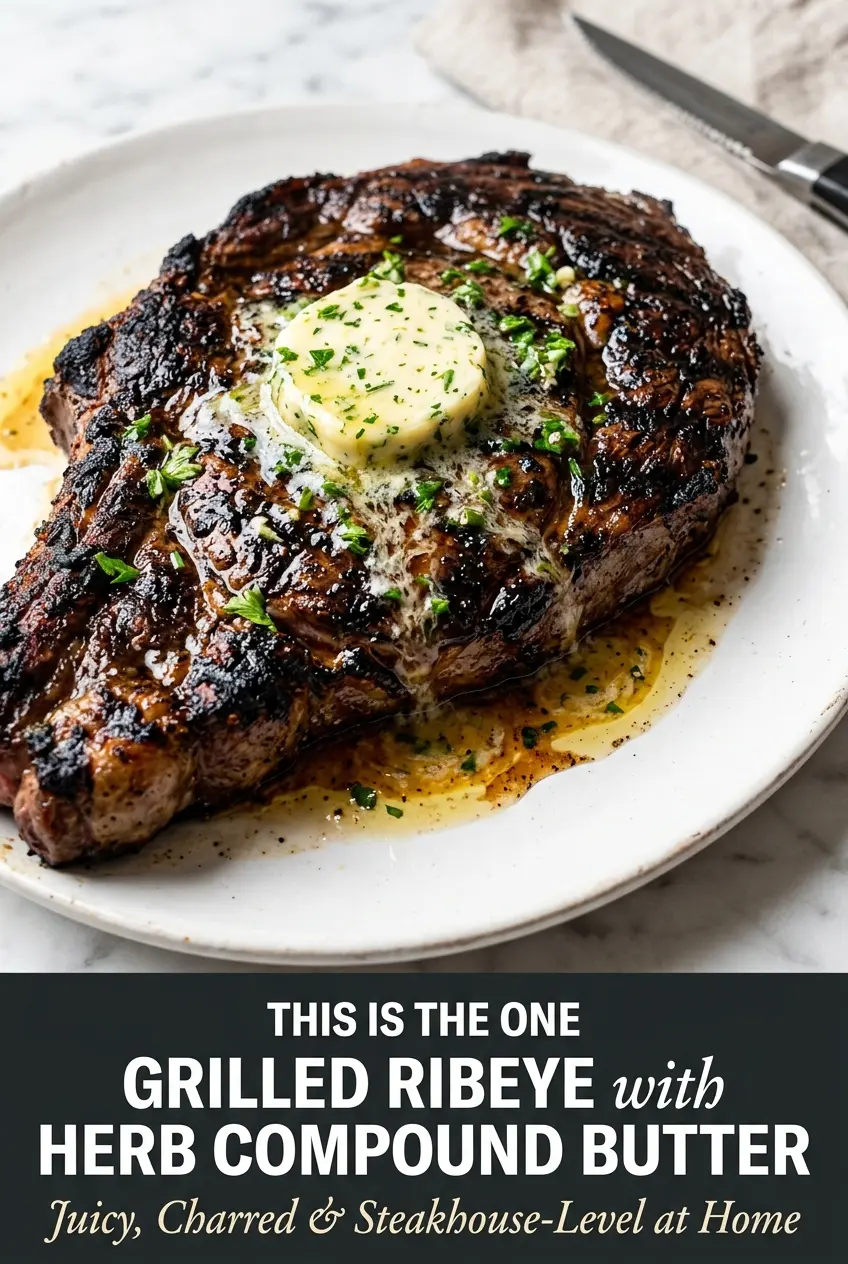
Grilled Ribeye with Herb Compound Butter
Ingredients
Equipment
Method
- Mix the softened butter with garlic, parsley, chives, thyme, rosemary, lemon zest, kosher salt, and black pepper in a small bowl until fully combined.
- Spoon the butter mixture onto a sheet of plastic wrap, roll into a log, twist the ends tight, and refrigerate for at least 30 minutes or until firm.
- Remove the ribeye steaks from the fridge 45 minutes before grilling to bring them closer to room temperature.
- Pat the steaks completely dry with paper towels so the surface can brown instead of steaming.
- Drizzle the steaks with olive oil, then rub all sides with kosher salt, coarse black pepper, garlic powder, and smoked paprika, pressing the seasoning firmly into the meat.
- Preheat the grill (gas or charcoal) to high heat, 450–500°F (230–260°C), then clean and oil the grates well.
- Place steaks on the hot grill and cook undisturbed for 4–5 minutes until a deep char forms.
- Flip the steaks once and grill 3–4 minutes more for medium-rare, until the internal temperature reaches 130–135°F (54–57°C).
- Rotate each steak 45° halfway through each side for attractive grill marks (optional).
- Transfer steaks to a cutting board or plate and tent loosely with foil, then rest for 5–7 minutes to let juices redistribute.
- Slice a generous round of compound butter (about ¾ inch thick) and set it directly on top of the hot resting steaks so it melts and pools into the crust.
- Serve immediately, plating with any remaining compound butter on the side.