
Bread Pudding Recipe
Warm bread pudding lands in that sweet spot between humble and special. The top bakes into a lightly caramelized crust while the center stays soft, custardy, and rich enough to…
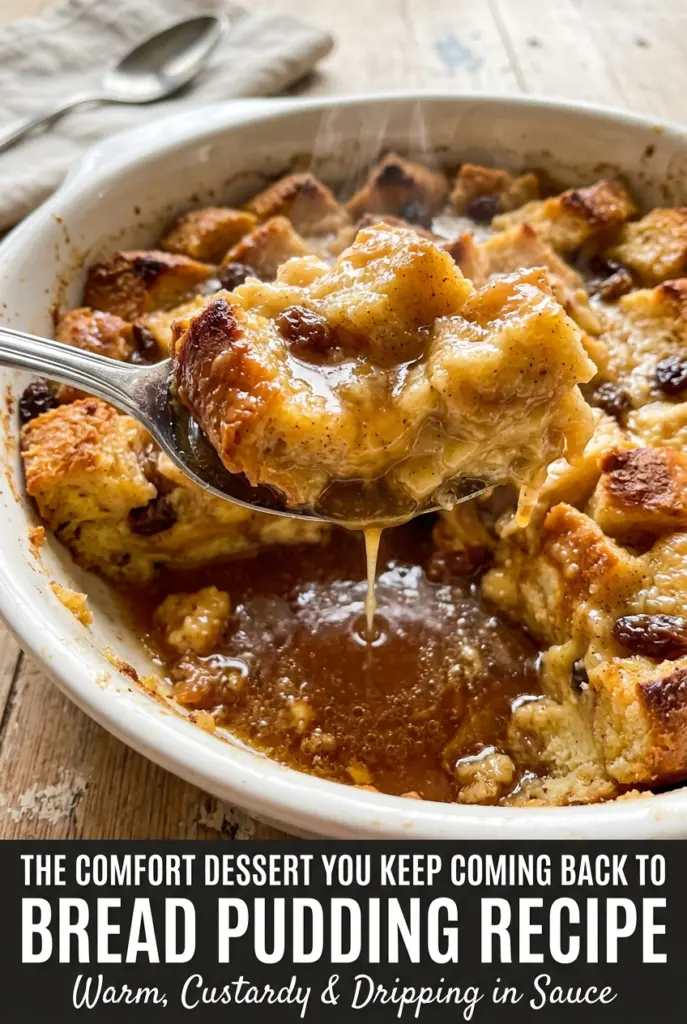
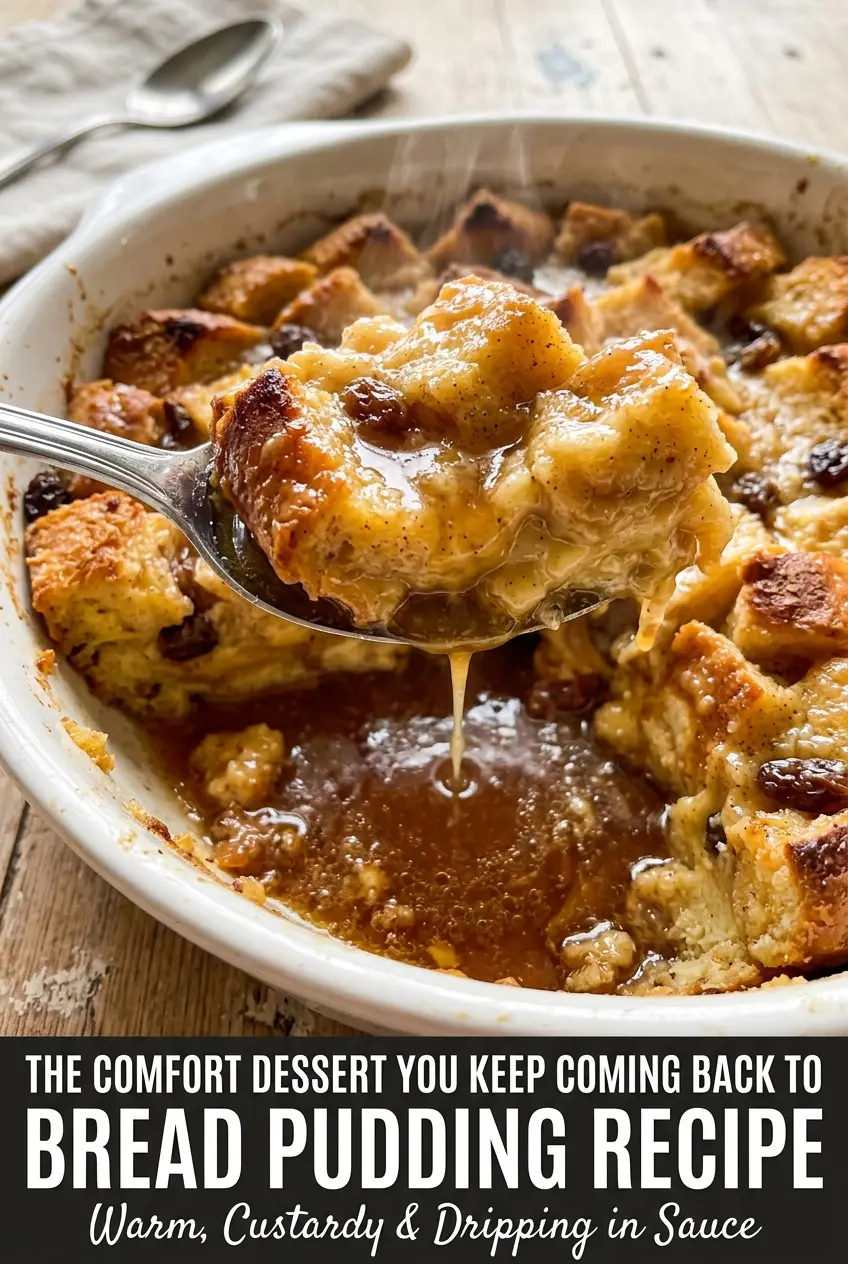
Tip: save now, cook later.Warm bread pudding lands in that sweet spot between humble and special. The top bakes into a lightly caramelized crust while the center stays soft, custardy, and rich enough to feel like dessert without becoming heavy. When it comes out of the oven with cinnamon and vanilla drifting through the kitchen, it has that old-fashioned comfort people go back for a second helping of before the pan even cools.
The difference between a good bread pudding and a disappointing one usually comes down to the bread and the soak. Day-old French bread or brioche holds its shape long enough to absorb the custard, which gives you distinct bites instead of a soggy casserole. A mix of whole milk and cream keeps the custard plush, while brown sugar and cinnamon add the kind of warmth that makes every forkful taste finished, not just sweet.
Below, you’ll find the method that keeps the center set without drying out the edges, plus the small details that matter if you want a pudding that slices neatly and still melts on the tongue. The bourbon sauce is optional, but it turns this from a nice dessert into the kind people remember.
The bread soaked up the custard perfectly and baked up with a creamy middle, not a mushy one. I used brioche and the bourbon sauce took it over the top.
Save this bread pudding for the next time you have stale bread and want a dessert with a custardy center and golden top.
The Part That Keeps Bread Pudding Custardy Instead of Soggy
Most bread pudding fails because the bread either stays too dry in the middle or turns into a dense, wet block. The fix starts before baking: use day-old bread, and if your loaf is fresh, dry it out in the oven first so it can absorb the custard without collapsing. Brioche gives you a softer, richer texture; French bread gives you more structure and a slightly less sweet result.
The soak matters just as much as the bread. Press the cubes down so the custard reaches every corner, then give it time to absorb before it goes into the oven. If you rush this part, the top bakes first and the center stays uneven. A good rest gives you the creamy middle and the lightly set top that slice cleanly.
What Each Ingredient Is Actually Doing in This Dish
- Day-old French bread or brioche — This is the backbone of the pudding. French bread gives a sturdier, more traditional texture, while brioche makes the finished dessert softer and richer. If you use fresh bread, dry it first so it can soak up the custard instead of dissolving into it.
- Whole milk and heavy cream — The combination gives you a custard that tastes full and silky without being greasy. You can use all whole milk in a pinch, but the pudding will be a little lighter and less luxurious. Avoid low-fat milk if you want that classic tender set.
- Brown sugar — This adds caramel depth that granulated sugar alone can’t give you. It also plays nicely with the cinnamon and nutmeg so the pudding tastes warm instead of one-note sweet.
- Eggs — They set the custard. If the ratio is off or the pudding bakes too long, the texture turns rubbery, so stop baking when the center still has the tiniest wobble.
- Vanilla, cinnamon, and nutmeg — These are the flavor anchors. Cinnamon carries the warmth, nutmeg adds a little edge, and vanilla ties everything together so the custard tastes rounded.
- Bourbon in the sauce — Optional, but it adds a toasted, grown-up note that cuts through the sweetness. If you want it alcohol-free, heavy cream works, though the sauce will taste milder and a bit richer.
Building the Custard So the Center Sets Without Drying Out
Preparing the Pan and Bread
Grease the baking dish well and get the bread cubes into an even layer. You want plenty of surface area exposed so the custard can move between the pieces. If the bread is fresh, toast it just until the edges feel dry and the cubes lose their softness; that small step prevents the bottom from turning gummy.
Mixing the Custard
Whisk the eggs, milk, cream, sugars, vanilla, cinnamon, nutmeg, and salt until the mixture looks smooth and fully combined. Stop whisking once the sugars dissolve and the custard looks uniform. If you leave streaks of egg white or pockets of sugar behind, the bake will set unevenly and you can end up with bland spots or curdled edges.
Soaking the Bread
Pour the custard over the bread and press gently until every cube has some contact with the liquid. Let it sit long enough for the bread to soften through, not just on the surface. A 20 to 30 minute soak works if you’re baking the same day; overnight in the fridge gives a deeper, more even custard and a better texture in the middle.
Baking to the Right Set
Bake until the top is deep golden and the center looks just set with a slight wobble. If the middle still sloshes when you move the pan, it needs more time; if it feels firm all the way across, it’s probably gone too far and will tighten as it cools. Rest it for 10 minutes before serving so the custard finishes settling instead of spilling apart on the plate.
Three Ways to Make This Bread Pudding Work for Your Kitchen
Use brioche for a softer, richer finish
Brioche makes the pudding taste more decadent and gives the cubes a softer, almost bread-french-toast texture. It does absorb faster than French bread, so don’t skip the drying step if it’s fresh. The result is less rustic and more dessert-like.
Make it dairy-free without losing the custard feel
Use full-fat canned coconut milk in place of the cream and whole milk, or a rich unsweetened oat milk plus a little extra coconut cream for body. The pudding will still set, but the flavor shifts slightly and you’ll lose some of the classic dairy sweetness. Keep the spices and vanilla in place so the custard still tastes balanced.
Leave out the bourbon and keep the sauce family-friendly
Swap the bourbon for heavy cream and cook the sauce the same way. You lose the warm, toasted edge that bourbon brings, but the sauce stays smooth, sweet, and pourable. If you want a little more depth without alcohol, add a tiny pinch of salt.
Add fruit or chocolate without wrecking the texture
A handful of raisins, diced apples, or chopped chocolate can go in with the bread before the custard is poured over. Keep the add-ins moderate so they don’t crowd the bread or throw off the bake. Too much extra moisture from fruit will make the center looser, so pat fresh fruit dry first.
Storage and Reheating
- Refrigerator: Store covered for up to 4 days. The texture firms up a bit as it chills, but it reheats well.
- Freezer: It freezes better than many custard desserts. Wrap portions tightly and freeze for up to 2 months; thaw overnight in the fridge before reheating.
- Reheating: Warm individual portions in the oven at 325°F until heated through, or use the microwave in short bursts. Don’t blast it on high heat or the custard can tighten and turn grainy.
Questions I Get Asked About This Bread Pudding
Bread Pudding Recipe
Ingredients
Equipment
Method
- Preheat the oven to 350°F (175°C) and grease a 9x13-inch baking dish generously with melted butter, leaving a light buttery coat on the sides. The dish should look glossy and well coated.
- Spread the bread cubes evenly in the baking dish so they form an even layer. If the bread is fresh, spread cubes on a sheet pan and toast in the oven for 8–10 minutes until slightly dried out.
- Whisk together eggs, whole milk, heavy cream, granulated sugar, brown sugar, vanilla extract, cinnamon, nutmeg, and salt until smooth. Stop when no sugar streaks remain and the mixture looks uniform.
- Pour the custard evenly over the bread cubes and press gently to ensure every piece is coated and submerged. The top should look evenly saturated.
- Let the pudding soak for at least 20–30 minutes at room temperature, or cover and refrigerate overnight for better absorption. You should see the bread swell and the liquid mostly soak in.
- Drizzle the remaining melted butter over the top of the soaked bread. You should see thin buttery streaks across the surface.
- Bake uncovered for 45–55 minutes at 350°F (175°C) until deep golden brown and just set in the center. A slight jiggle is okay, and a toothpick inserted in the center should come out mostly clean.
- Melt the butter in a small saucepan over medium-low heat until fully liquid. The butter should look clear and lightly glossy, not browned.
- Whisk in the sifted powdered sugar until smooth. The mixture should thicken and look creamy with no dry lumps.
- Remove from heat and whisk in the egg yolk quickly, then return to very low heat for 1–2 minutes stirring constantly. The sauce should turn silkier and slightly thicker.
- Remove from heat and stir in the bourbon and vanilla. The sauce should look smooth and fragrant.
- Let the bread pudding rest for 10 minutes before serving. It should firm up slightly while still warm.
- Drizzle generously with the warm bourbon sauce and serve immediately. The sauce should sink into the custardy center.