
Fresh Strawberry Vinaigrette Salad Dressing
Fresh strawberry vinaigrette has a way of making even the simplest bowl of greens feel worth sitting down for. It’s bright, silky, and balanced enough to coat the leaves without…
Tip: save now, cook later.Fresh strawberry vinaigrette has a way of making even the simplest bowl of greens feel worth sitting down for. It’s bright, silky, and balanced enough to coat the leaves without tasting sugary or flat. The strawberries bring a soft fruitiness, the vinegar keeps it lively, and the olive oil rounds everything out into a dressing that actually tastes layered.
What makes this version work is the order and the ratio. The strawberries need to be fully blended with the vinegar, honey, mustard, and garlic before the oil goes in, because that gives you a smooth base that emulsifies instead of separating into a jar of pink liquid and oil slick. A little Dijon does more than add flavor here — it helps the dressing stay together and sharpens the fruit so it doesn’t read like smoothie dressing. The garlic stays small on purpose; one clove is enough to deepen the flavor without pushing the whole thing savory.
Below, I’ve included the small details that matter most, from keeping the dressing glossy to the swaps that still taste good when strawberries aren’t at their peak. There’s also a note on straining, because texture is one of those things people either love or skip without realizing how much it changes the final pour.
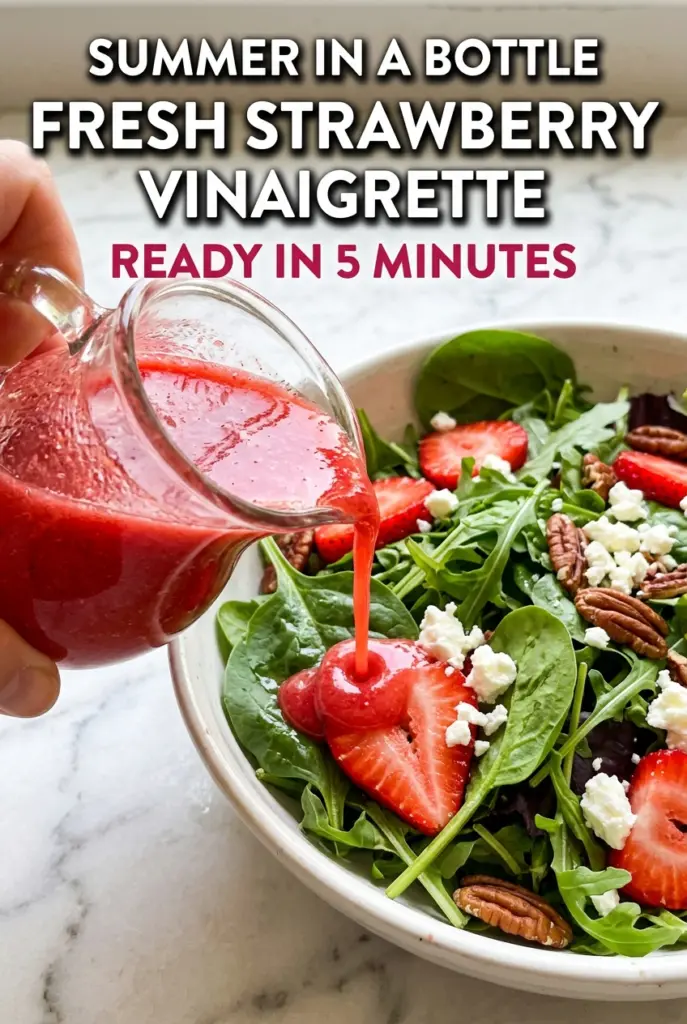
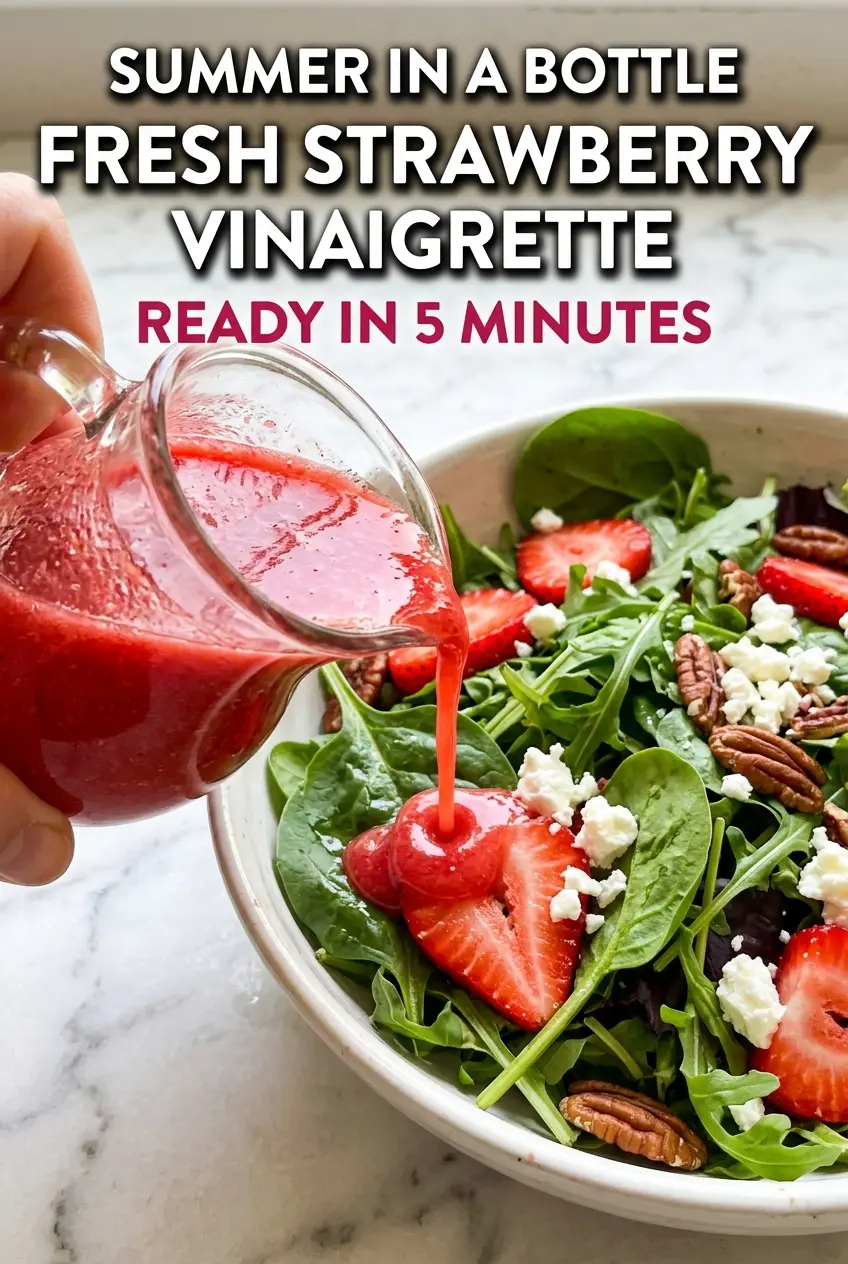
The dressing turned out silky and didn’t separate in the fridge, and the little bit of Dijon made the strawberry flavor taste fresh instead of candy-sweet. I used it on spinach with goat cheese and toasted pecans, and it was gone the same night.
Save this strawberry vinaigrette for the salads that need a bright, silky dressing with real strawberry flavor.
The Reason This Dressing Stays Smooth Instead of Turning Thin and Watery
Fresh fruit vinaigrettes fail in two common ways: they taste like jam with acid, or they split into something greasy and unstable. This one avoids both by starting with enough vinegar and mustard to create a strong base before the oil is added. The acid wakes up the strawberries, and the mustard helps suspend the oil so the dressing stays cohesive instead of separating the second it sits on the counter.
The other mistake is under-blending. Strawberries need to break down completely before the oil goes in, or you end up with tiny fruit bits floating in loose dressing. When the mixture is fully smooth and bright pink-red, you’ll get a cleaner emulsion and a better pour.
What Each Ingredient Is Actually Doing in This Dressing
- Fresh strawberries — Use ripe berries with good aroma and deep color. Soft, flavorful berries blend into a more intense dressing; pale berries taste watery and need extra honey to compensate. Frozen strawberries work in a pinch if you thaw and drain them first, but the finished dressing won’t taste quite as fresh.
- Apple cider vinegar — This gives the dressing its sharp edge and keeps the fruit from tasting flat. White wine vinegar can replace it if that’s what you have, but plain distilled vinegar tastes harsher and less balanced here.
- Honey or maple syrup — Sweetness smooths out the vinegar and helps the strawberries read as fruit instead of dessert. Honey gives a rounder finish; maple syrup works for a vegan version, though it adds a deeper note that changes the flavor slightly.
- Dijon mustard — This is the emulsifier and the flavor bridge. It keeps the dressing from separating as quickly and gives just enough savory depth to keep the berries from tasting one-note.
- Extra-virgin olive oil — Use an olive oil you actually like tasting, because there’s nowhere for a harsh one to hide. A mellow, fruity oil keeps the dressing smooth and glossy without overpowering the strawberries.
- Garlic — One small clove is enough. It shouldn’t announce itself; it just gives the dressing a little backbone so the fruit and acid don’t taste thin.
Building the Emulsion Without Losing the Strawberry Flavor
Blend the Fruit Into a Fully Smooth Base
Start with the strawberries, vinegar, honey, Dijon, garlic, salt, and pepper, and blend until the mixture looks completely uniform. You want no visible chunks and a glossy, bright color. If the fruit is still coarse at this stage, the oil won’t emulsify cleanly later and the dressing can feel uneven on the tongue. Scrape down the sides once if needed so every bit gets incorporated.
Drizzle the Oil in a Thin, Steady Stream
Once the base is smooth, lower the blender speed and pour in the olive oil slowly. This is the part that gives you that silky restaurant-style texture. Dumping the oil in too fast can break the emulsion, which leaves you with a dressing that looks fine at first and then separates into layers after a few minutes. Slow and steady is what keeps it pourable and cohesive.
Taste for Balance Before You Bottle It
Stop and taste before you transfer the dressing to a jar. If it feels too sweet, add another splash of vinegar or a squeeze of lemon. If it tastes sharp, add a little more honey. The goal is a dressing that tastes a touch bolder than you want on its own, because it softens once it hits greens.
Three Ways to Make This Strawberry Vinaigrette Fit the Salad You’re Building
Dairy-Free and Naturally Vegan
Use maple syrup instead of honey and keep the rest of the recipe the same. The flavor will be a little deeper and less floral, but the dressing still stays bright and balanced. This is the easiest swap in the recipe because the acidity and emulsification don’t change.
Strained and Glossy vs. Rustic and Fruit-Flecked
Run the dressing through a fine-mesh strainer if you want a smoother finish that clings cleanly to delicate greens. Skip that step if you like tiny strawberry bits and a softer, more homemade look. The flavor stays the same; only the texture changes.
A Little Herb or Heat, Without Overcomplicating It
Add fresh thyme for a more savory finish or a pinch of red pepper flakes for gentle heat. Both work best in small amounts, because strawberry dressing turns muddled fast if you pile on too many competing flavors. Lemon juice also fits here if you want extra lift and brightness.
Storage and Reheating
- Refrigerator: Store in a sealed jar for up to 5 days. It may thicken slightly and separate as it sits, which is normal.
- Freezer: I don’t recommend freezing this dressing. The strawberries and oil don’t thaw back into the same smooth texture.
- Reheating: Don’t heat it. Let it sit at room temperature for 10 to 15 minutes, then shake or whisk hard until it looks smooth again. If it still seems tight, add a teaspoon of water or vinegar to loosen it.
Answers to the Questions Worth Asking
Fresh Strawberry Vinaigrette Salad Dressing
Ingredients
Equipment
Method
- Wash and hull the fresh strawberries, halve them, and add them to a blender or food processor.
- Add the apple cider vinegar, honey, Dijon mustard, garlic clove, fine sea salt, and black pepper to the blender.
- Blend on high for 30–45 seconds until completely smooth and a bright pink-red color forms.
- With the blender running on low, slowly drizzle in the extra-virgin olive oil in a thin, steady stream to emulsify the dressing until silky and pourable.
- Taste the vinaigrette and adjust by adding more honey for sweetness, more vinegar for tang, or a squeeze of fresh lemon juice for brightness.
- If you want a very smooth, glossy dressing, pour it through a fine-mesh strainer (optional).
- Transfer the vinaigrette to a jar or airtight bottle and refrigerate for up to 5 days, then shake or stir well before each use.
- Drizzle over mixed greens, spinach salads, arugula, or grain bowls, and pair with feta, goat cheese, candied pecans, and sliced cucumber as desired.