
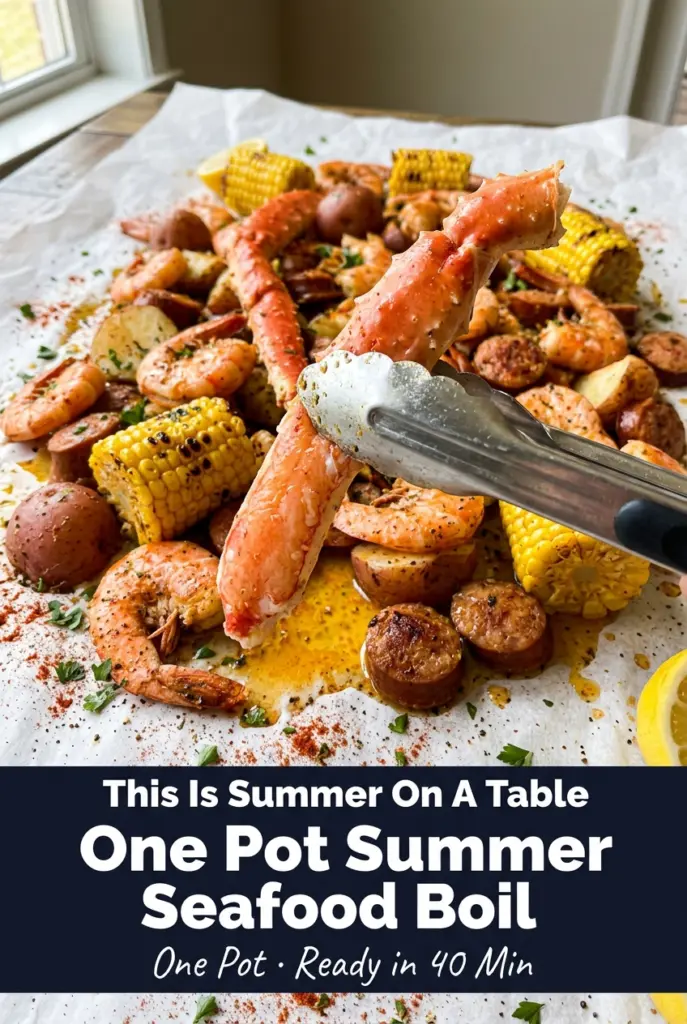
One Pot Summer Seafood Boil
Plump shrimp, sweet corn, tender potatoes, and smoky sausage all cooked in one seasoned pot make this seafood boil the kind of meal people remember. The best part is the…
Tip: save now, cook later.Plump shrimp, sweet corn, tender potatoes, and smoky sausage all cooked in one seasoned pot make this seafood boil the kind of meal people remember. The best part is the timing: each ingredient goes in when it needs to, so the potatoes turn creamy, the corn stays juicy, the clams open cleanly, and the shrimp stay snappy instead of rubbery. It lands on the table bold, messy, and built for sharing.
What makes this version work is the broth. Old Bay gives it that classic seafood-boil backbone, but the smoked paprika, garlic, lemon, and a little beer round it out so the pot tastes layered instead of just salty. The butter goes in twice too — once in the boil for richness, then again at the end as a garlic-lemon finish that clings to every bite.
Below, you’ll find the timing that keeps the seafood from overcooking, plus a few smart swaps if you want to use what’s available at the market. The order matters here, and once you’ve done it this way, the whole pot starts to make sense.
The potatoes were tender before the shrimp even went in, and the clams opened right on time. That finishing butter was the part everybody kept dunking bread into.
Save this one-pot seafood boil for the night you want shrimp, crab, corn, and sausage all drenched in garlic butter.
The Timing That Keeps the Seafood Tender Instead of Tough
The biggest mistake in a seafood boil is treating every ingredient like it needs the same amount of heat. Potatoes need the longest head start, corn wants enough time to turn sweet and tender, and the seafood should only be in the pot long enough to cook through. If you throw the shrimp in early, they tighten up and go bouncy. If you wait too long on the clams, some will overcook while the pot keeps rolling.
Boiling the potatoes first also seasons the whole dish from the inside out. They absorb the broth while the liquid is still building flavor, which is why the finished boil tastes deeper than a pot where everything goes in at once. The sausage comes after the potatoes because it only needs to warm and perfume the broth, not sit there for twenty minutes getting wrinkly and dry.
- Potatoes first — they need the most time and they soak up the seasoning best.
- Seafood last — shrimp and clams cook fast, and they only need the final few minutes.
- Butter at the end — adding it after draining keeps the sauce glossy instead of greasy.
What Each Ingredient Is Actually Doing in This Pot
- Shell-on shrimp — leaving the shells on protects the meat from overcooking and gives the broth more seafood flavor. Peeled shrimp will work, but they cook faster, so watch them closely.
- Crab legs or clusters — these add sweetness and make the pot feel like a feast. Snow crab is easier to serve, while king crab brings bigger bites and a richer texture.
- Littleneck clams — they bring briny broth to the party, and they tell you when they’re done by opening. Scrub them well and discard any that stay shut after cooking.
- Andouille sausage — this is the smoky, spicy anchor that keeps the boil from tasting one-note. If you swap it, choose another fully cooked sausage with enough seasoning to stand up to the broth.
- Old Bay and beer — Old Bay gives the unmistakable seafood-boil profile, and the beer adds a little malt depth that water alone won’t give. If you don’t want alcohol, use seafood stock or extra water with a little more seasoning.
- Garlic head, lemon, and butter — the garlic softens in the boil, the lemon cuts through the richness, and the butter ties everything together at the end. Fresh lemon juice matters here; bottled juice tastes flat against all the shellfish.
Building the Pot in the Right Order
Season the Broth First
Start with the stockpot full of water or seafood stock, beer if you’re using it, oil, butter, Old Bay, paprika, cayenne, garlic powder, onion powder, and salt. Bring it to a hard boil before anything else goes in. That first boil wakes up the spices and gives you a broth that tastes seasoned all the way through instead of just on the surface. If the pot only simmers at this stage, the potatoes will take forever and the broth won’t have the same depth.
Cook the Potatoes Until They Just Yield
Add the halved potatoes and the halved garlic head, then boil them until a knife slips in with a little resistance. They should be almost tender, not falling apart. This stage sets up the entire boil because undercooked potatoes throw off the timing for everything else. If they’re still hard when the corn goes in, keep them in a bit longer before moving on.
Add the Sausage and Corn
Stir in the sausage and corn and keep the boil moving. The sausage needs enough time to heat through and share its smoky flavor with the broth, while the corn should turn bright and sweet without getting wrinkled. You’ll know this stage is right when the corn looks plump and the sausage edges have a little shine from the broth. If the pot cools down too much, wait for it to come back to a full boil before counting the minutes.
Finish With the Seafood
Add the crab legs and clams first, then the shrimp at the very end. The clams should begin to pop open and the shrimp should turn pink and curl into a loose C, not a tight O. Pull the pot as soon as the shrimp lose their gray translucence. If you keep cooking after that, they turn tough fast, and there’s no fixing overdone shrimp.
How to Adapt This Seafood Boil Without Losing the Point
Make It Dairy-Free
Skip the butter in the boil and finish with olive oil, minced garlic, lemon juice, and parsley. You’ll lose a little richness, but the pot stays bright and clean, and the shellfish flavor comes through even more clearly.
Use What Seafood You Can Find
If crab legs are out of budget, add extra clams or more shrimp and keep the same timing. Mussels also work well here, but they should go in with the clams and be removed as soon as they open so they stay tender.
Make It Spicier or Milder
The cayenne is the easiest place to adjust heat. Add more if you want the broth to bite back, or leave it out and lean on paprika and Old Bay for warmth without the burn.
Storage and Reheating
- Refrigerator: Store leftovers up to 2 days. The shrimp and clams are best the first day, and the potatoes will soak up more broth as they sit.
- Freezer: Don’t freeze the finished boil. Shellfish turns rubbery after freezing and thawing, and the vegetables lose their texture.
- Reheating: Rewarm gently in a covered pan over low heat with a splash of stock or water. High heat will overcook the seafood before the center is hot, which is the fastest way to ruin leftovers.
Answers to the Questions Worth Asking
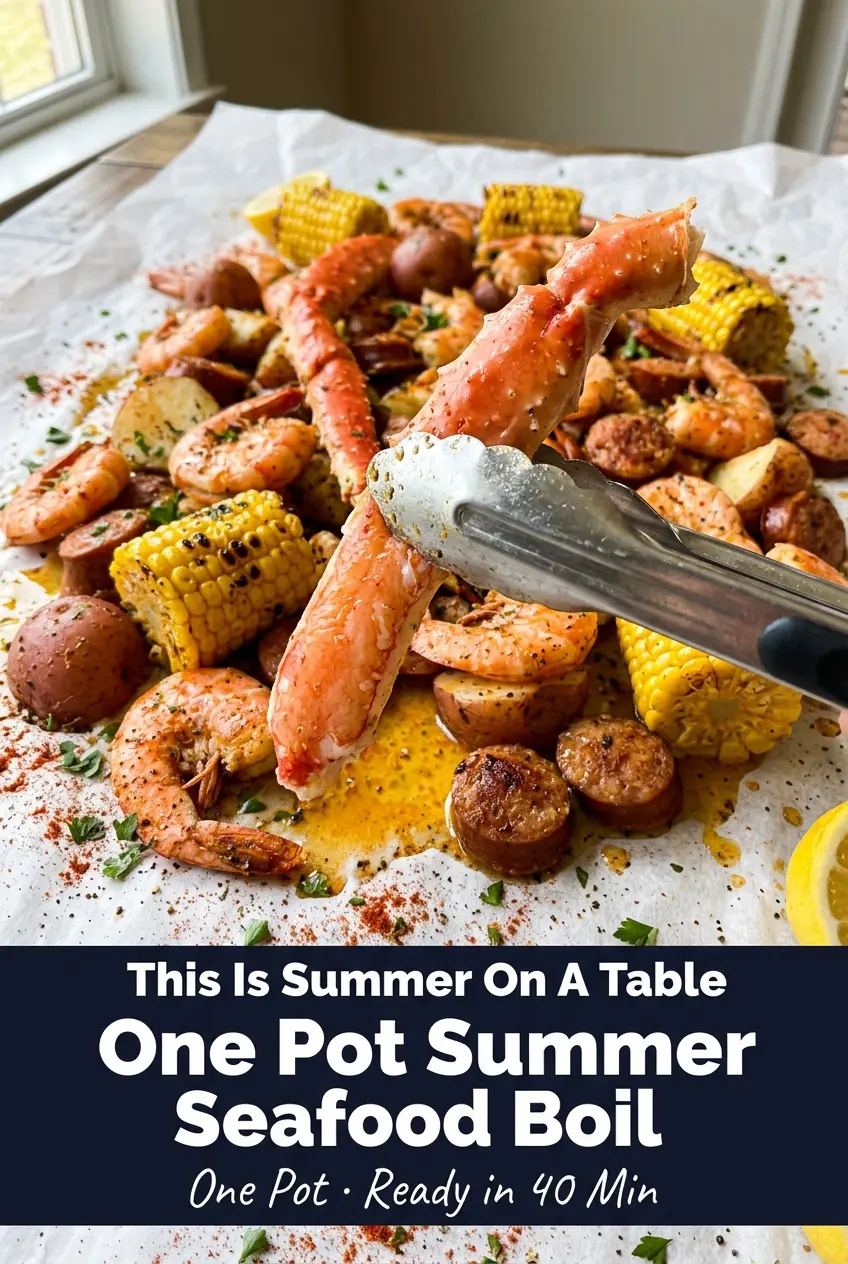
One Pot Summer Seafood Boil
Ingredients
Equipment
Method
- Fill a large stockpot (8–10 quart) with water or seafood stock, beer, olive oil, Old Bay seasoning, smoked paprika, cayenne pepper, garlic powder, onion powder, and salt, then squeeze in the lemon halves and toss them in too. Bring to a rolling boil over high heat.
- Add the baby potatoes and halved garlic head, then boil for 12–15 minutes until the potatoes are just beginning to soften but not fully cooked. Keep the liquid at a steady boil with visible bubbling.
- Add the andouille sausage and corn, then cook for 5–7 more minutes until the corn is bright yellow and tender. Stir gently a couple of times so the sausage rounds and corn move through the broth.
- Add the crab legs and clams, then cook for 4–5 minutes until the clams begin to open. Watch for shells to pop open as your timing cue.
- Add the shrimp last, then cook for 2–3 minutes until the shrimp are pink and curled. Do not overcook; once they curl firmly, remove from heat and immediately discard any clams that haven't opened.
- Melt 4 tbsp butter in a small saucepan over low heat, then add minced garlic and sauté for 1 minute. You should smell garlic without browning it.
- Stir in Old Bay, parsley, and lemon juice, then remove from heat. Keep the sauce warm so it drizzles smoothly.
- Drain the pot while reserving a cup of broth if desired, then pour everything out onto a large parchment-lined tray or table spread. Let it settle briefly so the seafood doesn’t slide around.
- Drizzle the finishing butter sauce generously over the entire spread, then scatter fresh parsley and lemon wedges on top. Serve immediately with crusty bread for soaking up the broth and plenty of napkins.