
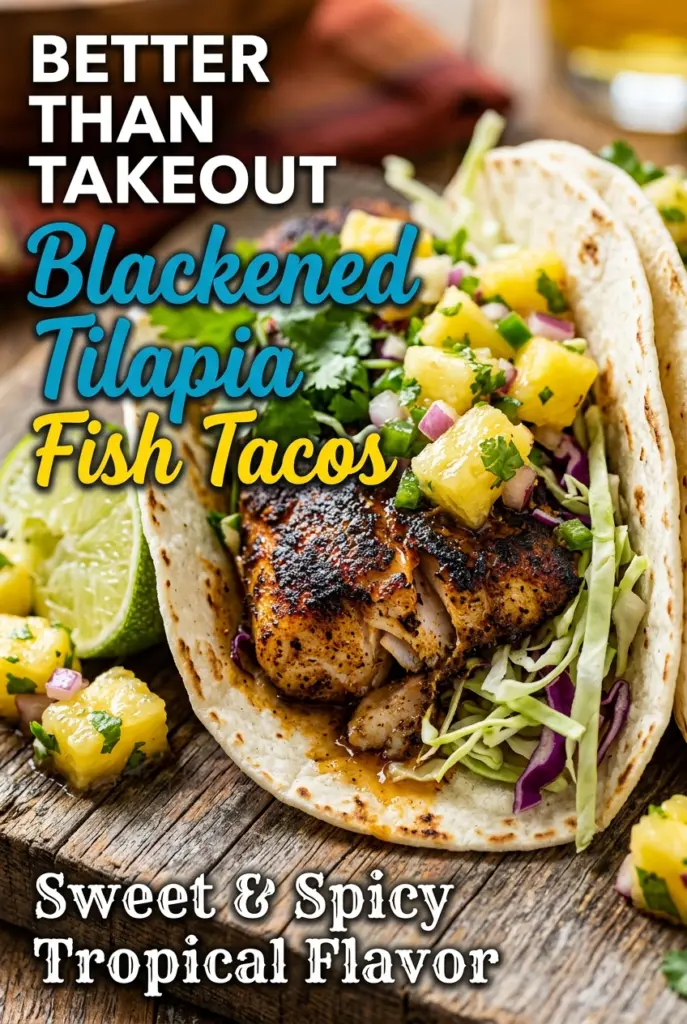
Blackened Tilapia Fish Tacos With Pineapple Salsa
Blackened tilapia tacos hit that sweet spot where a fast weeknight dinner still feels like something you’d order off a chalkboard menu. The fish cooks in minutes, the spice crust…
Tip: save now, cook later.Blackened tilapia tacos hit that sweet spot where a fast weeknight dinner still feels like something you’d order off a chalkboard menu. The fish cooks in minutes, the spice crust turns dark and fragrant in the pan, and the pineapple salsa cuts right through the heat with juicy, bright sweetness. Wrapped in warm corn tortillas with a little shredded cabbage, every bite gets smoke, crunch, and freshness all at once.
What makes this version work is the balance. Tilapia is mild, so it takes well to a bold blackening blend without tasting muddy or heavy. The pineapple salsa isn’t just a topping; it’s the thing that keeps the whole taco alive. Fresh lime juice, a little jalapeño, and red onion keep it sharp, while the pineapple brings enough natural sugar to round out the spice. If you’ve ever had fish tacos that tasted flat, this is usually where they went wrong.
Below, I’ve laid out the one pan trick that keeps the fish from sticking, why you want the skillet hot before the fish goes in, and the best way to keep corn tortillas from tearing when you fill them.
The fish got that crisp blackened edge without falling apart, and the pineapple salsa was the perfect cool, juicy contrast. I made a double batch and the tortillas were gone before I even sat down.
These blackened tilapia tacos with pineapple salsa bring smoky spice, juicy fruit, and crisp tortillas together in one fast dinner.
The Blackened Crust Needs Heat, Not Patience
Fish tacos go wrong when the pan is lukewarm. Tilapia is thin and delicate, so it needs a hot skillet to set the spice crust fast before the fish has time to dry out or stick. You want a sharp sizzle the moment the fillets hit the pan. If the oil is only shimmering a little, the seasoning can clump and smear instead of forming that dark, savory edge.
The other common mistake is overhandling. Once the fish goes in, leave it alone until it releases naturally. If it sticks, it’s telling you it needs another minute. Tilapia is done quickly, and the moment it flakes easily with a fork, it’s ready to come off the heat.
What Each Ingredient Is Actually Doing in This Dish
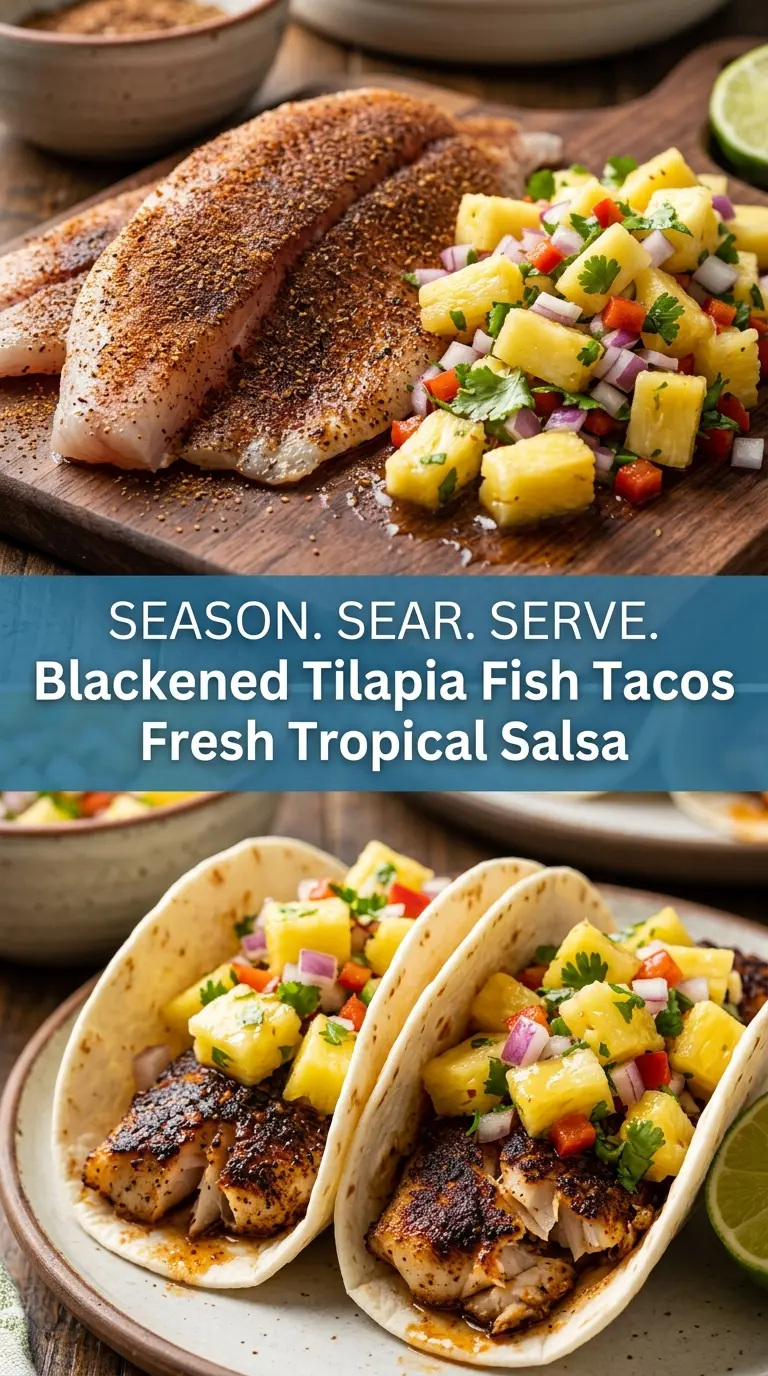
- Tilapia — Its mild flavor lets the blackening spices and pineapple salsa stand out. If you swap in another white fish, choose something thin and quick-cooking like cod or haddock, and watch the timing closely because thicker fillets need longer and can overcook on the outside before the center flakes.
- Smoked paprika and paprika — This combination gives the crust color and that smoky, slightly sweet edge. Regular paprika alone won’t bring the same depth, and smoked paprika alone can get harsh, so the pair works better together.
- Olive oil — A light coating helps the seasoning cling and helps the fish sear instead of dry out. Don’t drown the fillets; too much oil softens the crust.
- Fresh pineapple — This is the bright, juicy part that keeps the tacos from tasting one-note. Canned pineapple can work in a pinch, but drain it well and expect a softer salsa with less bite.
- Corn tortillas — They bring the right flavor and hold up to the fish better than flour tortillas here. Warm them in a dry skillet so they become pliable; cold tortillas crack and tear when you fold them.
- Cabbage — It adds crunch and helps catch the salsa juices. Shredded lettuce can work, but cabbage stays crisp longer and doesn’t collapse under the fish.
How to Build the Tacos So the Fish Stays Crisp
Mix the Salsa First
Stir the pineapple, red onion, jalapeño, cilantro, lime juice, and salt together before you start the fish. The salsa benefits from a few minutes of sitting because the salt pulls out juice and softens the onion’s bite. By the time the fish is cooked, the flavors have already started to blend. If the salsa tastes flat, it usually needs another pinch of salt or a little more lime, not more jalapeño.
Season the Fish Evenly
Pat the fillets dry before you brush on the oil. That dry surface is what helps the spices cling and brown instead of slipping off into the pan. Coat both sides in a thin, even layer. If you pile the seasoning on too thick, the crust can taste dusty instead of savory.
Cook Hot and Fast
Lay the fish into a hot skillet and let it cook for 3 to 4 minutes on the first side without moving it. You’re looking for the edges to darken and the fish to release cleanly. Flip it once, then cook just until it flakes. Overcooking tilapia is the fastest way to turn a tender taco into dry crumbs, so pull it the second it’s opaque all the way through.
Warm and Fill the Tortillas
Heat the tortillas in a dry skillet until they’re soft and flexible. Stack them in a clean towel to hold the heat while you finish the rest. Build each taco with cabbage first, then fish, then a generous spoonful of salsa. That order keeps the tortilla from getting soggy before you eat it.
Three Ways to Adapt These Fish Tacos Without Losing the Point
Gluten-Free by Default
These tacos are already naturally gluten-free as long as your spices are clean and your tortillas are 100% corn. That makes them one of the easier fish dinners to serve without any special adjustment. Just check the tortilla package, because some brands blend in flour and lose that classic corn flavor.
Milder for Kids or Heat-Sensitive Eaters
Leave the jalapeño out of the salsa or remove every seed and bit of white membrane before mincing it. You’ll keep the sweet pineapple and lime brightness without the burn. If you still want a little kick for the rest of the table, set out hot sauce at the end instead of building all the heat into the salsa.
Swap the Fish
Cod, mahi mahi, or haddock all work if you don’t have tilapia. Adjust the cook time based on thickness and stop as soon as the fish flakes. The seasoning and salsa stay the same, but a firmer fish gives you meatier bites and holds up especially well if you’re serving a crowd.
Make It Dairy-Free and Lighter
There’s no dairy here to begin with, so the dish stays naturally light and fresh without any swaps. If you want it even leaner, skip extra toppings and lean on the cabbage and salsa for texture. The tacos still feel complete because the fish has enough seasoning to carry the plate.
Storage and Reheating
- Refrigerator: Store the fish and salsa separately for up to 2 days. The fish loses some crispness, and the salsa gets juicier as it sits.
- Freezer: The cooked fish can be frozen, but the texture softens after thawing. The salsa and cabbage don’t freeze well, so keep those fresh.
- Reheating: Reheat the fish in a skillet over low heat or in a 300°F oven just until warmed through. High heat dries it out fast and makes the spices taste bitter.
Answers to the Questions Worth Asking
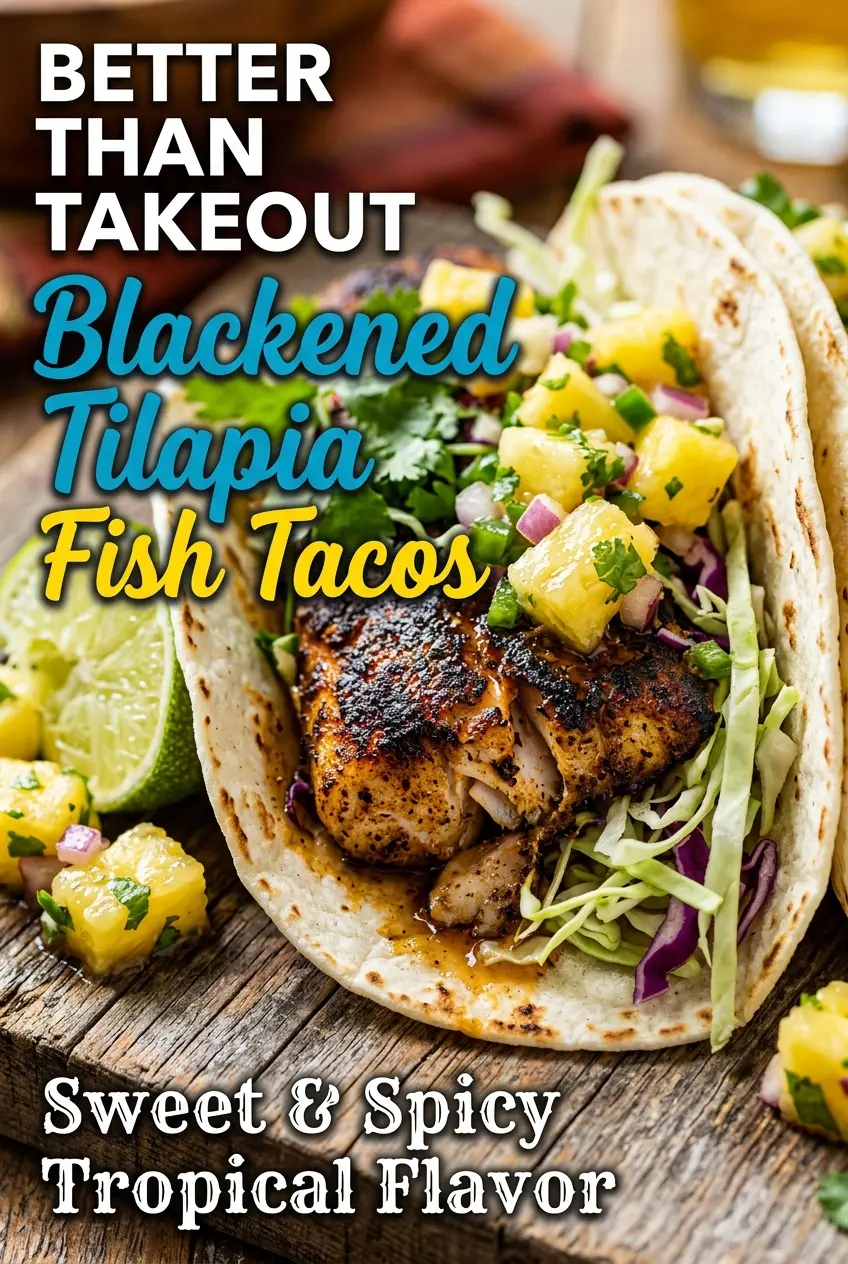
Blackened Tilapia Fish Tacos With Pineapple Salsa
Ingredients
Equipment
Method
- In a small bowl, combine the paprika, smoked paprika, garlic powder, onion powder, oregano, thyme, cumin, salt, and black pepper.
- Mix until evenly blended so the rub coats the tilapia consistently.
- Pat the tilapia fillets dry.
- Brush both sides lightly with olive oil.
- Coat both sides with the seasoning blend, pressing lightly so it adheres.
- Heat a cast iron skillet over medium-high heat.
- Cook tilapia for 3–4 minutes per side until flaky.
- Remove and break the fish into large pieces for easy taco filling.
- Mix the pineapple, red onion, jalapeño, cilantro, lime juice, and salt in a bowl.
- Stir well so every bite has pineapple juices and heat from the jalapeño.
- Warm the corn tortillas in a dry skillet.
- Fill each tortilla with shredded cabbage and blackened fish.
- Top generously with pineapple salsa for a juicy, fresh finish.
- Garnish with fresh cilantro and lime wedges.
- Serve immediately while the fish is hot and the tortillas are pliable.