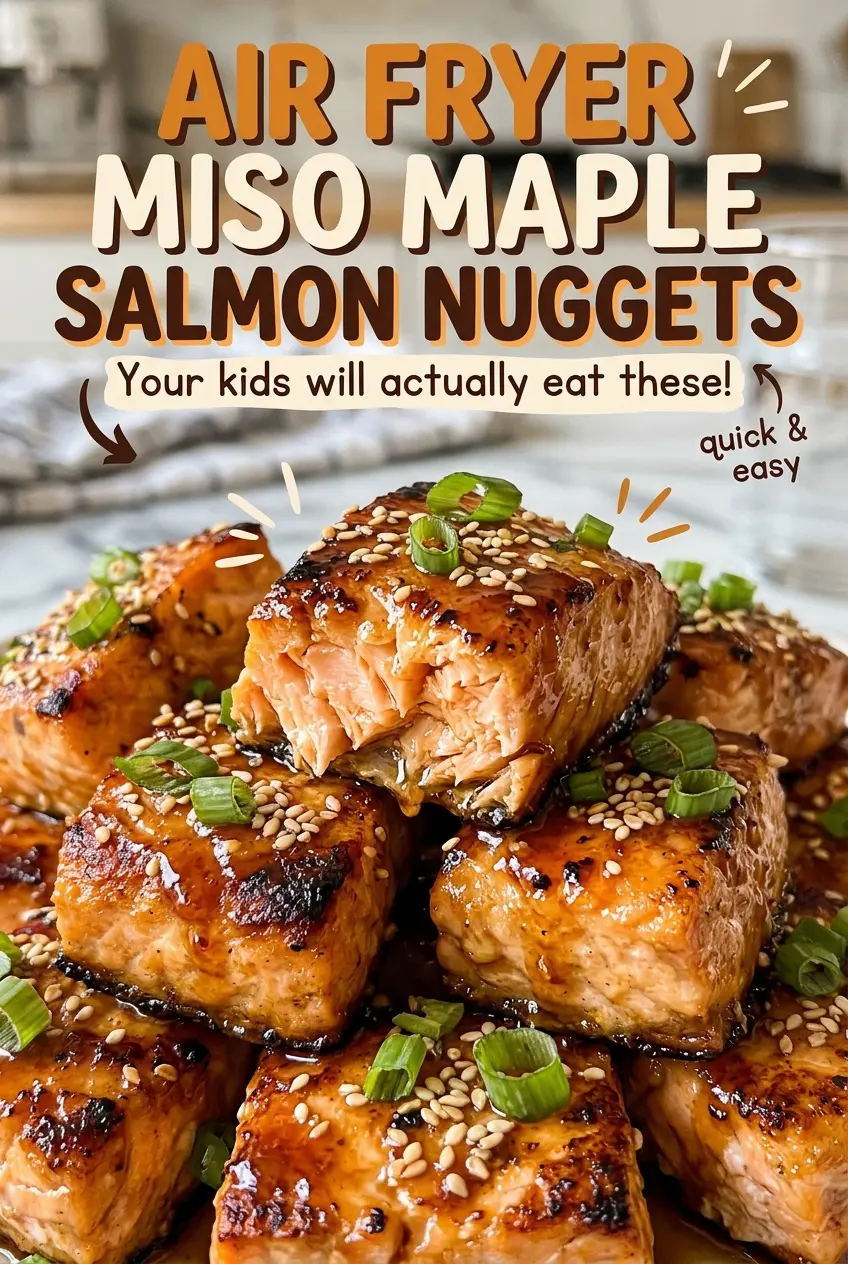
When you lift the air-fryer basket, the salmon should be cooked before the maple glaze ever touches it. That order matters: maple syrup can darken quickly under direct heat, and a sugary coating can stick before the salmon pieces have finished cooking. These Air Fryer Miso Maple Salmon Nuggets get their savory-sweet glaze at the end, so the fish cooks in the basket without that sticky layer.
I cut the salmon into even 1-inch pieces, dry them well, and toss them with avocado oil before arranging them in a single layer. While they cook, I whisk the glaze until the miso disappears into the maple, soy sauce, rice vinegar, water, and fresh ginger. A quick turn halfway through helps the pieces cook evenly, and the finished salmon takes on the glaze in a gentle toss. The result is tender salmon with a glossy, tangy-sweet coating.
Kitchen Note
Give the miso a thorough whisk before warming the glaze; little lumps are much harder to smooth out once the mixture is warm. After the 20-second microwave, stir again so the glaze is even from edge to edge.
Save these Air Fryer Miso Maple Salmon Nuggets for a quick savory-sweet dinner, with a ginger-bright glaze and tender air-fried bites.
Why the Maple Glaze Goes on After the Salmon, Not Before
Maple syrup brings the sweetness and shine, but it also changes how the salmon behaves in the air fryer. Coating raw pieces first puts the sugar against a hot, circulating heat source for the full cook. It can darken or stick before the center of a thick piece is ready, and a wet coating also covers the surface that you want exposed to the hot air.
Cooking the salmon with just a light coating of avocado oil gives the pieces room to cook without the glaze becoming a sticky layer in the basket. Once the fish is cooked, the warm pieces pick up the miso-maple mixture in a bowl, where you can coat them gently instead of scraping them loose from the basket. This finishing order also keeps the glaze’s ginger and rice-vinegar notes clear rather than turning them into a cooked-on crust. The sauce is meant to cling, not cook down around the fish.
What Miso, Maple, and Ginger Each Bring to These Salmon Bites
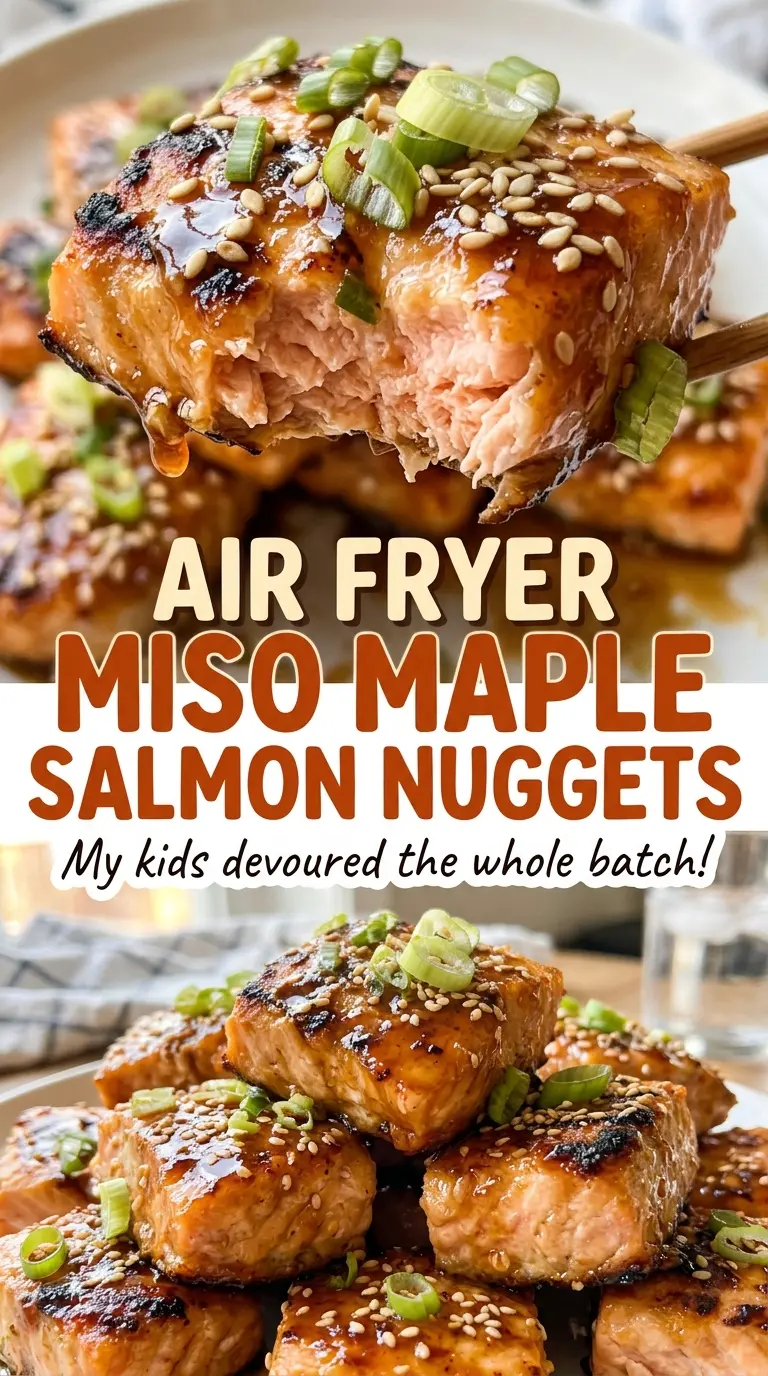
- White miso — This is the savory backbone of the glaze, with a mild fermented flavor that doesn’t overwhelm the salmon. Red miso can stand in one-for-one, but it tastes stronger and saltier, so the finished glaze will be more assertive.
- Pure maple syrup — Pure maple syrup gives the glaze its rounded sweetness and maple aroma. Honey works in the same amount if that’s what you have, though it shifts the flavor toward floral sweetness and away from maple.
- Low-sodium soy sauce — It seasons the glaze while leaving room for the miso’s saltiness. Tamari is a useful one-for-one replacement; choose a gluten-free version for a gluten-free adaptation.
- Rice vinegar — Its gentle acidity balances the sweet syrup and savory miso without taking over. Unseasoned rice vinegar is the best fit; apple cider vinegar can replace it in the same amount, with a fruitier, sharper edge.
- Fresh ginger — Finely grating fresh ginger spreads its warm, bright flavor through the glaze. If fresh ginger isn’t available, use ¼ teaspoon ground ginger in place of each teaspoon of freshly grated ginger; the flavor will be less lively but still fits.
- Skinless salmon fillet — Skinless fillet is easy to cut into neat nuggets and toss with the glaze. Keep the pieces close to the same size so they cook at a similar pace; another fish won’t necessarily follow the same timing.
- Avocado oil — A light coating helps the salmon cook without masking the glaze. Canola oil can replace it in the same amount, while cooking spray is for the basket rather than the fish.
How to Air-Fry the Salmon Before the Glaze Goes On
Whisk a Smooth Miso Maple Glaze
Whisk the white miso, maple syrup, low-sodium soy sauce, rice vinegar, water, and finely grated ginger in a microwave-safe bowl until smooth. Pay attention to the bottom and sides of the bowl, where miso can cling in small pockets. Microwave the mixture for 20 seconds, then stir it again. The finished glaze should look evenly blended, with no streaks of miso.
Preheat the Basket for Direct, Even Heat
Preheat a 6-quart air fryer to 400°F for 3 minutes. Lightly coat the basket with cooking spray so the salmon is less likely to cling when you turn it or lift it out. Spray the basket, not the heating element. Have the salmon ready to arrange as soon as the preheat ends.
Dry, Oil, and Arrange the Salmon Pieces
Pat the salmon dry before cutting or tossing it; surface moisture can interfere with even browning. Cut the skinless fillet into 1-inch pieces, then toss them with the avocado oil until lightly coated. Arrange the pieces in a single layer with space around them, cooking in batches if needed. Crowding makes it harder for hot air to circulate around each nugget.
Turn Once, Check the Thickest Piece, Then Glaze
Air-fry the salmon for 6 to 8 minutes, turning the pieces halfway through. The thinner edges will look opaque first, so check the thickest piece rather than judging the batch by the smallest nugget. Cook until the thickest piece reaches 145°F. Transfer the salmon to a bowl, add the glaze, and toss gently so the pieces stay intact while they get coated.
Easy Ways to Adapt the Miso Maple Salmon Nuggets
Make the glaze gluten-free
Replace the low-sodium soy sauce with the same amount of gluten-free tamari. The result stays savory and balanced, though tamari can taste a little deeper than soy sauce; the salmon and cooking method stay the same.
Leave out the ginger for a gentler glaze
Omit the fresh ginger if you want the miso and maple to take the lead. The glaze will lose its fresh, peppery lift, but it will still coat the salmon with a sweet-savory finish.
Serve some glaze on the side
Before tossing the cooked salmon, set aside a little of the freshly mixed glaze in a clean dish. Coat the nuggets with the rest and serve the reserved portion alongside for anyone who wants a more pronounced miso-maple finish.
Storage and Reheating
- Refrigerator: Store cooked salmon in a covered container within 2 hours and use it within 3 to 4 days. The glaze may soak in, so leftovers won’t be as glossy as freshly coated nuggets.
- Freezer: Freeze the cooled nuggets in an airtight container for up to 2 to 3 months for best quality. The salmon may be softer after thawing.
- Reheating: Warm only the portion you plan to eat in the microwave in short bursts, stopping as soon as it’s hot. Long reheating dries out salmon and makes the pieces break apart more easily.
Questions That Come Up When Making These Salmon Nuggets
Air Fryer Miso Maple Salmon Nuggets
Ingredients
Equipment
Method
- Whisk the miso, maple syrup, soy sauce, rice vinegar, water, and ginger in a microwave-safe bowl until smooth.
- Microwave for 20 seconds and stir.
- Preheat a 6-quart air fryer to 400°F for 3 minutes and lightly coat the basket with cooking spray.
- Pat the salmon dry and toss it with the avocado oil.
- Arrange the salmon pieces in a single layer in the basket, cooking in batches if needed.
- Air-fry for 6 to 8 minutes, turning the pieces halfway through, until the thickest piece reaches 145°F.
- Transfer the cooked salmon to a bowl and add the glaze.
- Toss gently to coat before serving.