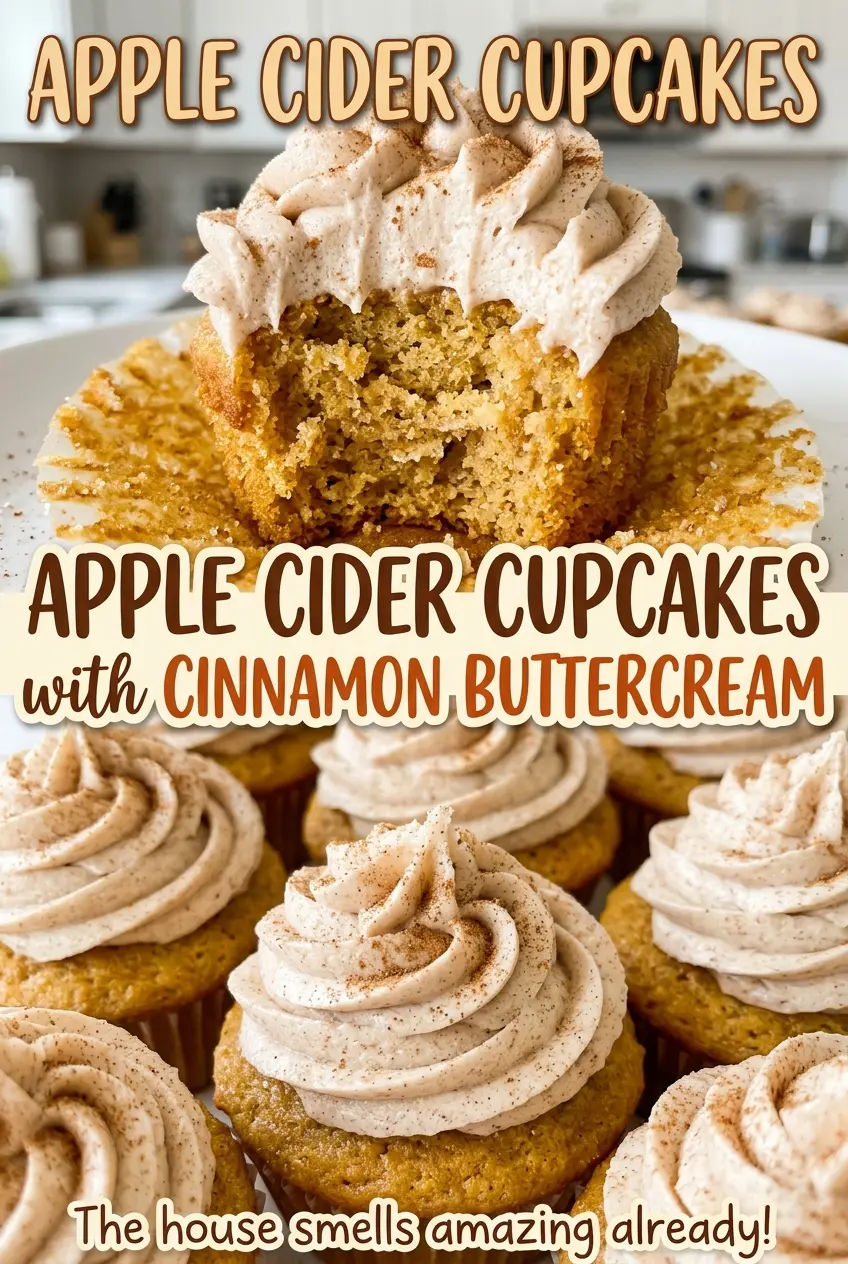
The cider gets quiet as it simmers, but the smell turns sharper and more apple-forward. That’s the point where I know it’s concentrating instead of just warming up. In these apple cider cupcakes with cinnamon buttercream, that concentrated cider gives the crumb a clear apple flavor without making the batter heavy.
I cream the butter and sugar until they look light and fluffy before adding the eggs, then mix in the flour only until it disappears. That gentle finish matters: once flour is in the bowl, extra beating can make the cupcakes tough instead of soft. Room-temperature eggs and sour cream blend in smoothly, too, so the batter stays even.
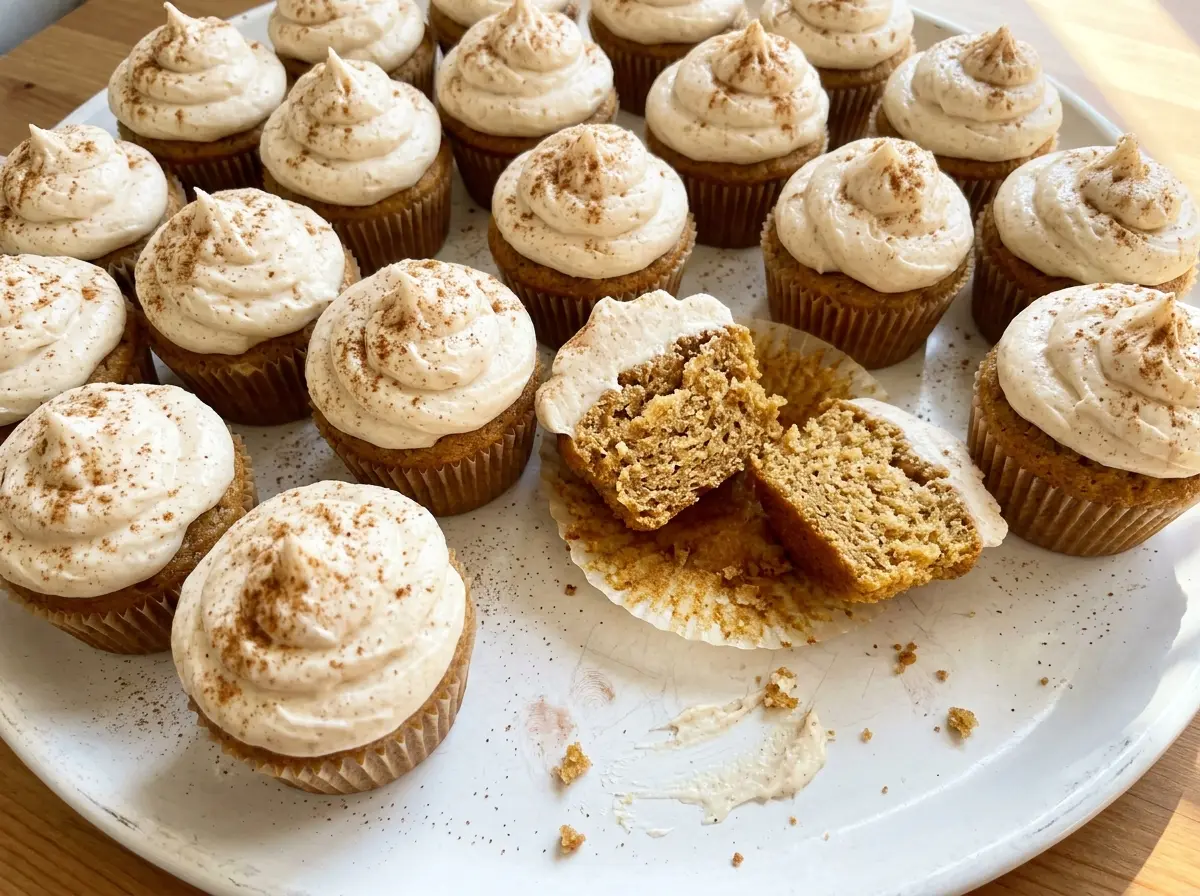
The cinnamon buttercream is soft enough to spread, with just enough spice to echo the cupcakes without covering up the cider. After the frosting goes on, each bite has a tender, lightly spiced crumb under a creamy cinnamon top.
Kitchen Note
Let the cider reduction cool all the way to room temperature before it goes into the batter. Warm cider can soften the creamed butter, so I set it aside while I get the pan and dry ingredients ready.
Save these apple cider cupcakes with cinnamon buttercream for a bake when you want a tender apple-spiced crumb and an easy-to-spread cinnamon frosting.
Why These Cupcakes Need Reduced Cider, Not a Bigger Pour
Apple cider has plenty of water along with its apple flavor. Pouring it straight into cupcake batter in a larger amount would change the balance of wet and dry ingredients, and the finished cakes could come out heavy or damp. Reducing the cider concentrates its taste while keeping the amount of liquid in the batter controlled.
The cider starts at 1 1/2 cups and simmers down to 1/2 cup. That concentrated liquid gives the cupcakes a more distinct apple note than a small splash of cider would, while the sour cream brings its own moisture and softness. It’s a useful distinction when you want the apple to come through without adding more liquid to the batter. Keep the reduction at the specified final volume; stopping early leaves extra water in the mix, and cooking it down too far takes away liquid the batter needs.
You don’t need to chase a dark color or a syrupy texture. The goal is simply to reduce the volume, then let it cool before mixing. The apple aroma will be more noticeable once the cider has simmered, even though the reduction itself is still pourable.
What the Cider, Sour Cream, and Butter Each Bring
- Apple cider — Fresh cider with a clean, apple-forward smell gives the reduction its best flavor. A basic grocery-store cider works well; there’s no need to seek out a specialty bottle. Apple juice can stand in, though its flavor is usually sweeter and less rounded.
- All-purpose flour and leaveners — All-purpose flour gives these cupcakes enough structure to hold the frosting without turning bready. Baking powder and baking soda each have a job here, so don’t swap one for the other. A standard store-brand flour is fine; freshness matters more for the leaveners.
- Butter and granulated sugar — Softened butter creams with the sugar to create the light base that helps the cupcakes bake tender. Unsalted butter lets the salt stay controlled in both parts of the recipe. A familiar, everyday butter is perfectly suitable.
- Eggs and sour cream — Room-temperature eggs blend into the creamed butter more evenly than cold eggs, and sour cream adds richness and a soft crumb. Plain full-fat yogurt is a workable sour cream replacement; it makes the crumb a little tangier and may feel slightly less rich.
- Cinnamon and nutmeg — These ground spices give the cake its warm, familiar cider-season character. Use spices that still smell fragrant when you open the jar; old, faint spices won’t bring as much aroma. Ground ginger can replace the nutmeg in the same measured amount for a sharper, warmer variation.
- Powdered sugar, vanilla, and milk — Powdered sugar makes a smooth frosting, while vanilla rounds out the cinnamon and milk loosens the mixture to a spreadable consistency. Powdered sugar is worth keeping fresh and dry so it doesn’t clump. The buttercream’s salt keeps the sweetness from tasting flat.
The Mixing Order That Keeps the Crumb Tender
Reduce the cider before mixing
Simmer the apple cider in a small saucepan over medium heat until it has reduced to 1/2 cup, about 10 to 15 minutes. Keep an eye on the volume rather than waiting for it to become thick or dark. Set the reduction aside until it reaches room temperature. If it’s still warm when added, it can soften the butter you’ve already creamed.
Cream the butter and sugar until light
Heat the oven to 350°F and line a 12-cup muffin pan with paper liners. Whisk the flour, baking powder, baking soda, cinnamon, nutmeg, and salt in a medium bowl. In a large bowl, beat the softened butter and granulated sugar for about 2 minutes, until the mixture looks light and fluffy. Beat in the eggs one at a time so each has a chance to blend into the butter mixture.
Finish the batter with a light hand
Beat in the sour cream and cooled cider reduction, then add the flour mixture in two additions. Mix just until the dry streaks disappear; stop before the batter turns elastic or looks overworked. Divide it evenly among the liners so the cupcakes bake at a similar pace. Bake for 18 to 22 minutes, until a toothpick inserted in the center comes out with a few moist crumbs.
Cool fully, then make the frosting
Leave the cupcakes in the pan for 5 minutes, then transfer them to a rack and let them cool completely. For the buttercream, beat the softened butter in a large bowl until smooth. Gradually beat in the powdered sugar, cinnamon, and salt, then beat in the vanilla and milk until fluffy and spreadable. Frost only after the cupcakes are cool, so the buttercream holds its shape instead of softening against warm cake.
Easy Changes That Still Keep the Cupcakes Balanced
Use full-fat plain yogurt for the sour cream
Replace the sour cream with the same amount of full-fat plain yogurt. It keeps the batter moist and tender, though the flavor is a little tangier and the crumb may be slightly less rich. Choose plain yogurt rather than a sweetened or flavored one.
Make a gluten-free batch
Replace the all-purpose flour with an equal volume of a one-to-one gluten-free baking flour blend intended for cakes or muffins. The cupcakes may have a slightly more delicate crumb, so let them cool fully before moving or frosting them. A blend formulated to replace wheat flour is a better choice here than a single-ingredient flour such as almond flour.
Trade the nutmeg for ginger
Use ground ginger in place of the nutmeg, keeping the same quantity. Ginger gives the spice blend a livelier, slightly sharper edge while cinnamon still anchors the flavor. This is an easy change when nutmeg isn’t in your spice cabinet.
Storage and Reheating
- Refrigerator: Keep frosted cupcakes in an airtight container for up to 3 days. The cake gradually dries a little, and the buttercream firms when cold.
- Freezer: Freeze completely cooled, unfrosted cupcakes in an airtight freezer-safe container for up to 2 months. Thaw them at room temperature before frosting.
- Reheating: These are best brought back to room temperature rather than warmed. Let refrigerated cupcakes sit out for about 30 minutes before serving; microwaving can soften or melt the buttercream.
Questions That Come Up Before the First Batch
Apple Cider Cupcakes with Cinnamon Buttercream
Ingredients
Equipment
Method
- Simmer the apple cider in a small saucepan over medium heat until reduced to 1/2 cup, about 10 to 15 minutes.
- Cool the cider reduction to room temperature.
- Heat the oven to 350°F.
- Line a 12-cup muffin pan with paper liners.
- Whisk the flour, baking powder, baking soda, cinnamon, nutmeg, and salt in a medium bowl.
- Beat the softened butter and granulated sugar in a large bowl until light and fluffy, about 2 minutes.
- Beat in the eggs one at a time.
- Beat in the sour cream and cooled cider reduction.
- Mix in the flour mixture in two additions just until combined.
- Divide the batter evenly among the liners.
- Bake for 18 to 22 minutes, until a toothpick inserted in the center comes out with a few moist crumbs.
- Cool the cupcakes in the pan for 5 minutes.
- Transfer the cupcakes to a rack and cool completely.
- Beat the softened butter in a large bowl until smooth.
- Gradually beat in the powdered sugar, cinnamon, and salt.
- Beat in the vanilla and milk until the buttercream is fluffy and spreadable.
- Frost the cooled cupcakes.