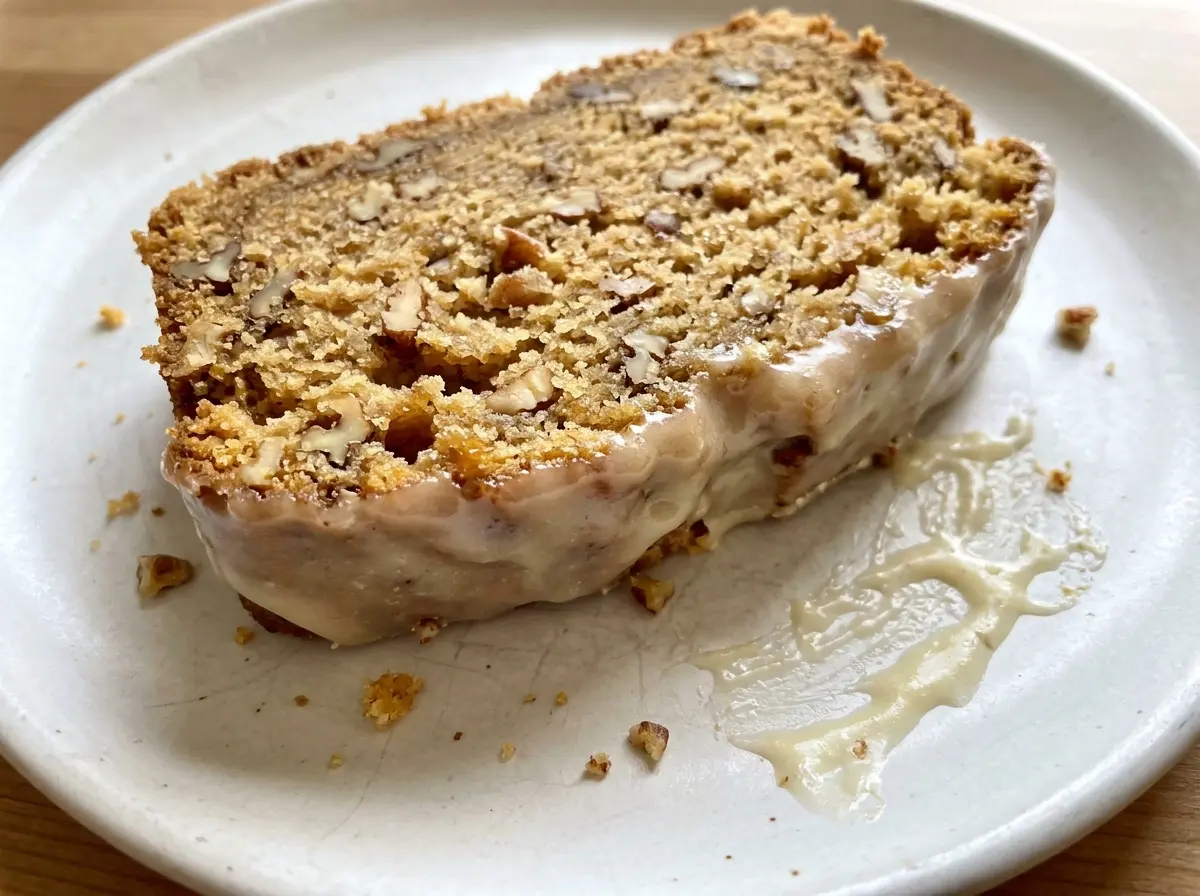
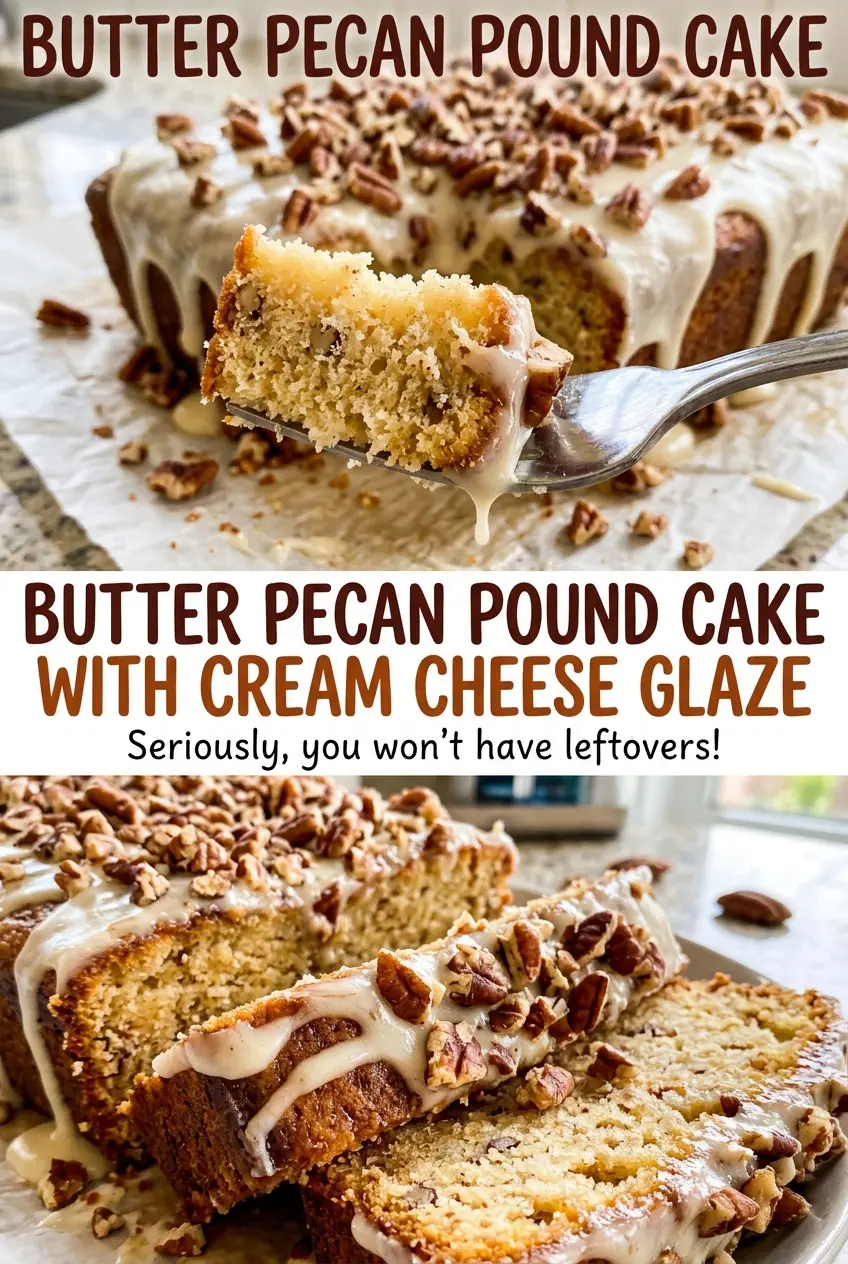
The pecans go from quiet to fragrant in a dry skillet in just a few minutes, and that toasted smell tells me they’re ready for the batter. I fold them into this butter pecan pound cake with cream cheese glaze, where they break up the rich crumb with a little crunch. A Bundt pan gives the cake its ridged shape, and the cream cheese drizzle settles into those curves instead of hiding them under a heavy layer of frosting.
I take my time beating softened butter and sugar until pale and fluffy; those 3 to 4 minutes build the base for a tender crumb. The eggs go in one at a time, then flour and sour cream alternate so the batter comes together without a long, rough mix. Once the toasted pecans are folded through, the thick batter is ready for the pan. After baking, the center stays moist while the outside turns golden, and a thin, tangy glaze finishes each slice. Let the cake cool completely before cutting so the slices hold their shape.
Kitchen Note
I bring the eggs and sour cream to room temperature before mixing. Cold ingredients can firm up the butter and make the batter look less cohesive, so give them time on the counter before you start.
Save this Butter Pecan Pound Cake with Cream Cheese Glaze for its toasted pecans, tender slices, and smooth cream cheese drizzle.
Why a Flour-Coated Bundt Pan Saves This Cake’s Edges
Bundt pans have more places for a cake to cling than a straight-sided pan does: the ridges, the center tube, and the curves all need a good coating. If even one section is missed, a piece of the cake can stay behind when you turn the pan over. I use nonstick baking spray with flour and coat the pan thoroughly, including around the center tube and down into the ridges. That flour coating gives the cake a better chance of releasing cleanly than a quick spray of plain oil.
The pan size matters, too. This batter is meant for a 10- to 12-cup Bundt pan, which gives it room to rise and lets the heat reach the center. A pan outside that range changes how much batter sits in it and how quickly the middle bakes. Once the cake is in the oven, resist the urge to judge it by the color alone; the skewer test is what tells you whether the center is ready. A little patience at the pan-prep stage pays off when the cake comes out with its ridges intact.
What Gives This Pound Cake Its Buttery Crumb and Toasted-Pecan Flavor
- All-purpose flour and baking powder — All-purpose flour gives the cake enough structure to hold its shape in the Bundt pan. The baking powder provides lift; self-rising flour isn’t a direct swap because this batter already includes baking powder and salt.
- Unsalted butter — Butter brings the rich flavor and helps create the cake’s fine crumb when beaten with the sugar. A standard grocery-store butter works well here; unsalted lets the measured salt stay in control.
- Granulated sugar — The sugar sweetens the cake and helps the butter become pale and fluffy during mixing. Keep it granulated for the creaming step rather than switching to a coarser or liquid sweetener.
- Eggs and sour cream — Eggs help bind the batter, while sour cream adds moisture and a gentle tang that balances the butter. The sour cream should be plain; flavored yogurt would change the sweetness and taste.
- Pecans — Fresh pecans have a sweet, buttery taste that stands out after toasting. Chopped pieces distribute through the cake more evenly than large halves, so each slice gets some nut without a heavy pocket.
- Vanilla extract — Vanilla rounds out the buttery batter without competing with the pecans. A basic vanilla extract is enough; there’s no need to use an expensive bottle for this cake.
- Cream cheese, powdered sugar, and milk — Cream cheese gives the drizzle a little tang, and powdered sugar makes it smooth rather than grainy. Use softened cream cheese so it blends easily; the milk loosens the mixture until it pours over the cooled cake.
How to Build the Batter and Finish the Bundt Cake
Coat the Bundt Pan Before Mixing
Heat the oven to 325°F and thoroughly coat a 10- to 12-cup Bundt pan with nonstick baking spray with flour. Pay attention to the center tube and the narrow ridges, not just the broad sides. Set the prepared pan aside while you work on the batter. A complete coating now helps protect the cake’s detailed edges later.
Toast the Pecans Until Fragrant
Put the chopped pecans in a dry skillet over medium heat and stir often for 4 to 6 minutes. They’re ready when the aroma turns warm and toasted; don’t wait for them to darken deeply, because nuts can go from fragrant to scorched quickly. Transfer them to a plate as soon as they’re toasted. Let them cool before they go into the batter.
Cream the Butter, Then Add the Dry Ingredients in Turns
Whisk the flour, baking powder, and salt together in a medium bowl. In a large bowl, beat the softened butter and granulated sugar on medium speed for 3 to 4 minutes, until pale and fluffy. Add the eggs one at a time, mixing well after each, then mix in the vanilla. Add the flour mixture in three additions, alternating with the sour cream in two additions; begin and end with flour, and mix on low just until combined. Fold in the cooled pecans rather than beating them through.
Bake Until the Center Leaves a Few Moist Crumbs
Scrape the batter into the prepared pan and smooth the top. Bake at 325°F for 75 to 90 minutes, checking the center with a skewer near the end of that range. The right cue is a skewer with a few moist crumbs, not wet batter and not a completely dry center. If it still carries streaks of batter, give the cake more time and check again.
Cool the Cake Before Adding the Cream Cheese Glaze
Let the cake cool in its pan for 15 minutes, then invert it onto a wire rack and cool completely. For the glaze, beat the softened cream cheese in a medium bowl until smooth. Gradually beat in the powdered sugar and milk until the glaze is smooth and pourable. Drizzle it over the cooled cake and let it set before serving; glazing a warm cake makes the drizzle run off instead of settling over the ridges.
Two Easy Ways to Change the Pecans or Flour
Use Walnuts for a More Earthy, Toasted Bite
Replace the chopped pecans with the same amount of chopped walnuts and toast them in the dry skillet until fragrant. Walnuts bring a slightly earthier, less buttery flavor, while keeping the nutty crunch in each slice.
Make It Gluten-Free with a Cup-for-Cup Baking Blend
Replace the all-purpose flour with an equal amount of a gluten-free, cup-for-cup flour blend made for baking. Choose one without added leavening, since this batter already has baking powder. The finished crumb may be a little more delicate, so let the cake cool completely before slicing.
Storage and Reheating
- Refrigerator: Keep the glazed cake covered and chilled for up to 4 days. The crumb firms when cold and softens as it loses its chill.
- Freezer: Freeze the unglazed cake, tightly wrapped, for up to 2 months. Thaw it in the refrigerator, then make and add the glaze.
- Reheating: This cake doesn’t need reheating. Let a slice sit out briefly before serving, and don’t leave the cream-cheese-glazed cake at room temperature for more than 2 hours total.
Questions I Get Asked About This Butter Pecan Pound Cake
Butter Pecan Pound Cake with Cream Cheese Glaze
Ingredients
Equipment
Method
- Preheat the oven to 325°F.
- Thoroughly coat a 10- to 12-cup Bundt pan with nonstick baking spray with flour.
- Toast the pecans in a dry skillet over medium heat for 4 to 6 minutes, stirring often, until fragrant.
- Transfer the pecans to a plate to cool.
- Whisk the flour, baking powder, and salt together in a medium bowl.
- Beat the butter and granulated sugar in a large bowl with an electric mixer on medium speed for 3 to 4 minutes, until pale and fluffy.
- Beat in the eggs one at a time, mixing well after each addition.
- Mix in the vanilla.
- Add the flour mixture in three additions, alternating with the sour cream in two additions, beginning and ending with the flour; mix on low just until combined.
- Fold in the cooled pecans.
- Scrape the batter into the prepared pan and smooth the top.
- Bake for 75 to 90 minutes, until a skewer inserted in the center comes out with a few moist crumbs.
- Cool the cake in the pan for 15 minutes.
- Invert the cake onto a wire rack.
- Cool the cake completely.
- Beat the cream cheese in a medium bowl until smooth.
- Gradually beat in the powdered sugar and milk until the glaze is smooth and pourable.
- Drizzle the glaze over the cooled cake.
- Let the glaze set before serving.