When a breadcrumb coating sits flat against a hot baking sheet, the underside can soften before the top has a chance to brown. Chicken spiedini needs air moving around each strip, not a damp spot where the coating meets the pan. I use a lightly greased wire rack set over a rimmed baking sheet, and the crust comes out golden all around.
Cutting the chicken into strips of a similar size helps them cook at the same pace. The Italian-style breadcrumbs and Parmesan make a savory coating, while the lemon garlic butter goes on after baking, when the chicken is hot and ready to catch every drop. It’s a straightforward way to get crisp-coated chicken with a bright, buttery finish.
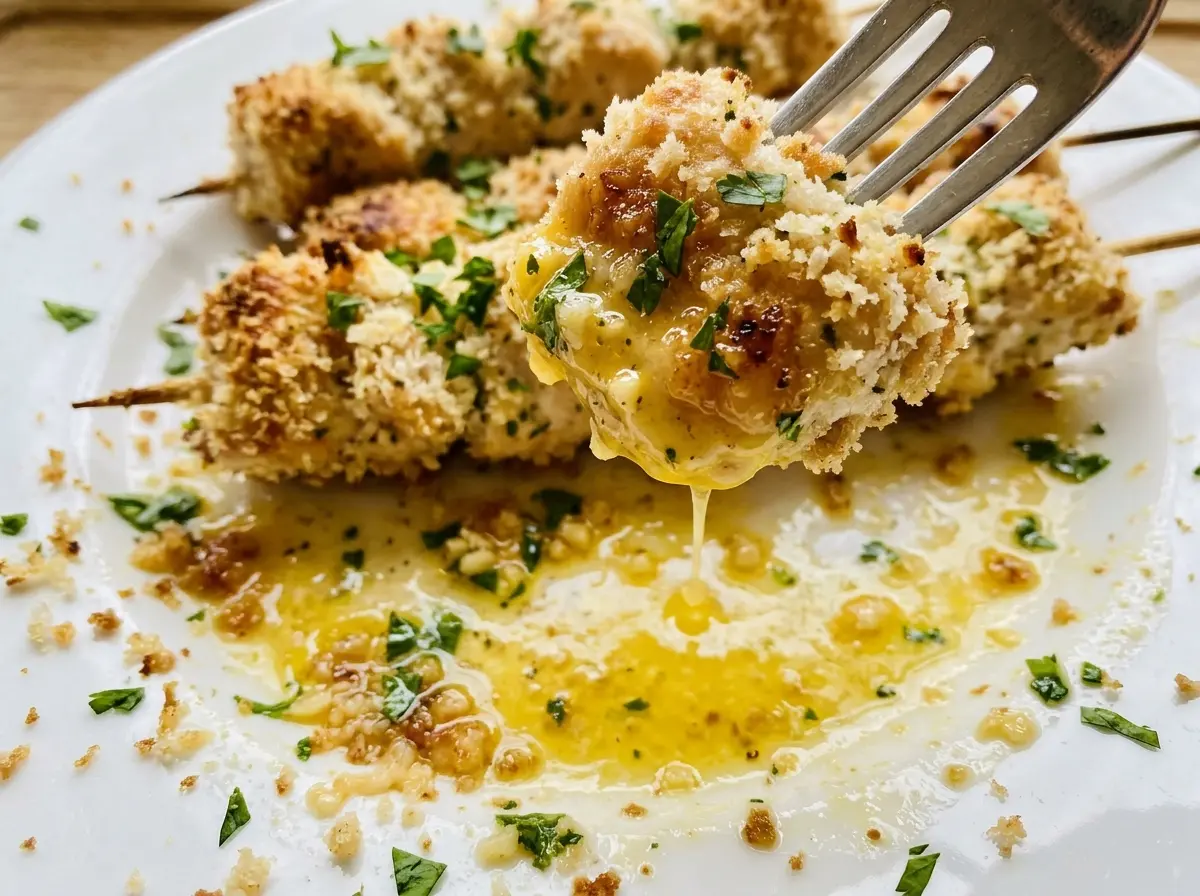
The garlic deserves a little attention: it should smell fragrant, not toasted or browned. I keep the saucepan over low heat and take it off the burner before stirring in the lemon juice and parsley. The finished spiedini are crisp at the edges, tender in the middle, and glossy with lemon garlic butter.
Kitchen Note
Garlic can go from fragrant to browned quickly, so I keep the heat low and stay close to the saucepan. Take it off the heat while the garlic is still pale; it will keep its mellow flavor in the butter.
Save this chicken spiedini for a cozy dinner with crisp Parmesan-coated chicken and a bright lemon garlic butter finish.
Why the Rack Keeps the Parmesan Crust From Going Soft
A coated chicken strip needs contact with hot air on more than one side. When it sits directly on a baking sheet, the underside is pressed against the pan, where moisture can collect and leave that patch softer than the top. A wire rack lifts the spiedini above the rimmed sheet so the coating has room to brown around the chicken.
Set the rack inside the rimmed baking sheet, rather than balancing it on a flat tray. The sheet catches the oil and drips, while the rack keeps the chicken elevated. Lightly greasing the rack helps the coating release when you turn the skewers; it also avoids pulling crisp crumbs off the chicken during that halfway turn.
The rack doesn’t replace a good coating. Pressing the chicken into the breadcrumb and Parmesan mixture on every side gives the hot air something even to crisp. Together, the raised surface and firmly coated strips make a more reliable crust than piling on extra crumbs, which can fall away instead of sticking.
What the Breadcrumbs, Parmesan, and Butter Each Bring

- Chicken breasts — Boneless, skinless breasts are easy to cut into long strips that thread accordion-style onto skewers. Choose pieces that are similar in thickness so the strips cook evenly; there’s no need to pay extra for a specialty cut.
- Olive oil and Italian seasoning — The oil helps the salt, pepper, and dried herbs cling to the chicken before it’s coated. Italian seasoning gives the strips their familiar herb flavor in one ingredient, so there’s no need to add separate dried herbs.
- Italian-style breadcrumbs — These provide a fine, seasoned coating that adheres to the oiled chicken. If you need a gluten-free version, use Italian-seasoned gluten-free breadcrumbs in the same quantity; the crumb may be a little coarser, so press it on firmly.
- Finely grated Parmesan — Fine shreds mix evenly through the breadcrumbs and help create a savory, golden crust. Grating a wedge finely gives a light, even texture; pre-grated Parmesan works when convenience matters, though it can coat less evenly.
- Unsalted butter and garlic — Unsalted butter lets the seasoning on the chicken stay in balance, and finely minced garlic spreads its flavor through the sauce. Fresh garlic gives the cleanest flavor here; larger pieces cook less evenly in the short time the butter is on the stove.
- Fresh lemon juice and parsley — Lemon juice cuts through the butter’s richness, while fresh parsley adds a bright herbal finish. Freshly squeezed juice tastes livelier than bottled, and chopped fresh parsley gives the sauce a fresher flavor than dried herbs would.
From Even Strips to a Golden, Butter-Finished Crust
Cut and season the chicken evenly
Heat the oven to 425°F and set a lightly greased wire rack inside a rimmed baking sheet. Cut the chicken breasts into strips about 1 inch wide and 3 to 4 inches long. Toss them with olive oil, kosher salt, black pepper, and Italian seasoning until each strip has a light sheen; unevenly sized pieces are more likely to finish at different times.
Press on the Parmesan breadcrumb coating
Mix the Italian-style breadcrumbs and finely grated Parmesan in a shallow dish. Work with a few strips at a time, pressing them into the mixture so the coating covers all sides rather than just the broad faces. A bare patch will stay pale, while loose crumbs are more likely to fall away when you lift the chicken.
Thread and bake until golden
Thread the strips accordion-style onto 8 metal skewers, then arrange the skewers on the prepared rack. Bake for 15 to 20 minutes, turning them once halfway through so the coating browns evenly. Look for a golden crust and check the thickest chicken strip; it should reach 165°F before you take the skewers out.
Make the butter sauce and finish
While the chicken bakes, melt the unsalted butter in a small saucepan over low heat. Add the finely minced garlic and cook for 30 to 60 seconds, just until fragrant and not browned. Remove the pan from the heat, stir in the fresh lemon juice and chopped parsley, and spoon the lemon garlic butter over the hot chicken.
Two Practical Ways to Adapt Chicken Spiedini
Make it gluten-free with seasoned crumbs
Replace the Italian-style breadcrumbs with Italian-seasoned gluten-free breadcrumbs, using the same quantity, and keep the Parmesan in the coating. The flavor stays close to the original; depending on the brand, the crust may be slightly coarser or more delicate, so press it firmly onto each strip.
Bake the strips without skewers
For a no-skewer format, arrange the coated strips in a single layer directly on the greased rack instead of threading them accordion-style. Turn each strip halfway through baking and use the same golden coating and thickest-piece doneness cues. You’ll get the same flavors in easy-to-serve individual pieces.
Storage and Reheating
- Refrigerator: Refrigerate leftovers promptly in a covered container and use within 3 to 4 days. The coating softens as it sits.
- Freezer: Freeze the cooled chicken in an airtight freezer-safe container for up to 3 months for best quality. The lemon garlic butter is best made fresh; thaw the chicken in the refrigerator before reheating.
- Reheating: Reheat on a rack in a 350°F oven until the thickest piece reaches 165°F. The oven helps bring back some crispness; the microwave is quicker but leaves the coating soft.
Questions That Come Up While Making Chicken Spiedini
Chicken Spiedini With Lemon Garlic Butter – Cozy Dinner Recipe
Ingredients
Equipment
Method
- Heat the oven to 425°F.
- Set a wire rack in a rimmed baking sheet and lightly grease the rack.
- Cut the chicken into strips about 1 inch wide and 3 to 4 inches long, then toss with the olive oil, salt, pepper, and Italian seasoning.
- Mix the breadcrumbs and Parmesan in a shallow dish, then press the chicken strips into the mixture until coated on all sides.
- Thread the strips accordion-style onto 8 metal skewers and arrange them on the rack.
- Bake for 15 to 20 minutes, turning the skewers once halfway through, until the coating is golden and the thickest chicken strip reaches 165°F.
- Melt the butter in a small saucepan over low heat, add the garlic, and cook for 30 to 60 seconds until fragrant but not browned.
- Remove the saucepan from the heat and stir in the lemon juice and parsley, then spoon the butter over the hot chicken spiedini.