When the foil comes off, the ham is pale and the roasting pan is still steamy. That’s exactly what I want to see before the honey glaze goes on. This Christmas Honey Glazed Ham starts covered, so the meat warms gently before it gets its glossy finish.
I use a fully cooked, bone-in half ham that hasn’t been spiral-sliced. It holds together well for roasting, and the glaze can cling to the outside instead of running between slices. The honey and brown sugar bring sweetness, while Dijon and a little ground clove keep the glaze from tasting one-note. Once it’s carved, you get tender slices with a shiny, warmly spiced coating.
Kitchen Note
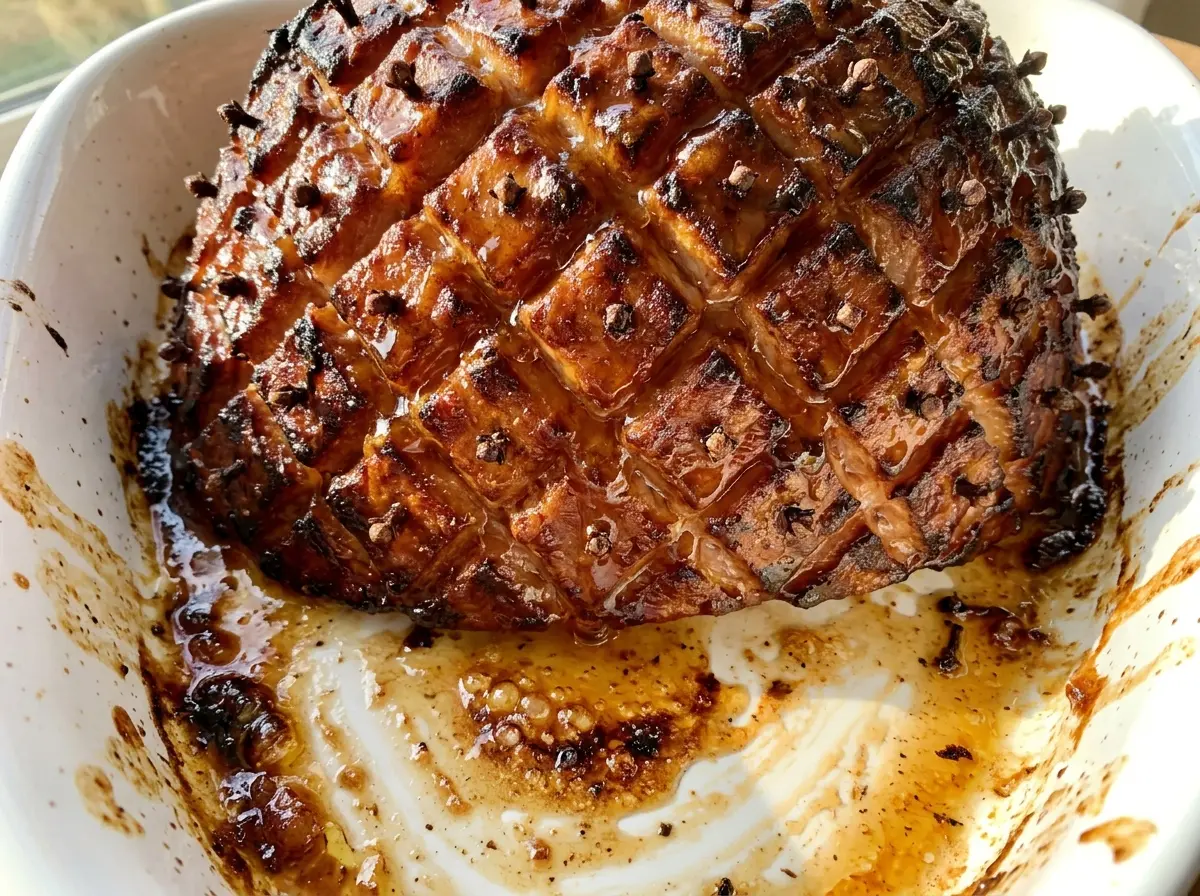
When you score the fat, keep the knife out of the meat. Shallow diamonds give the glaze plenty of ridges to catch on without opening deep cuts that can dry at the edges.
Save this Christmas Honey Glazed Ham for a centerpiece with a shiny honey-brown finish and tender slices from an unsliced bone-in ham.
Why the Honey Glaze Goes on After the Ham Is Already Hot
Honey and brown sugar give this glaze its shine, but they also need less time in the oven than the ham does. If the sugary coating went on at the start, it would spend the entire roast heating and could turn too dark before the center of a large ham warmed through. I keep the ham covered for that first stretch, then uncover it and add the glaze near the end.
That timing also gives you control over the finish. The first brushing lays down a thin coat; two more additions, about 10 minutes apart, build the glossy surface without leaving one heavy layer to slide off. Keep an eye on both cues: the outside should look lacquered, and the center should reach 140°F. The temperature tells you when the fully cooked ham is heated through; the glaze tells you when the surface is ready for the carving board.
What the Ham, Honey, and Dijon Each Bring to the Glaze

- Fully cooked, bone-in half ham — Choose an unsliced ham for this method; it gives you one intact surface to score and glaze. Check the label for “fully cooked,” since this roast is being reheated rather than cooked from raw. A boneless ham has a different shape and won’t follow the same timing as reliably.
- Honey and light brown sugar — Honey gives the glaze a smooth, floral sweetness, while brown sugar adds a deeper molasses note and helps it turn glossy. Ordinary honey works well here; there’s no need for a specialty variety. Dark brown sugar can replace light brown sugar measure for measure, though its stronger molasses flavor will come through more.
- Unsalted butter — Butter rounds out the sweetness and helps the glaze brush on smoothly. A dairy-free version works with stick-style plant-based butter in the same amount; avoid a soft tub spread, which can behave differently as it melts.
- Dijon mustard — Dijon brings a clean tang that cuts through the honey and sugar. Whole-grain mustard can stand in at the same amount if you like a more textured glaze; its mustard seeds will remain visible.
- Ground cloves — Cloves give the coating its warm, holiday-like aroma, and a small amount goes a long way. If you don’t have them, leave them out rather than adding extra spice; the glaze will still work, just with a simpler flavor.
- Water — The water sits in the roasting pan beneath the ham, not in the glaze. Keep it in the pan for the covered roasting stage; it helps create a moist environment under the foil.
How to Warm the Ham Before Building Its Glossy Coating
Trim and Set Up the Ham
Heat the oven to 325°F and set a rack inside a large roasting pan. Remove the rind, leaving about 1/4 inch of fat, then score the surface in a 1-inch diamond pattern. Set the ham cut side down on the rack, pour the water into the pan, and cover the pan tightly with foil.
Roast Until the Center Is Warmed Through
Roast the covered ham until its center reaches 110°F to 115°F, which takes about 1 1/2 to 2 1/2 hours. The wide time range reflects the ham’s size and shape, so use an instant-read thermometer instead of relying on the clock alone. Keep the foil sealed during this stage so the ham warms in the covered pan rather than drying at the surface.
Stir Together the Honey-Mustard Glaze
While the ham roasts, melt the butter in a small saucepan over medium-low heat. Stir in the honey, brown sugar, Dijon mustard, and ground cloves, then cook for 3 to 5 minutes, stirring until the butter melts and the sugar dissolves. The finished glaze should look smooth, with no undissolved sugar at the bottom of the pan.
Brush in Three Coats and Rest Before Carving
Take off the foil and brush the ham with about one-third of the glaze. Roast uncovered, brushing on the remaining glaze in two more additions about 10 minutes apart, until the surface is glossy and the center reaches 140°F; this takes about 25 to 35 minutes. Transfer the ham to a carving board, tent it loosely with foil, and leave it to rest for 15 minutes before carving.
Three Ways to Change the Glaze Without Changing the Roast
Make the Glaze Dairy-Free
Replace the unsalted butter with the same amount of stick-style dairy-free butter. It keeps the glaze’s buttery texture while making the ham suitable for a dairy-free table; the finished coating may taste a little less rich depending on the brand.
Add a Fresh Orange Note
Stir the finely grated zest of one orange into the glaze after the butter and sugar have melted. The citrus lifts the honey’s sweetness and adds a fresh aroma, while the glaze still brushes onto the ham the same way.
Give It a Peppery Edge
Stir 1/8 teaspoon of freshly ground black pepper into the glaze with the other seasonings. It adds a gentle savory bite that balances the sweet coating without taking over the clove and Dijon.
Storage and Reheating
- Refrigerator: Refrigerate leftover ham within 2 hours, packed in an airtight container, and use it within 3 to 4 days. The glaze will lose some of its fresh shine as it chills.
- Freezer: Freeze carved portions in airtight freezer-safe packaging for 1 to 2 months for best quality. Thaw them in the refrigerator before reheating.
- Reheating: Warm slices covered in a baking dish with a splash of water until they reach 165°F. Keep the dish covered; reheating uncovered can dry the edges before the centers are hot.
Questions That Come Up When Roasting a Bone-In Ham
Christmas Honey Glazed Ham
Ingredients
Equipment
Method
- Heat the oven to 325°F.
- Set a rack in a large roasting pan.
- Remove any rind from the ham, leaving about 1/4 inch of fat.
- Score the fat in a 1-inch diamond pattern without cutting into the meat.
- Set the ham cut side down on the rack.
- Add the water to the pan and cover the pan tightly with foil.
- Roast until the center of the ham reaches 110°F to 115°F, about 1 1/2 to 2 1/2 hours.
- While the ham roasts, melt the butter in a small saucepan over medium-low heat.
- Stir in the honey, brown sugar, Dijon mustard, and ground cloves.
- Cook, stirring, until the butter melts and the sugar dissolves, 3 to 5 minutes.
- Remove the foil and brush the ham with about one-third of the glaze.
- Roast uncovered, brushing with the remaining glaze in two more additions about 10 minutes apart, until glossy and the center reaches 140°F, about 25 to 35 minutes.
- Transfer the ham to a carving board, tent loosely with foil, and rest for 15 minutes before carving.