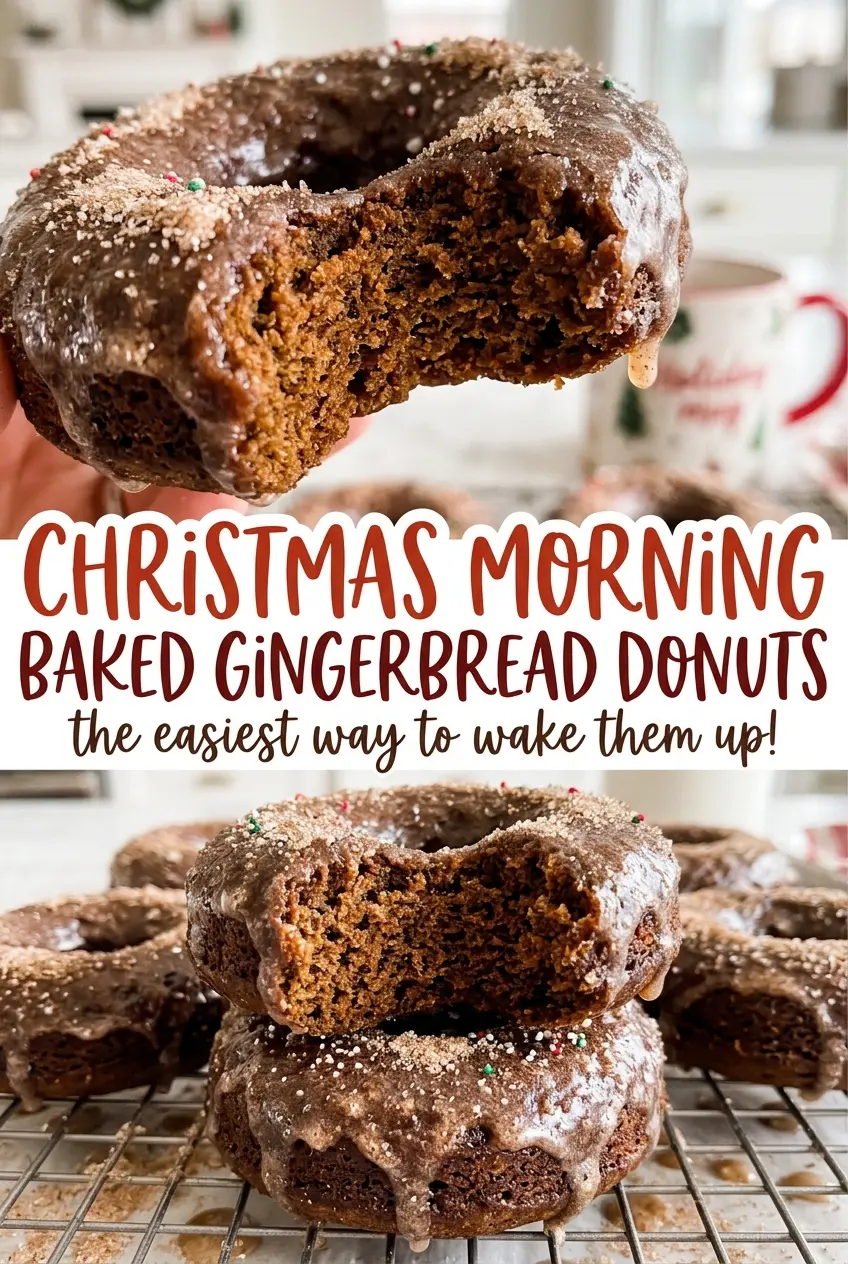
The batter for these donuts should be thick enough to hold its shape as you pipe it, but still soft enough to settle into the pan. That small visual cue saves a lot of guesswork when you’re making Christmas Morning Baked Gingerbread Donuts for the first time.
I whisk the dry ingredients well before adding the wet mixture, so the spices are spread through every bite instead of clumping in one spot. Then I stop stirring as soon as the flour disappears. You’ll get tender donuts with a clear gingerbread flavor, not a tight, bready crumb, and the vanilla glaze gives each one a thin, sweet finish.
Kitchen Note
Wait until the donuts are completely cool before dipping them. If they’re even a little warm, the glaze turns runny and slides off instead of setting in a smooth coat.
Save these Christmas Morning Baked Gingerbread Donuts for a soft, warmly spiced breakfast treat with a simple vanilla glaze.
Why gingerbread donut batter should stop when the flour disappears
Baked donuts aren’t yeast-raised, so their light texture depends on the leaveners and a gentle hand—not a long mixing session. Once the flour is wet, stirring keeps developing gluten. A few extra turns can make the crumb firm and chewy, which is especially noticeable in a small donut that doesn’t have much room to hide a tough texture.
Mix the dry ingredients thoroughly first, then add the wet ingredients and stir only until no dry flour remains. The batter doesn’t need to look perfectly smooth; a few small lumps are fine. If you keep working it to chase those lumps away, you’re more likely to lose the tender bite you want. A spoon or piping bag also lets you portion the batter without extra mixing, so the donuts bake evenly and keep their soft, cake-like texture.
Molasses, buttermilk, and the spices that make these taste like gingerbread

- Unsulphured molasses — This brings the deep, slightly bittersweet gingerbread character and adds moisture to the crumb. Use unsulphured molasses rather than blackstrap, which is much more bitter and can overwhelm the other spices. A freshly opened bottle isn’t necessary, but molasses that pours easily is simpler to whisk into the wet ingredients.
- Buttermilk — Its tang balances the sweetness, and its acidity works with the baking soda. If you don’t have buttermilk, stir a little lemon juice or white vinegar into regular milk and let it stand for five minutes before using it. The flavor is a touch less tangy, but it’s a practical stand-in.
- Ground ginger and the supporting spices — Ginger gives these their defining warmth, while cinnamon, nutmeg, and cloves round it out. Ground spices lose their punch as they sit in the cupboard, so use jars that still smell fragrant when you open them. There isn’t a perfect one-for-one replacement for the ground ginger here; fresh ginger changes the moisture and texture of the batter.
- All-purpose flour — It gives the donuts enough structure to rise while staying tender. For a gluten-free version, use a cup-for-cup gluten-free baking blend that includes xanthan gum; the crumb may be a little more delicate than the all-purpose flour version. Measure the flour without packing it down so the batter doesn’t turn heavy.
- Light brown sugar and butter — The brown sugar adds moisture and a mild caramel note, while melted butter gives the crumb a richer taste. Dark brown sugar works in place of light brown sugar if you want a deeper molasses note. Neutral oil can replace the melted butter in the same measure, though you’ll give up some buttery flavor.
- Powdered sugar and vanilla — Powdered sugar dissolves into a smooth glaze without the graininess granulated sugar would leave. Vanilla softens the sharp sweetness. If the glaze seems too thick for dipping, add milk a little at a time; if it’s too thin, whisk in more powdered sugar until it clings to the donut.
From thick batter to a glaze that actually stays put
Coat the pans and distribute the spices
Heat the oven to 350°F and coat the two standard six-cavity donut pans with nonstick cooking spray. Whisk the flour, brown sugar, baking powder, baking soda, spices, and salt in a large bowl until the mixture looks evenly colored. Break up any brown-sugar clumps with the whisk. Thoroughly mixed dry ingredients help prevent a pocket of baking soda or spice from landing in a single donut.
Mix gently and fill each cavity evenly
In a medium bowl, whisk the egg, buttermilk, molasses, and melted butter until combined. Pour that mixture into the dry ingredients and stir just until you can’t see dry flour; don’t try to beat the batter smooth. Pipe or spoon it into the prepared pans, filling each cavity about two-thirds full. Overfilling leaves less room for the donuts to rise into their shape, so keep the batter below the rim.
Bake until springy, then cool on a rack
Bake the donuts for 10 to 12 minutes. They’re ready when they spring back after a light press and a toothpick inserted into one comes out clean. If the center still feels wet or the toothpick has batter on it, give them another minute and check again. Let them rest in the pans for five minutes, then turn them out onto a wire rack to cool completely.
Whisk and dip the vanilla glaze
Whisk the powdered sugar, milk, vanilla, and pinch of salt in a small bowl until smooth. The glaze should be loose enough to coat the tops when dipped, but thick enough to leave a visible layer. Dip each cooled donut and return it to the wire rack so the excess can drip away. Let the coating set before stacking or storing the donuts.
Three small changes that reshape these gingerbread donuts
Make them gluten-free
Replace the all-purpose flour with a cup-for-cup gluten-free baking blend that contains xanthan gum. The spices and molasses still come through, though the donuts may be a little more fragile when you turn them out, so handle them gently after their short rest in the pan.
Turn up the ginger
Add an extra half teaspoon of ground ginger to the dry ingredients for a sharper ginger note. The donuts keep the same soft texture, but the spice reads more clearly against the brown sugar and glaze.
Use dark brown sugar for deeper flavor
Swap the light brown sugar for dark brown sugar in the same measure. Its stronger molasses flavor makes the donuts taste darker and a little less delicate, while keeping the gingerbread character front and center.
Storage and Reheating
- Room temperature: Keep glazed donuts in an airtight container for up to two days. The glaze may soften a little, and the crumb gradually loses moisture.
- Freezer: Freeze the cooled, unglazed donuts in an airtight container for up to two months. Thaw them at room temperature, then glaze once they’re no longer cold.
- Reheating: Warm an unglazed donut in the microwave in five-second bursts until just warm, then dip it in the glaze. Don’t microwave glazed donuts; the coating can melt and turn sticky.
Questions that come up while baking gingerbread donuts
Christmas Morning Baked Gingerbread Donuts
Ingredients
Equipment
Method
- Heat the oven to 350°F and coat two 6-cavity standard donut pans with nonstick cooking spray.
- Whisk the flour, brown sugar, baking powder, baking soda, ginger, cinnamon, nutmeg, cloves, and salt in a large bowl.
- Whisk the egg, buttermilk, molasses, and melted butter in a medium bowl until combined.
- Pour the wet ingredients into the dry ingredients and stir just until no dry flour remains, then pipe or spoon the batter into the prepared pans, filling each cavity about two-thirds full.
- Bake for 10 to 12 minutes, until the donuts spring back when lightly pressed and a toothpick inserted in one comes out clean.
- Cool the donuts in the pans for 5 minutes, then turn them out onto a wire rack and cool completely.
- Whisk the powdered sugar, milk, vanilla, and salt in a small bowl until smooth.
- Dip the cooled donuts into the glaze and return them to the wire rack until the glaze sets.