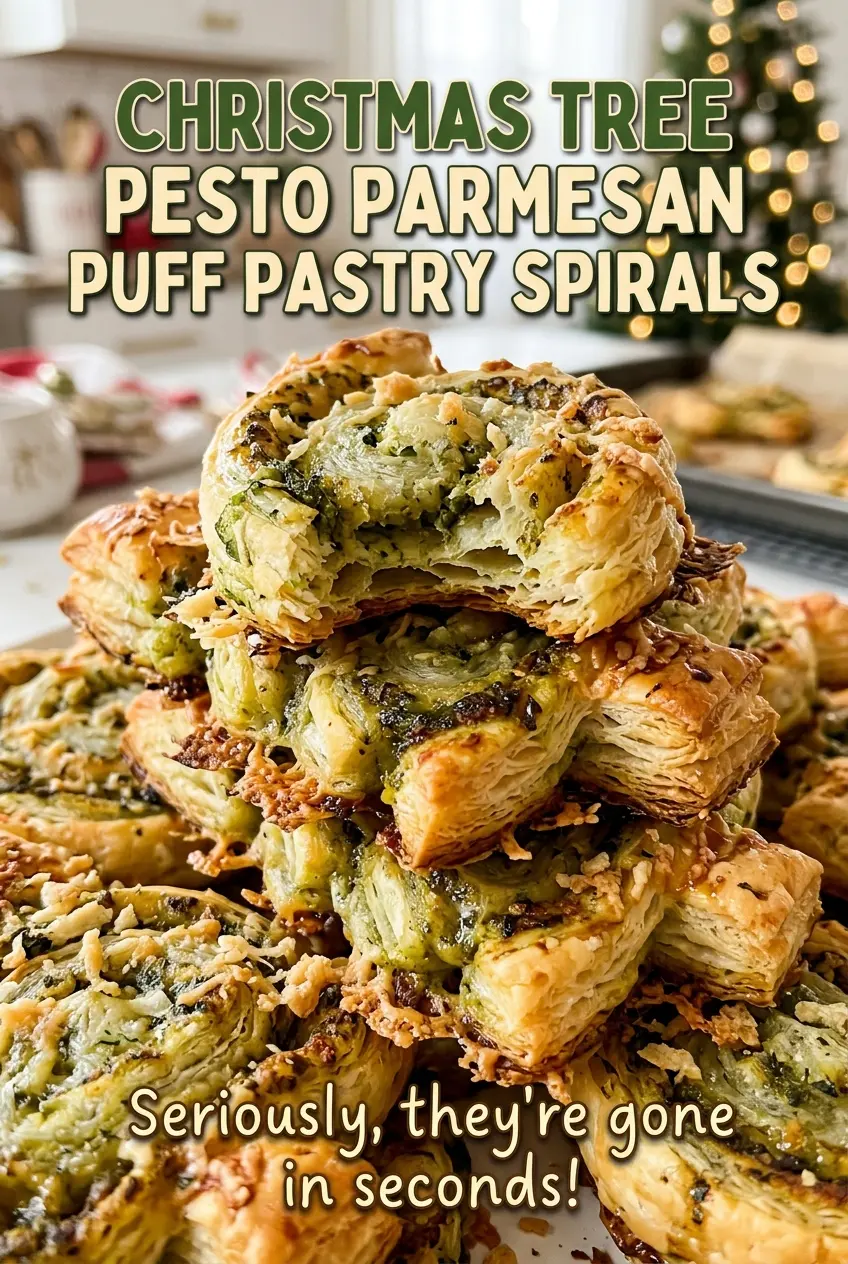
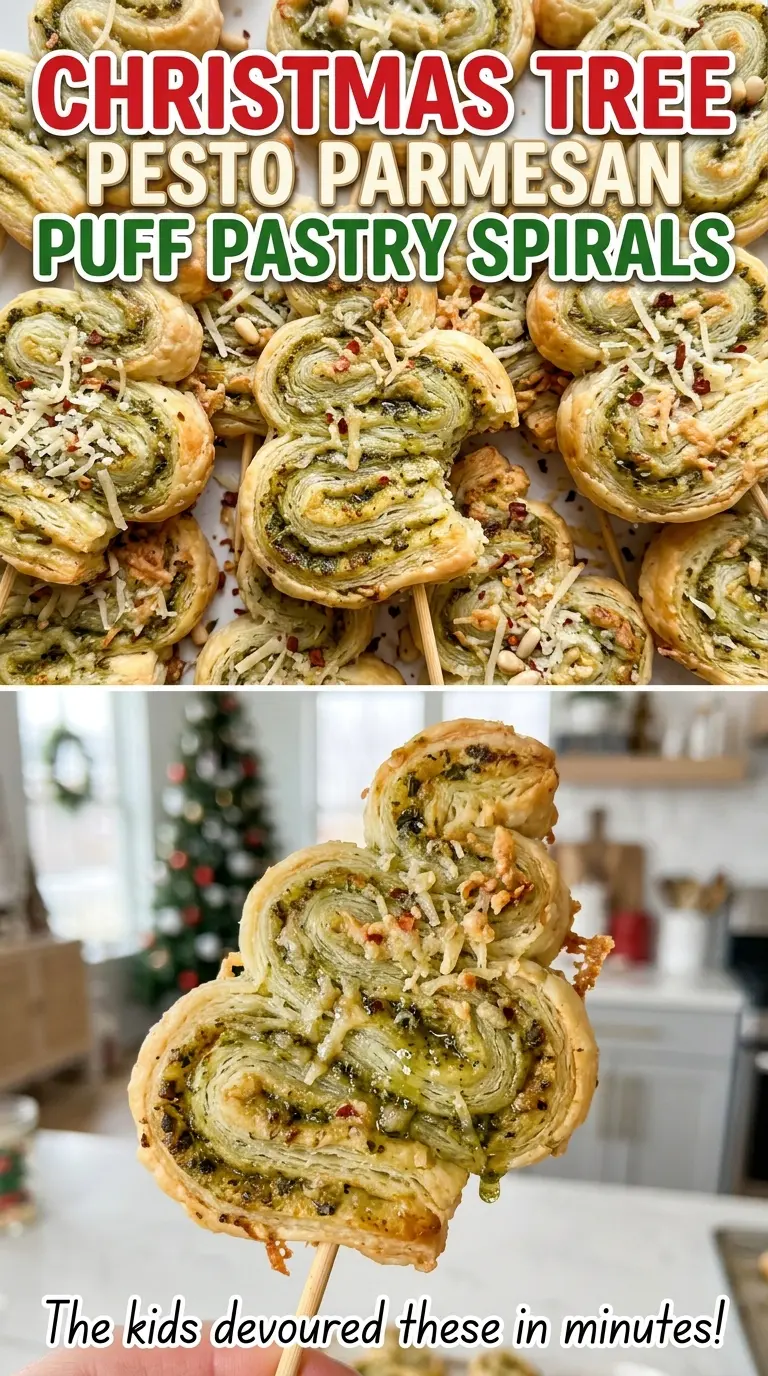
The pastry looks like a flat little tree before it goes in the oven; as it bakes, the cut branches lift and turn into crisp, golden twists. That transformation is what makes these Christmas Tree Pesto Parmesan Puff Pastry Spirals such a fun centerpiece without complicated pastry work. You get the flaky layers of puff pastry with pesto and Parmesan tucked between them, and the branches pull apart easily for serving.
Two sheets make the difference here. The filling is sandwiched between them, so you can cut and twist the branches without exposing all the pesto to the pan. Keep the pastry pliable but cold while you shape it. Warm pastry gets floppy and is harder to cut cleanly, while cold pastry holds its edges as you work.
Once the tree is deeply golden, the twists are crisp at the edges and tender where the layers meet. It’s a festive savory bake that looks special on the table and is made from a short list of familiar ingredients.
Kitchen Note
Give the baked tree 5 minutes on the pan before serving. The pastry is fragile straight from the oven, and that short rest lets the twists settle so they’re easier to lift and pull apart.
Save these Christmas Tree Pesto Parmesan Puff Pastry Spirals for a festive table centerpiece with crisp, pull-apart branches and a savory pesto-Parmesan filling.
Why the Center Trunk Keeps the Twisted Branches Together
The tree shape isn’t just for looks: its uncut center acts like a spine. Each side branch is attached to that strip, so you can twist the pastry without separating the tree into loose pieces. Cut too far inward and the branches lose their anchor; leave a continuous center and the pastry can puff while staying connected.
That structure also gives the filling somewhere to stay. The pesto and Parmesan are enclosed between the pastry sheets, and the branches open outward rather than folding the filling onto the pan. Keep the filling away from the outer edge, too. A clear border helps the top sheet press against the bottom one instead of letting pesto squeeze out where the pastry should seal.
Think of the twists as small, individual layers, not tight knots. A couple of turns show off the striped filling and leave room for the pastry to expand. If you wind a strip too tightly, it can look pinched rather than flaky after baking. The shape works best when the center stays intact and the branches have a little space.
What the Pastry, Pesto, and Parmesan Each Bring to the Tree
- Puff pastry — Frozen sheets are convenient and give you the defined layers that lift into crisp branches. Thaw them until pliable but still cold; if they become warm and soft, the edges are harder to cut neatly. A standard store-brand pastry works well here, as long as the sheets are intact and thawed according to the package directions.
- Basil pesto — Pesto brings the concentrated basil, garlic, and oil flavor that seasons the pastry from the inside. A good jarred pesto works, and homemade pesto works too; use a thick, well-mixed pesto rather than one with a pool of separated oil. If the oil has risen to the top, stir it back in before spreading so the filling is more even.
- Finely grated Parmesan — Fine shreds distribute between the layers without making the top sheet lumpy, and they melt into the pesto as the pastry bakes. A wedge grated at home gives a fresh, nutty taste, while pre-grated Parmesan is convenient and works in this filling. Pecorino Romano can stand in for Parmesan, with a sharper and saltier result.
- Egg and water — Beating them together makes a wash that helps the pastry bake to a deep golden finish. Brush it over the exposed pastry rather than pouring it on; a puddle around the base can bake onto the parchment. The egg wash is for the outside, so it doesn’t change the pesto-and-cheese filling.
How to Shape the Tree Without Tearing the Pastry
Thaw the Sheets While They’re Still Cold
Thaw the pastry according to the package directions until the sheets bend without cracking but still feel cool. Heat the oven to 400°F and line an 18×13-inch rimmed baking sheet with parchment paper. If the pastry is stiff, give it a little more time rather than forcing it flat; cracks in the sheet can let the filling escape. A cool, pliable sheet is much easier to cut and twist cleanly.
Layer the Pesto and Parmesan Evenly
Set one pastry sheet on the prepared pan and spread the pesto across it, leaving a 1/2-inch border. Scatter the finely grated Parmesan over the pesto so the filling reaches the branches without collecting in one thick patch. Lay the second sheet on top and press lightly to adhere. Pressing firmly can push pesto toward the edges, so use a gentle touch and keep the border clear.
Cut the Outline and Shape the Branches
Cut the tree outline from the midpoint of one short edge toward points about 1 inch above the opposite edge and 1 inch in from each side. From those points, cut inward horizontally, leaving a 1-inch-wide center trunk, then cut down along the trunk to the bottom edge. Starting at the bottom, cut 3/4-inch horizontal strips from each angled side toward the center, stopping 1/2 inch before the centerline. Twist each strip away from the center 2 to 3 times; if a strip resists, ease it instead of pulling hard.
Brush and Bake Until Deep Golden
Beat the egg with the water in a small bowl, then brush the wash over the pastry. Cover the exposed surface with a thin, even coat so the branches color consistently. Bake for 22 to 28 minutes, until the tree is puffed and deep golden brown; pale pastry needs more time to crisp and develop color. The branches should look lifted, not flat, when you take the pan from the oven.
How to Change the Filling Without Losing the Tree Shape
Use Sun-Dried Tomato Pesto
Replace the basil pesto with an equally thick sun-dried tomato pesto, keeping the rest of the filling and shaping the same way. It gives the tree a tangier, more tomato-forward center while the Parmesan still adds a savory finish. Choose a spreadable pesto rather than a runny one so it stays between the pastry layers.
Make a Dairy-Free Tree
Use two sheets of dairy-free puff pastry, dairy-free pesto, and finely grated dairy-free Parmesan-style cheese in place of the standard ingredients. Keep the same layering and tree shape. The savory filling will be a little less nutty than one made with Parmesan, but the pastry still puffs into crisp branches; the egg wash can stay as written.
Storage and Reheating
- Refrigerator: Refrigerate leftovers in a covered container within 2 hours and eat within 3 days. The pastry softens as it sits against the pesto.
- Freezer: Freeze baked, cooled portions in an airtight container for up to 1 month. Thaw them in the refrigerator; the layers won’t be quite as crisp as they are fresh.
- Reheating: Reheat uncovered in an oven until warm and crisp again. Skip the microwave, which makes puff pastry soft instead of flaky.
Questions That Come Up Once the Pastry Is Shaped
Christmas Tree Pesto Parmesan Puff Pastry Spirals
Ingredients
Equipment
Method
- Thaw the pastry sheets according to package directions until pliable but still cold.
- Heat the oven to 400°F.
- Line an 18x13-inch rimmed baking sheet with parchment paper.
- Place one pastry sheet on the prepared pan.
- Spread the pesto over the pastry, leaving a 1/2-inch border.
- Sprinkle with Parmesan.
- Lay the second pastry sheet on top and press lightly to adhere.
- From the midpoint of one short edge, cut diagonally to points about 1 inch above the opposite edge and 1 inch in from each side.
- From each point, cut horizontally inward to leave a 1-inch-wide center trunk.
- Cut straight down along the trunk to the bottom edge.
- Starting at the bottom and working upward, cut 3/4-inch-wide horizontal strips from each angled side toward the center, stopping 1/2 inch before the centerline.
- Twist each strip away from the center 2 to 3 times.
- Beat the egg with the water in a small bowl.
- Brush the egg mixture over the pastry.
- Bake for 22 to 28 minutes, until puffed and deep golden brown.
- Let the pastry tree rest on the pan for 5 minutes before serving.