The mushrooms start out crowded and glossy in the skillet, then slowly cook down until the pan is dry and their edges begin to brown. That change is what keeps the pastry from turning damp under the crust. For Classic Beef Wellington, the duxelles needs more time than you might expect, but it’s worth staying close and stirring often.
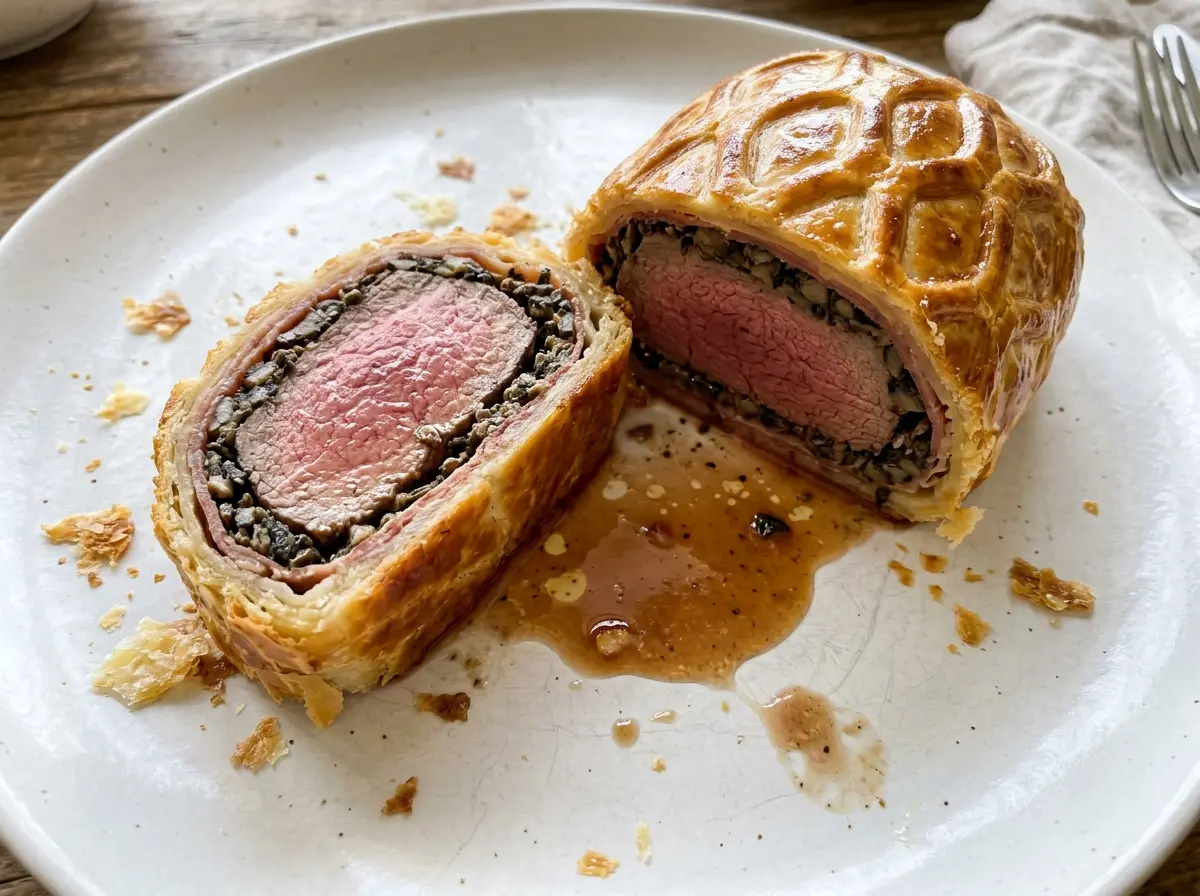
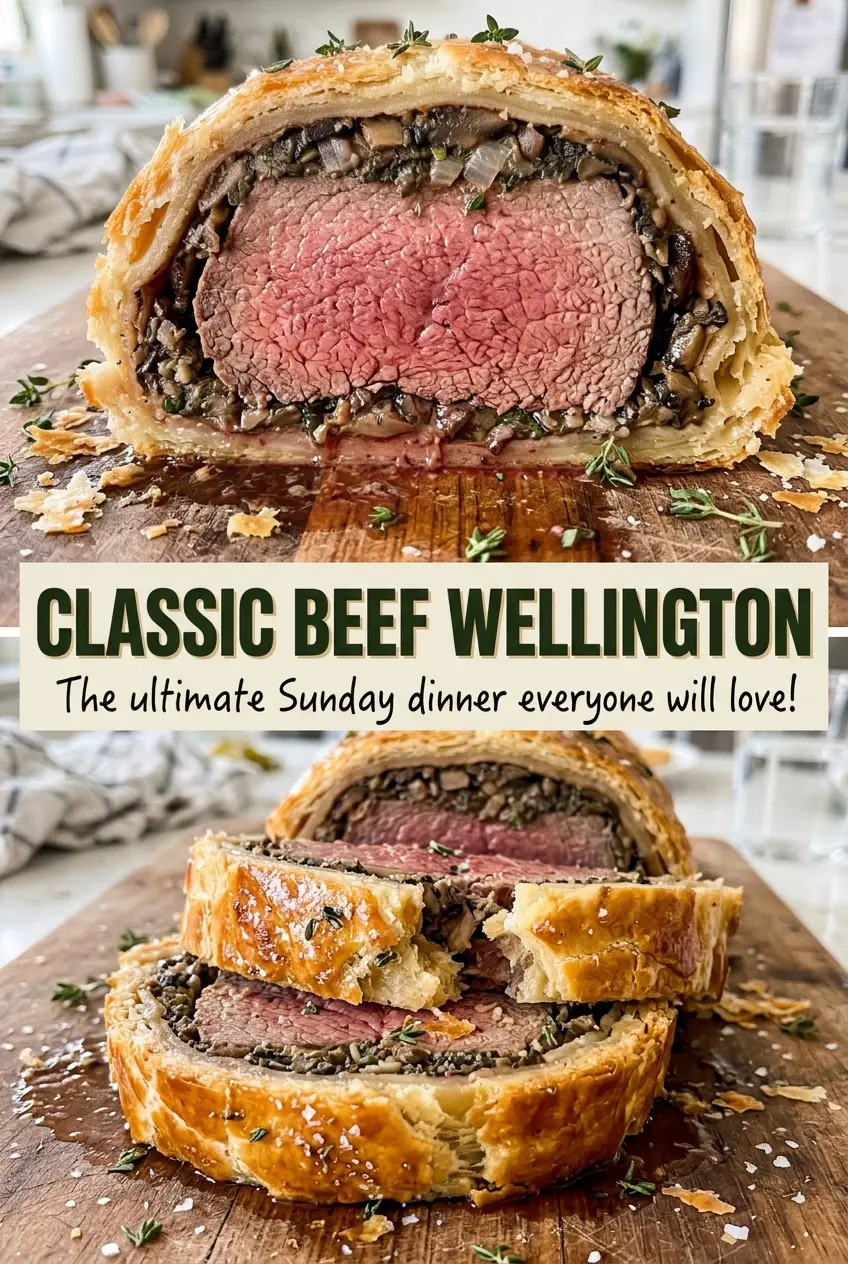
I like how the layers each have a job: Dijon coats the seared tenderloin, prosciutto holds the mushroom mixture around the beef, and puff pastry makes the crisp outer shell. Letting the beef and mushrooms cool completely before assembly helps the pastry stay cold and workable. Once it’s baked, the crust should be deeply golden around a rosy, tender center.
Kitchen Note
Pull the plastic wrap snug around the prosciutto bundle before it goes in the refrigerator. That firm wrap helps the mushroom layer hold close to the tenderloin instead of slipping as you move it onto the pastry.
Save this Classic Beef Wellington for a special dinner, with its crisp pastry shell and tender beef center.
Why the Beef and Mushroom Layers Must Be Cool Before the Pastry
Warm filling is rough on puff pastry. The pastry’s layers rely on cold fat; if the beef or mushroom mixture is still warm when you wrap it, that fat can soften before the Wellington reaches the oven. The result is harder-to-handle pastry and less separation between those delicate layers as they bake.
Cooling the beef and duxelles completely also makes the assembly easier to manage. The mustard-coated tenderloin is less slippery, and the mushroom mixture stays where you spread it instead of smearing across the prosciutto. Give each component its own chance to cool before building the bundle. That little pause makes a neat wrap much less of a wrestling match.
The chill after wrapping serves a different purpose: it firms the whole package so the pastry can be folded and sealed around it. Keep the filling cool at every stage, and the Wellington is easier to move without stretching or tearing the pastry.
What Each Wellington Layer Brings to the Table
- Center-cut beef tenderloin — Its even shape is useful here because it gives the prosciutto and pastry a consistent surface to wrap around. Ask the butcher for a trimmed, tied center-cut roast. A different cut won’t have the same shape or tenderness, so it isn’t a direct swap.
- Cremini mushrooms — They cook down into a savory, concentrated layer. Fresh mushrooms are the better choice; look for firm caps without damp or slimy spots. Finely chopping them helps them cook evenly, and white button mushrooms can replace them in the same quantity if that’s what your store has.
- Prosciutto — Thin slices bend around the roast and hold the duxelles in place. The standard packaged kind works well; extra-thick slices are less flexible and harder to overlap into a continuous layer. There isn’t a simple omission that keeps the same wrapping function.
- Puff pastry — Thawed pastry is pliable enough to roll and fold but should still feel cool. A familiar grocery-store sheet works; handle it gently if it begins to feel soft. For a gluten-free version, use gluten-free puff pastry and gluten-free flour for dusting, knowing the crust may be more delicate.
- Dijon mustard and fresh thyme — Dijon gives the beef a sharp, savory coating, while thyme adds an earthy note to the mushrooms. A regular jar of Dijon is fine; choose fresh thyme leaves that look green rather than wilted. Strip the leaves from the stems before chopping the shallot and mushrooms.
Wrapping a Tenderloin So the Pastry Stays Intact
Sear the beef and set up the oven
Heat the oven to 400°F and line a 13×18-inch sheet pan with parchment. Pat the tenderloin dry, season it all over, and heat the olive oil in a 12-inch skillet over medium-high until shimmering. Sear the beef, turning it, for 2 to 3 minutes per side until it’s browned all over. Remove and discard the twine, brush the roast with Dijon, and let it cool completely.
Cook the mushrooms until the pan is dry
Wipe out the skillet, melt the butter over medium heat, and add the mushrooms, shallot, thyme, and salt. Cook for 15 to 20 minutes, stirring often; at first the mixture will release plenty of moisture. Keep cooking until the liquid has evaporated and the mushrooms are beginning to brown. Spread the duxelles on a plate and let it cool completely.
Build the prosciutto bundle
Lay a large sheet of plastic wrap on the counter and arrange the prosciutto slices in an overlapping rectangle. Spread the cooled mushroom mixture over the slices, then set the beef in the center. Wrap the prosciutto snugly around the roast and chill the bundle for 20 minutes. If the prosciutto has gaps, reposition the slices before wrapping so the mushroom mixture is covered.
Seal, score, and bake the Wellington
Lightly dust the counter with flour and roll the thawed puff pastry into a 12×14-inch rectangle. Beat the egg with the water, brush the pastry edges, fold the pastry around the beef, and press the seams to seal; place it seam-side down on the prepared pan. Decorate with pastry scraps if you like, score the top lightly without cutting through, brush with the remaining egg wash, and chill for 15 minutes. Bake for 40 to 55 minutes, until the pastry is deeply golden and a thermometer inserted through an end into the center of the beef reads 145°F; tent loosely with foil if the pastry browns before the beef reaches temperature, then rest the Wellington for 10 minutes before slicing.
Two Useful Ways to Adapt Beef Wellington
Use white button mushrooms
Swap in the same quantity of finely chopped white button mushrooms for the cremini. The filling will be a little milder, but it still cooks down into a suitable duxelles; keep cooking until the pan is dry and the mushrooms begin to brown.
Make a gluten-free Wellington
Use gluten-free puff pastry and gluten-free flour in place of the regular versions. The pastry may be more fragile as you roll and fold it, so work gently and keep it cool; the savory beef and mushroom filling stays the same.
Storage and Reheating
- Refrigerator: Store leftover Wellington in an airtight container for 3 to 4 days. The pastry will soften as it sits.
- Freezer: Freeze individual slices tightly wrapped, then place them in an airtight container for up to 2 to 3 months. Thaw in the refrigerator; the pastry may lose some crispness.
- Reheating: Warm slices on a sheet pan in a 325°F oven until the centers reach 165°F. Avoid the microwave if you want the pastry to stay as crisp as possible.
Questions That Come Up Before Making Beef Wellington
Classic Beef Wellington
Ingredients
Equipment
Method
- Heat the oven to 400°F and line a 13x18-inch sheet pan with parchment paper.
- Pat the tenderloin dry and season it all over with the kosher salt and black pepper.
- Heat the olive oil in a 12-inch skillet over medium-high heat until shimmering.
- Sear the tenderloin, turning it, for 2 to 3 minutes per side until browned all over.
- Transfer the beef to a plate and remove and discard the twine.
- Brush the beef all over with the Dijon mustard, then let it cool completely.
- Wipe out the skillet and melt the butter over medium heat.
- Add the mushrooms, shallot, thyme, and kosher salt; cook, stirring often, for 15 to 20 minutes until the mixture is dry and beginning to brown.
- Spread the mushroom mixture on a plate and let it cool completely.
- Lay a large sheet of plastic wrap on the counter and arrange the prosciutto slices on it, overlapping them to form a rectangle.
- Spread the cooled mushroom mixture over the prosciutto and set the beef in the center.
- Wrap the beef snugly and chill for 20 minutes.
- Lightly dust the counter with the flour and roll the puff pastry into a 12x14-inch rectangle.
- Unwrap the beef and place it in the center of the pastry.
- Beat the egg and water together in a small bowl.
- Brush the pastry edges with egg wash, fold the pastry around the beef, and press the seams to seal.
- Place the Wellington seam-side down on the prepared sheet pan.
- Use any pastry scraps to decorate the top and score the pastry lightly without cutting through.
- Brush the pastry with the remaining egg wash and chill for 15 minutes.
- Bake for 40 to 55 minutes until the pastry is deeply golden and a thermometer inserted through an end into the center of the beef reads 145°F.
- If the pastry browns before the beef reaches temperature, tent it loosely with foil.
- Rest the Wellington for 10 minutes before slicing.