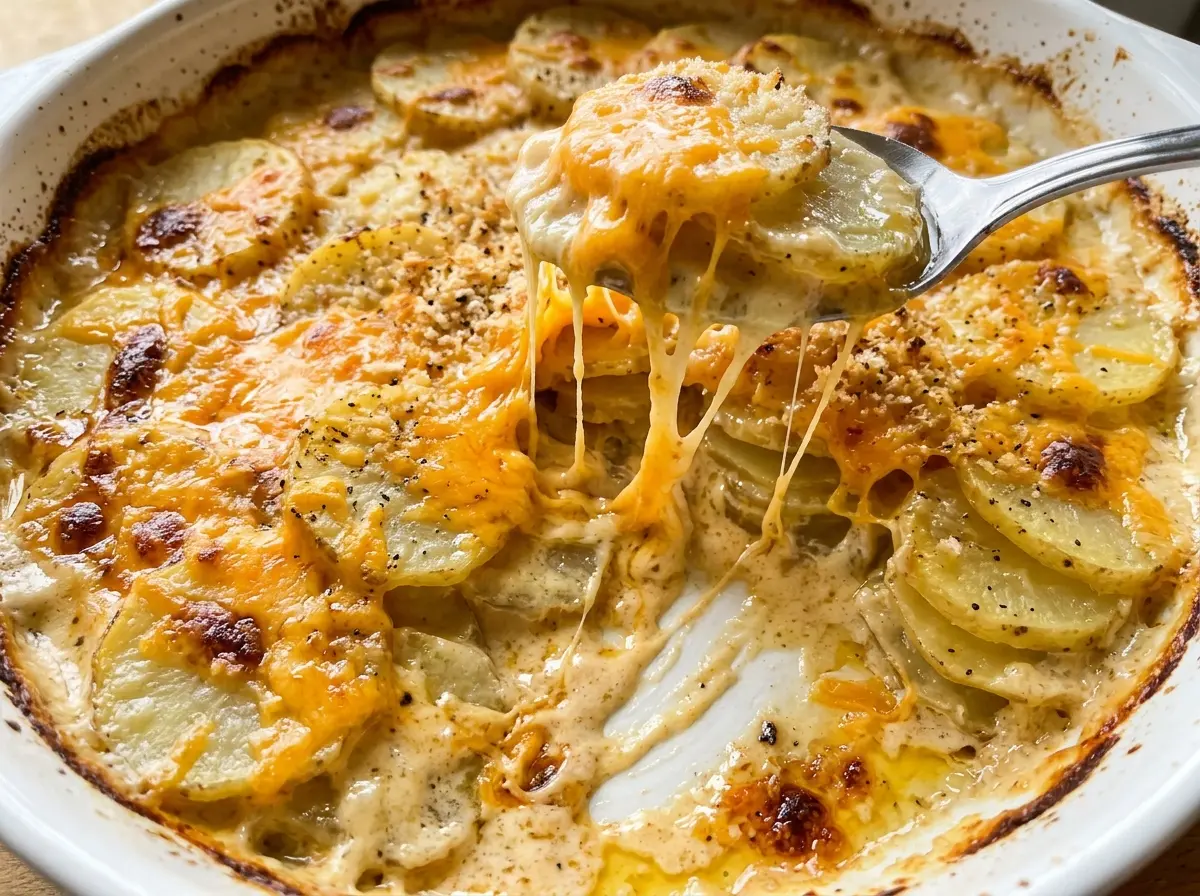
When the foil comes off, the top of these potatoes should be bubbling at the edges, with the cheddar turning golden as the center finishes baking. The knife test matters more than the clock here: potatoes in the middle need to be tender, not just the ones near the sides. That’s what I look for with these classic cheesy scalloped potatoes before I let the dish rest.
I use russet potatoes because their starch helps the cheese sauce cling to the layers instead of pooling at the bottom. The sauce starts on the stovetop, where flour thickens the milk before the cheddar goes in. Then I spread it over the potatoes in layers, so there’s sauce all the way through rather than only on top. Each slice bakes in that creamy cheddar sauce, and the uncovered finish gives the top its golden crust.
Give the casserole a little time to settle after baking. The layers hold together better, and each scoop brings up tender potatoes with a rich, cheesy middle and a browned top.
Kitchen Note
Let the casserole rest for the full 15 minutes before serving. The sauce thickens as it settles, so the layers stay together when you scoop instead of sliding apart on the plate.
Save these classic cheesy scalloped potatoes for a cozy dinner or a holiday table—the layered cheddar sauce and golden top make this casserole worth keeping close.
Why Russet Potatoes Matter More Than the Cheese Here
Sharp cheddar gives this casserole its savory, tangy character, but the potatoes do more than provide the layers. Russets are starchy, and as they bake, that starch helps give the sauce a fuller, more cohesive texture. A waxier potato tends to keep its shape more firmly; the result can be tasty, but the sauce won’t cling in quite the same way.
Even slices help the whole dish cook evenly. At 1/8 inch thick, the potatoes can soften through the center during the covered bake, while the foil holds in moisture. If slices vary widely, the thinner ones may turn very soft before thicker pieces are tender. A mandoline gives you consistent slices quickly, but a sharp knife works when you take your time and keep the slices even. Don’t rinse the cut potatoes—their surface starch is useful in this sauce.
There’s a balance here between a sauce that coats and one that runs. Cooking the flour and milk mixture until it coats a spoon gives it enough body to sit between the potato layers, while the potatoes finish softening in the oven. The result is creamy throughout without relying on a separate topping to carry all the flavor.
The Ingredients That Make This Sauce Cling to Every Layer

- Russet potatoes — Their starch gives the casserole a softer, creamier feel than a waxy potato. Choose firm potatoes without green patches or sprouts. Peel them and slice evenly; a mandoline is handy, while a knife is fine if you keep the pieces close to the same thickness.
- Sharp cheddar — Sharpness keeps the cheese flavor distinct against the mild potatoes and milk. A block that you shred yourself usually melts more smoothly than pre-shredded cheese, which is coated to prevent clumping. Mild cheddar works if that’s what you have, but the finished sauce will taste gentler.
- Whole milk — It brings enough richness for a creamy sauce without making it heavy. Two-percent milk can work, though the sauce will be less rich; skim milk is more likely to leave it thin and less satisfying.
- Flour, onion, and garlic — Flour thickens the milk, while the softened onion and brief garlic cook build a savory base. For a gluten-free version, replace the all-purpose flour with the same amount of a cup-for-cup gluten-free flour blend. The sauce may have a slightly different texture, but it still gives the casserole its creamy layers.
Building the Sauce and Layering the Potatoes
Prepare the Dish and Slice Evenly
Heat the oven to 375°F and grease a 9×13-inch baking dish with 1 tablespoon of the softened butter. Peel the russet potatoes and slice them 1/8 inch thick, keeping the pieces as even as you can. Set the prepared dish nearby so you can layer the potatoes as soon as the sauce is ready. Uneven slices are the main reason some pieces turn tender ahead of others.
Cook the Onion Cheddar Sauce
Melt the remaining 4 tablespoons of butter in a 3-quart saucepan over medium heat. Add the finely chopped onion and cook for 4 to 5 minutes, until softened, then stir in the garlic for 30 seconds. Stir in the flour and cook for 1 minute before gradually whisking in the milk, kosher salt, and black pepper. Bring the mixture to a gentle simmer and whisk for 3 to 5 minutes, until it thickens enough to coat a spoon; take the pan off the heat before stirring in 1 1/2 cups of cheddar.
Give Each Potato Layer Its Share of Sauce
Arrange one-third of the potatoes in the greased dish, spread one-third of the cheese sauce over them, and repeat those layers twice. Finish with the sauce, then sprinkle the remaining 1/2 cup of cheddar over the top. Keep the layers fairly even rather than piling the potato slices into one thick mound. Cover the dish tightly with foil before it goes into the oven.
Uncover for a Golden Top
Bake the covered casserole for 45 minutes, then remove the foil and bake for 25 to 35 minutes more. Look for a golden top and test the potatoes in the center with a knife; it should slide in easily. If the top is already browned but the center still feels firm, lay the foil back over the dish while the potatoes finish baking. Rest the casserole for 15 minutes before serving.
Two Simple Ways to Adapt These Scalloped Potatoes
Make the Sauce Gluten-Free
Use a cup-for-cup gluten-free flour blend in place of the all-purpose flour. Whisk it into the butter and cook it for the same minute before adding the milk gradually. The casserole keeps its creamy, layered character, though the sauce may not be quite as silky as the wheat-flour version.
Make It Without Onion
Leave out the chopped onion and keep the garlic in the butter for its full 30-second cook. The sauce will be less sweet and savory, with a cleaner garlic-and-cheddar flavor. The onion isn’t needed to thicken the sauce, so the rest of the method stays the same.
Storage and Reheating
- Refrigerator: Keep leftovers covered for 3 to 4 days. The sauce firms up when chilled, so the potatoes will be less creamy straight from the fridge.
- Freezer: You can freeze portions in airtight containers for up to 2 months. The dairy sauce may separate slightly after thawing, and the potatoes will be softer.
- Reheating: Warm a portion covered in a 350°F oven until heated through, or microwave it in short intervals. Keep it covered in the oven; reheating uncovered for too long can dry out the top before the center is warm.
Questions That Come Up While Making Scalloped Potatoes
Classic Cheesy Scalloped Potatoes
Ingredients
Equipment
Method
- Heat the oven to 375°F.
- Use 1 tablespoon of the butter to grease a 9x13-inch baking dish.
- Melt the remaining 4 tablespoons butter in a 3-quart saucepan over medium heat.
- Add the onion and cook for 4 to 5 minutes until softened.
- Add the garlic and cook for 30 seconds.
- Stir in the flour and cook for 1 minute.
- Gradually whisk in the milk, salt, and pepper.
- Bring the mixture to a gentle simmer and cook, whisking, for 3 to 5 minutes until thickened enough to coat a spoon.
- Remove the saucepan from the heat and stir in 1 1/2 cups of the cheddar until melted.
- Arrange one-third of the potatoes in the prepared dish and spread one-third of the cheese sauce over them.
- Repeat the potato and sauce layers twice, finishing with the sauce.
- Sprinkle the remaining 1/2 cup cheddar on top.
- Cover the dish tightly with foil and bake for 45 minutes.
- Remove the foil and bake for 25 to 35 minutes, until the top is golden and a knife slides easily into the potatoes in the center.
- Let the potatoes rest for 15 minutes before serving.