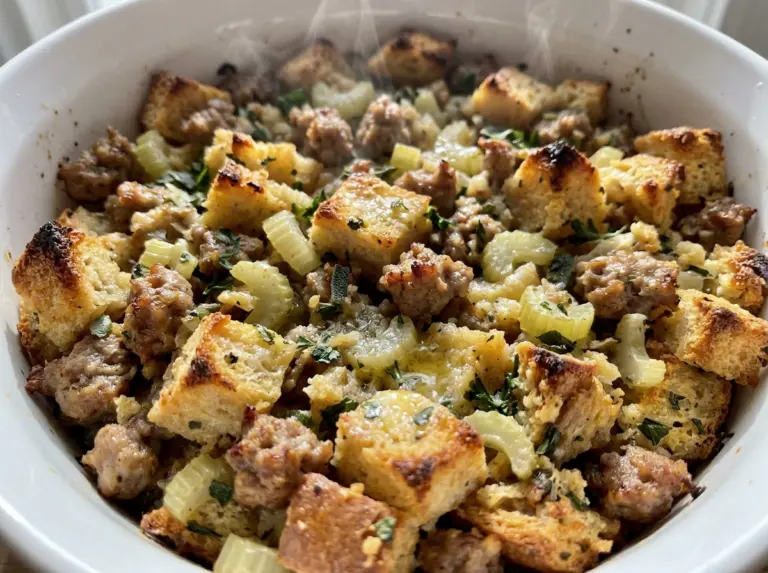
The first clue that the bread is ready is the sound: the cubes tap against the baking sheet instead of landing with a soft thud. I learned not to rush that part; bread that still bends takes broth unevenly, and the finished pan can have wet pockets beside dry ones. For this classic Thanksgiving stuffing with celery and onion, I dry the cubes in the oven first, then toss them with buttery vegetables, herbs, broth, and egg. The top turns golden while the center stays tender.
The onion and celery need time to soften in the butter before the dried herbs go in. That brief minute of cooking wakes up the sage and thyme without letting them scorch. Fresh parsley joins the bread mixture later, where it keeps the seasoning bright. Every bite has savory herbs, soft bread, and little pieces of celery and onion beneath a crisp top.
Kitchen Note
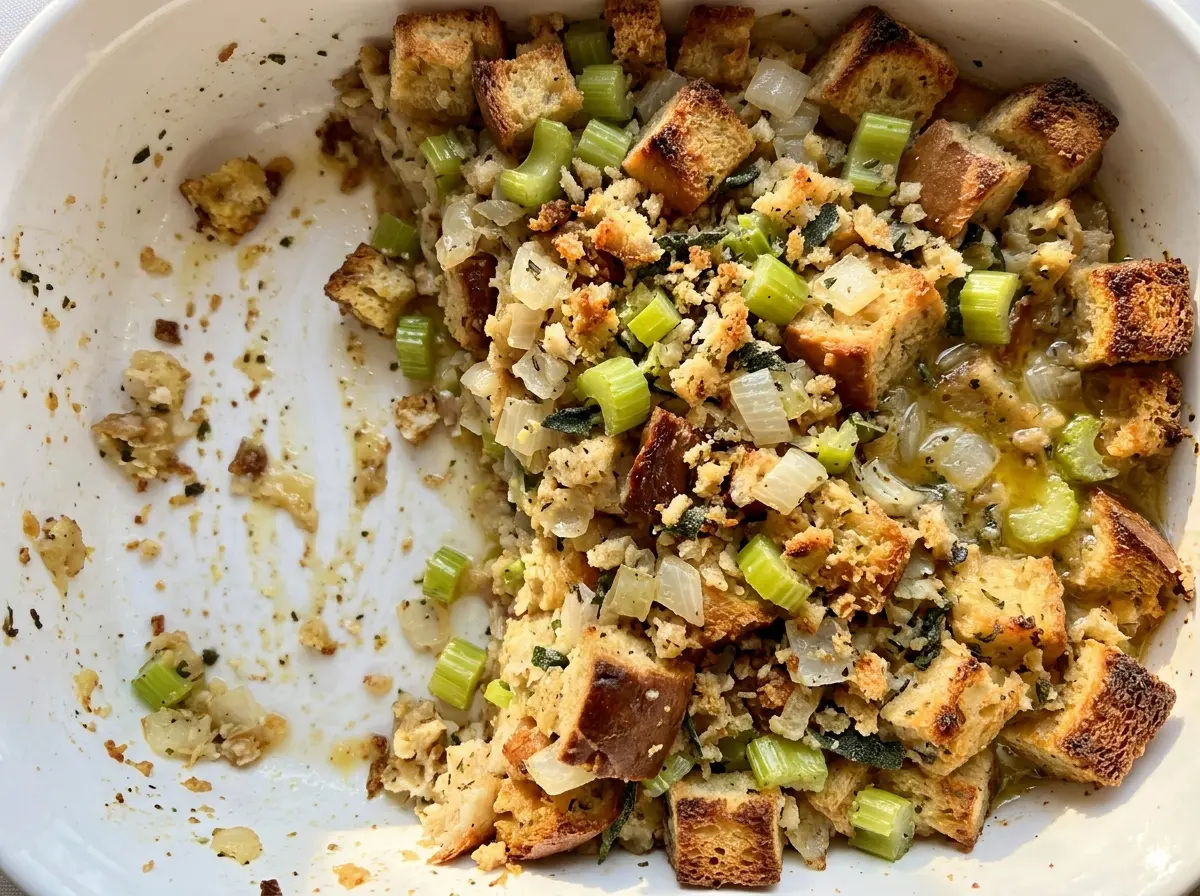
Give the baked stuffing its full 10-minute rest before serving. The center settles enough to scoop neatly, and the crisp top stays in place instead of breaking apart under the spoon.
Save this classic Thanksgiving stuffing with celery and onion for its buttery herbs, tender center, and golden top.
Why This Stuffing Bakes Covered Before It Gets a Golden Top
A pan of stuffing has two jobs to do at once: the center needs enough time to heat through and become tender, while the top should finish with a little crunch. Baking it covered first gives the bread mixture time to warm without letting the exposed surface dry out too soon. Uncovering it for the final stretch lets moisture escape from the top and gives the bread a chance to turn golden.
Skipping either part changes the balance. If the dish stays covered the whole time, the surface won’t get that toasted finish. If it bakes uncovered from the start, the top edges can dry before the middle has had time to settle. I use foil for the first bake, then remove it and watch for an evenly browned surface. This approach gives you a soft, savory center with crisp bits across the top, rather than a uniformly damp or dried-out pan.
The 9×13-inch baking dish gives the mixture room to spread into a layer that cooks at a steady pace. Pressing it down hard would compact the cubes, so I transfer the mixture gently and leave it loosely arranged. That helps the pieces hold their shape and gives the top plenty of surface area to brown.
What the Bread, Butter, and Herbs Each Bring to the Pan
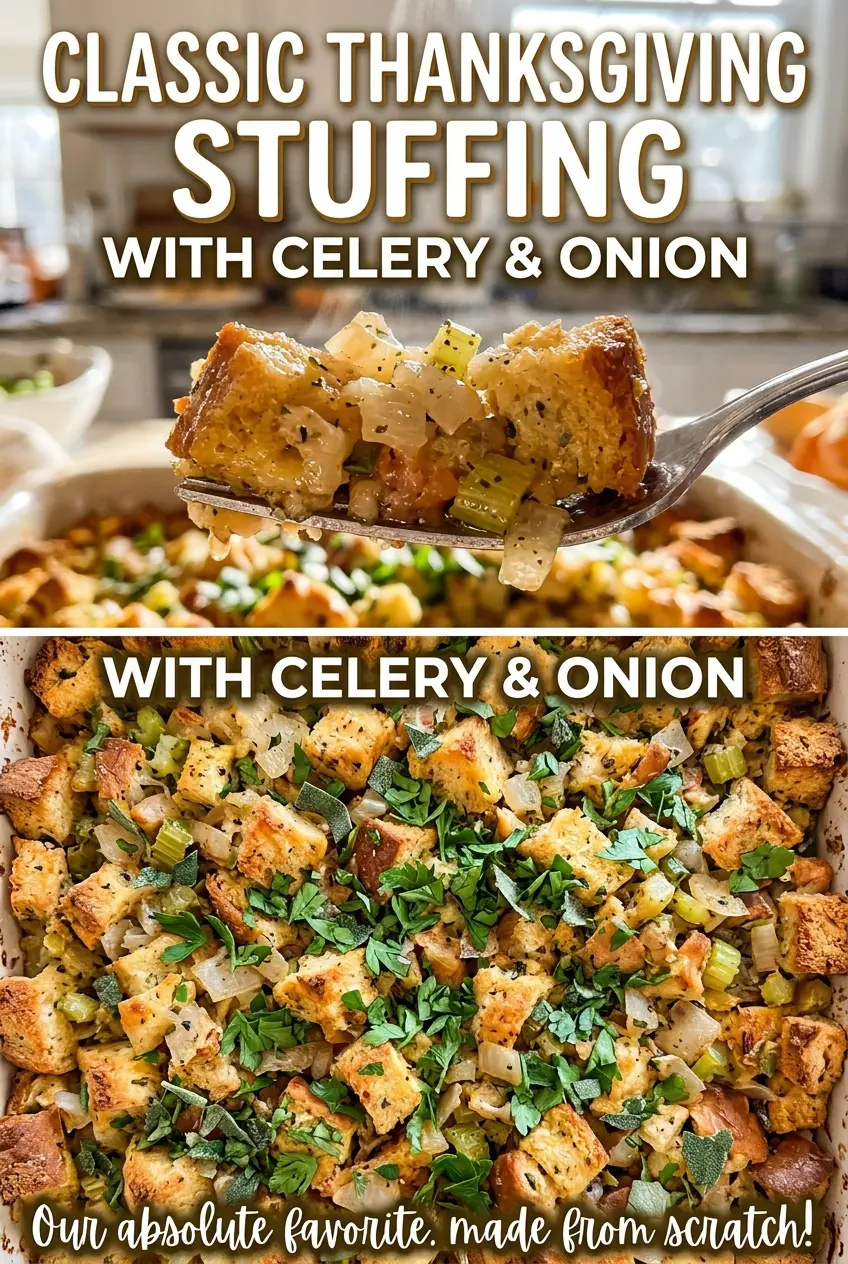
- Day-old white or country bread — A loaf with a simple, mild crumb lets the celery, onion, and herbs come through. Day-old bread is a good use for a loaf that’s no longer soft enough for sandwiches; if yours is fresh, the oven-drying step takes care of that. Cut the cubes evenly so they dry at a similar rate.
- Unsalted butter — Butter carries the flavor of the softened vegetables and keeps the finished stuffing rich without adding salt before the broth goes in. Unsalted butter gives you better control over seasoning, especially alongside broth.
- Yellow onion and celery — These are the savory base, and their texture matters more than choosing a specialty variety. Dice them into similar-sized pieces so they soften together; don’t leave the celery in large chunks if you want it tender throughout.
- Dried sage and thyme — Dried herbs stand up well to the long bake and give the stuffing its familiar savory aroma. The quick cook in butter helps release their fragrance. Dried herbs are convenient here; fresh parsley goes in separately for a lighter finish.
- Low-sodium chicken broth and eggs — Broth moistens the bread, and eggs help the baked mixture hold together when you serve it. Low-sodium broth leaves room for the kosher salt in the seasoning. Choose fresh eggs and whisk them thoroughly into the broth before pouring it over the bread.
- Fresh parsley — Parsley brings a fresh, grassy note that balances the buttery bread and dried herbs. Chop it shortly before using so it stays bright rather than limp.
Building the Stuffing in Four Stages
Dry the Bread Until the Cubes Feel Crisp
Heat the oven to 300°F and spread the bread cubes across two rimmed baking sheets. Bake for 30–40 minutes, stirring once, until the cubes are dry and crisp, then let them cool. Check a cube from the middle of each sheet; it should feel dry rather than soft or bendy. If the centers still feel pliable, the bread needs more time before it meets the broth.
Soften the Vegetables Before Adding the Herbs
Grease a 9×13-inch baking dish with the softened butter. Melt the remaining butter in a 12-inch skillet over medium heat, then add the diced onion and celery. Cook for 8–10 minutes, stirring occasionally, until both are tender; they should look softened, not browned at the edges. Stir in the sage and thyme and cook for 1 minute, just until fragrant.
Toss Until Every Cube Is Moistened
Put the cooled bread cubes in a large bowl and add the cooked vegetables and chopped parsley. In a separate bowl, whisk together the broth, eggs, kosher salt, and black pepper, then pour the mixture over the bread. Toss gently until the cubes are evenly moistened, without crushing them, and let the mixture stand for 5 minutes. If liquid is pooling at the bottom, give the bread another gentle toss before moving on.
Bake Covered, Then Brown the Top
Transfer the mixture to the prepared dish and cover it with foil. Bake at 350°F for 30 minutes, then uncover and bake for 15–20 minutes more, until the top is golden and the center reaches 160°F. Start checking the surface near the shorter end of that final baking window; it should look toasted, not dark at the corners. Let the stuffing rest for 10 minutes before serving.
Three Ways to Adapt This Thanksgiving Stuffing
Make It Vegetarian with Vegetable Broth
Replace the chicken broth with the same amount of low-sodium vegetable broth. The bread will still bake up tender and cohesive, with a slightly more vegetable-forward savory flavor.
Use Sourdough for a Tangier Base
Swap in day-old sourdough bread, cut into the same-sized cubes and dried until crisp. Its gentle tang gives the stuffing a sharper edge and a chewier bite, while the onion, celery, sage, and thyme still come through.
Make It Dairy-Free with Vegan Butter
Use a dairy-free vegan butter in place of the butter for greasing the dish and cooking the vegetables. The stuffing will still have a tender texture, though the flavor will be a little less rich than the butter version.
Storage and Reheating
- Refrigerator: Cool and refrigerate the stuffing within 2 hours. Store it covered for 3–4 days; the bread will firm up as it chills.
- Freezer: Freeze portions in an airtight, freezer-safe container for up to 1 month for the best texture. Thaw overnight in the refrigerator before reheating.
- Reheating: Cover with foil and reheat in a 350°F oven until the center reaches 165°F. If the edges look dry, stir in a small splash of broth before heating; leaving the dish uncovered for the whole reheat can dry it out.
Questions That Come Up While Making Thanksgiving Stuffing
Classic Thanksgiving Stuffing with Celery and Onion
Ingredients
Equipment
Method
- Heat the oven to 300°F.
- Spread the bread cubes across 2 rimmed baking sheets.
- Bake for 30–40 minutes, stirring once, until dry and crisp.
- Let the bread cubes cool.
- Grease a 9x13-inch baking dish with 1 tablespoon softened butter.
- Melt the remaining 7 tablespoons butter in a 12-inch skillet over medium heat.
- Add the onion and celery and cook for 8–10 minutes, stirring occasionally, until tender.
- Stir in the sage and thyme and cook for 1 minute.
- Put the bread cubes in a large bowl and add the cooked vegetables and parsley.
- Whisk the broth, eggs, salt, and pepper in a separate bowl.
- Pour the broth mixture over the bread and toss until evenly moistened.
- Let stand for 5 minutes.
- Transfer the mixture to the prepared baking dish and cover with foil.
- Bake at 350°F for 30 minutes.
- Uncover and bake for 15–20 minutes more, until the top is golden and the center reaches 160°F.
- Let the stuffing rest for 10 minutes before serving.