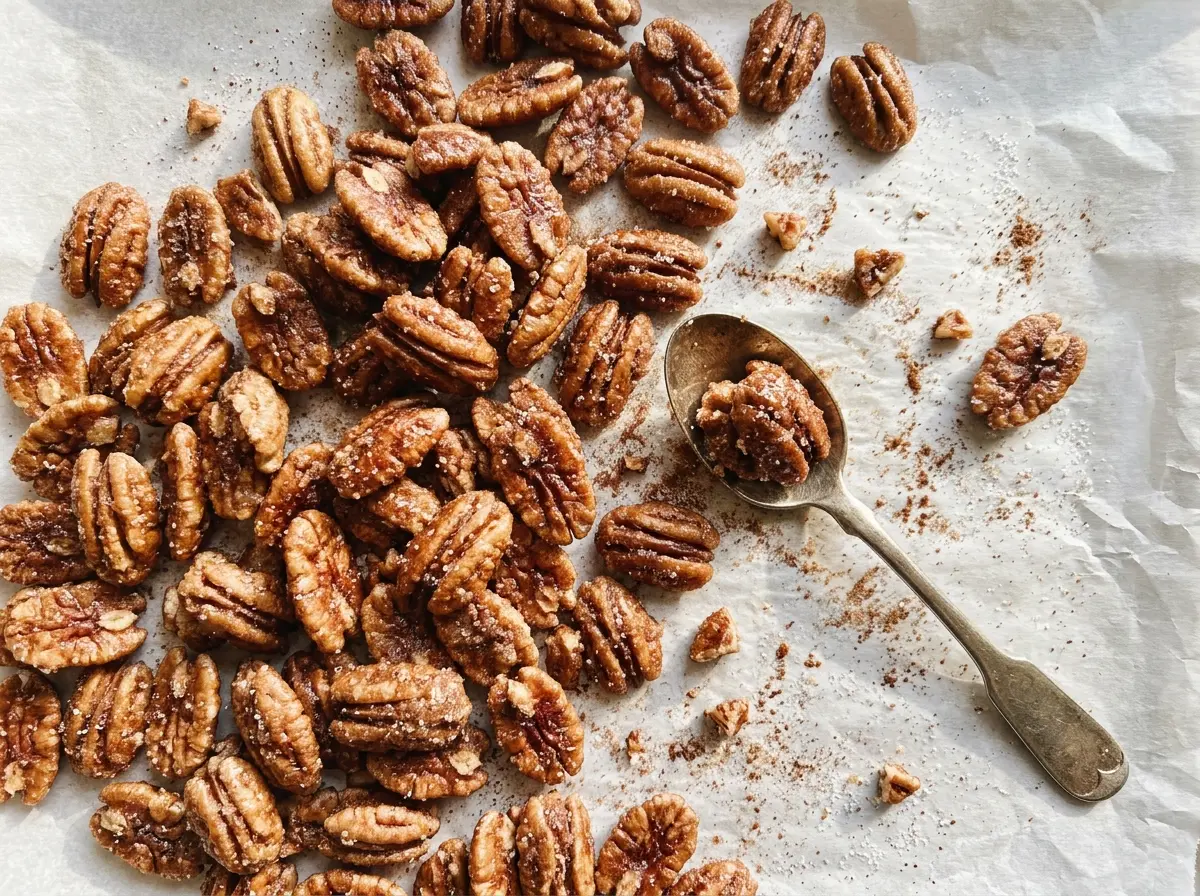
The sugar-coated pecans look pale when they first come out of the oven, and that can make you wonder if they need more time. I’ve learned to judge them by whether the coating feels dry, not by how dark it looks. These Copycat Bucees Pecans bake low and slow, so the cinnamon-sugar shell dries around each pecan instead of turning into a sticky caramel.
The egg white gives the coating something to cling to, while the low oven gives moisture time to evaporate without quickly browning the sugar. I stir the pecans at regular intervals so the ones around the edges don’t get all the heat. Once they’ve cooled, you get a crisp, lightly spiced shell with a buttery pecan at the center.
Kitchen Note
Line the baking sheet with parchment before you start mixing. Once the pecans are coated, you can spread them straight onto the pan, and the hardened sugar won’t be stuck to the metal when it’s time to clean up.
Save these Copycat Bucees Pecans for a crunchy cinnamon-sugar snack with a crisp coating and toasted pecan centers.
Why These Pecans Dry Into a Crisp Shell Instead of Sticky Candy
Candied nuts often start with cooked syrup, but this batch gets its coating from a foamy egg-white mixture and granulated sugar. That distinction matters: the egg white helps the cinnamon sugar cling to the pecans, and the oven slowly dries the coating around them. At 250°F, the sugar has time to set without quickly darkening into a hard, glossy caramel.
There’s also a reason the pecans go into the oven in a single layer and get stirred throughout baking. A crowded pile traps moisture between the nuts, leaving damp patches while the exposed tops dry. Stirring turns the pecans over and shifts their positions, helping the coating dry more evenly across the pan. Look for a dry-looking coating rather than a deep brown color; the pecans don’t need to look caramelized to be ready.
What Each Ingredient Adds to the Cinnamon-Sugar Coating

- Pecan halves — Halves give you a substantial nut beneath the thin coating and are easy to toss without breaking. Fresh pecans matter most; if they smell stale or paint-like, the finished snack won’t taste fresh either. Pieces aren’t my first choice here because their smaller edges can toast unevenly.
- Egg white — Whisking it with the liquid ingredients creates the tacky layer that holds the sugar mixture on the nuts. Separate the white cleanly; even a little yolk adds fat and makes the coating less reliable. The egg white should be foamy, not whipped into stiff peaks.
- Granulated sugar — Its fine, dry crystals spread through the coating and bake into a crisp shell. Granulated sugar is the right fit here; brown sugar brings extra moisture and a deeper molasses taste, which changes how the coating dries.
- Ground cinnamon — Cinnamon brings the familiar warm, sweet-spice flavor. A fresh jar smells fragrant as soon as you open it, while older cinnamon can taste flat. There’s no need for a specialty brand if your ground cinnamon is still aromatic.
- Vanilla extract — Vanilla rounds out the cinnamon and sugar without taking over. Pure extract has a fuller aroma, but imitation vanilla works when that’s what you have; the pecans will still take on the coating.
- Water and kosher salt — Water helps the egg white loosen and foam, while kosher salt keeps the sugar from tasting one-note. Use the salt listed for the recipe rather than salted pecans, which make the final seasoning harder to control.
The Four Stages That Keep the Coating Even
Get the pan and oven ready
Heat the oven to 250°F and line an 18×13-inch rimmed baking sheet with parchment paper. A rimmed sheet keeps the nuts contained when you stir them, and the parchment gives the sugar-coated pecans a surface they can release from. Set the pan aside before you begin tossing the ingredients together.
Whisk the foamy binder
In a large bowl, whisk the egg white, water, and vanilla until foamy. You want bubbles throughout the mixture, not a stiff meringue or a pool of clear liquid. If the egg white still looks slick and unbroken, keep whisking before adding the pecans so the coating can spread more evenly.
Coat the pecans before adding the sugar
Add the pecan halves and toss until each one looks lightly coated with the foamy mixture. Then add the granulated sugar, cinnamon, and kosher salt, tossing again until the nuts are covered evenly. Check the bottom of the bowl as you mix; loose sugar tends to collect there, and a few extra turns help distribute it instead of leaving it behind.
Bake, stir, and let the coating set
Spread the pecans in a single layer on the prepared baking sheet. Bake for 60 to 75 minutes, stirring every 15 minutes, until the coating looks dry. A few pale spots are fine; damp, glossy patches mean the coating hasn’t dried through yet. Cool the pecans completely on the baking sheet, about 30 minutes, before serving or storing.
Two Easy Ways to Change the Spice or Make Them Egg-Free
Swap cinnamon for ground ginger
Use the same amount of ground ginger in place of the cinnamon. The coating will taste sharper and more peppery, with less of the familiar cinnamon warmth; keep the rest of the ingredients and method unchanged.
Make an egg-free coating with aquafaba
Replace the egg white with 2 tablespoons of aquafaba, the liquid from a can of chickpeas, and whisk it with the water and vanilla until foamy. It gives the sugar a binder without egg, though the coating may be a little less uniform than the egg-white version.
Storage and Reheating
- Refrigerator: Keep the cooled pecans in an airtight container for up to 2 weeks; humidity can soften the coating.
- Freezer: Freeze fully cooled pecans in an airtight container for up to 2 months. Thaw them in the closed container to limit condensation on the sugar shell.
- Reheating: They’re best served at room temperature. If the coating softens, warm the pecans in a single layer in a 250°F oven until dry again; skip the microwave, which can melt the sugar unevenly.
Questions That Come Up When Making Cinnamon-Sugar Pecans
Copycat Bucees Pecans
Ingredients
Equipment
Method
- Heat the oven to 250°F.
- Line an 18x13-inch rimmed baking sheet with parchment paper.
- In a large bowl, whisk the egg white, water, and vanilla until foamy.
- Add the pecans and toss until coated.
- Add the sugar, cinnamon, and salt and toss until evenly covered.
- Spread the pecans in a single layer on the prepared baking sheet.
- Bake for 60 to 75 minutes, stirring every 15 minutes, until the coating is dry.
- Cool the pecans completely on the baking sheet, about 30 minutes, before serving or storing.