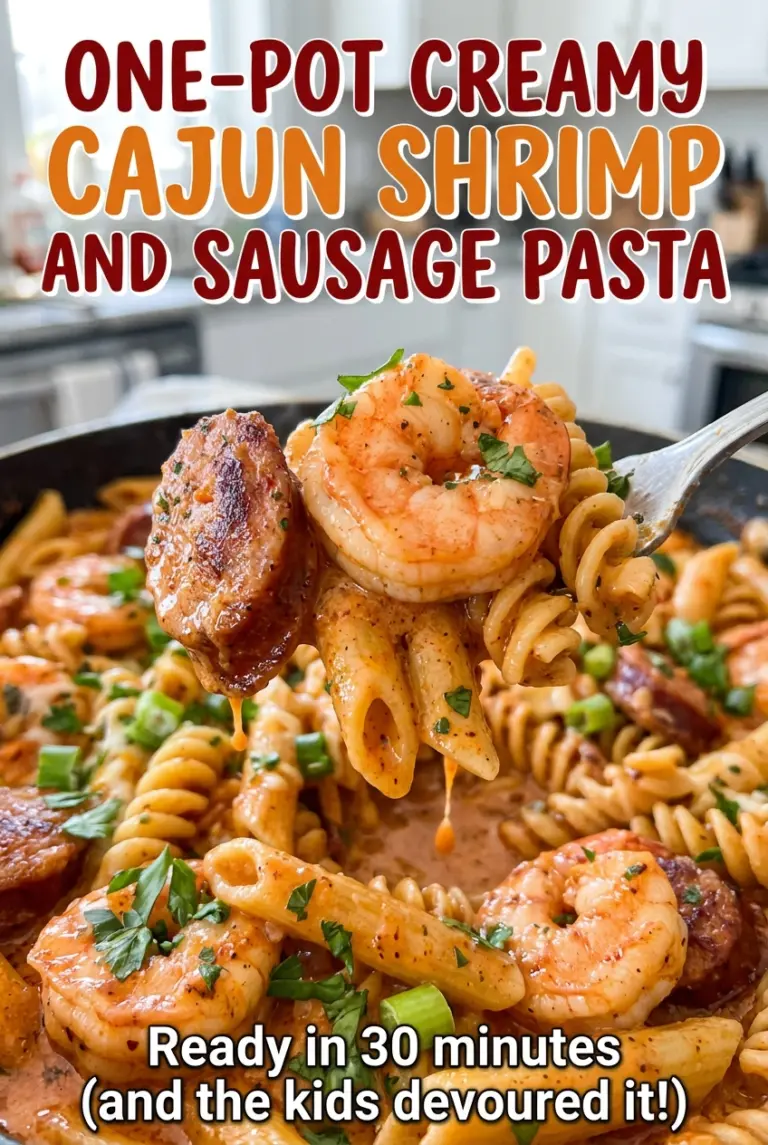
The chicken gets a quick sear, the andouille leaves its smoky drippings in the skillet, and then the orzo cooks right in that same pan. That’s the part I like about this creamy Cajun chicken and sausage orzo skillet: the broth picks up all those browned bits while the pasta cooks, so there’s no separate pot to wash and no flavor left behind.
I brown the chicken just until the outside has color, then let it finish cooking with the orzo. That keeps the small pieces from drying out while everything simmers together. Cajun seasoning goes on the chicken first, then the rest cooks with the onion, bell pepper, and garlic, giving the whole skillet a steady warmth instead of concentrating the spice in one bite. Cream and Parmesan go in at the end for a smooth, savory finish, with tender orzo tucked between the chicken and sausage.

Kitchen Note
After the cream and Parmesan are stirred in, take the skillet off the heat and give it the full two-minute rest. The sauce is already creamy, but that short pause helps it settle around the orzo before you serve it.
Save this creamy Cajun chicken and sausage orzo skillet for a cozy one-pan dinner, with tender pasta and a Parmesan cream finish.
Why the Browned Bits Matter More Than a Longer Sear
The chicken and sausage don’t need a deep crust before they leave the skillet. A short sear gives the surfaces color and leaves flavorful browned bits on the bottom of the pan; the chicken finishes cooking later, when it returns to the simmer. Trying to cook it through during the first few minutes can leave the small pieces overdone by the time the orzo is tender.
Once the onion and pepper soften, the broth loosens those browned bits as you scrape the skillet. They dissolve into the cooking liquid, seasoning the orzo as it absorbs the broth. That’s why this dish benefits from using the same pan for each stage rather than browning the meat separately. Keep the bits in the skillet, but watch the heat while the vegetables cook: if the garlic starts to darken, it can turn bitter before the broth goes in.
A deep 12-inch skillet gives the chicken, sausage, vegetables, and pasta room to cook together. It also gives you enough space to stir the orzo without sloshing broth over the sides. The result should be creamy and cohesive, not a pile of pasta with sauce pooled underneath.
What the Orzo, Andouille, and Parmesan Bring to the Skillet

- Orzo — This small pasta cooks directly in the broth and releases enough starch to help the finished skillet feel creamy. It’s worth keeping the orzo here rather than swapping in a different pasta shape, since shapes absorb liquid and cook at different rates.
- Andouille sausage — Andouille brings a smoky, seasoned bite that gives the broth more depth than plain sausage. The heat and salt level vary by brand, so a bite of sausage can help you anticipate how assertive the finished skillet will taste.
- Finely grated Parmesan — Fine shreds melt into the cream more evenly than thick pieces. A wedge grated at home is a good choice, but packaged finely grated Parmesan works when that’s what you have; avoid large flakes that take longer to blend in.
- Low-sodium chicken broth — Cajun seasoning, sausage, and Parmesan all bring salt, so low-sodium broth gives you more control over the final balance. Regular broth works, but the skillet may taste saltier.
- Chicken breast — Cutting the chicken into evenly sized pieces helps it cook at the same pace once it returns to the pan. Trim away any uneven thin edges so they don’t finish much earlier than the larger pieces.
- Heavy cream — It makes the sauce rich and smooth without needing a separate thickener. Choose fresh cream with no added flavor; the Cajun seasoning and browned meat should be the main notes.
- Onion, red bell pepper, and garlic — The onion and pepper soften into the base while garlic adds a sharper savory note. Mince the garlic before it goes into the skillet so it can cook briefly and evenly rather than sitting in large pieces.
Building the Skillet in the Right Order
Brown the Chicken and Sausage
Toss the chicken with two teaspoons of Cajun seasoning, the kosher salt, and black pepper. Heat the olive oil in a 12-inch deep skillet over medium-high heat, then arrange the chicken in a single layer. Cook it for 2–3 minutes, turning once, until browned but not cooked through; transfer it to a plate. Brown the sausage in the same skillet for 2–3 minutes, then move it to the plate with the chicken.
Soften the Vegetables and Toast the Orzo
Reduce the heat to medium and add the diced onion and red bell pepper. Cook for 4–5 minutes, until they’ve softened; the onion should look translucent around the edges. Stir in the garlic and the remaining teaspoon of Cajun seasoning, and cook for 30 seconds. Add the orzo and stir for 1 minute so the pasta is coated before the broth goes in.
Simmer Until the Orzo Is Tender
Pour in the chicken broth and scrape up the browned bits from the bottom of the skillet. Return the chicken and sausage to the pan, then bring the broth to a boil. Cover the skillet, reduce the heat to medium-low, and simmer for 10–12 minutes, stirring every few minutes so the orzo cooks evenly. The orzo should be tender and the chicken should reach 165°F before you move on.
Stir in the Cream and Parmesan
Add the heavy cream and finely grated Parmesan, then stir until the sauce looks creamy throughout. Scrape the bottom and corners as you stir so no cooked orzo is left clinging to the pan. Take the skillet off the heat and let it rest for 2 minutes before serving. The sauce should coat the pasta rather than run like broth.
Three Smart Ways to Adapt This Cajun Orzo
Make It Dairy-Free
Replace the heavy cream with an unsweetened dairy-free cooking cream and use a dairy-free Parmesan-style cheese. The sauce will still turn creamy, though the cheese alternative may bring a less savory, less nutty finish than real Parmesan.
Use a Milder Sausage
Swap the andouille for the same amount of smoked sausage and choose a mild Cajun seasoning. You’ll keep a smoky, meaty base while dialing back the heat; the skillet won’t have quite the same peppery bite as the andouille version.
Swap in Chicken Thighs
Use boneless, skinless chicken thighs cut into the same size pieces as the breasts. Thigh meat has a richer taste and stays juicy, but the pieces still need to cook through during the covered simmer before you add the cream and Parmesan.
Storage and Reheating
- Refrigerator: Store leftovers in a covered container for 3–4 days. The orzo will continue to absorb sauce and become softer as it sits.
- Freezer: Freeze in airtight portions for up to 2 months. The orzo may soften and the cream sauce may separate slightly after thawing, so the texture won’t be quite as silky as when freshly made.
- Reheating: Thaw frozen portions in the refrigerator, then warm the orzo gently in a skillet over low heat with a splash of chicken broth, stirring until hot throughout. Avoid a hard boil, which can make the pasta mushy and the sauce less smooth.
Questions I Get About This Cajun Chicken Orzo
Creamy Cajun Chicken and Sausage Orzo Skillet
Ingredients
Equipment
Method
- Toss the chicken with 2 teaspoons of the Cajun seasoning, the salt, and the pepper.
- Heat the olive oil in a 12-inch deep skillet over medium-high heat.
- Add the chicken in a single layer and cook for 2–3 minutes, turning once, until browned but not cooked through.
- Transfer the chicken to a plate.
- Cook the sausage in the skillet for 2–3 minutes until browned, then transfer it to the plate.
- Reduce the heat to medium, add the onion and bell pepper, and cook for 4–5 minutes until softened.
- Stir in the garlic and remaining 1 teaspoon Cajun seasoning and cook for 30 seconds.
- Stir in the orzo and cook for 1 minute.
- Pour in the broth and scrape up any browned bits from the skillet.
- Return the chicken and sausage to the skillet and bring the broth to a boil.
- Cover, reduce the heat to medium-low, and simmer for 10–12 minutes, stirring every few minutes, until the orzo is tender and the chicken reaches 165°F.
- Stir in the heavy cream and Parmesan until creamy.
- Remove the skillet from the heat and let it rest for 2 minutes before serving.