The steak needs a hot pan and a little breathing room; crowd the pieces together and they turn gray before they brown. I sear these bites in batches, then make a quick garlic butter finish while the Parmesan orzo waits covered in its saucepan. The two parts come together fast, but each gets the attention it needs.
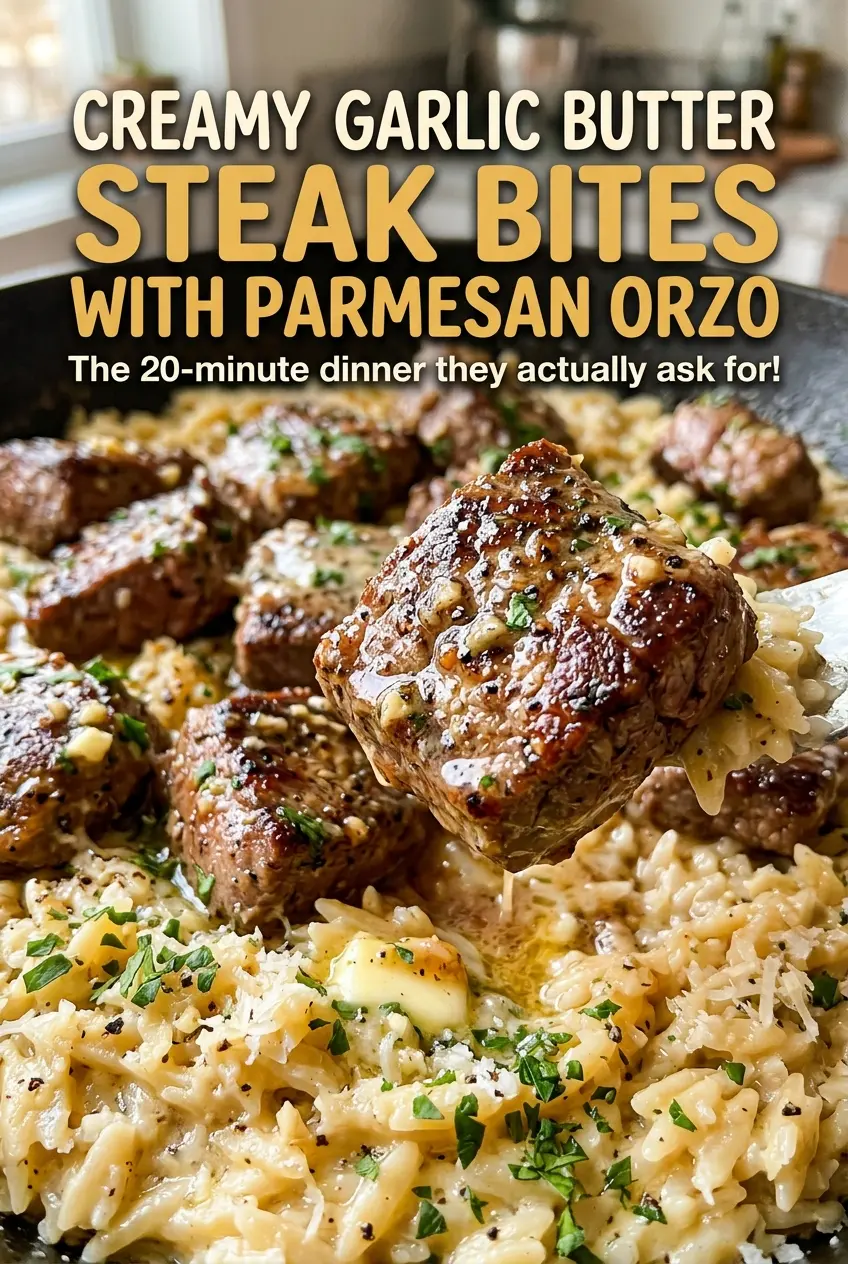
For this creamy garlic butter steak bites with Parmesan orzo, I keep the orzo slightly firm before stirring in the cream and finely grated Parmesan. It finishes gently over low heat, so the sauce turns silky instead of catching on the bottom. Meanwhile, the steak picks up browned edges and a buttery garlic coating, with parsley to freshen the last bite. It’s a cozy skillet dinner with tender steak and creamy, savory orzo.
Kitchen Note
Once the orzo comes off the heat, cover the saucepan while you cook the steak. That short covered pause lets the pasta finish settling without leaving it simmering until it turns soft.
Save these creamy garlic butter steak bites with Parmesan orzo for a dinner that pairs browned, buttery steak with a silky, savory pasta side.
Why Crowding the Steak Steals Its Browned Edges
Steak bites look like they should all fit in the skillet at once, but a crowded pan traps the moisture coming off the meat. Instead of browning, the pieces start steaming against one another. A 12-inch skillet gives the steak room, but even then, cooking in two batches is what keeps the surface hot enough to build color.
That browned exterior matters beyond appearance. It gives the steak a deeper, roasted taste that stands up to the rich orzo, while the garlic butter carries those savory pan flavors over the finished bites. If you try to hurry by piling in all the pieces, you lose that contrast and the steak can cook unevenly. Give each batch space, and the butter and garlic have a better base to cling to when the meat goes back into the skillet.
What Gives the Orzo Its Creamy Finish and the Steak Its Rich Coating

- Sirloin steak — It stays tender through a quick sear and has enough beefy flavor to pair with the buttery sauce. A neatly trimmed, reasonably priced cut is fine; cut it into even 1-inch pieces so they cook at a similar pace. Strip steak is a workable swap, though it’s often pricier.
- Orzo and low-sodium chicken broth — The small pasta shape absorbs broth as it simmers, giving the finished dish more body than pasta cooked and drained separately. Low-sodium broth gives you more control over the salt once Parmesan is stirred in. Boxed broth works well; a low-sodium beef broth swap makes the orzo taste more deeply savory.
- Heavy cream and Parmesan — Cream gives the sauce a smooth, rich base, while finely grated Parmesan melts into it and brings its own salty, nutty savoriness. Freshly grated Parmesan melts more evenly than coarsely grated cheese; finely grated packaged Parmesan is convenient, though it may not melt quite as smoothly. There isn’t a like-for-like dairy-free swap that keeps the same creamy, cheesy finish.
- Garlic, butter, and fresh parsley — Butter carries the garlic through the steak bites, and parsley adds a fresh note at the end. Freshly minced garlic gives the most rounded flavor here; jarred minced garlic works in a pinch but can taste sharper. Fresh parsley is worth using if you want that clean finish, while the neutral oil can be an inexpensive canola oil.
Building the Orzo First, Then Finishing the Steak in Garlic Butter
Simmer the Orzo Until Just Tender
Bring the chicken broth to a boil in a 2-quart saucepan over medium-high heat. Stir in the orzo, lower the heat to medium-low, and simmer uncovered for 8–10 minutes, stirring often. Look for pasta that is al dente with most of the broth absorbed; if it’s still firm, give it a little more time rather than moving on too soon. Take the pan off the heat and cover it.
Dry and Season the Steak
Pat the 1-inch steak pieces dry before adding the kosher salt and black pepper. Moisture on the surface can slow browning, so use a paper towel to blot the pieces rather than leaving them damp. Even-sized pieces are easier to cook consistently. Keep the seasoned steak ready beside the skillet before you start searing.
Sear in Two Batches
Heat a 12-inch skillet over medium-high until it’s very hot, then add half the neutral oil. Sear half the steak, turning the pieces often, until browned and a thermometer reads 145°F, about 3–5 minutes per batch. Transfer that batch out of the pan, add the remaining oil, and cook the rest the same way. If the skillet looks wet instead of sizzling, there’s too much steak in it at once.
Make the Garlic Butter Finish
Lower the heat to low and add the butter and minced garlic to the skillet. Cook for 30 seconds, just until the garlic smells fragrant; it can turn bitter if it browns. Return the steak and any juices to the pan, then toss with the chopped parsley. Take the skillet off the heat and let the steak rest for 3 minutes.
Turn the Orzo Silky
Stir the heavy cream and finely grated Parmesan into the covered orzo. Set the saucepan over low heat and cook for 1–2 minutes, stirring, until creamy. Keep the heat gentle so the cheese melts into the pasta instead of catching on the bottom. Serve the orzo with the steak bites.
Easy Swaps for a Different Take on Steak Bites and Orzo
Use Strip Steak for a More Tender Bite
Swap strip steak for the sirloin and cut it into the same 1-inch pieces. It sears in the same quick batches and brings a slightly richer, more tender bite, though it usually costs more than sirloin.
Make It Gluten-Free with Gluten-Free Orzo
Choose gluten-free orzo and use its package’s stovetop timing, since different brands absorb liquid at different rates. Cook it in the broth until al dente, then stir in the cream and Parmesan as usual. The pasta may be a little less springy than wheat orzo, but the creamy finish still works.
Use Low-Sodium Beef Broth for a Deeper Base
Replace the chicken broth with the same amount of low-sodium beef broth. It makes the orzo taste more robust and beef-forward, while low-sodium broth keeps the Parmesan from pushing the whole dish too salty.
Storage and Reheating
- Refrigerator: Store leftovers in an airtight container for 3–4 days. The orzo will thicken as it chills.
- Freezer: You can freeze the steak and orzo together in an airtight container for up to 2 months, but the creamy pasta may soften or turn a little grainy after thawing.
- Reheating: Warm gently in a covered skillet over low heat, stirring occasionally. A small splash of chicken broth loosens the orzo; high heat can make the cream sauce separate and the steak tough.
Questions That Come Up While Making This Steak-and-Orzo Dinner
Creamy Garlic Butter Steak Bites with Parmesan Orzo
Ingredients
Equipment
Method
- In a 2-quart saucepan, bring the chicken broth to a boil over medium-high heat.
- Stir in the orzo, reduce the heat to medium-low, and simmer uncovered for 8–10 minutes, stirring often, until al dente and most of the broth is absorbed.
- Remove the saucepan from the heat and cover it.
- Pat the steak dry and season it with the salt and pepper.
- Heat a 12-inch skillet over medium-high heat until very hot, then add half the oil.
- Sear the steak in two batches, turning often, until browned and a thermometer reads 145°F, about 3–5 minutes per batch.
- Reduce the heat to low, add the butter and garlic, and cook for 30 seconds until fragrant.
- Return the steak and any juices to the skillet.
- Toss the steak with the parsley.
- Rest off the heat for 3 minutes.
- Stir the cream and Parmesan into the orzo and cook over low heat for 1–2 minutes, stirring, until creamy.
- Serve the Parmesan orzo with the steak bites.