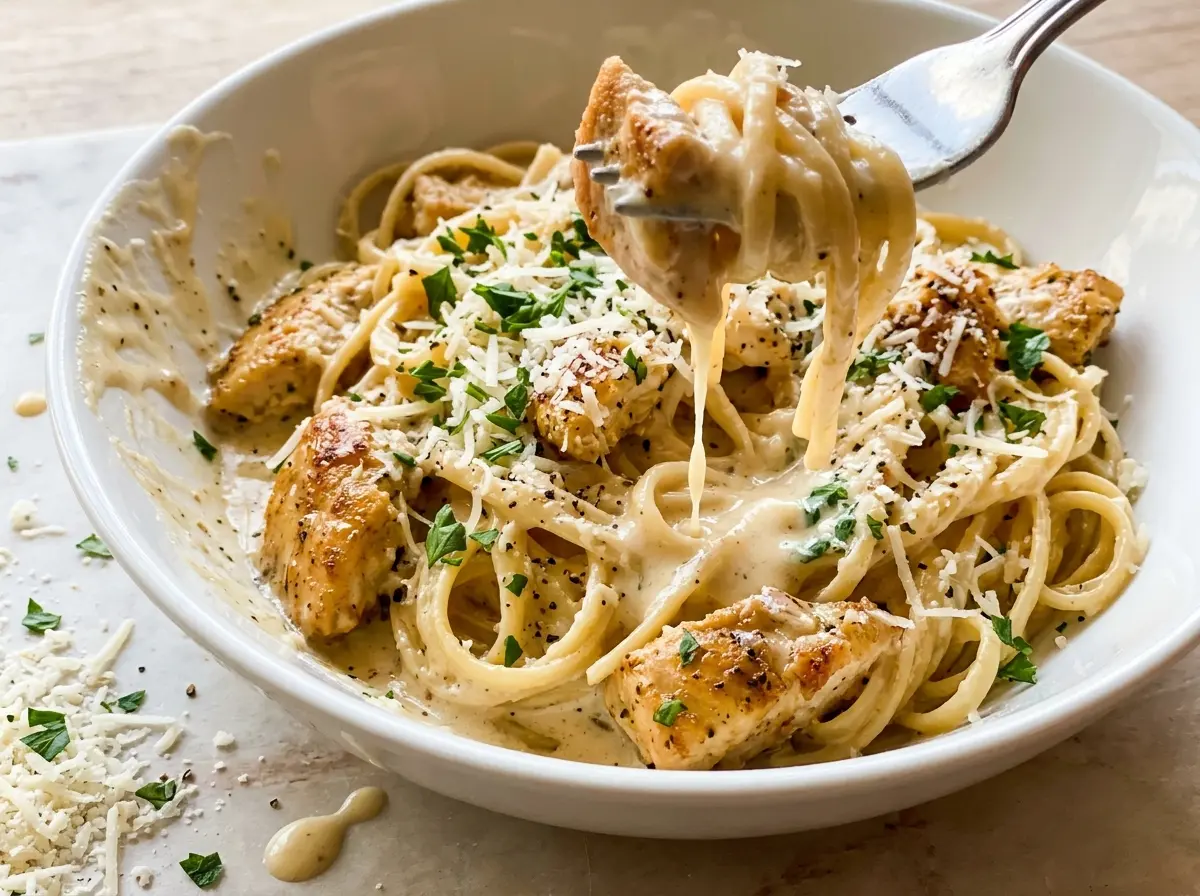
The chicken should sizzle as soon as it hits the skillet, then turn golden at the edges while the centers cook through. If the pieces go into the pan damp, they steam instead, and the creamy garlic Parmesan sauce has to do all the heavy lifting. I pat them dry first, which gives this Creamy Garlic Parmesan Chicken Pasta the browned, savory base that makes each bite taste like more than chicken and cream.
The sauce comes together in that same skillet, so the browned bits left behind meet the butter, garlic, broth, and cream. I take the pan off the heat before stirring in finely grated Parmesan; it melts into the sauce without the high heat that can make cheese clump. A little reserved pasta water brings everything together when the sauce needs loosening, and the fettuccine ends up coated instead of swimming. It’s a cozy, full-flavored bowl with tender chicken and a smooth, glossy sauce.
Kitchen Note
Pat the chicken dry before seasoning it. Moisture on the surface slows browning, so a quick blot helps the pieces color in the skillet instead of steaming.
Save this Creamy Garlic Parmesan Chicken Pasta for a weeknight dinner with golden chicken, silky sauce, and fettuccine coated all the way through.
Why Pasta Water Does More Than Thin the Cream Sauce
A cream sauce can look rich in the skillet and still slide off the noodles once it reaches the plate. The difference here is the starchy water clinging to the fettuccine. As the pasta cooks, some starch moves into the pot water; a little of that water helps the cream sauce cling to the strands instead of pooling underneath them.
That’s why I reserve pasta water before draining, rather than reaching for extra cream at the end. Cream adds richness, but it won’t help the sauce coat the pasta in quite the same way. Add the reserved water only as needed while tossing, and give the noodles a moment to pick up the sauce before adding more. The finished pasta should look glossy, with sauce on the noodles and just enough left in the skillet to catch each bite.
What the Chicken, Cream, and Parmesan Each Bring to the Sauce
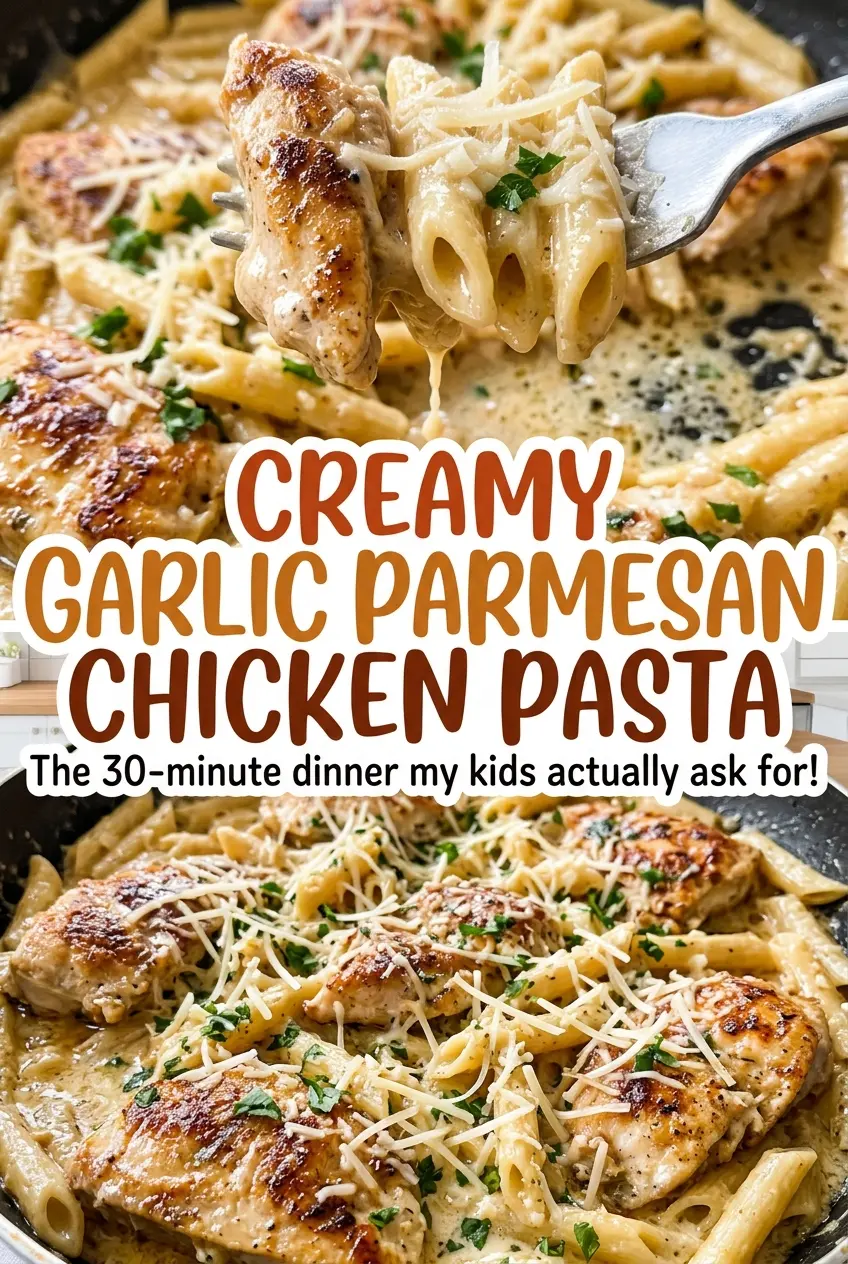
- Chicken breasts — Boneless, skinless breasts cut into even pieces cook quickly and are easy to coat in sauce. Look for pieces that are similar in size so they finish at about the same time; trimming them into consistent chunks matters more than buying a particular brand.
- Fettuccine — The wide ribbons give the cream sauce plenty of surface to cling to. Use a good-quality dried pasta if that’s what you keep on hand; the package cooking time is the useful guide for reaching al dente.
- Heavy cream and chicken broth — Cream gives the sauce body, while broth brings savory depth without making it taste like plain dairy. Heavy cream is a better fit than a thinner milk in this preparation because the sauce needs to simmer and coat the pasta.
- Parmesan — Finely grated Parmesan melts into the warm sauce more evenly than coarse shreds. A wedge grated just before cooking gives the smoothest texture, though the important detail is a fine grate rather than large pieces.
- Garlic, butter, and parsley — Butter carries the garlic through the sauce, and fresh parsley adds a clean finish. Mince the garlic before it goes into the skillet so it cooks evenly during its short time in the butter.
From Golden Chicken to a Smooth Parmesan Finish
Brown the Chicken in a Hot Skillet
Season the cut chicken with 1 teaspoon of the kosher salt and the black pepper. Heat the olive oil in a 12-inch skillet over medium-high heat, then add the chicken and turn the pieces occasionally as they cook. Look for browned spots on the outside; the chicken should reach 165°F, which takes about 6–8 minutes. Transfer it to a plate once it’s cooked through so it doesn’t stay in the pan while you build the sauce.
Cook the Fettuccine Until Al Dente
Bring 4 quarts of water and the remaining 2 teaspoons of kosher salt to a boil in a 5- to 6-quart pot. Add the fettuccine and cook it according to the package directions, stopping when it’s al dente rather than soft. Before draining, reserve 1 cup of the pasta water. Don’t skip that pause at the sink; once the water is poured away, you lose the easiest way to adjust the sauce later.
Simmer the Garlic, Broth, and Cream
Melt the butter in the same skillet over medium heat, then add the minced garlic and stir for 30 seconds, just until fragrant. Garlic can turn bitter if it browns, so keep it moving and add the broth and heavy cream promptly. Bring the mixture to a simmer and cook for 3–4 minutes, stirring occasionally. It should look a little thicker than when it first went into the pan, but it doesn’t need to become a heavy, spoon-standing sauce.
Toss Everything Together Off the Heat
Take the skillet off the heat before stirring in the Parmesan, then add the drained fettuccine and cooked chicken. Toss until the noodles are coated and the chicken is distributed through the pasta. If the sauce feels too thick to move around the noodles, loosen it with reserved pasta water as needed. Finish by tossing in the chopped parsley, then serve while the sauce is warm and smooth.
Easy Swaps for Different Noodles and Chicken
Make It Gluten-Free with Gluten-Free Fettuccine
Swap in gluten-free fettuccine and cook it according to its package directions; different brands can soften at different rates, so start checking at the earliest suggested time. Reserve some cooking water before draining. The finished pasta may be a little less elastic than wheat fettuccine, but it still works with the creamy sauce.
Use Boneless Chicken Thighs for a Juicier Bite
Replace the chicken breasts with boneless, skinless thighs cut into 1-inch pieces. Brown them in the same way and cook until they reach 165°F; the timing can vary with the size of the pieces. Thigh meat has a richer taste and stays moist easily, though the pieces may look less uniform when sliced.
Trade Parsley for Chives
Use chopped fresh chives in place of the parsley for a gentler, onion-like finish. Add them at the same point, after tossing the pasta and chicken. The sauce stays creamy, but the fresh-herb note becomes softer and less grassy.
Storage and Reheating
- Refrigerator: Store leftovers in an airtight container for 3–4 days. The pasta will absorb some sauce as it sits, so it won’t be quite as loose as it was fresh.
- Freezer: Freezing isn’t recommended. The cream sauce may separate when thawed, and the cooked fettuccine can turn soft.
- Reheating: Warm leftovers gently in a skillet over low heat with a splash of chicken broth, stirring until hot. Avoid a hard boil, which can make the cream sauce separate.
Questions That Come Up When Making This Chicken Pasta
Creamy Garlic Parmesan Chicken Pasta
Ingredients
Equipment
Method
- Pat the chicken dry and season it with 1 teaspoon of the salt and the pepper.
- Heat the olive oil in a 12-inch skillet over medium-high heat.
- Add the chicken and cook, turning occasionally, until browned and it reaches 165°F, about 6–8 minutes; transfer it to a plate.
- Bring the water and remaining 2 teaspoons salt to a boil in a 5- to 6-quart pot.
- Add the fettuccine and cook according to package directions until al dente.
- Reserve 1 cup pasta water before draining the fettuccine.
- Melt the butter in the same skillet over medium heat.
- Add the garlic and cook for 30 seconds, stirring, until fragrant.
- Add the chicken broth and heavy cream and simmer for 3–4 minutes, stirring occasionally, until the sauce is slightly thickened.
- Remove the skillet from the heat and stir in the Parmesan until melted.
- Add the drained pasta and chicken and toss to coat.
- Loosen the sauce with reserved pasta water as needed.
- Toss with the parsley.