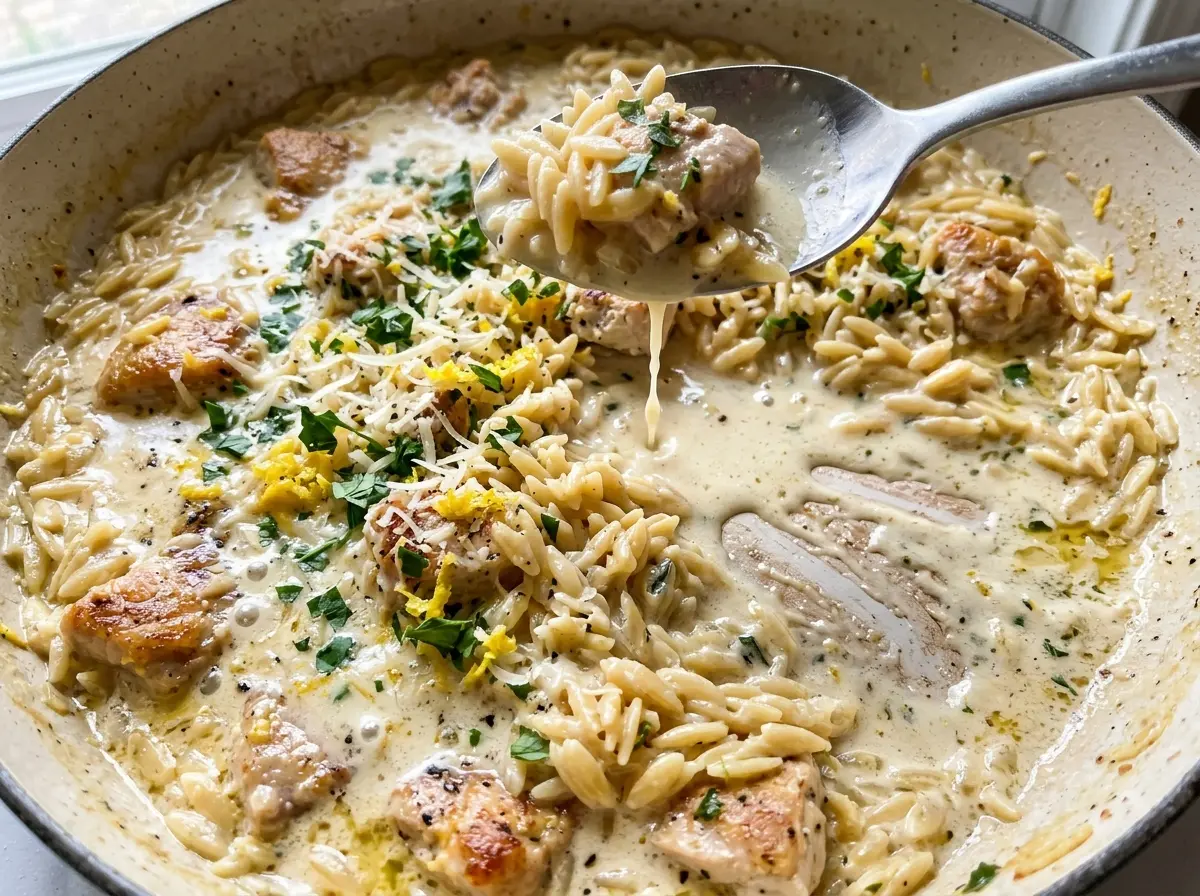
When the chicken hits the hot skillet, it takes a minute for the pale pieces to turn golden. Give them a little space and let that first side brown before turning; the color left on the pan becomes part of the flavor in this creamy lemon chicken orzo. The finished skillet has tender chicken and pasta in a sauce that’s rich from cream and Parmesan, with lemon keeping each bite bright.
I like this dish because the orzo cooks right in the skillet with the broth, so it picks up the savory base instead of tasting like pasta added at the end. The chicken goes back into the pan to finish cooking alongside it, and spinach, cream, Parmesan, and lemon go in after the skillet comes off the heat. That order keeps the finish smooth and lets the spinach wilt gently into the warm orzo.
Kitchen Note
Let the finished skillet stand for the full 2 minutes before serving. It may look a touch loose when you first stir everything together, but the orzo thickens the sauce as it rests.
Save this creamy lemon chicken orzo for a one-skillet dinner with tender chicken, wilted spinach, and a bright lemon finish.
Why the Chicken Browns First but Finishes in the Orzo
Chicken breast cooks quickly, so leaving it in the skillet for the entire time the orzo simmers can make it tough. Browning the pieces first gives them a golden exterior and leaves savory bits in the pan, but it doesn’t have to cook them through. They return to the skillet with the broth, where they finish gently while the orzo cooks.
That two-part cooking also makes the timing easier to manage. The chicken gets color over medium-high heat, then the skillet’s heat drops before the onion and garlic go in. Once the broth is simmering under the lid, the chicken stays nestled in the liquid rather than taking another round of direct high heat. Stirring the orzo every few minutes helps it cook evenly and keeps the pasta from settling against the bottom. At the end, check the thickest chicken pieces rather than judging doneness by the browned outside.
Why Orzo, Cream, Parmesan, and Lemon Each Matter

- Chicken breast — Cutting it into even 1-inch pieces helps the chicken brown and finish cooking at a similar pace. Choose pieces that are close in size; unusually large chunks can lag behind the smaller ones.
- Orzo and low-sodium broth — Orzo is small enough to cook directly in the skillet, and its starch helps give the broth a creamy body. Low-sodium broth leaves room for the Parmesan’s saltiness. Store-brand broth works well; another pasta shape isn’t a direct swap because its cooking time and liquid needs differ.
- Onion and garlic — Finely chopped onion softens into the base, while minced garlic brings a more concentrated savory note. Fresh garlic has the clearest flavor here, but there’s no need to seek out a specialty onion; a small yellow onion is the right fit.
- Heavy cream and Parmesan — Cream gives the sauce its smooth, rounded texture, and finely grated Parmesan adds a salty, savory finish. Finely grated cheese melts into the sauce more evenly than coarse shreds. I wouldn’t replace the cream with milk; it makes a thinner sauce and is more likely to curdle beside the lemon.
- Lemon — The finely grated zest brings fragrant citrus oils, while the juice supplies the sharper acidity that balances the cream. Use a fresh lemon so you get both parts. Bottled juice won’t provide the zest that gives the dish its fresh lemon aroma.
- Baby spinach — Its tender leaves wilt into the warm orzo without needing a separate cooking step. Baby spinach is convenient and tender; tougher greens won’t soften in quite the same way during the short finish.
How to Brown the Chicken and Simmer the Orzo Without Losing the Sauce
Get Golden Color on the Chicken
Toss the chicken with the kosher salt and black pepper until the pieces are evenly coated. Heat the olive oil in a 12-inch deep skillet over medium-high heat, then add the chicken and cook for 4 to 5 minutes, turning occasionally, until browned. The outside should have golden patches, not just a gray cooked surface. Transfer the chicken to a plate; it will finish cooking later.
Soften the Onion and Toast the Orzo
Reduce the heat to medium and melt the butter in the same skillet. Cook the finely chopped onion for 3 to 4 minutes, until softened, then add the minced garlic and cook for 30 seconds. Stir in the orzo and let it cook for 1 minute, stirring so the pasta gets coated in the buttery onion mixture. If the garlic starts to darken, move straight on to the broth rather than letting it turn bitter.
Simmer Until the Pasta Is Tender
Pour in the low-sodium chicken broth, add the dried oregano, and return the chicken and any juices on the plate to the skillet. Bring the mixture to a boil, then cover, reduce the heat to low, and simmer for 10 to 12 minutes. Stir every few minutes so the orzo doesn’t stick to the bottom, and check that the skillet is simmering gently rather than boiling hard. The orzo should be tender, and the thickest chicken pieces should reach 165°F.
Finish Off the Heat
Take the skillet off the heat before stirring in the heavy cream, baby spinach, finely grated Parmesan, lemon zest, and lemon juice. Stir for about 1 to 2 minutes, until the spinach wilts and the sauce looks cohesive. The residual heat is enough to soften the spinach and blend the finish without continuing to boil the cream and cheese. Let the skillet stand for 2 minutes before serving.
Three Small Changes That Give This Skillet a Different Finish
Leave Out the Spinach
For a simpler chicken-and-orzo skillet, omit the spinach and keep the rest of the ingredients and method the same. The sauce will stay creamy, with no leafy texture, and the lemon and Parmesan will come through more clearly.
Make the Lemon Hit in Two Moments
Use the full lemon, but stir the zest into the cream and Parmesan first, then add the juice gradually while stirring. You’ll still use all the zest and juice, but separating the additions gives you a chance to keep the citrus aroma distinct from its sharper finish.
Skip the Parmesan for a Less Savory Finish
Leaving out the Parmesan changes the balance: the cream still makes the orzo smooth, but the sauce loses some salty, savory depth. Keep the rest of the ingredients unchanged, including the lemon, which helps the cream taste less heavy.
Storage and Reheating
- Refrigerator: Store leftovers in an airtight container for 3 to 4 days. The orzo will continue absorbing sauce, so it will be thicker the next day.
- Freezer: Freeze airtight portions for up to 2 months. The orzo softens after thawing, and the creamy sauce may separate slightly, so the texture won’t be quite as smooth as freshly made.
- Reheating: Warm a portion gently in the microwave in short intervals, stirring between them. High heat can make the sauce separate and the orzo overly soft.
Questions That Come Up When Making Creamy Lemon Chicken Orzo
Creamy Lemon Chicken Orzo
Ingredients
Equipment
Method
- Toss the chicken with the salt and pepper to coat evenly.
- Heat the olive oil in a 12-inch deep skillet over medium-high heat.
- Add the chicken and cook for 4 to 5 minutes, turning occasionally, until browned; transfer it to a plate.
- Reduce the heat to medium and melt the butter in the skillet.
- Cook the onion for 3 to 4 minutes until softened.
- Add the garlic and cook for 30 seconds.
- Stir in the orzo and cook for 1 minute.
- Add the broth and oregano, then return the chicken and any juices to the skillet and bring to a boil.
- Cover, reduce the heat to low, and simmer for 10 to 12 minutes, stirring every few minutes, until the orzo is tender and the chicken reaches 165°F in the thickest pieces.
- Remove the skillet from the heat and stir in the heavy cream, spinach, Parmesan, lemon zest, and lemon juice until the spinach wilts, about 1 to 2 minutes.
- Let stand for 2 minutes to thicken before serving.