When a fork slips through a potato chunk with no resistance, it’s ready to drain; a minute too soon can leave stubborn little lumps in the bowl. I learned to check a few pieces from different parts of the pot before calling them tender. That small pause helps these Creamy Three Cheese Mashed Potatoes turn out smooth without having to mash them endlessly.
Yukon Golds bring a naturally creamy texture, while cream cheese adds body and cheddar and Parmesan bring two distinct kinds of savory flavor. I warm the milk before adding it, then mash it in gradually. Cold milk can cool the potatoes quickly, and pouring it all in at once makes it harder to judge how creamy the mash is getting.
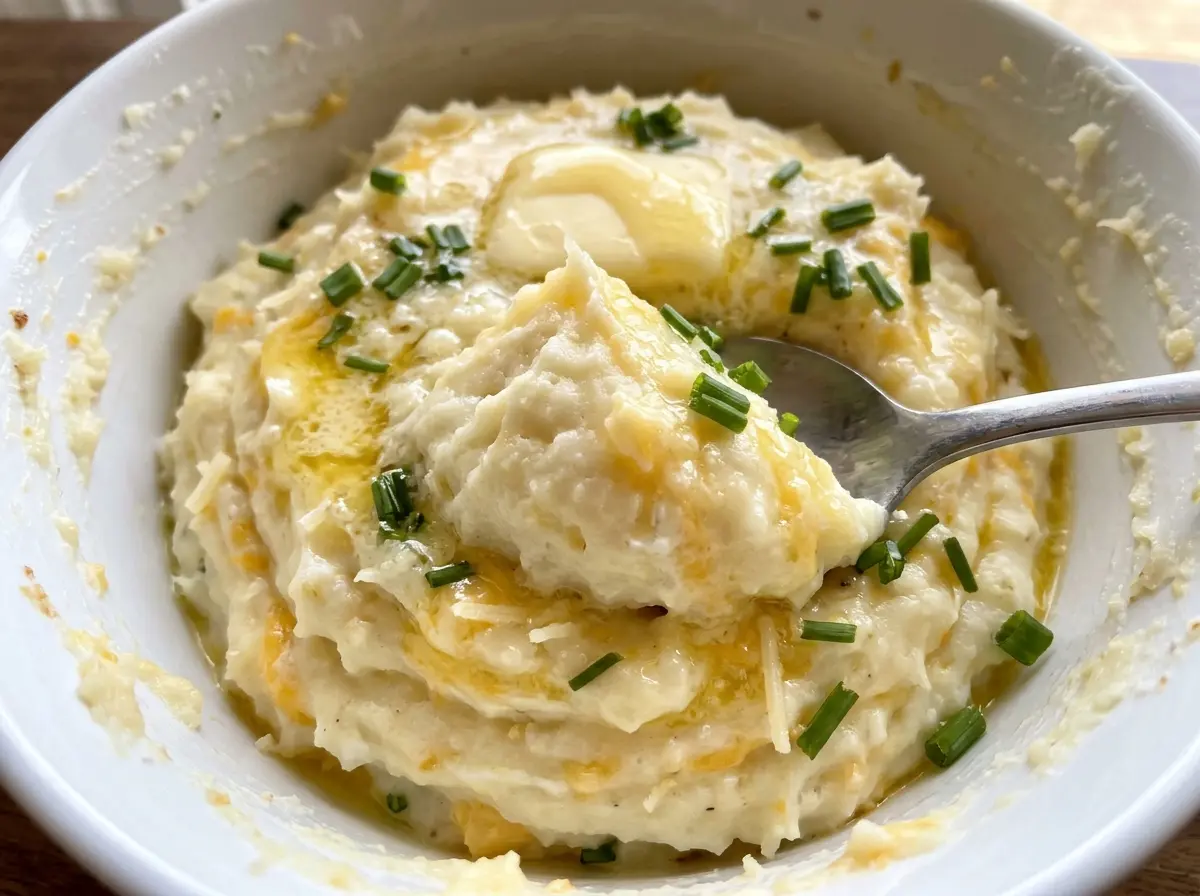
The result is soft and rich, with melted cheese throughout rather than a layer of cheese sitting on top. They’re comforting straight from the pot, with a gentle sharpness from the cheddar and Parmesan.
Kitchen Note
Warm the milk until it’s steaming, not boiling, and mash it in gradually. The potatoes take it in more evenly this way, so you can stop when the texture feels right instead of trying to correct a loose mash.
Save these Creamy Three Cheese Mashed Potatoes for a smooth, cheesy side that starts with Yukon Golds and finishes with melted cheddar and Parmesan.
Why the Potatoes Need a Dry Finish Before the Cheese Goes In
Boiled potatoes hold water on their surfaces and in the spaces between the chunks. If that water goes straight into the mash, it dilutes the butter, cream cheese, and milk before they can give the potatoes their creamy texture. The result can taste thin even when you’ve added plenty of dairy.
After draining, I return the potatoes to the pot over low heat and shake the pot now and then. The brief time back on the burner lets excess moisture steam away without browning the potatoes or drying out their centers. You’ll see steam rising, and the potato pieces will look less wet at the edges. That small drying step gives the dairy room to coat the potatoes instead of competing with leftover cooking water.
It also helps to cut the potatoes into evenly sized chunks. Pieces around the same size become tender together, so you’re less likely to have some falling apart while others still resist the fork. Yukon Golds are naturally creamy, but they still benefit from being cooked until fully tender and drained well.
What Yukon Golds, Cream Cheese, and Two Cheeses Each Bring

- Yukon Gold potatoes — Their creamy, lightly buttery flesh makes a smooth mash without relying on extra dairy for body. Choose firm potatoes without soft spots. Peeling and cutting them into even chunks helps them cook at the same pace; russets work in a pinch, but they make a drier, fluffier mash.
- Cream cheese — Softened cream cheese gives the potatoes a little tang and helps create a rich, cohesive texture. Let it soften before it goes into the hot potatoes so it blends without leaving cold lumps. Full-fat cream cheese gives the closest result; reduced-fat versions tend to make the mash less rich.
- Whole milk — Milk loosens the mash while keeping it creamy. Warming it first helps it blend into the hot potatoes smoothly. Whole milk gives the fullest texture; lower-fat milk works, though the finished potatoes won’t feel quite as lush.
- Sharp cheddar — Sharp cheddar contributes the most familiar, pronounced cheese flavor. Use a cheddar whose flavor you enjoy on its own, since it remains noticeable in the finished dish. Shredded cheese melts more evenly when its strands are loose rather than pressed into clumps.
- Parmesan — Finely grated Parmesan brings a salty, savory edge that balances the cheddar. Fine shreds disappear into the mash more readily than coarse pieces. A fresh, finely grated Parmesan gives the cleanest melt, while packaged finely grated cheese is convenient for everyday cooking.
- Unsalted butter — Butter adds a rounded, familiar richness without bringing extra salt along for the ride. Unsalted butter lets the measured salt stay in control. The butter goes into the hot potatoes with the cream cheese, where it melts as you mash.
From Tender Potato Chunks to a Creamy Cheese Finish
Simmer Until a Fork Slides In Easily
Put the peeled potato chunks in a 6-quart pot and add cold water until they’re covered by 1 inch. Stir in 2 teaspoons of the kosher salt, bring the water to a boil over high heat, then reduce the heat and simmer uncovered for 15 to 20 minutes. Check a few chunks with a fork; it should pass through easily. If the centers still feel firm, give them more time rather than trying to mash them smooth later.
Steam Off the Water Clinging to the Potatoes
Drain the potatoes well, then return them to the pot over low heat for 1 to 2 minutes. Shake the pot occasionally so the chunks don’t sit in one spot. Watch for the excess moisture to steam away; you’re not looking for browned edges. This is a short drying stage, so stay nearby and take the pot off the heat when the surface looks less wet.
Mash in the Butter, Cream Cheese, and Warm Milk
Warm the milk in a microwave-safe measuring cup for 45 to 60 seconds, until it’s steaming but not boiling. Add the butter and softened cream cheese to the hot potatoes, then mash until mostly smooth. Gradually mash in the warm milk, pausing as needed to check the texture. Adding it little by little makes it easier to stop at creamy rather than loose.
Fold in the Cheddar and Parmesan
Fold in the shredded cheddar, finely grated Parmesan, remaining 1/2 teaspoon of kosher salt, and black pepper. Keep folding until the cheeses melt and the potatoes look creamy throughout. If you still see a few cheese strands, continue folding rather than mashing hard; the goal is an even finish without working the potatoes more than needed. Taste a spoonful before serving so you can tell the cheeses have blended through the mash.
Small Changes That Keep the Three-Cheese Balance
Make the Cheddar More Prominent
For a sharper, more cheddar-forward version, shift some of the Parmesan portion toward the sharp cheddar while keeping the total cheese amount the same. The mash will taste tangier and less nutty, so keep some Parmesan in the mix if you want its savory finish.
Choose Vegetarian-Rennet Cheeses
For a vegetarian version, use cheddar and a Parmesan-style hard cheese made with vegetarian rennet. The texture and savory character stay close to the original; the ingredient change is in how the cheeses are made. Check the cheese packaging for the rennet information.
Storage and Reheating
- Refrigerator: Refrigerate in a covered container within 2 hours and use within 3 to 4 days. The potatoes will firm up as they chill.
- Freezer: Freeze in an airtight container for up to 1 month for the best texture. Thaw in the refrigerator; the potatoes may be a little less smooth after freezing.
- Reheating: Reheat gently in a saucepan over low heat, stirring often, or in the microwave in short intervals, stirring between each. If the mash seems stiff, stir in a splash of milk. Reheat leftovers to 165°F, and avoid high heat, which can make the dairy separate.
Questions That Come Up With These Cheesy Mashed Potatoes
Creamy Three Cheese Mashed Potatoes
Ingredients
Equipment
Method
- Put the potatoes in a 6-quart pot and add the water to cover them by 1 inch.
- Stir in 2 teaspoons salt.
- Bring to a boil over high heat, then reduce the heat and simmer uncovered for 15 to 20 minutes, until the potatoes are fork-tender.
- Drain the potatoes and return them to the pot over low heat for 1 to 2 minutes, shaking the pot occasionally until excess moisture steams off.
- Warm the milk in a microwave-safe measuring cup in the microwave for 45 to 60 seconds, until steaming but not boiling.
- Add the butter and cream cheese to the hot potatoes and mash until mostly smooth.
- Gradually mash in the warm milk.
- Fold in the cheddar, Parmesan, remaining 1/2 teaspoon salt, and pepper until the cheeses are melted and the potatoes are creamy.