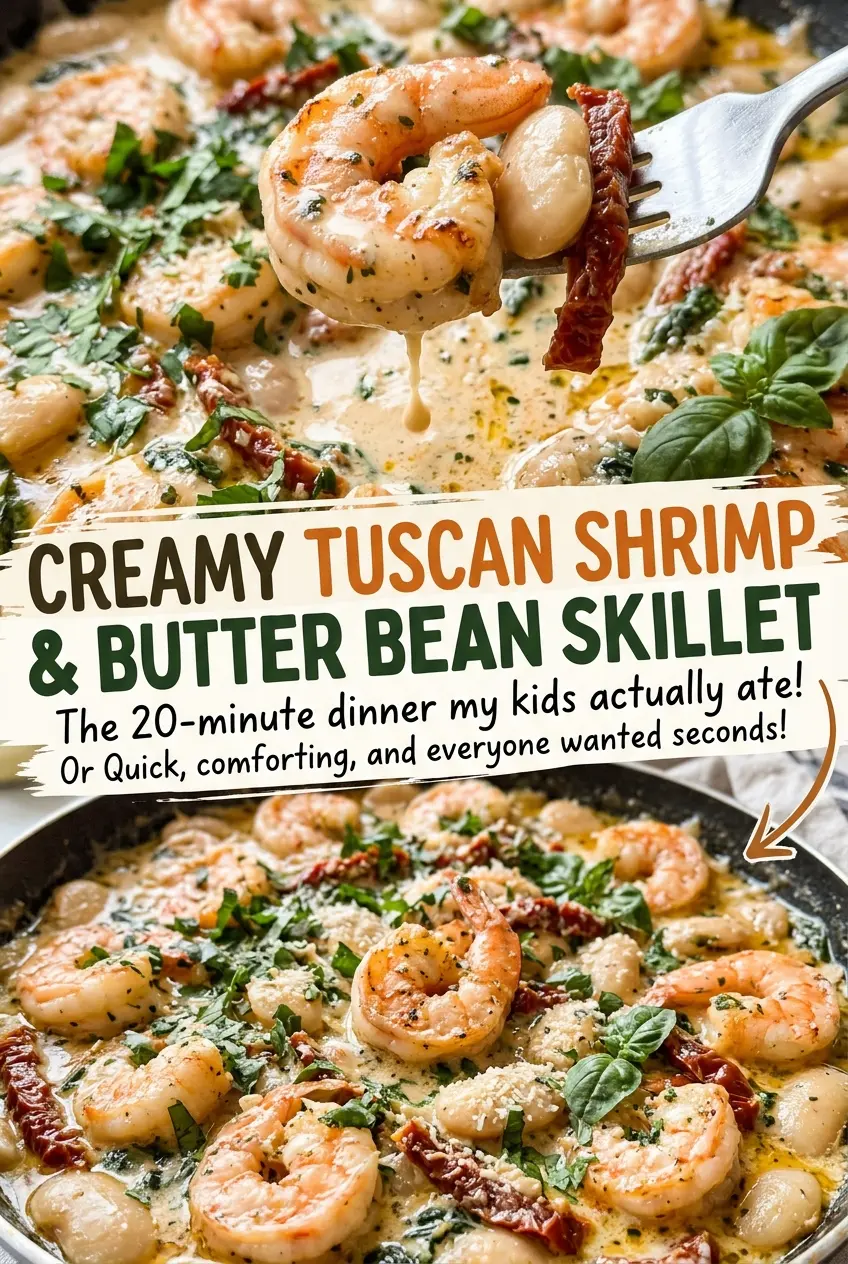
When the shrimp hit a hot skillet, the edges turn pink and the centers go from translucent to opaque in a couple of minutes. Leaving them in while the cream and beans simmer is an easy way to overcook them, so I cook them first and set them aside. That small timing choice makes this Creamy Tuscan Shrimp and Butter Bean Skillet feel like a complete dinner without sacrificing tender shrimp.
The sauce starts in the same skillet, where butter, garlic, sun-dried tomatoes, and Italian seasoning pick up the browned bits left by the shrimp. Butter beans make it hearty, spinach softens into the cream, and Parmesan gives the sauce enough savory depth to cling to every spoonful. A little lemon juice at the end keeps the rich sauce tasting bright, with tender beans and shrimp in every bite.
Kitchen Note
Add the lemon juice after the shrimp goes back into the skillet. It lifts the creamy sauce without muting the fresh, bright finish.
Save this creamy Tuscan shrimp and butter bean skillet for a cozy, filling dinner with a silky tomato-cream sauce.
Why the shrimp leaves the pan before the creamy beans go in
Shrimp cook quickly, while the beans need a few minutes in the sauce to warm through and help it thicken. Those timings don’t match. If the shrimp stayed in the skillet for the full simmer, they’d keep cooking as the cream reduced and the spinach wilted, leaving you with firm, tight bites instead of tender ones.
Cooking the shrimp first gives them a brief sear and leaves flavorful browned bits behind. The broth loosens those bits into the sauce, and the shrimp only return for a short warm-through at the end. The beans get their own time in the cream, so they’re warm and coated without needing a long cook. You end up with distinct textures: plump shrimp, soft spinach, and butter beans that hold their shape in a rich sauce.
What gives the skillet its creamy, savory balance
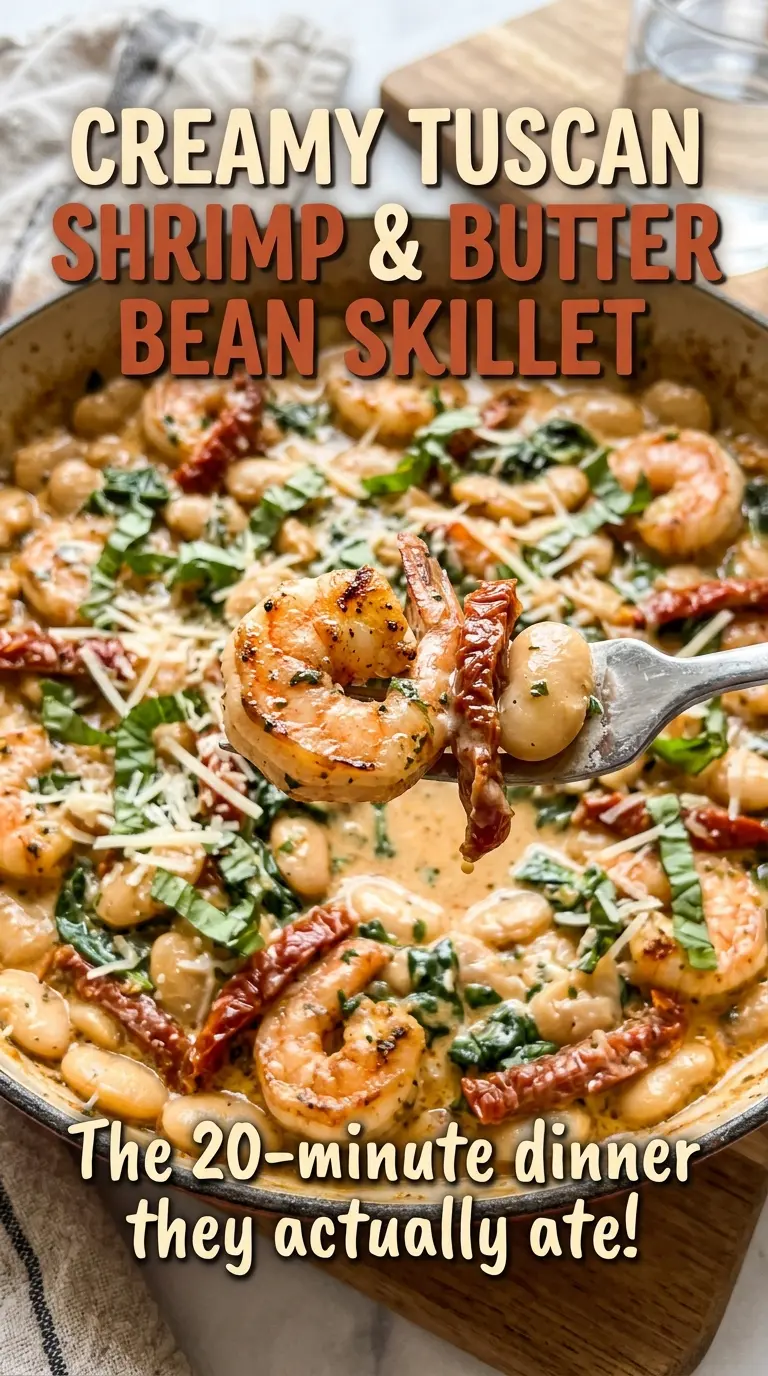
- Large shrimp — Peeled and deveined shrimp are quick to cook and easy to eat in a skillet dinner. Patting them dry helps them sear instead of releasing moisture straight into the pan. Large shrimp are a better fit here than tiny ones, which cook too quickly and are harder to keep tender.
- Oil-packed sun-dried tomatoes — These bring concentrated tomato flavor and a little of the savory richness that makes the cream taste layered rather than plain. Drain them before chopping so extra oil doesn’t make the sauce greasy. Oil-packed tomatoes are convenient and already tender; dry-packed tomatoes aren’t a direct swap without rehydrating them first.
- Heavy cream and Parmesan — Heavy cream gives the sauce body, while grated Parmesan adds saltiness and a savory finish as it melts. Half-and-half makes a thinner sauce, and pre-shredded Parmesan may not melt as smoothly as freshly grated cheese. If you use a dairy-free version, choose a cooking cream meant for savory dishes and a Parmesan-style alternative; the sauce will taste less rich and cheesy.
- Butter beans — Their soft, creamy centers make this skillet filling, and their size gives them a substantial bite alongside the shrimp. Drain and rinse them well to remove the canning liquid, which can cloud the sauce. Cannellini beans are the closest easy swap: they’re a little firmer but hold together well in a gentle simmer.
- Baby spinach and lemon — Baby spinach wilts quickly without needing a separate cooking step. Lemon juice cuts through the richness of the cream and cheese, so add it fresh for the cleanest taste. Bottled juice works in a pinch, but it tends to taste less lively here.
- Low-sodium chicken broth — Broth loosens the browned bits from the skillet and gives the sauce a savory base. Low-sodium broth leaves room for the salt, Parmesan, and sun-dried tomatoes to season the dish without making it overly salty. If you only have regular broth, season cautiously and taste the finished sauce before adding anything else.
Build the sauce while the shrimp rests
Season and sear the shrimp
Pat the shrimp dry, then season them with kosher salt and black pepper. Heat the olive oil in a 12-inch skillet over medium-high heat and arrange the shrimp in a single layer. Cook for 1 to 2 minutes per side, until opaque and 145°F in the thickest part, then transfer them to a plate. If the skillet is crowded, the shrimp won’t brown as well, so keep them in one layer.
Start the tomato-garlic base
Reduce the heat to medium and melt the butter in the same skillet. Add the minced garlic, chopped sun-dried tomatoes, and Italian seasoning, stirring for 30 seconds. Keep the garlic moving so it turns fragrant without browning. Pour in the chicken broth, scrape up the browned bits, and let it simmer for 1 minute.
Give the beans time in the cream
Stir in the heavy cream and the drained, rinsed butter beans. Bring everything to a gentle simmer, not a hard boil, and cook for 3 to 5 minutes. The sauce should thicken slightly and coat the beans, while the beans stay whole. If it’s bubbling vigorously, lower the heat before the cream reduces too far.
Wilt the spinach and finish the skillet
Add the spinach and grated Parmesan, stirring until the leaves wilt and the cheese melts, about 2 minutes. Return the shrimp to the skillet and add the lemon juice. Stir gently for about 1 minute, just until the shrimp are heated through. The finished sauce should look glossy, with the spinach folded through rather than sitting in a pile.
Easy ways to adapt this shrimp and bean skillet
Use cannellini beans for a firmer bite
Swap the butter beans for the same quantity of drained and rinsed cannellini beans. They’re slightly firmer and less buttery, but they stay intact in the cream sauce and work with the same simmering time.
Make it dairy-free
Use olive oil in place of the butter, and replace the heavy cream with an equal amount of unsweetened dairy-free cooking cream. Stir in dairy-free Parmesan-style cheese instead of Parmesan. The sauce will be less rich and may not thicken quite as much, so choose a cooking cream rather than a thin beverage-style milk.
Storage and Reheating
- Refrigerator: Store leftovers in an airtight container for 3 to 4 days. The sauce thickens as it chills, and the shrimp will be firmer after reheating.
- Freezer: Freezing the finished skillet isn’t recommended. The cream sauce can separate after thawing, and the shrimp’s texture suffers.
- Reheating: Warm leftovers gently in a skillet over low heat, stirring until they reach 165°F; add a small splash of chicken broth if the sauce is too thick. Avoid a hard boil, which can make the shrimp tough and the sauce less smooth.
Questions that come up when making this skillet
Creamy Tuscan Shrimp and Butter Bean Skillet
Ingredients
Equipment
Method
- Pat the shrimp dry and season with the salt and pepper.
- Heat the olive oil in a 12-inch skillet over medium-high heat.
- Add the shrimp in a single layer and cook for 1 to 2 minutes per side, until opaque and 145°F in the thickest part. Transfer the shrimp to a plate.
- Reduce the heat to medium and melt the butter in the skillet.
- Add the garlic, sun-dried tomatoes, and Italian seasoning and cook for 30 seconds, stirring.
- Pour in the chicken broth and scrape up any browned bits.
- Simmer for 1 minute.
- Stir in the heavy cream and butter beans and bring to a gentle simmer.
- Cook for 3 to 5 minutes, until the sauce thickens slightly.
- Add the spinach and Parmesan and stir until the spinach wilts and the cheese melts, about 2 minutes.
- Return the shrimp to the skillet, add the lemon juice, and stir gently until the shrimp are heated through, about 1 minute.