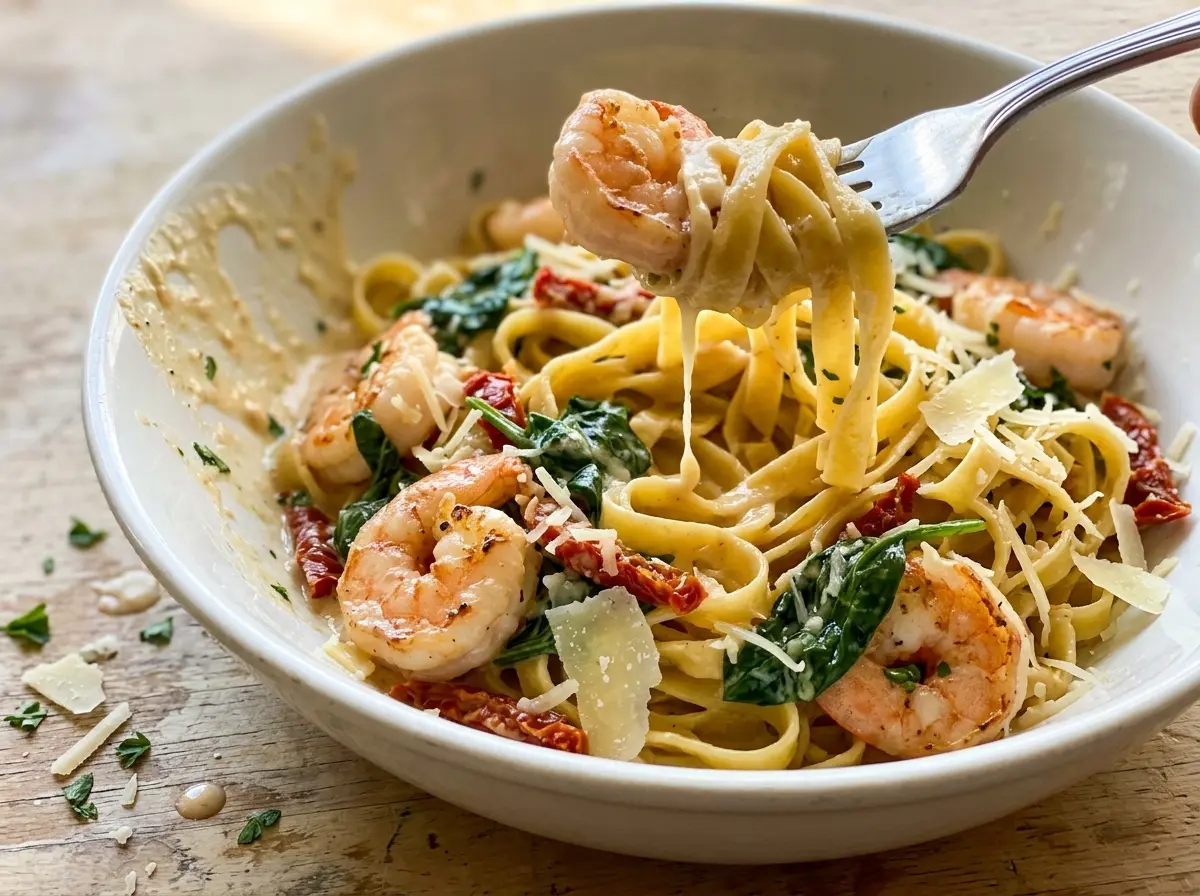
The shrimp cook fast enough that I like to have the pasta water reserved before I even heat the skillet. Drain the fettuccine without saving that starchy water and the sauce has less help clinging to every ribbon. I learned to set a measuring cup beside the pot before draining, and now this creamy Tuscan shrimp pasta comes together without a last-minute scramble.
The sauce starts with garlic and oil-packed sun-dried tomatoes, then turns silky with cream and finely grated Parmesan. I keep the heat gentle once the cream goes in; a calm simmer gives the flavors a little time to mingle without rushing the sauce. Spinach wilts right into the skillet, and the shrimp go back in at the end, so they stay tender instead of sitting over the heat while everything else cooks. Each forkful has a little tomato, spinach, and shrimp tucked through the creamy fettuccine.
Kitchen Note
I set the Parmesan and spinach beside the stove before starting the sauce. The garlic and tomatoes cook in a quick burst, and having the next ingredients ready keeps the butter from sitting in the hot skillet while I look for them.
Save this creamy Tuscan shrimp pasta for a night when you want tender shrimp, silky Parmesan sauce, and sun-dried tomatoes in every bite.
Why the Pasta Water Goes In After the Creamy Sauce Is Built
Cream gives this sauce its richness, but cream alone can sit heavily on the pasta instead of coating it. The reserved pasta water brings a little starch along with it, helping the sauce cling to the fettuccine as you toss everything together. It also loosens the sauce without thinning it as abruptly as plain water would.
That timing matters. The water goes into the skillet with the drained pasta, after the Parmesan has melted and the spinach has wilted. Tossing at that point lets the sauce settle around the noodles, rather than adding liquid to the cream before you know how much the pasta needs. Start with the reserved amount and toss until the noodles look evenly coated. The finished sauce should move with the pasta, not pool separately at the bottom of the skillet.
Remember to save the water before draining; once it goes down the sink, you can’t get that starch back. A small measuring cup set beside the pot makes this easy to remember, especially when the shrimp and sauce are moving along quickly.
What Gives This Tuscan Cream Sauce Its Tomato, Garlic, and Parmesan Backbone
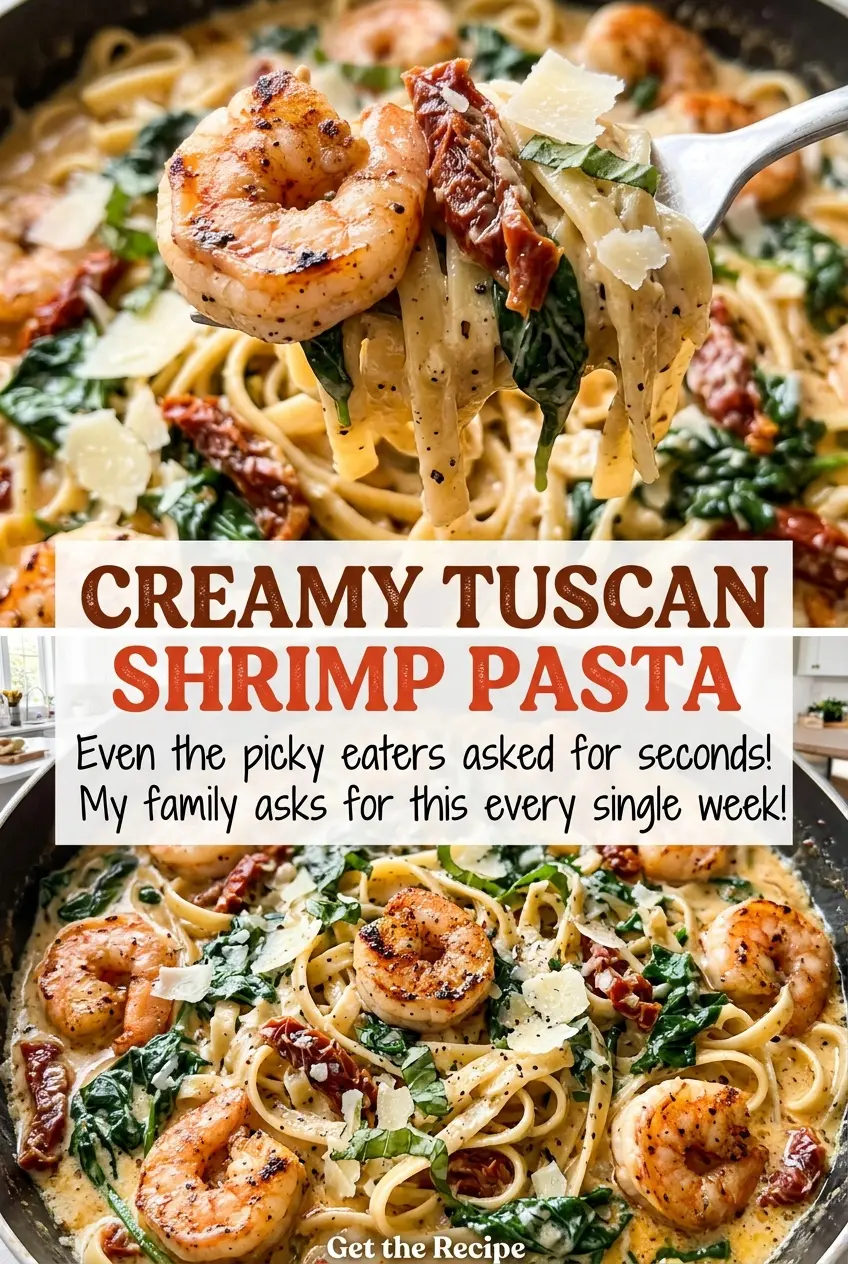
- Large shrimp — The large size gives you a little more room between a tender center and an overcooked one. Patting them dry helps them cook in the skillet instead of releasing surface water. Tails removed also makes the finished pasta easier to eat. There isn’t another ingredient in this dish that can replace the shrimp’s texture; leaving them out gives you a different, shrimp-free pasta.
- Oil-packed sun-dried tomatoes — These bring concentrated tomato flavor and a chewy bite that fresh tomatoes wouldn’t provide in the same way. Drain them before chopping so extra oil doesn’t change the balance of the sauce. Their distinctive sweet-tart flavor doesn’t have a like-for-like replacement among the other ingredients here.
- Heavy cream and Parmesan — Cream forms the body of the sauce, while finely grated Parmesan adds savory depth and melts smoothly into it. Grate the cheese finely so it incorporates without leaving larger clumps. Neither ingredient has a direct substitute within this ingredient list; leaving one out changes the sauce’s richness or its cheesy finish.
- Fettuccine and spinach — The broad noodles catch the sauce well, and baby spinach wilts quickly into the skillet. Keep the spinach dry after washing, if needed, so extra water doesn’t dilute the finished sauce. The reserved pasta water is useful precisely because it adds a little body as it loosens the noodles and sauce.
The Fast Skillet Sequence That Keeps the Shrimp Tender
Cook the Fettuccine and Save Its Starchy Water
Bring a large pot of water to a boil, add the fettuccine and 1 tablespoon of kosher salt, then cook the pasta according to the package directions until al dente. Before draining, set aside 1/4 cup of pasta water. Drain the noodles and keep them close by while you cook the shrimp and sauce. Al dente pasta has a little bite; it will get tossed again in the skillet.
Sear the Shrimp in a Single Layer
Pat the shrimp dry, then season them with the remaining 1/2 teaspoon of kosher salt and the black pepper. Heat the olive oil in a 12-inch skillet over medium-high heat and arrange the shrimp in a single layer. Cook for 1 to 2 minutes per side, until they’re opaque and have reached 145°F. Transfer them to a plate once cooked; leaving them in the skillet during the sauce stage would keep them over the heat too long.
Build the Sauce Without Rushing the Simmer
Reduce the heat to medium and melt the butter in the same skillet. Add the minced garlic and drained, chopped sun-dried tomatoes, stirring as they cook for 30 seconds. Pour in the chicken broth and heavy cream, then stir in the Italian seasoning and bring the mixture to a gentle simmer. Cook for 2 to 3 minutes; keep the simmer gentle rather than letting the cream boil hard.
Finish with Parmesan, Spinach, Pasta, and Shrimp
Stir in the finely grated Parmesan until the sauce is smooth, then add the baby spinach. Stir for 1 to 2 minutes, until the leaves have wilted into the sauce. Add the drained fettuccine and reserved pasta water, tossing until the noodles are coated. Return the shrimp and toss just until heated through, then serve while the sauce is creamy.
Three Practical Ways to Change the Shrimp-and-Pasta Balance
Make It Shrimp-Free
Leave out the shrimp and cook the fettuccine with the same creamy tomato, Parmesan, and spinach sauce. The dish becomes a meatless pasta, though it isn’t vegetarian while made with chicken broth; the sauce will also have less contrast in texture without the shrimp.
Leave Out the Spinach
Skip the spinach if you want the sauce to read more strongly as cream, Parmesan, garlic, and sun-dried tomato. The pasta will lose the tender leafy texture and green color, but the sauce and shrimp still make a complete skillet pasta.
Arrange the Shrimp on Top
For a more composed look, toss the pasta with the sauce and spinach, then arrange the cooked shrimp over the noodles instead of tossing them back through. This keeps the shrimp visible on top and gives everyone an easy way to portion them. The shrimp are already cooked, so let the hot pasta warm them as you plate.
Storage and Reheating
- Refrigerator: Refrigerate leftovers within 2 hours and use them within 3 days. The pasta will absorb sauce as it sits, so expect it to be thicker the next day.
- Freezer: Freezing isn’t ideal for this cream-based pasta. The sauce may separate and the noodles can turn soft after thawing.
- Reheating: Warm leftovers gently in a skillet with a splash of water, stirring until the center reaches 165°F. Avoid a hard boil, which can make the sauce separate and the shrimp tough.
Questions That Come Up When Making Creamy Tuscan Shrimp Pasta
Creamy Tuscan Shrimp Pasta
Ingredients
Equipment
Method
- Bring a large pot of water to a boil.
- Add the fettuccine and 1 tablespoon of the salt, and cook according to package directions until al dente.
- Reserve 1/4 cup pasta water, then drain the pasta.
- Pat the shrimp dry and season with the remaining 1/2 teaspoon salt and the black pepper.
- Heat the olive oil in a 12-inch skillet over medium-high heat.
- Add the shrimp in a single layer and cook for 1 to 2 minutes per side, until opaque and 145°F; transfer to a plate.
- Reduce the heat to medium and melt the butter in the skillet.
- Add the garlic and sun-dried tomatoes and cook for 30 seconds, stirring.
- Add the chicken broth, heavy cream, and Italian seasoning, bring to a gentle simmer, and cook for 2 to 3 minutes.
- Stir in the Parmesan until smooth.
- Add the spinach and cook for 1 to 2 minutes, stirring, until wilted.
- Add the drained pasta and reserved pasta water to the skillet and toss to coat.
- Return the shrimp and toss until heated through.