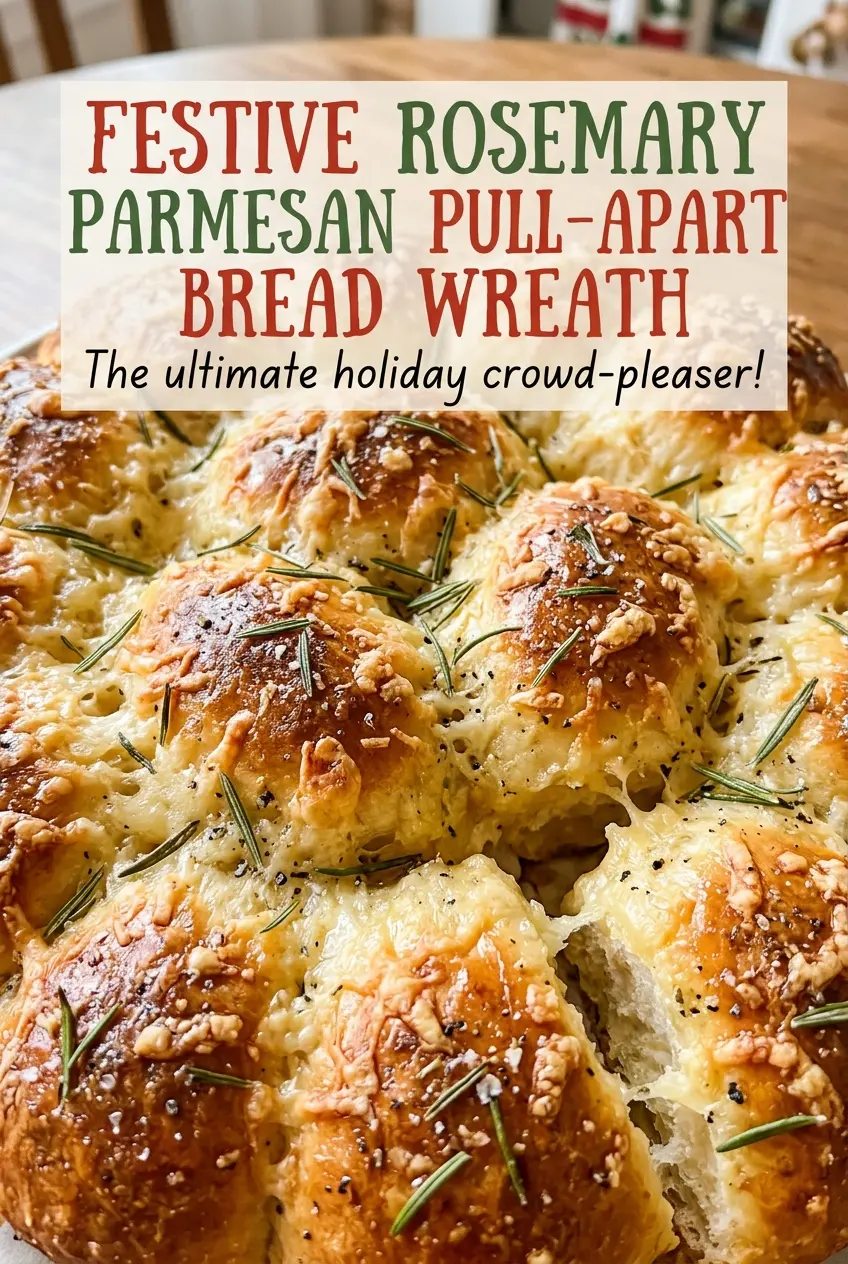
The Parmesan turns golden first, then the rosemary butter starts to smell warm and woodsy as the rolls bake. That’s when I start checking the center, because the outside can look ready before the middle is. This Festive Rosemary Parmesan Pull-Apart Bread Wreath is made from soft, yeasted dough rolled into small balls and coated one by one, so every piece gets its own buttery, savory crust.
The wreath shape comes from arranging the dough in two staggered rings rather than trying to form one long rope. The rolls touch as they rise and bake, but stay easy to pull apart when served. I like this approach because it gives the bread a clear center opening and keeps the pieces evenly sized, with plenty of Parmesan clinging to the sides.
Set out the butter, rosemary, and Parmesan before shaping; once your hands are buttery, it’s easier to keep the coating station ready than to stop and hunt for something. The finished bread is tender inside, golden at the edges, and fragrant with rosemary.
Kitchen Note
Set the egg out before you warm the milk. A room-temperature egg blends into the dough more smoothly, so you won’t start with a cold, stiff mixture.
Save this rosemary Parmesan bread wreath for a holiday table or any gathering where warm, pull-apart bread belongs in the middle.
Why the Inner Ring Needs to Sit Between the Outer Rolls
A wreath can lose its shape if the dough balls are arranged in two tidy circles with each row directly behind the other. The offset pattern matters: the inner rolls sit in the gaps between the outer ones, which links the rings as the dough expands. That gives the baked bread a connected structure instead of two separate circles with a weak seam.
The spacing also helps the center stay open. Arrange the outer ring first, then set the inner balls into the spaces between them, keeping the overall circle even. The balls will puff toward one another during the second rise, so don’t try to press them together or close the center by hand. Once baked, the rolls hold the wreath shape while still pulling apart in individual pieces.
That little bit of planning makes serving easier, too. There’s no need to cut wedges or tear through a dense center; each roll can be lifted away from its neighbors.
What Makes the Rosemary-Parmesan Coating Cling

- Whole milk and active dry yeast — The milk gives the dough a tender crumb, while active dry yeast needs a warm, sweetened liquid to wake up. Use a thermometer for the milk rather than guessing; too-cool milk can slow the start, and milk that’s too hot can harm the yeast.
- All-purpose flour — It makes a soft dough that’s sturdy enough to roll into balls and hold the coating. Measure it without packing it into the cup; too much flour can leave the rolls dense and make the dough harder to knead.
- Olive oil and egg — These enrich the dough and help keep the baked rolls tender. A basic olive oil is fine here; a strongly flavored one can come through more than you may want.
- Fresh rosemary — Fresh leaves bring a bright, resinous aroma that stands up to the cheese. Chop them finely so the pieces distribute over the rolls instead of falling off in large needles.
- Finely grated Parmesan — Fine shreds coat the dough more evenly than broad, thick shreds and form a savory crust as they bake. A good-quality finely grated Parmesan is worth choosing; it doesn’t need to be an expensive specialty cheese.
- Butter and garlic powder — Melted butter helps the cheese and rosemary adhere, while garlic powder spreads evenly through the coating. Garlic powder is a better fit than fresh garlic here because it won’t add wet, uneven bits to the butter.
From Foamy Yeast to a Golden, Pull-Apart Wreath
Wake Up the Yeast and Knead the Dough
Stir the warm milk, active dry yeast, and sugar together in a large bowl, then leave the mixture for 5–10 minutes. A layer of foam tells you the yeast is active; if the surface stays flat, pause before adding the rest. Whisk in the egg and olive oil, then stir in the flour and kosher salt until the dough looks shaggy. Knead on a clean counter for 8–10 minutes, until it feels smooth and elastic rather than rough or sticky.
Give the Dough Time to Double
Return the dough to the bowl, cover it, and let it rise at room temperature for 60–90 minutes. Look for dough that has visibly doubled, not just a few bubbles around the edges. A cooler kitchen can put the rise toward the longer end of that window. Don’t shape it while it’s still compact; the first rise builds the softness that makes the finished rolls easy to pull apart.
Coat Each Ball and Build the Two Rings
Stir the melted butter, chopped fresh rosemary, and garlic powder in a medium bowl, and place the finely grated Parmesan in a separate bowl. Divide the dough into 20 equal pieces and roll each piece into a ball. Dip each ball in the rosemary butter, then coat it with Parmesan, and arrange 12 balls in an outer ring about 8 inches across on a parchment-lined 18×13-inch sheet pan. Add 8 balls in an inner ring about 4 1/2 inches across, offsetting them between the outer balls; brush over any remaining butter and sprinkle on leftover Parmesan.
Proof Until Puffy, Then Bake Through the Center
Cover the wreath loosely and let it rise for 30–45 minutes, until the rolls look puffy and are nearly touching. Preheat the oven to 375°F during the last 20 minutes of this rise. Bake for 22–27 minutes, checking that the center rolls reach 190°F; the center is the part most likely to need the full bake. If the Parmesan browns too quickly, loosely cover the wreath with foil, then let it rest on the pan for 10 minutes before serving.
Two Easy Ways to Change the Wreath
Make It Dairy-Free
Use an unsweetened plain plant milk in place of whole milk, dairy-free butter instead of unsalted butter, and a dairy-free Parmesan-style alternative for the coating. The dough may be a little less rich, and the topping won’t brown quite like real Parmesan, but you’ll still get a fragrant, pull-apart wreath.
Trade Rosemary for Fresh Thyme
Finely chopped fresh thyme gives the buttery coating a softer, earthier herbal note. Use it in place of the rosemary and keep the same coating method; the rolls will still have a savory Parmesan crust, with a more delicate herb aroma.
Storage and Reheating
- Refrigerator: Keep leftover bread covered in the refrigerator for 3–4 days. The rolls will lose some of their fresh-baked softness as they chill.
- Freezer: Freeze the completely cooled wreath, well wrapped, for up to 2 months. Thaw it in the refrigerator before reheating.
- Reheating: Cover loosely with foil and warm in a 300°F oven until heated through. Uncovered reheating can dry the rolls and darken the Parmesan before the center is warm.
Questions That Come Up While Making This Bread
Festive Rosemary Parmesan Pull-Apart Bread Wreath
Ingredients
Equipment
Method
- Stir together the warm milk, yeast, and sugar in a large bowl.
- Let stand for 5–10 minutes until foamy.
- Whisk in the egg and olive oil.
- Stir in the flour and salt until a shaggy dough forms.
- Knead on a clean counter for 8–10 minutes until smooth and elastic.
- Return the dough to the bowl, cover, and let rise at room temperature for 60–90 minutes, until doubled in size.
- Stir together the melted butter, rosemary, and garlic powder in a medium bowl.
- Put the Parmesan in a separate bowl.
- Divide the dough into 20 equal pieces and roll each into a ball.
- Dip each ball in the rosemary butter and coat it with Parmesan.
- Arrange 12 balls in an outer ring about 8 inches across and 8 balls in an inner ring about 4 1/2 inches across, offsetting the inner balls between the outer ones on a parchment-lined 18x13-inch sheet pan.
- Brush the wreath with any remaining butter.
- Sprinkle over any leftover Parmesan.
- Cover loosely and let rise for 30–45 minutes, until puffy and nearly touching.
- Preheat the oven to 375°F during the last 20 minutes.
- Bake for 22–27 minutes, until golden brown and the center rolls reach 190°F; loosely cover with foil if the Parmesan browns too quickly.
- Let rest on the pan for 10 minutes before serving.