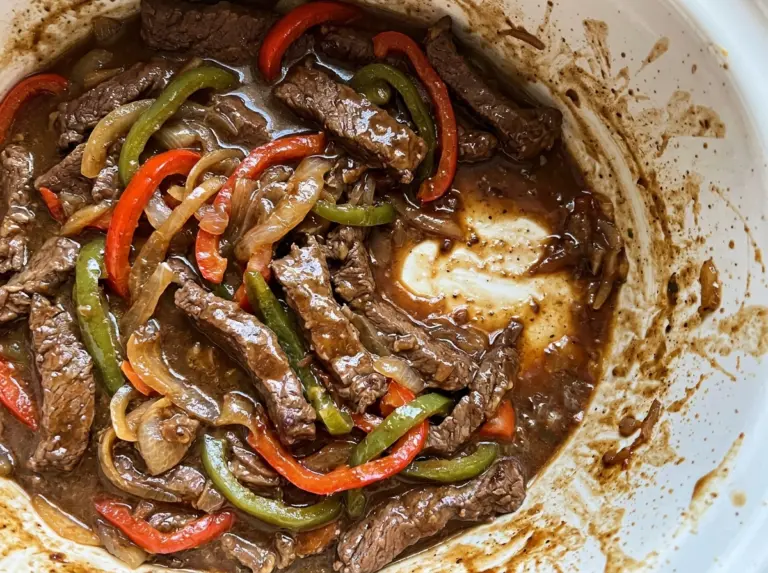
The onions start out piled high in the skillet, but they soften and turn golden before the beef ever goes in. Give them time, and the casserole gets a mellow, savory base instead of tasting like ground beef with noodles stirred through it. That slow start is what makes this French Onion Beef Casserole feel at home on the dinner table, even though it’s made with familiar pantry ingredients.
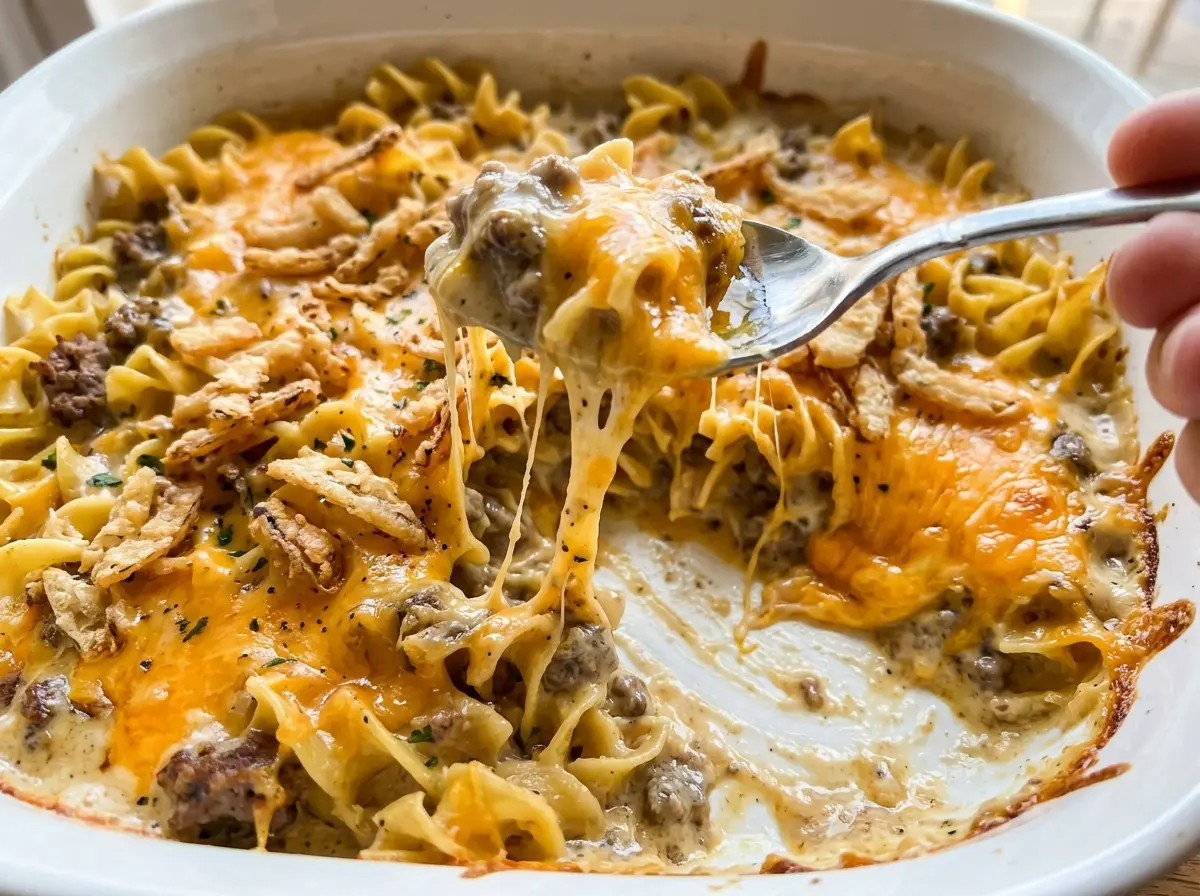
I like how the wide egg noodles catch the beef and onion sauce, while Gruyere melts through the filling and over the top. The French-fried onions go on near the end, not at the beginning, so they keep their crunch. You’ll get a bubbling, creamy casserole with a crisp finish and enough for eight servings.
Kitchen Note
Let the casserole rest for the full 10 minutes after baking before you scoop it. The sauce settles around the noodles, so portions hold together better instead of spreading across the plate.
Save this French Onion Beef Casserole for a cozy dinner: tender noodles, browned beef, melted Gruyere, and a crisp French-fried onion finish.
Why the Onions Get Their Own 25 Minutes Before the Beef
It’s easy to hurry the onions along because they look like they’re taking over the skillet. But adding the beef too soon changes what happens next: the meat releases moisture, and the onions soften in that liquid instead of gradually turning soft and golden. Cooking the onions first gives them room to develop a deeper, sweeter taste that carries through the whole casserole.
Keep the skillet at medium-low and stir often. The onions won’t brown like a steak searing in a hot pan; they slowly lose volume and become tender, with a warm golden color. If you see them catching or getting dark in spots, lower the heat rather than rushing them. This patient first step gives the casserole its French onion character without needing a complicated sauce or extra ingredients.
After the beef goes in, the onion flavor stays present but doesn’t overwhelm the filling. It’s a small change in order, yet it means the onions and beef each get the cooking they need before the broth and noodles bring everything together.
What the Noodles, Gruyere, and Broth Bring to This Casserole

- Wide egg noodles — Their broad shape gives the sauce plenty of surface to cling to, and they make the filling feel hearty without turning it into a dense pasta bake. Drain them well so excess water doesn’t thin the sauce.
- Yellow onions — They soften into a sweet, savory base as they cook slowly. Thin, even slices help them cook at the same pace; thick pieces may still feel firm when the rest of the filling is ready.
- 85% lean ground beef — This gives the casserole a balance of beef flavor and richness. Breaking it into small pieces as it cooks helps the meat distribute through the noodles rather than forming large clumps.
- Low-sodium beef broth and flour — The broth builds the savory sauce, while the flour gives it enough body to coat the noodles. Low-sodium broth leaves room for the salt already added to the noodles and beef.
- Sour cream and Gruyere — Sour cream makes the sauce creamy, and Gruyere brings a nutty, savory flavor that works especially well with the onions. Stir them in after taking the skillet off the heat for a smooth mixture.
- French-fried onions — These add a crisp finish, distinct from the tender noodles and creamy filling. Their crunch is best when they go on for only the last few minutes of baking.
Build the Filling in the Skillet Before It Goes Into the Baking Dish
Cook the noodles just short of ready
Bring the water to a boil, add the tablespoon of salt, and cook the wide egg noodles for one minute less than the shortest time on the package. They’ll spend more time in the oven later, so this small buffer helps keep them tender rather than soft. Drain them well while you work on the beef and sauce. A little water clinging to the noodles is fine, but don’t leave them sitting in the cooking water.
Soften the onions, then brown the beef
Melt the butter in a 12-inch skillet over medium-low heat and add the thinly sliced onions. Stir often for 25 to 30 minutes, until they’re soft and golden brown. Add the ground beef, the remaining salt, and the black pepper, breaking the meat apart as it cooks. Continue until it’s browned and reaches 160°F; avoid leaving large pieces intact, since they make the finished filling less evenly mixed.
Thicken the broth before adding the dairy
Stir the flour into the beef and onions and cook it for one minute. Gradually add the broth, Worcestershire sauce, and dried thyme, stirring as you pour so the flour blends into the liquid instead of clumping. Simmer for 3 to 5 minutes, stirring, until the sauce thickens slightly. Take the skillet off the heat before stirring in the sour cream and 1 1/2 cups of the Gruyere, then fold in the drained noodles.
Bake the casserole, then add the crunchy finish
Coat a 9×13-inch baking dish with nonstick cooking spray and spread the noodle mixture in an even layer. Sprinkle the remaining Gruyere over the top and bake at 350°F for 20 to 25 minutes, until hot and bubbling. Scatter the French-fried onions over the casserole and return it to the oven for 5 minutes, until they’re crisp and golden. Let it rest for 10 minutes before serving.
Two Easy Ways to Change the Texture Without Changing the Flavor
Put all the Gruyere inside
Stir all of the Gruyere into the noodle mixture instead of reserving some for the top. The casserole will have a more evenly cheesy filling and less of a distinct melted-cheese layer, while the French-fried onions still add crunch.
Skip the French-fried onion topping
Leave off the topping if you prefer a softer finish or don’t have it on hand. The beef, onions, noodles, and Gruyere still make a complete casserole, but you’ll lose the crisp contrast on top.
Storage and Reheating
- Refrigerator: Refrigerate leftovers within 2 hours and keep them covered for 3 to 4 days. The French-fried onions soften as they sit.
- Freezer: Freeze cooled portions in airtight freezer-safe containers for up to 2 to 3 months. The casserole freezes well, though the topping won’t stay crisp.
- Reheating: Reheat in a covered ovenproof dish at 350°F until the center reaches 165°F. Leaving it uncovered the whole time can dry the noodles before the middle is hot.
Questions That Come Up While Making French Onion Beef Casserole
French Onion Beef Casserole
Ingredients
Equipment
Method
- Preheat the oven to 350°F.
- Coat a 9x13-inch baking dish with nonstick cooking spray.
- Bring the water to a boil in a large pot, add 1 tablespoon of the salt, and cook the noodles 1 minute less than the shortest time on the package directions.
- Drain the noodles.
- Melt the butter in a 12-inch skillet over medium-low heat.
- Add the onions and cook for 25 to 30 minutes, stirring often, until soft and golden brown.
- Add the ground beef, the remaining 1 teaspoon salt, and the pepper; cook, breaking up the beef, until browned and it reaches 160°F.
- Stir in the flour and cook for 1 minute.
- Gradually stir in the broth, Worcestershire sauce, and thyme.
- Simmer for 3 to 5 minutes, stirring, until the sauce thickens slightly.
- Remove the skillet from the heat and stir in the sour cream and 1 1/2 cups of the Gruyere.
- Fold in the drained noodles.
- Spread the mixture in the prepared dish and sprinkle with the remaining 1/2 cup Gruyere.
- Bake for 20 to 25 minutes, until hot and bubbling.
- Scatter the French-fried onions over the casserole.
- Bake for 5 minutes, until crisp and golden.
- Let the casserole rest for 10 minutes before serving.