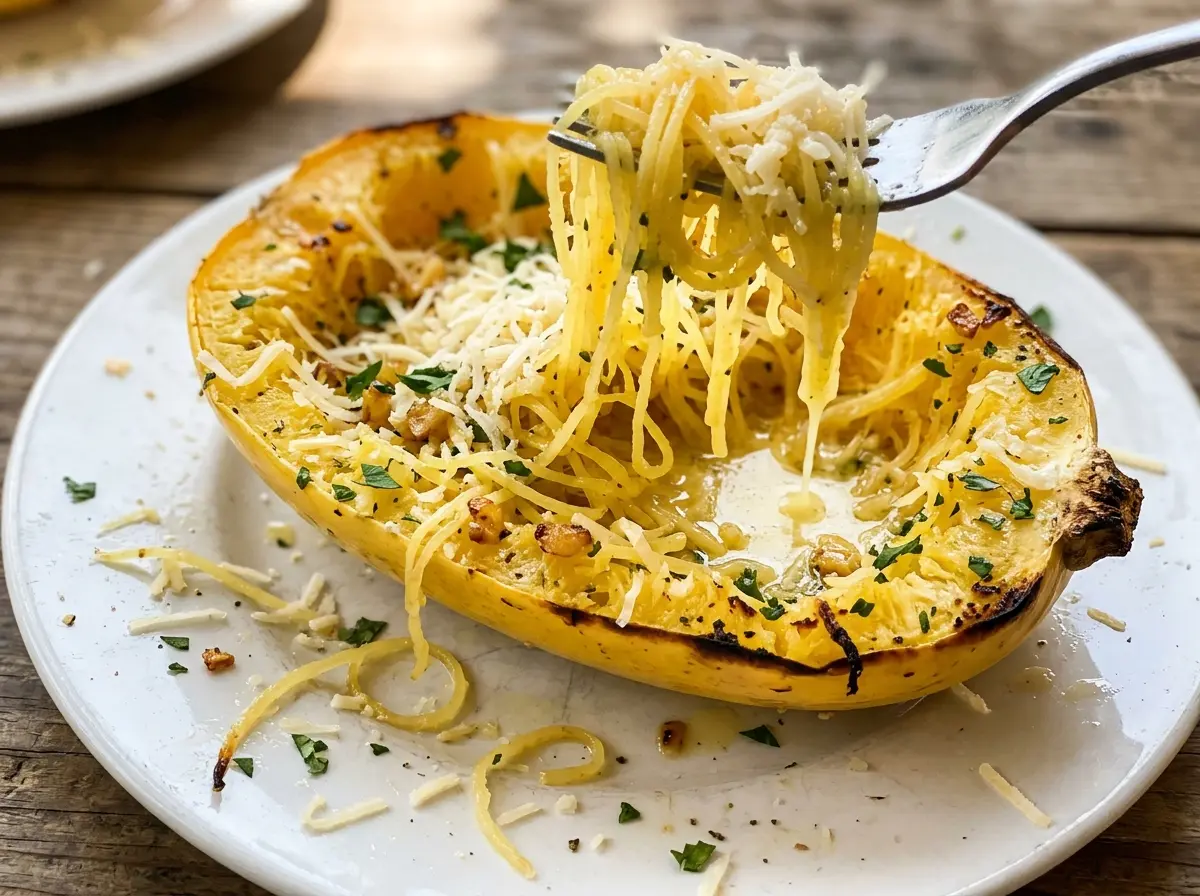
When the roasted squash comes out of the oven, a fork should pull the flesh into distinct strands instead of a soft heap. That small difference changes the whole skillet: the ribbons catch the garlic butter and Parmesan, while over-soft squash turns heavy and damp. Garlic Butter Parmesan Spaghetti Squash keeps the seasoning simple, so the squash still tastes like itself with a buttery, savory finish.
I cook the garlic in melted butter only until its aroma rises, then toss in the squash and finely grated Parmesan. Garlic can turn bitter once it browns, and Parmesan coats more evenly when it’s fine rather than in thick shreds. The skillet finish is brief; the strands need just a minute or two to pick up the butter and cheese, not another round of cooking. That leaves each forkful tender, lightly coated, and full of garlic aroma.
Kitchen Note
Give the roasted squash its full 10-minute rest before scraping. I get cleaner strands when the squash has had a moment to settle, and it’s easier to handle than piping-hot halves.
Save this garlic butter Parmesan spaghetti squash for a simple side with tender strands and a savory, garlicky finish.
Why Spaghetti Squash Turns Soft Instead of Strand-y
Spaghetti squash needs to become tender enough to separate with a fork, but roasting it until every bit feels soft is a different goal. The strands keep their shape best when you stop at fork-tender, before the flesh breaks down into a loose, wet pile. That texture matters once the squash goes into the skillet: tossing adds a little more heat, and the strands need to hold together while the butter and cheese coat them.
Roasting the halves cut side down gives the flesh time to soften in the oven without adding water to the pan. Start checking at the early end of the roasting window, especially if your squash is on the smaller side. Slide a fork into the thicker part of the flesh. It should pull away in ribbons, but those ribbons should still look distinct rather than mashed. The outside can be tender while a thicker section needs a few more minutes; check again instead of leaving the whole squash in for a long stretch. A firm, strand-holding texture is what makes this dish feel light on the plate instead of watery.
Why Fine Parmesan and Fresh Garlic Matter Here

- Spaghetti squash — Choose one that feels firm and heavy for its size, with an intact rind and no soft spots. The variety matters: its flesh separates into strands, while other squash won’t give you the same texture. A medium squash is a practical size for the four-serving batch.
- Olive oil — It helps the cut flesh roast without drying at the surface. A standard everyday olive oil works well; there’s no need to use a premium finishing oil here.
- Unsalted butter — Unsalted butter keeps the seasoning predictable because the squash is salted separately. Regular grocery-store butter is fine; the browned, nutty character of specialty butter isn’t needed for this quick finish.
- Garlic — Fresh cloves, minced small, spread their aroma through the butter and strands. Mince them evenly so you don’t end up with a few large, sharp pieces among the squash.
- Parmesan — Finely grated cheese clings to the strands and melts into the butter. A block grated finely at home gives a smooth coating, while finely textured store-bought Parmesan is convenient; thick shreds are more likely to stay separate.
- Black pepper — It adds a mild, warm bite that cuts through the butter. Freshly ground pepper has a brighter aroma, but ordinary preground pepper works just fine.
Roasting and Tossing for Strands That Hold Together
Set Up the Squash for Even Roasting
Heat the oven to 400°F and line a rimmed baking sheet with parchment paper. Halve the squash lengthwise and scoop out the seeds, then brush the cut sides with olive oil and season them with kosher salt. Set the halves cut side down on the prepared pan. If the halves wobble, reposition them so they sit steadily before sliding the pan into the oven.
Roast Until Fork-Tender, Not Collapsing
Roast for 35 to 45 minutes, checking for a fork-tender center while the strands still hold their shape. Insert a fork into the flesh and pull gently; it should separate into strands without turning to mush. If the thicker area still resists the fork, give it a little more time and check again. Don’t wait for the whole interior to feel uniformly soft.
Rest, Then Pull the Strands
Let the squash rest for 10 minutes before handling it. Use a fork to scrape the flesh into strands, working from the inside of each half and loosening the flesh without pressing it into a mash. Keep the strands in a loose pile as you scrape. The goal is separated ribbons, not a compacted mass.
Warm the Garlic Butter and Coat the Squash
Melt the butter in a large skillet over medium heat, then add the minced garlic. Stir for 30 to 60 seconds, stopping as soon as it smells fragrant; browned garlic tastes bitter and can take over the dish. Add the squash strands, finely grated Parmesan, and black pepper. Toss until evenly coated and warmed through, about 1 to 2 minutes, then take the skillet off the heat.
Three Small Changes That Suit This Squash
A Dairy-Free Garlic Finish
Replace the butter with olive oil and leave out the Parmesan. The squash will still take on the garlic and pepper, but the finish will be lighter and less creamy, with less of Parmesan’s salty, savory depth.
A More Peppery Finish
Use 1/2 teaspoon black pepper instead of 1/4 teaspoon for a more noticeable bite. The extra pepper gives the rich butter and Parmesan a sharper edge without changing the roasting or skillet method.
Serve It Back in the Shells
Set the empty squash halves aside while you scrape out the strands. After tossing the squash with the garlic butter and Parmesan, spoon it back into the shells for a tidy, rustic presentation; the flavor and texture stay the same.
Storage and Reheating
- Refrigerator: Store leftovers in an airtight container for 3 to 4 days. The strands soften and may release a little moisture as they sit.
- Freezer: Freezing is safe, but thawed squash tends to lose its distinct texture and become wetter, so I don’t recommend freezing this dish.
- Reheating: Warm the leftovers in a skillet over medium-low heat, stirring until heated through. Avoid cooking them for a long time; extended heat softens the strands further.
Questions That Come Up While Making This Squash
Garlic Butter Parmesan Spaghetti Squash
Ingredients
Equipment
Method
- Heat the oven to 400°F.
- Line a rimmed baking sheet with parchment paper.
- Halve the squash lengthwise and scoop out the seeds.
- Brush the cut sides with olive oil.
- Season the squash with the salt.
- Place the squash cut side down on the baking sheet.
- Roast for 35 to 45 minutes, until the flesh is fork-tender but the strands still hold their shape.
- Let the squash rest for 10 minutes.
- Use a fork to scrape the flesh into strands.
- Melt the butter in a large skillet over medium heat.
- Add the garlic and cook for 30 to 60 seconds, stirring, until fragrant but not browned.
- Add the squash strands, Parmesan, and black pepper to the skillet.
- Toss until evenly coated and warmed through, about 1 to 2 minutes.