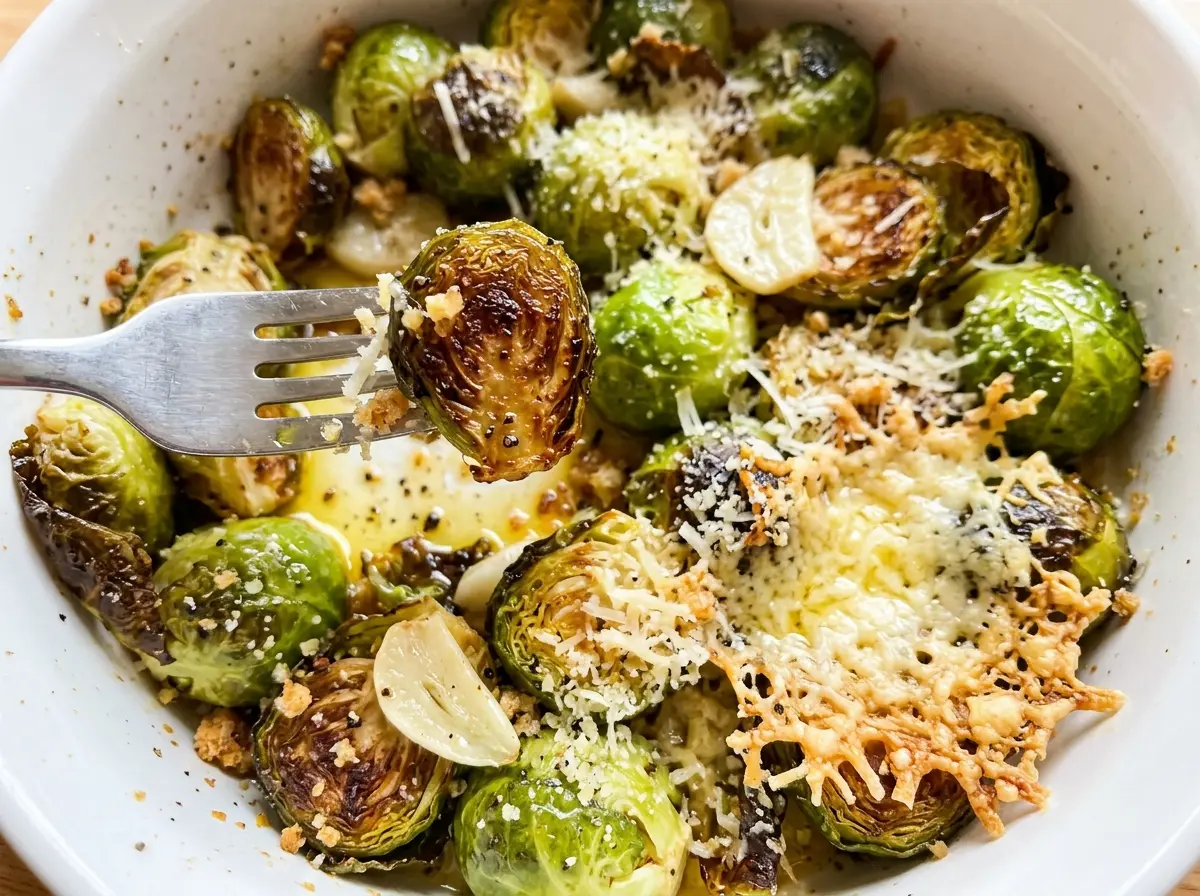
When the baking sheet comes out, the cut faces are what I check first: they should be browned where they’ve been touching the pan, not pale and soft. I learned to give the sprouts a little space and keep them cut side down for their first stretch in the oven. That simple setup gives these Garlic Parmesan Roasted Brussels Sprouts their best shot at crisp edges and tender centers.
The garlic goes in after the sprouts have started roasting, and the Parmesan gets its own short finish at the end. Each addition gets a little time in the oven without asking the delicate ingredients to stay in there for the entire roast. You end up with browned sprouts, fragrant garlic, and a thin layer of melted Parmesan clinging to the edges.
Kitchen Note
Set the sprouts down with their cut faces against the parchment, and leave a little room between them. When they’re crowded, the exposed surfaces don’t brown as evenly, so a spacious layer is worth the extra minute of arranging.
Save these Garlic Parmesan Roasted Brussels Sprouts for a side with browned edges, tender centers, and a just-melted Parmesan finish.
Why the Garlic Waits Until the Sprouts Have a Head Start
Minced garlic has a much shorter path from fragrant to scorched than a halved Brussels sprout does. Give both the full roasting time together and the little garlic pieces can darken before the centers of the sprouts turn tender. Adding the garlic after the first roast means it still gets heat and releases its aroma, but it doesn’t have to endure the entire cook.
The timing also keeps the flavor balanced. Garlic tossed onto the hot sprouts coats their surfaces, then the brief second roast takes away its raw edge. Parmesan waits until the very end for the same reason: it needs only a few minutes to melt over the vegetables. This staggered approach lets the sprouts do the longer work of browning while the garlic and cheese finish gently.
That order matters more than trying to stir everything together at the start. Keep the first stretch focused on the vegetables, then bring in the other flavors as the pan comes back out. The finished bites have a clear garlicky aroma and a browned, savory edge instead of a bitter note from overcooked garlic.
What the Sprouts, Garlic, and Parmesan Each Bring to the Pan
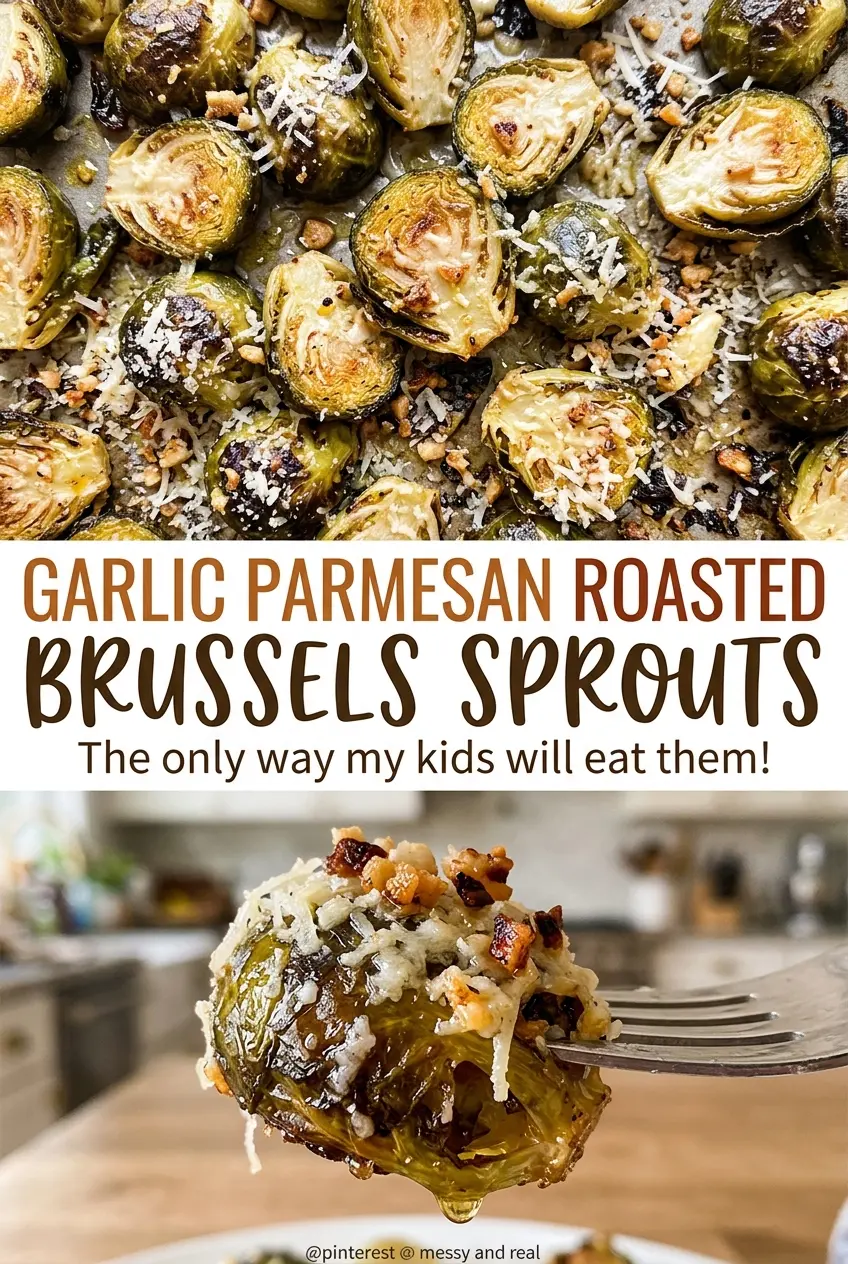
- Brussels sprouts — Choose firm sprouts with tight leaves; the cut halves give the pan a broad surface to brown while the centers soften. Very large sprouts may need a little more time within the second roasting window, so use tenderness and browning as your cues rather than relying on color alone.
- Olive oil — It coats the sprouts so the salt and pepper cling and the surfaces roast instead of drying out. A mild olive oil is a good everyday choice; avocado oil works as a neutral alternative at this oven temperature, though it won’t add the same olive-oil aroma.
- Kosher salt and black pepper — Kosher salt seasons the vegetables throughout, while pepper adds a gentle, savory bite. Fine table salt is denser by volume, so it doesn’t behave like a direct spoon-for-spoon swap; use kosher salt here if you want to keep the seasoning balance predictable.
- Fresh garlic — Minced cloves give the sprouts a lively, rounded garlic flavor that dried seasoning can’t quite reproduce. Mince it finely so it spreads over the vegetables instead of collecting in a few large, easy-to-burn pieces.
- Finely grated Parmesan — Fine shreds melt into a light coating rather than sitting in thick clumps. A wedge grated at home gives a particularly even melt, while packaged finely grated Parmesan is convenient; a sharper aged cheese such as Pecorino Romano can stand in, with a saltier, more assertive finish.
The ingredient list is short, so each element has a clear job. The oil carries the seasoning, the garlic brings its aroma late in the roast, and the cheese supplies the salty finish. There isn’t a substitute for Brussels sprouts that keeps the same shape and roasting behavior, so I keep the vegetable itself unchanged when I want this particular texture.
Four Stages for Browned Sprouts and a Melted Cheese Finish
Prepare the pan and season the halves
Heat the oven to 425°F and line a large rimmed baking sheet with parchment paper. Toss the trimmed, halved Brussels sprouts with the olive oil, kosher salt, and black pepper until the cut faces have a light sheen. Arrange them cut side down in a single layer. The flat side needs contact with the pan to develop those browned patches.
Let the cut faces roast undisturbed
Roast the sprouts for 15 minutes before turning them. That first stretch gives the flat surfaces uninterrupted contact with the hot pan, so resist the urge to shuffle them around early. When you lift one, look for some color on the cut side; the sprouts won’t be fully tender yet. A little resistance at this point is expected.
Toss in the garlic and finish the roast
Turn the sprouts, then toss them with the minced garlic so it’s distributed across the pan instead of left in one pile. Roast for 5–10 minutes more, until the sprouts are tender and browned. Start checking toward the shorter end of that range if your halves are small. The centers should yield when pierced, while the outside still has some color.
Melt the Parmesan over the hot vegetables
Sprinkle the finely grated Parmesan over the sprouts and return the pan to the oven for 2–3 minutes. Watch for the cheese to soften and melt across the vegetables; it doesn’t need a long bake to finish. Pull the pan once the Parmesan has melted. Leaving it in beyond that point can make the cheese too dark before the sprouts benefit from any extra time.
Useful Swaps for a Different Finish, Without Losing the Roast
Make the Parmesan finish dairy-free
Use the same amount of finely grated dairy-free Parmesan-style cheese, choosing one made to melt rather than a dry shaker-style topping. Add it at the same finishing stage. The coating may melt less smoothly and taste a little less savory than dairy Parmesan, but the roasted sprouts and garlic remain the focus.
Trade black pepper for a little heat
Replace the black pepper with the same amount of crushed red pepper flakes. The change makes the seasoning distinctly warmer and more noticeable, while leaving the garlic and melted cheese combination intact. If you prefer mild heat, start with less and season to taste.
Use Pecorino Romano for a sharper edge
Swap in the same amount of finely grated Pecorino Romano for the Parmesan. It melts over the hot sprouts, but its flavor is sharper and saltier, so the finished dish tastes more assertive. Keep the cheese finely grated for an even coating.
Storage and Reheating
- Refrigerator: Store leftovers in an airtight container for 3–4 days. The sprouts soften in storage, and the cut edges won’t stay crisp.
- Freezer: They can be frozen in an airtight container for up to 2 months, but thawed sprouts will be softer and less browned in texture.
- Reheating: Warm them in a single layer in the oven or a skillet until heated through. A microwave works for warming, but it softens the edges further; don’t expect the original crispness to return.
Questions That Come Up While Roasting Brussels Sprouts
Garlic Parmesan Roasted Brussels Sprouts
Ingredients
Equipment
Method
- Heat the oven to 425°F.
- Line a large rimmed baking sheet with parchment paper.
- Toss the Brussels sprouts with the olive oil, salt, and pepper.
- Arrange the sprouts cut side down on the baking sheet.
- Roast for 15 minutes.
- Turn the sprouts.
- Toss the sprouts with the garlic.
- Roast for 5–10 minutes more, until tender and browned.
- Sprinkle with the Parmesan.
- Roast for 2–3 minutes, until the cheese is melted.