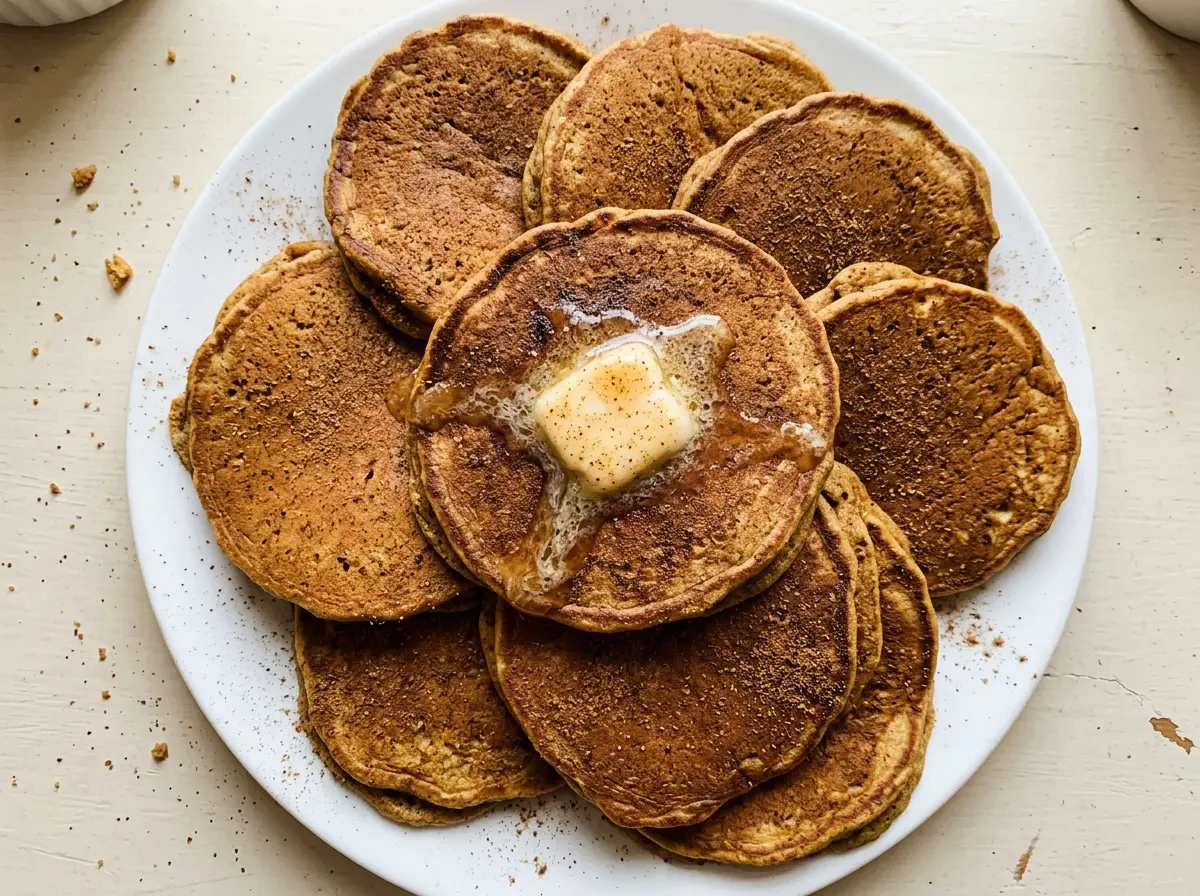
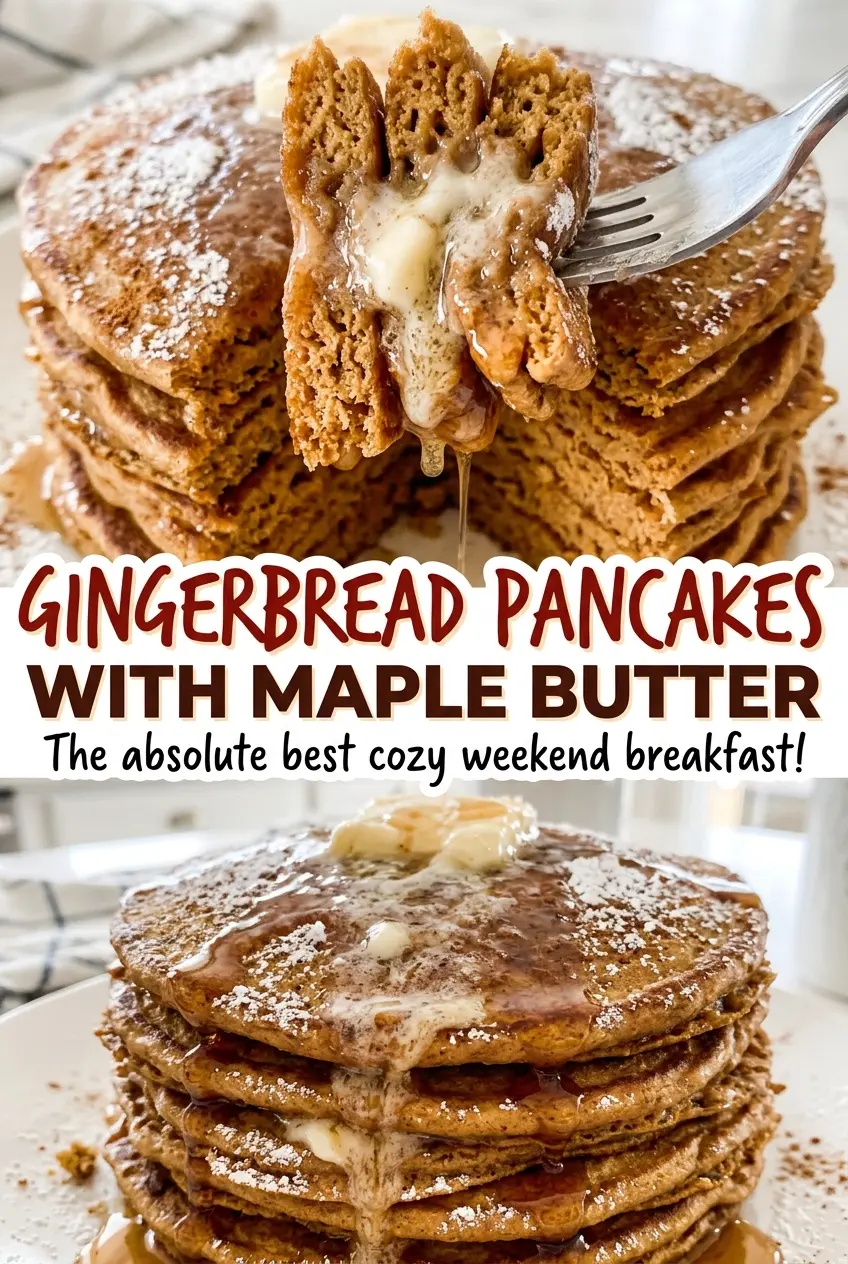
The first pancake hits the skillet and the kitchen starts smelling like ginger, cinnamon, and molasses. These gingerbread pancakes with maple butter bring that deep, cozy flavor to a breakfast batter, but molasses also makes the pancakes brown faster than a plain buttermilk stack.
I use buttermilk alongside unsulphured molasses, then whisk the dry ingredients separately so the spices and leaveners are spread evenly before the bowls meet. The batter should look a little lumpy; stirring until it’s perfectly smooth can make the pancakes dense instead of tender.
Stir the maple butter while the butter is soft, and it’s ready to melt over the pancakes as they come off the griddle. You get warm, gently spiced pancakes with a sweet maple finish in every bite.
Kitchen Note
Use softened butter for the maple butter, not melted butter. It should stir smoothly with the syrup and stay creamy enough to spread over each hot pancake.
Save these gingerbread pancakes with maple butter for a breakfast with warm molasses, fragrant spices, and a soft, tender crumb.
Molasses Makes These Pancakes Brown Before the Center Is Done
Molasses gives gingerbread its dark, rounded sweetness, but it also changes what you see in the pan. Its sugars encourage a deep brown surface, so a pancake can look ready on the outside while the center still needs time. That’s why color alone isn’t a reliable doneness test for this batter.
Keep the skillet or griddle at medium heat rather than turning it up to speed things along. A hotter surface can darken the outside before the middle cooks through, especially with a batter that already contains molasses and brown sugar. The bubbles and set edges are more useful signals for when to flip; the second side needs less time than the first. If a test pancake is browned but still doughy inside, let the next ones cook at the same steady medium heat rather than chasing a darker crust.
The balance of spices matters here, too. Ginger leads, while cinnamon, cloves, and nutmeg give the pancakes a familiar gingerbread warmth without letting one spice take over. Buttermilk keeps that sweetness in check with a gentle tang, so the maple butter can finish the stack without making it taste one-note.
What the Molasses, Buttermilk, and Spice Blend Bring to the Batter
- Unsulphured molasses — This is the main source of the deep gingerbread flavor and color. Its taste is rich without the sharp bitterness that can come with blackstrap molasses, so stick with unsulphured molasses for a balanced pancake.
- Buttermilk — Its acidity works with the baking soda, while its thickness helps make a tender batter. Cultured buttermilk is the best fit; plain milk doesn’t bring the same tang or acidity.
- Ground ginger, cinnamon, cloves, and nutmeg — Ginger gives the most direct warmth, and the other spices round it out. Fresh, fragrant spices make the difference here; if a jar smells faint, its flavor will fade against the molasses.
- Brown sugar and leaveners — Packed light brown sugar adds a softer sweetness and a little moisture. Baking powder and baking soda do different jobs in the batter, so keep both rather than replacing one with extra of the other.
- Pure maple syrup and unsalted butter — Pure maple syrup gives the topping a clean maple taste, while unsalted butter lets you control its seasoning. Pancake syrup won’t taste quite the same in the maple butter.
- All-purpose flour and neutral oil — All-purpose flour gives the pancakes their structure, and neutral oil lightly coats the cooking surface without competing with the spices. A neutral-tasting oil is all you need for the skillet.
Mixing and Cooking the Batter Without Dry, Tough Pancakes
Stir the Maple Butter Until It’s Smooth
In a small bowl, stir the softened butter with the maple syrup and salt until the mixture looks even and creamy. Set it aside while you make the pancakes. If the butter is cold and stiff, it won’t blend smoothly; give it time to soften before stirring rather than melting it.
Whisk the Dry Ingredients Before Adding the Wet
In a large bowl, whisk together the flour, brown sugar, baking powder, baking soda, salt, ginger, cinnamon, cloves, and nutmeg. In a separate medium bowl, whisk the buttermilk, molasses, egg, and melted butter until combined. Pour the wet mixture into the dry ingredients and stir just until no dry flour remains; a few lumps are fine. Stop there instead of working the batter until smooth.
Heat and Lightly Oil the Skillet
Set a 12-inch nonstick skillet or griddle over medium heat. Brush it lightly with some of the neutral oil once it’s hot. Use a thin coating rather than a puddle, which can leave unevenly browned patches. Leave enough room between pancakes to slide a spatula in for flipping.
Cook Each Pancake Until the Center Sets
Scoop 1/4 cup of batter for each pancake. Cook for 2 to 3 minutes, watching for bubbles on top and edges that look set before flipping. Cook the second side for 1 to 2 minutes, until browned underneath and cooked through in the center. Repeat with the remaining batter, lightly oiling the skillet as needed, and serve the pancakes warm with the maple butter.
Two Reliable Ways to Adapt These Gingerbread Pancakes
Make Them Gluten-Free
Replace the all-purpose flour with a cup-for-cup gluten-free flour blend that includes a binder such as xanthan gum. Keep the other ingredients and mixing method the same. The pancakes may be a little more delicate when you flip them, so use a thin spatula and turn them once the edges look set.
Make a Dairy-Free Batch
Use plain, unsweetened dairy-free cultured buttermilk in place of the buttermilk, and plant-based butter in both the batter and maple butter. Choose a plant butter that works for baking and has a mild taste. The pancakes will be a little less rich, but the gingerbread spices and maple topping still come through.
Storage and Reheating
- Refrigerator: Store cooled pancakes in an airtight container for 3 to 4 days. They’ll lose some of their just-cooked softness as they chill.
- Freezer: Freeze cooled pancakes in a single layer, then stack them with parchment between each one in a freezer-safe container for up to 2 months.
- Reheating: Warm pancakes in a toaster or in a covered skillet over low heat until hot throughout; reheat leftovers to 165°F. Avoid high heat, which can dry the edges before the middle warms.
Questions I Get Asked About Gingerbread Pancakes
Gingerbread Pancakes with Maple Butter
Ingredients
Equipment
Method
- Stir the softened butter, maple syrup, and salt until smooth.
- Set the maple butter aside.
- Whisk the flour, brown sugar, baking powder, baking soda, salt, ginger, cinnamon, cloves, and nutmeg in a large bowl.
- Whisk the buttermilk, molasses, egg, and melted butter in a medium bowl until combined.
- Pour the wet ingredients into the dry ingredients.
- Stir just until no dry flour remains; a few lumps are fine.
- Heat a 12-inch nonstick skillet or griddle over medium heat.
- Lightly brush the skillet with some of the oil.
- Scoop 1/4 cup batter per pancake onto the skillet, leaving space between pancakes.
- Cook for 2 to 3 minutes, until bubbles form on top and the edges look set.
- Flip the pancakes.
- Cook for 1 to 2 minutes, until the undersides are browned and the centers are cooked through.
- Repeat with the remaining batter, lightly oiling the skillet as needed.
- Serve the pancakes warm with the maple butter.