The potatoes look almost too wet when they first go into the oven, and that’s exactly the point. They roast in broth, olive oil, and lemon juice before the liquid cooks down, leaving the wedges tender inside with browned edges. I used to expect a dry-roasted surface right away; these Greek lemon roasted potatoes take a slower route to get there.
Russet potatoes are a good fit for that change from brothy to browned. Their soft, fluffy centers soak up the lemony cooking liquid, while the exposed edges color as the pan dries out. Turning the wedges every 20 minutes helps them cook evenly in the 9×13-inch dish.
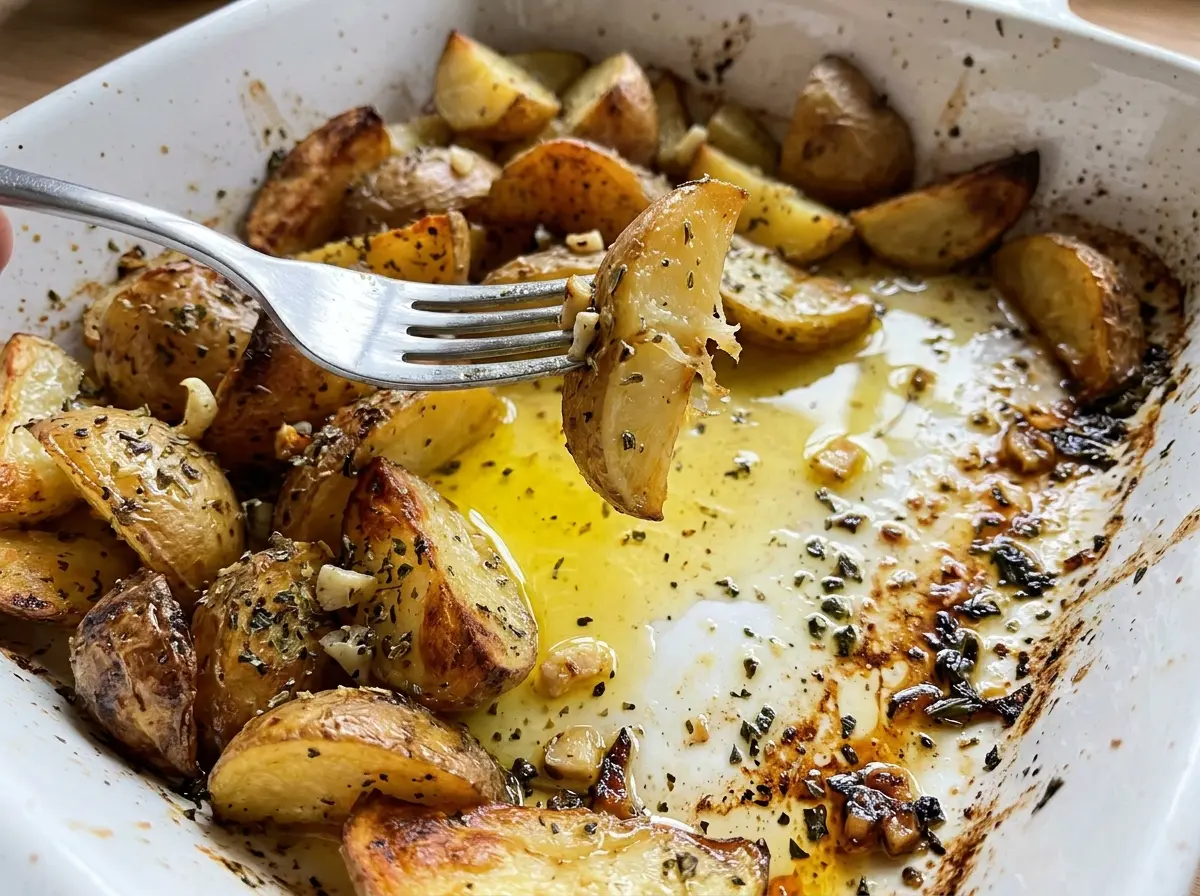
After a short rest, the potatoes are fragrant with garlic and dried oregano, bright with lemon, and soft enough to pierce easily with a fork. They’re a generous, savory side with plenty of browned corners to reach for.
Kitchen Note
Turn the wedges every 20 minutes, even if they still look pale at the first turn. Their color builds as the liquid cooks down, so keep going until the edges are browned and most of the liquid has absorbed.
Save these Greek lemon roasted potatoes for the next time you want tender centers, browned edges, and a bright garlic-oregano finish.
Why These Potatoes Roast in Liquid Before They Turn Golden
These aren’t dry-roasted potatoes with a little lemon added at the end. They start in a shallow mixture of broth, lemon juice, olive oil, and seasonings, so the first part of the roast is about softening the wedges and letting them take on that savory, citrusy flavor. As the liquid cooks down, the potatoes get more direct contact with the hot dish and their edges begin to brown.
That change takes patience. If you pull them while a lot of liquid is still pooled in the dish, the potatoes may be tender but won’t have the same browned edges. On the other hand, waiting for every last drop to disappear isn’t the goal; the potatoes are ready when they’re fork-tender, browned at the edges, and most of the liquid has absorbed. The 60-to-75-minute range gives the liquid time to reduce without rushing the centers.
The 2-inch wedges give the centers time to turn soft while the outside browns. Smaller pieces would cook through sooner, and much larger ones would take longer to become tender. Keeping the pieces close in size helps the pan finish together instead of giving you a mix of firm and falling-apart potatoes.
Why Russets and Fresh Lemon Set the Greek-Style Balance

- Russet potatoes — Their fluffy texture suits a roast that begins with liquid: the centers become tender while the edges take on color. Choose firm potatoes without soft spots, and cut the wedges to a similar size so they cook at the same pace.
- Olive oil — It coats the potatoes and carries the oregano and garlic across their surfaces. A basic everyday olive oil works well here; there’s no need to use a costly finishing oil since it roasts with the other ingredients.
- Broth — Chicken broth gives the pan a savory base, while vegetable broth keeps the dish vegetarian. Either option works in this combination, so choose based on the rest of the meal rather than looking for a special brand.
- Fresh lemon juice — Fresh juice brings a clean, tart note that balances the oil and broth. Roll the lemon firmly against the counter before cutting it to help release the juice, and strain out any seeds as you squeeze.
- Garlic and dried oregano — Minced garlic disperses through the cooking liquid, and dried oregano seasons the potatoes from the start. Mince the garlic finely so it doesn’t leave large, sharp pieces, and keep the oregano dry rather than swapping in fresh herbs that would behave differently during the long roast.
The 20-Minute Turns That Carry the Potatoes from Brothy to Browned
Heat the Oven and Set Up the Dish
Preheat the oven to 425°F before the potatoes go in. Peel the russets and cut them into 2-inch wedges, keeping the pieces as even as you can. A sharp knife gives you cleaner cuts, which makes the wedges easier to turn later. Have the 9×13-inch baking dish ready so the potatoes can sit in an even layer.
Coat the Wedges in the Lemon-Garlic Mixture
Arrange the potatoes in the dish, then add the olive oil, broth, fresh lemon juice, minced garlic, dried oregano, kosher salt, and black pepper. Toss everything until the wedges are coated, then spread them into an even layer. Take a moment to distribute the garlic and oregano rather than leaving them in one concentrated patch. The potatoes should be in the liquid mixture, not piled on top of one another.
Roast and Turn as the Liquid Cooks Down
Roast uncovered for 60 to 75 minutes, turning the potatoes every 20 minutes. At first, the pan will look quite wet and the wedges may still be pale; that’s normal. As the roast continues, look for the liquid to reduce, the edges to brown, and a fork to slide into the centers without resistance. If they need more time within that range, let the visual and fork cues guide you.
Let the Potatoes Settle Before Serving
When the wedges are tender and browned at the edges with most of the liquid absorbed, take the dish from the oven. Let the potatoes rest in the dish for 5 minutes before serving. That short pause gives the hot potatoes a chance to settle rather than breaking apart as soon as they’re moved. The lemony liquid left in the dish can be served alongside the wedges.
Two Broth Choices, One Pan of Lemon-Roasted Potatoes
Choose vegetable broth for a plant-based side
Use vegetable broth instead of chicken broth to keep the potatoes vegetarian and vegan. The lemon, garlic, oregano, and olive oil still give the dish its defining character; the broth simply brings a different savory background.
Use chicken broth for a more savory base
Chicken broth gives the cooking liquid a fuller, more savory note and pairs naturally with the lemon and oregano. It’s the choice to make when you aren’t keeping the side vegetarian; the rest of the method stays the same.
Storage and Reheating
- Refrigerator: Store leftovers in a covered container for 3 to 4 days. The potatoes soften as they sit, and their browned edges won’t stay crisp.
- Freezer: Freezing isn’t my pick for these; thawed potatoes tend to lose their pleasant texture and turn grainy.
- Reheating: Reheat uncovered in the oven until hot throughout, checking that the center reaches 165°F. A microwave works, but it softens the browned edges.
Questions That Come Up Before the Potatoes Hit the Table
Greek Lemon Roasted Potatoes
Ingredients
Equipment
Method
- Preheat the oven to 425°F.
- Arrange the potatoes in a 9x13-inch baking dish and add the olive oil, broth, lemon juice, garlic, oregano, salt, and pepper.
- Toss to coat and spread the potatoes into an even layer.
- Roast uncovered for 60 to 75 minutes, turning the potatoes every 20 minutes, until tender when pierced with a fork and browned at the edges, with most of the liquid absorbed.
- Let the potatoes rest in the dish for 5 minutes before serving.