The broccoli is the part that can throw off a salmon dinner: start everything at once, and the fish may be ready while the florets are still firm and pale. I give the broccoli a head start, then move it aside so the salmon can bake in the middle of the same pan.
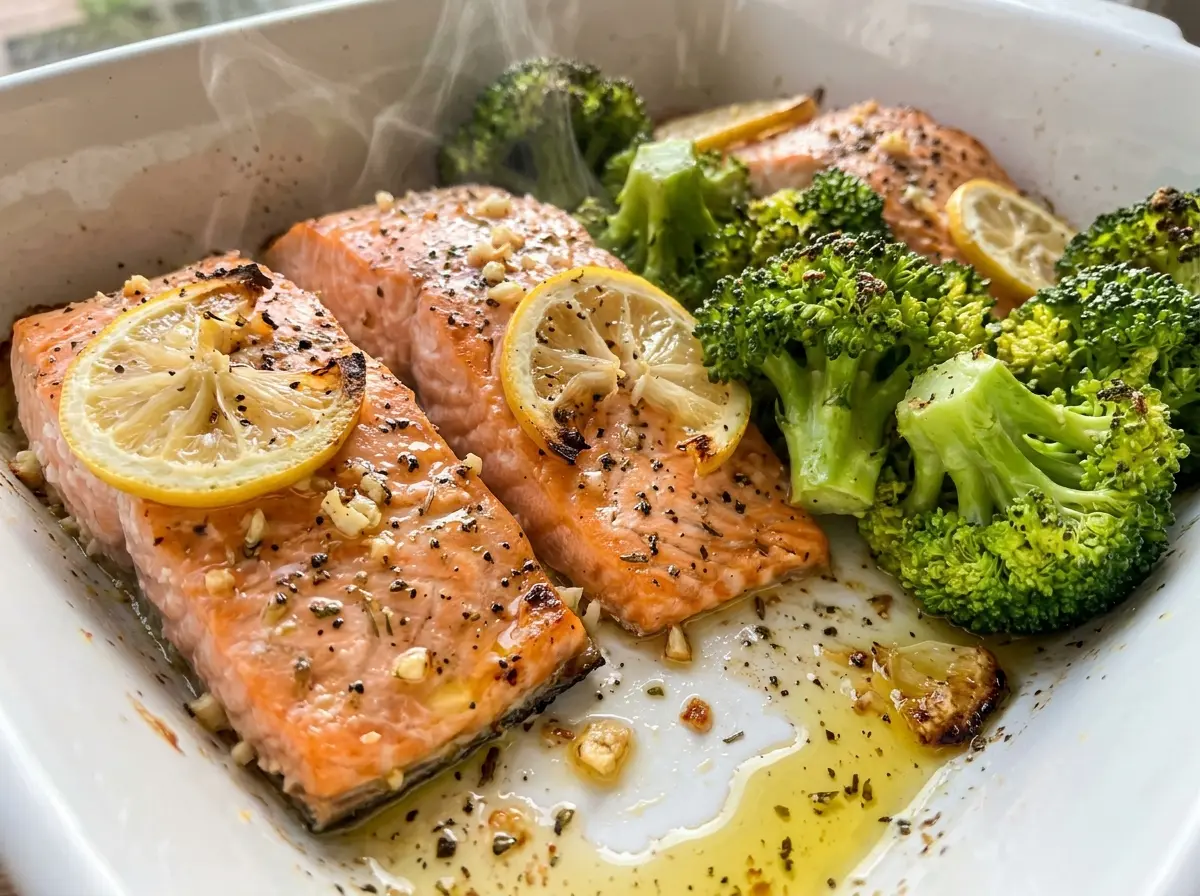
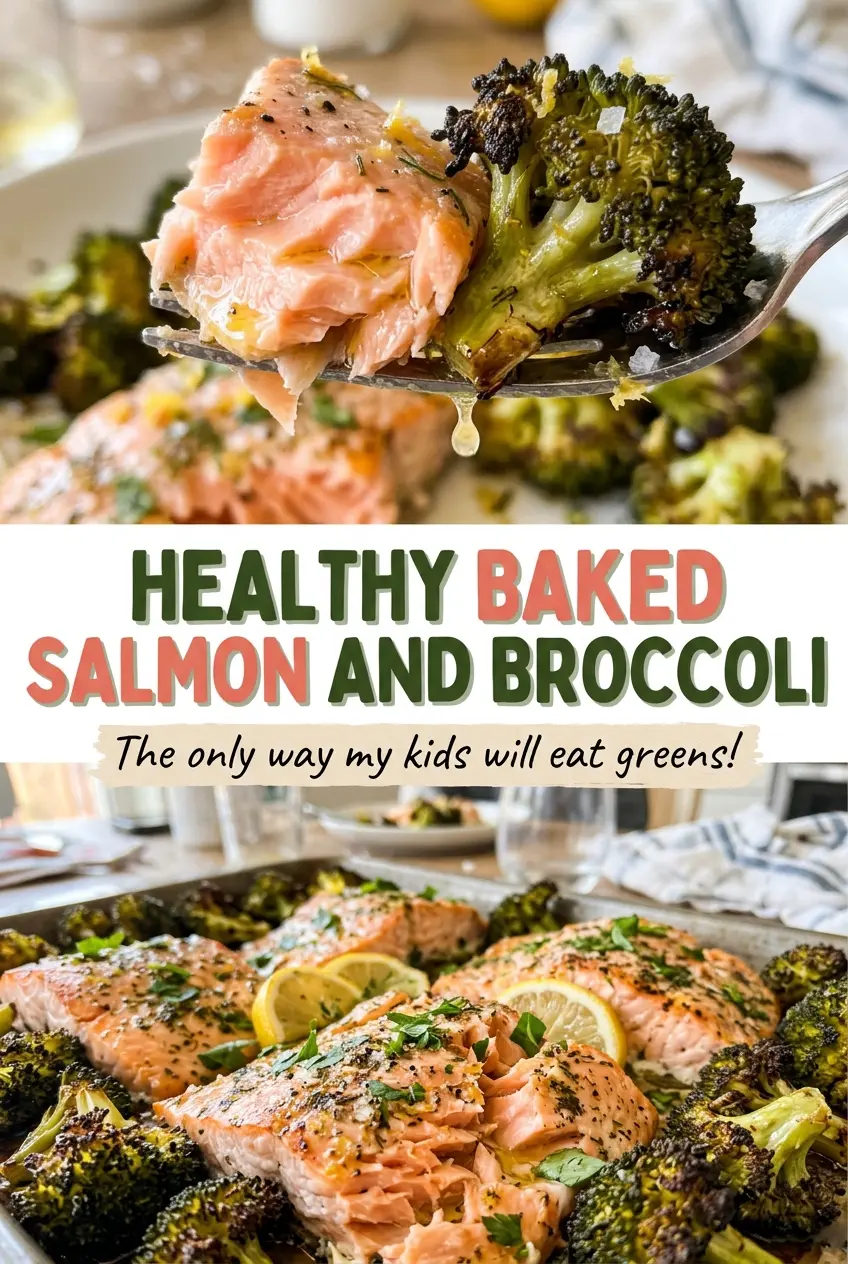
For this Healthy Baked Salmon and Broccoli, lemon juice and Dijon mustard make a bright coating that clings to the fillets instead of running off immediately. Garlic and paprika round it out, while the broccoli roasts in olive oil until its edges turn brown and its centers are tender.
There’s no separate sauce to make and no second pan to wash. You get flaky salmon, browned broccoli, and a sharp, garlicky finish from one oven tray.
Kitchen Note
Stir the lemon-Dijon mixture just before you brush it on. The oil and lemon juice can separate as they sit, and a quick stir brings the minced garlic and paprika back through the coating.
Save Healthy Baked Salmon and Broccoli for a one-pan dinner with flaky fish, browned florets, and a tangy lemon-Dijon coating.
Why the Broccoli Goes in Before the Salmon
Salmon and broccoli share a pan here, but they don’t need the same amount of oven time. The florets need a chance to roast on their own before the fish goes in; otherwise, the salmon can reach its doneness while the broccoli still tastes firm and looks steamed rather than browned.
That staggered start also solves a pan-space problem. The broccoli gets spread across the baking sheet first, where the hot air can reach its surfaces. When it’s time for the salmon, pushing the florets to the sides leaves a clear spot for each fillet in the center. The vegetables keep roasting while the fish finishes, so the two parts come together without piling everything on top of each other.
Look for tender broccoli with browned edges, not just a change in color. The sequence does the work: roast the vegetables first, then bake the salmon alongside them. You’re not trying to cook either ingredient harder; you’re giving each one the time it needs.
What the Dijon Coating Does for the Salmon
- Salmon fillets — Choose portions that are close in thickness so they finish at a similar pace. The skin helps protect the underside as the fish bakes; skinless fillets also work, but check them carefully because they can cook faster. There’s no substitute that keeps the same timing and texture as salmon.
- Broccoli florets — Similar-sized florets roast more evenly, so cut especially large pieces down before tossing them with oil. Fresh, firm florets give the best browned edges. I wouldn’t swap in frozen broccoli for this method; the extra moisture makes it harder to get the same roasted finish.
- Dijon mustard and lemon juice — Dijon gives the coating a sharp, savory bite and helps the oil and lemon cling to the fish. Bottled lemon juice works if that’s what you have; use the listed quantity. Yellow mustard has a different, sweeter flavor, so it won’t give the same result.
- Garlic and paprika — Minced garlic spreads through the coating and paprika adds warmth and color. Mince the garlic finely so you don’t end up with a few large pieces on the fish. Standard paprika works well here; there’s no need for a specialty variety.
- Olive oil — Dividing the oil matters: the broccoli gets its own coating before roasting, and the rest carries the seasonings onto the salmon. A regular cooking olive oil is a good choice; an expensive finishing oil won’t add much in the oven.
Roast the Broccoli First, Then Finish the Salmon on the Tray
Set up the hot baking sheet
Heat the oven to 425°F and line an 18×13-inch rimmed baking sheet with parchment paper. Toss the broccoli with its portion of olive oil, salt, and black pepper until the florets look lightly coated. Spread them across the pan instead of leaving them in a heap. The broccoli needs room for its edges to brown.
Give the florets their head start
Roast the broccoli for 10 minutes. While it’s in the oven, stir together the remaining olive oil, lemon juice, Dijon mustard, minced garlic, paprika, salt, and black pepper. Brush the mixture over the salmon fillets, covering the top surfaces. If the mixture looks separated, stir it again before brushing so the garlic and seasonings aren’t left behind in the bowl.
Make room for the salmon
Take the baking sheet out and move the broccoli to the sides. Set the salmon skin-side down in the center, leaving space between the fillets. Don’t stack the broccoli over the fish; that blocks the salmon’s coating and traps moisture against the vegetables. Keep the pieces in a single layer so heat can circulate around them.
Bake until the fish flakes and broccoli browns
Return the sheet to the oven and bake for 10 to 14 minutes. Check the thickest part of each fillet with an instant-read thermometer; it should reach 145°F, while the broccoli should be tender with browned edges. If the fillets differ in thickness, judge each one at its thickest point rather than relying on the clock alone. Let the salmon rest for 3 minutes before serving.
Two Practical Ways to Adapt the Tray
Use skinless salmon portions
Skinless fillets keep the same lemon-Dijon flavor and make serving simple. Set them flat on the pan and start checking at the early end of the baking window, since the skin no longer shields the underside from the heat. The thermometer, not the appearance of the coating, tells you when they’re ready.
Split the ingredients between two pans
If your broccoli florets are unusually large or the tray feels crowded, keep the broccoli on its pan and place the salmon on a second parchment-lined baking sheet when it’s time to add the fish. The ingredients still roast at the same oven temperature, but the vegetables have more open space. It costs you an extra pan to wash in exchange for less crowding.
Storage and Reheating
- Refrigerator: Refrigerate leftovers promptly in a covered container and use them within 3 days. The broccoli softens and the salmon loses some of its just-baked texture.
- Freezer: Freeze cooled portions in an airtight freezer-safe container for up to 2 months for best quality. The salmon holds up better than the broccoli, which will be softer after thawing.
- Reheating: Warm gently in the microwave in short bursts, stopping as soon as the fish is hot throughout. A long blast on high can dry out the salmon before the broccoli is warmed.
Questions That Come Up While This Tray Bakes
Healthy Baked Salmon and Broccoli
Ingredients
Equipment
Method
- Heat the oven to 425°F.
- Line an 18x13-inch rimmed baking sheet with parchment paper.
- Toss the broccoli with 1 tablespoon olive oil, 1/4 teaspoon salt, and 1/8 teaspoon black pepper.
- Spread the broccoli across the baking sheet.
- Roast the broccoli for 10 minutes.
- While the broccoli roasts, stir together the remaining 1 tablespoon olive oil, lemon juice, Dijon mustard, garlic, paprika, remaining 1/4 teaspoon salt, and remaining 1/8 teaspoon black pepper.
- Brush the mixture over the salmon fillets.
- Move the broccoli to the sides of the baking sheet.
- Place the salmon skin-side down in the center, leaving space between the fillets.
- Bake for 10 to 14 minutes, until the thickest part of each fillet reaches 145°F and the broccoli is tender and browned at the edges.
- Let the salmon rest for 3 minutes before serving.