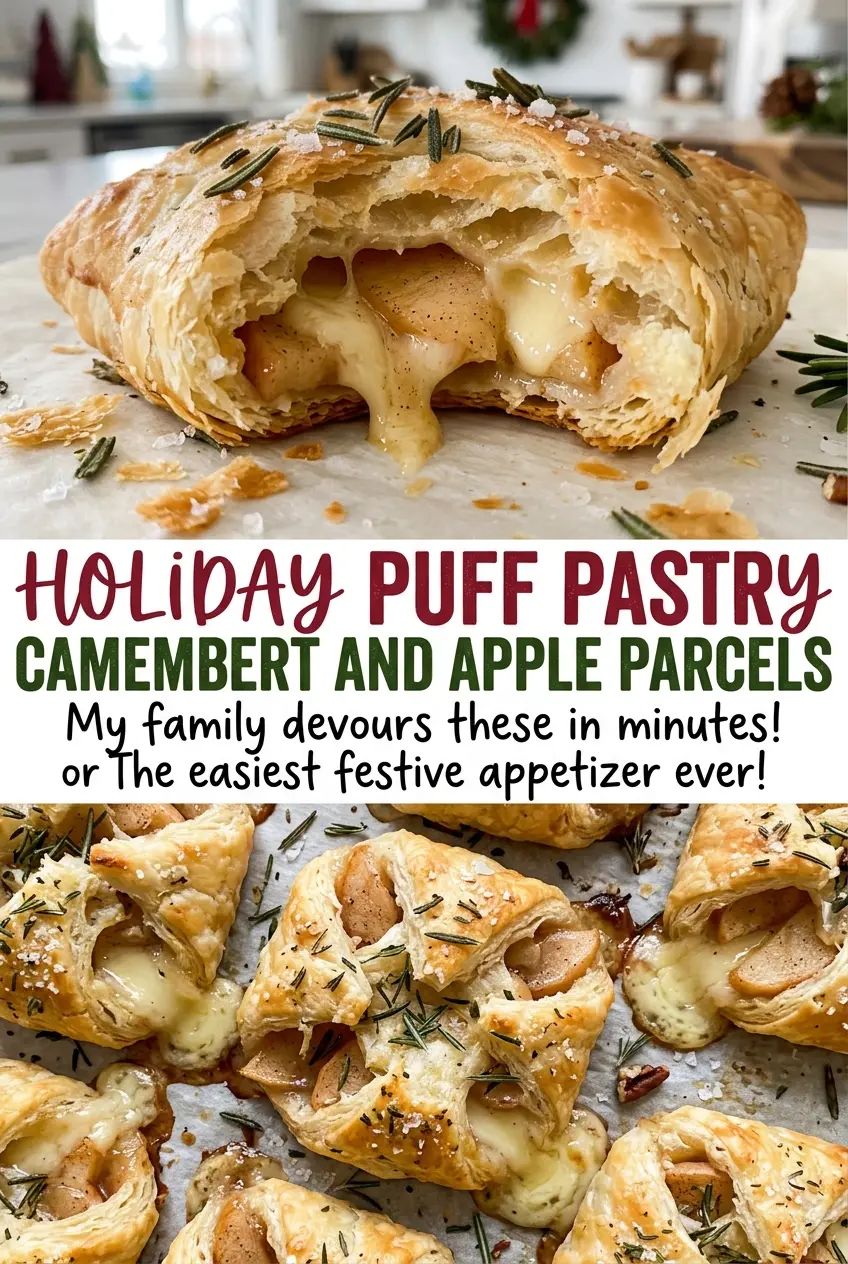
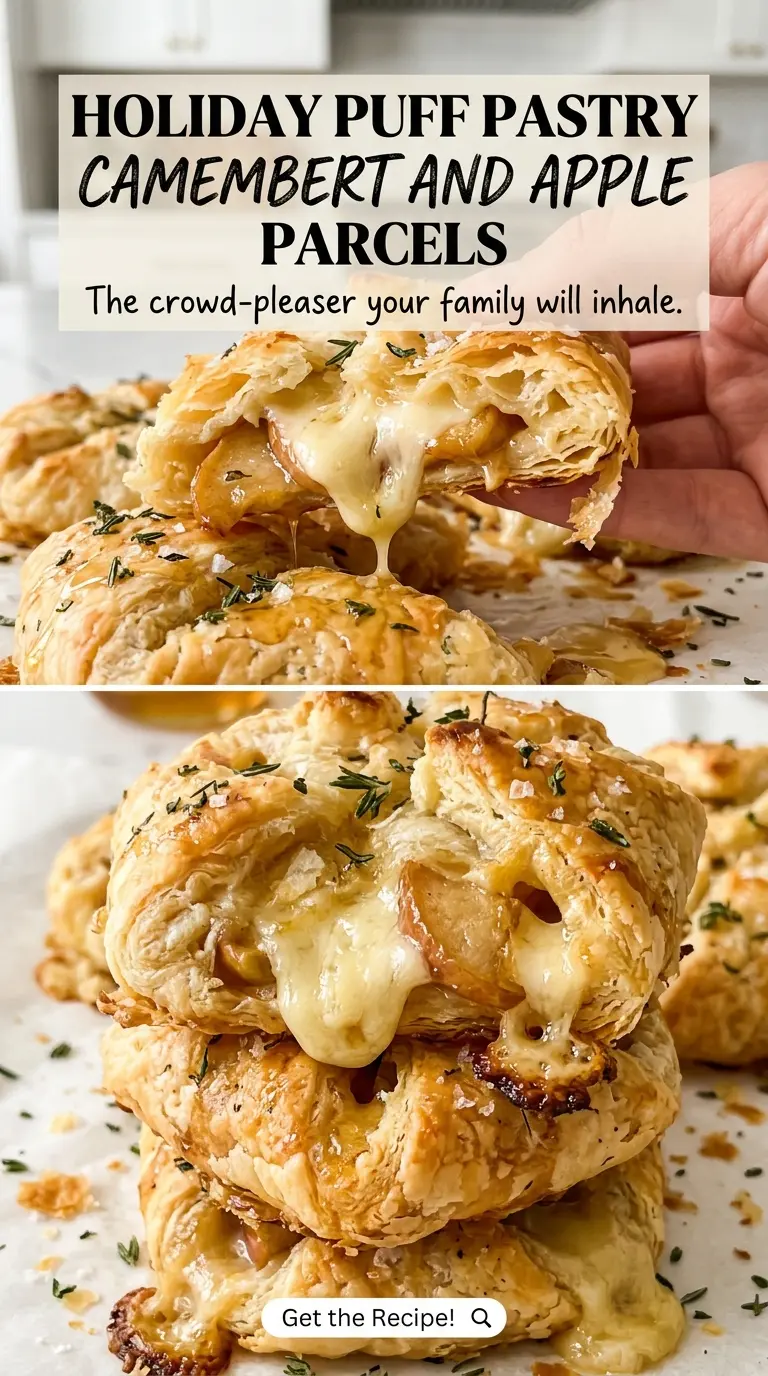
The first thing you notice is the pastry: it rises around the seams and turns deep gold while the Camembert softens inside. I make these Holiday Puff Pastry Camembert and Apple Parcels when I want a savory-sweet appetizer that feels special without asking me to build a complicated filling. Each parcel holds a piece of cheese and a spoonful of apple tossed with honey, thyme, and black pepper.
The small detail that keeps the filling where it belongs is a clean border around each pastry rectangle. Leave that half-inch edge free, brush it with egg wash, then press the folded pastry firmly with a fork. The apple and honey bring moisture, and the cheese melts as the parcels bake, so a secure seam matters. After baking, give them five minutes to rest before serving; the filling settles a little, and the pastry stays crisp around the edges.
Kitchen Note
Let the parcels rest for the full five minutes after they come out of the oven. The cheese is molten at first, and that short pause gives the filling time to settle before you serve them.
Save these Camembert and apple parcels for a party menu when you want flaky pastry, warm cheese, and a sweet thyme-scented filling.
Why the Half-Inch Border Keeps the Filling Inside
These parcels are folded, not wrapped like little bundles, so the edge is doing more work than it might seem. Apple tossed with honey releases a bit of moisture, and Camembert softens into a molten center. If either reaches the pastry edge, it can get between the layers and make the seam harder to seal. Leaving a clear half-inch border gives you dry pastry to join together.
Brush that border with egg wash before folding, then press all the way around with the tines of a fork. A firm, continuous seal helps contain the filling as the pastry puffs. Don’t pile the apple mixture toward the edge; divide it evenly and keep it on one half of each rectangle, beside the cheese. If a little filling shifts while you fold, nudge it back toward the center before pressing the seam.
The egg wash serves two jobs here. Along the edge, it helps the pastry adhere; over the tops, it encourages an even golden finish. Keep the top wash light enough that it doesn’t pool along the sides, where it can glue the pastry layers together and limit their rise.
How the Apple, Honey, and Camembert Balance Each Other
- Puff pastry — Frozen pastry is a practical choice because its distinct layers bake up crisp and airy around the filling. Thaw it before cutting so the sheets fold without cracking. A gluten-free version works as an adaptation, though the dough may be more delicate.
- Apple — Cut the cored apple into small, even dice so each parcel gets a consistent bite and the fruit fits neatly beside the cheese. A firm apple holds its shape better than a soft, mealy one. There’s no need to peel it for this filling.
- Honey — Honey sweetens the apple and gives the filling a rounded, floral note. A strongly flavored honey will be more noticeable, while a mild everyday honey lets the thyme and cheese come through. Maple syrup can replace it for a different, more woodsy sweetness.
- Fresh thyme — Fresh leaves bring a clean herbal note that cuts through the rich cheese. Strip the leaves from the stems before measuring; woody stems don’t belong in the filling. Dried thyme has a more concentrated, less fresh taste, so it won’t give quite the same lift.
- Camembert — Camembert softens into a creamy center and has a more pronounced earthy character than a mild cheese. Cut the wheel into eight pieces so each parcel gets its share. Brie is the closest easy swap and makes the filling a little milder.
- Egg — Whisked with water, egg gives the pastry a bronzed finish and helps the folded edges seal. Brush it on the border before folding, then use what remains on the tops.
From Pastry Sheets to Deep-Golden Parcels
Cut Each Sheet into Four Rectangles
Heat the oven to 400°F and line a large rimmed baking sheet with parchment paper. Cut each thawed pastry sheet into four equal rectangles, about 5 by 7 1/2 inches each. Keep the pieces as even as you can so they fold and bake at a similar pace. If the pastry cracks as you handle it, it needs more time to thaw before you continue.
Toss the Apple and Mix the Egg Wash
Stir the diced apple with the honey, fresh thyme leaves, and black pepper until the pieces are lightly coated. In a small bowl, whisk the egg and water together. The apple mixture should be evenly seasoned rather than sitting in a pool of honey. Keep the egg wash nearby so you can brush the borders just before folding.
Fill, Fold, and Press the Seams
Place one piece of Camembert and one-eighth of the apple mixture on one half of each rectangle, leaving a half-inch border clear. Brush the border with egg wash, then fold the pastry over the filling. Press the edges firmly with a fork, working around the full parcel so there are no open gaps. Arrange the sealed parcels on the lined baking sheet and brush their tops with the remaining egg wash.
Bake Until the Pastry Is Deep Gold
Bake for 20–25 minutes, until the parcels are puffed and deep golden brown. Don’t pull them while the pastry is still pale; the strong color is your cue that the layers have baked through and the outside is crisp. The parcels will be hot when they come out, so rest them for five minutes before serving. That short wait also makes them easier to lift without breaking the flaky edges.
Three Swaps That Change the Parcels Without Changing Their Shape
Use pear for a softer, honeyed filling
Replace the diced apple with an equal amount of diced firm pear. Pear gives the parcels a gentler fruit flavor that pairs naturally with Camembert; choose fruit that still feels firm so the filling doesn’t turn mushy as it bakes.
Trade Camembert for Brie
Use Brie in place of the Camembert and cut it into eight pieces just as you would the original cheese. Brie keeps the creamy center but tastes milder, so the apple and honey come forward more clearly.
Make the parcels gluten-free
Replace the regular puff pastry with gluten-free puff pastry sheets. Cut each sheet into four equal rectangles, since sheet sizes can differ, and handle the dough gently because gluten-free pastry is often more fragile. The filling stays the same, while the crust’s texture depends on the pastry you use.
Storage and Reheating
- Refrigerator: Store leftover parcels in an airtight container for up to 3 days. The pastry softens as it sits, and the cheese firms up when chilled.
- Freezer: Freeze baked, cooled parcels in a single layer until firm, then transfer them to a freezer-safe container for up to 2 months. Thaw them in the refrigerator before reheating; the pastry won’t be quite as crisp as when freshly baked.
- Reheating: Warm them in a 350°F oven until heated through. Skip the microwave if you want to preserve the flaky exterior; trapped steam makes puff pastry soft.
Questions That Come Up Before the First Batch
Holiday Puff Pastry Camembert and Apple Parcels
Ingredients
Equipment
Method
- Heat the oven to 400°F and line a large rimmed baking sheet with parchment paper.
- Cut each puff pastry sheet into 4 equal rectangles, about 5x7 1/2 inches each.
- Stir the diced apple with the honey, thyme, and black pepper.
- Whisk the egg and water together in a small bowl.
- Place a piece of Camembert and one-eighth of the apple mixture on one half of each pastry rectangle, leaving a 1/2-inch border.
- Brush the pastry borders with egg wash.
- Fold each rectangle over the filling and press the edges firmly with a fork to seal.
- Arrange the parcels on the prepared baking sheet.
- Brush their tops with the remaining egg wash.
- Bake for 20–25 minutes, until puffed and deep golden brown.
- Rest for 5 minutes before serving.