The milk should feel warm, not hot, when it meets the yeast; too much heat can keep the mixture from foaming. Once it does, these homemade dinner rolls come together into a soft dough that rises twice before it goes into the oven. I like this recipe for the way it keeps the work simple: the stand mixer handles the kneading, and the rolls bake together in one 9×13-inch dish.
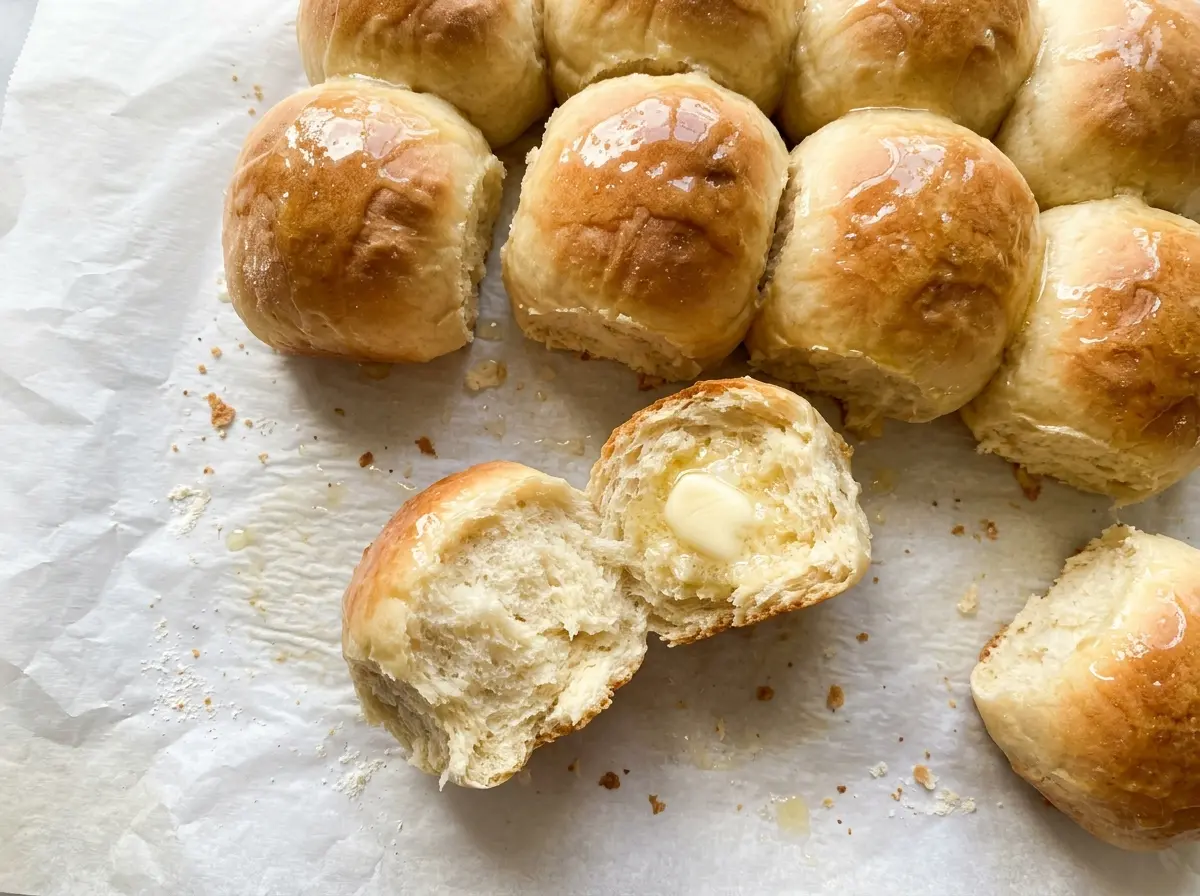
The dough has enough time to rise before shaping and again after the rolls are in the pan. That second rise is what gives them their puffy sides and tender pull-apart texture, so I watch how the dough looks instead of relying on the clock alone. A little honey butter stirred smooth while the rolls bake is all they need alongside their golden tops.
Kitchen Note
Give the milk, sugar, and yeast the full 5–10 minutes to sit before adding anything else. When the surface looks foamy, the yeast is ready to go into the dough.
Save these homemade dinner rolls with honey butter for a soft, golden batch that rises right in the baking dish.
Why the Second Rise Matters More Than the Clock
There are two separate rises here, and each one has a different job. The first lets the whole dough expand before you divide it. After shaping, the second rise gives the individual rolls room to puff up in the baking dish, so they bake into soft-sided rolls instead of tight, heavy rounds.
Use the stated times as a guide, then check what the dough is doing. For the first rise, look for dough that has doubled in size. After shaping, the rolls should look puffy and nearly doubled before they go into the oven. A cool kitchen can slow either rise, while a warmer spot may move things along faster. If the rolls still look compact at the end of the second rise, give them a little more time rather than baking them just because the timer says so. The goal is a visibly airy dough, not a particular number on the clock.
Why Warm Milk, Active Dry Yeast, and Neutral Oil Matter

- Whole milk — It gives the dough a richer, softer crumb than water. Warm it within the specified range; overly hot milk can harm the yeast, and cold milk can delay the rise.
- Active dry yeast — Letting it sit in the warm milk and sugar gives you a visible cue before you build the dough. Check that it foams before moving on rather than trying to compensate later with extra yeast.
- All-purpose flour — It makes a tender, familiar dinner roll without the extra chew bread flour can bring. Measure it without packing it tightly, since too much flour can leave the dough stiff and the baked rolls dry.
- Egg and neutral oil — The room-temperature egg blends more readily into the dough, while the oil keeps the dough supple without adding a strong flavor. Save the separate small portion of oil for coating the rising bowl so the dough doesn’t stick.
- Salted butter and honey — Softened butter stirs smoothly with honey into a spreadable accompaniment. The honey’s flavor is easy to notice here, so use one you enjoy; there’s no need for a specialty butter.
From Foamy Yeast to Golden Tops in Four Stages
Let the yeast wake up
Stir the warm milk, sugar, and active dry yeast together in the bowl of a 5-quart stand mixer. Leave it for 5–10 minutes, until the surface looks foamy. If you don’t see foam, pause before adding the egg and flour; the yeast mixture hasn’t shown the cue you’re looking for yet.
Knead until the dough turns elastic
Add the egg, the larger portion of oil, salt, and flour. With the dough hook fitted, mix on low until the mixture looks shaggy, then knead on medium-low for 6–8 minutes. The finished dough should look smoother and feel elastic rather than rough and crumbly. If it clings to the bowl at first, give the mixer time to work before assuming it needs more flour.
Shape the rolls and let them puff
Coat a large bowl with the remaining oil, transfer in the dough, cover, and let it rise in a warm place for 1–1 1/2 hours, until doubled. Line a 9×13-inch baking dish with parchment, punch down the dough, divide it into 12 equal pieces, and shape each into a ball. Arrange the balls in the dish, cover loosely, and let them rise for 30–45 minutes, until puffy and nearly doubled. Leave space for them to expand rather than pressing them together.
Bake until golden and stir the honey butter
Heat the oven to 350°F and bake the rolls for 20–25 minutes, until the tops are golden brown. While they bake, stir the softened salted butter and honey together in a small bowl until smooth. Let the rolls rest in the pan for 5 minutes before serving them warm with the honey butter. That short rest makes them easier to lift without losing their soft sides.
Two Ways to Adapt These Rolls Without Losing Their Soft Texture
Make the rolls dairy-free
Replace the whole milk with the same amount of unsweetened oat or soy milk, warmed to the same range, and use dairy-free salted butter for the honey butter. The rolls will have a slightly different flavor and may be a little less rich, but the dough can still rise and bake as described. Honey is not vegan, so this swap makes the rolls dairy-free, not vegan.
Tie the dough into knots
For a more defined shape, roll each of the 12 portions into a short rope and tie it into a loose knot instead of shaping it into a ball. Set the knots in the same parchment-lined dish and use the same rise cues; the ridges give the finished rolls a little more browned edge, while the centers stay tender.
Storage and Reheating
- Refrigerator: Refrigeration can make bread stale faster, so keep the rolls in an airtight container at room temperature and enjoy them within 2 days.
- Freezer: Freeze fully cooled rolls in an airtight freezer bag or container for up to 2 months. Thaw at room temperature before warming.
- Reheating: Warm an individual roll briefly in the microwave, just until soft. Long heating can dry it out; add the honey butter after warming.
Questions That Come Up While Making Dinner Rolls
Homemade Dinner Rolls with Honey Butter
Ingredients
Equipment
Method
- In the bowl of a 5-quart stand mixer, stir together the warm milk, sugar, and yeast. Let stand for 5–10 minutes, until foamy.
- Add the egg, 1/4 cup oil, salt, and flour. Fit the mixer with a dough hook and mix on low until shaggy.
- Knead on medium-low for 6–8 minutes, until the dough is smooth and elastic.
- Transfer the dough to a large bowl coated with the remaining 1 teaspoon oil. Cover and let rise in a warm place for 1–1 1/2 hours, until doubled in size.
- Line a 9x13-inch baking dish with parchment paper.
- Punch down the dough and divide it into 12 equal pieces.
- Shape each piece into a ball and arrange the balls in the dish.
- Cover loosely and let rise for 30–45 minutes, until the rolls look puffy and nearly doubled.
- Heat the oven to 350°F.
- Bake for 20–25 minutes, until the tops are golden brown.
- Stir the softened butter and honey together in a small bowl until smooth.
- Let the rolls rest in the pan for 5 minutes.
- Serve warm with the honey butter.