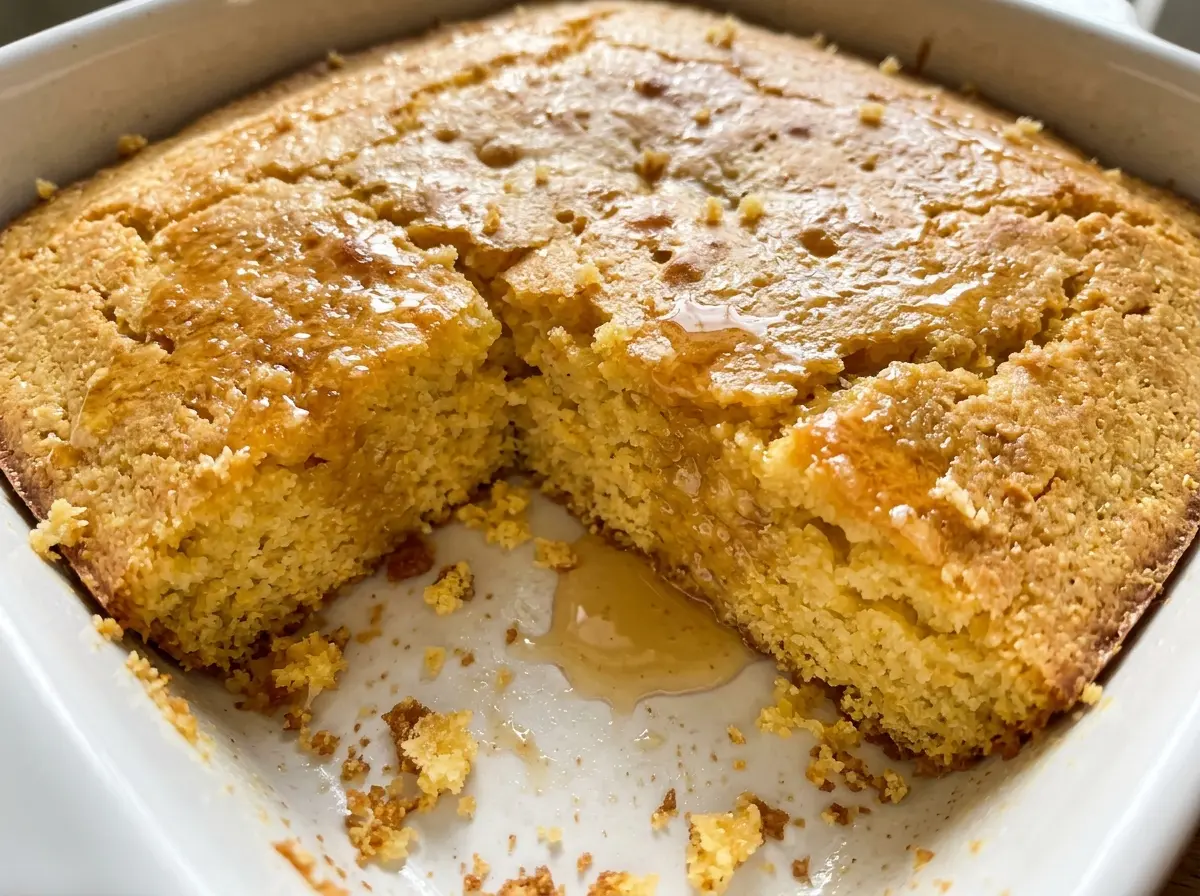
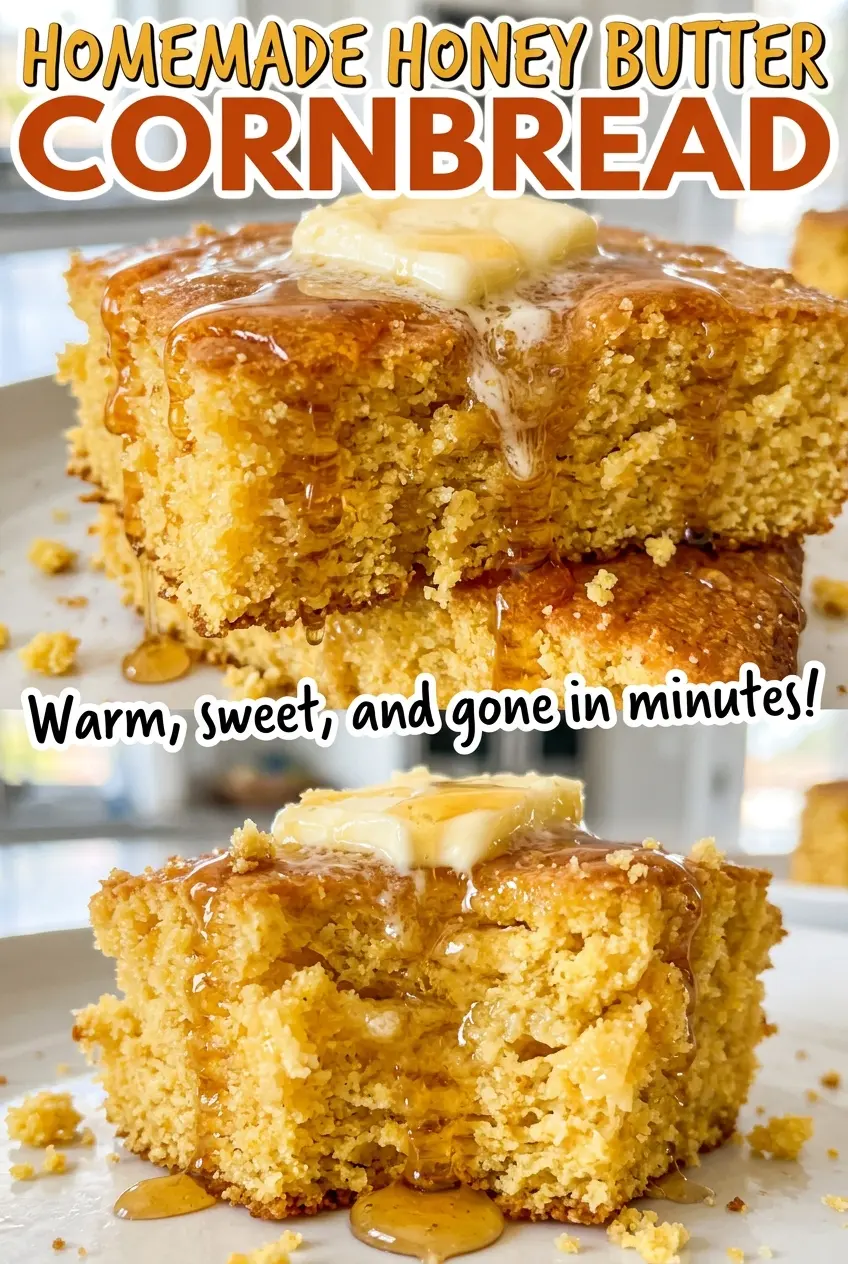
When the pan comes out of the oven, the top is golden and the center has a soft, tender look—not the dry, crumbly surface that can make cornbread feel like an afterthought. I let it sit before slicing; straight from the oven, even a well-baked square is delicate and more likely to break apart. This Homemade Honey Butter Cornbread has a gentle sweetness from honey, with yellow cornmeal bringing that familiar corn flavor.
The batter comes together in two bowls, and the small details matter: the melted butter should cool slightly before it meets the eggs, and the wet and dry mixtures only need to be stirred until no dry patches remain. That keeps the crumb tender without asking you to fuss over the batter. Give the cornbread its short rest in the pan, then serve warm, when the buttery edges and honeyed center are at their best.
Kitchen Note
Let the melted butter cool until it’s no longer hot before whisking it with the eggs. Hot butter can partially cook the eggs, leaving little bits in a batter that should be smooth and combined.
Save this Homemade Honey Butter Cornbread for its golden top, tender crumb, and gentle honey sweetness.
Why Equal Parts Flour and Cornmeal Matter More Than You’d Expect
Yellow cornmeal gives cornbread its recognizable flavor and a little texture, but it doesn’t build the same structure as wheat flour. Using both lets the cornmeal come through without making the whole square overly sandy or fragile. The flour helps the crumb hold together; the cornmeal keeps it from tasting like a plain quick bread.
Buttermilk, honey, and butter round out that balance. Buttermilk brings acidity and moisture, while honey adds sweetness in a way that blends into the batter rather than sitting as a sugary crunch. Butter gives the crumb richness, and the eggs help the baked squares hold their shape. The result is a cornbread that’s tender enough to slice neatly after a short rest, with enough cornmeal character to taste like cornbread. Stirring only until the dry ingredients disappear protects that balance; working the batter longer develops more gluten in the flour and can leave the crumb tougher.
How Buttermilk, Cornmeal, and Honey Shape the Crumb
- Yellow cornmeal — The grind affects the finished texture more than the brand does. A standard grocery-store grind works well; a coarser grind makes the crumb more textured and slightly rustic.
- All-purpose flour — This is the structure that keeps the squares from crumbling apart. A reliable store brand is fine; avoid swapping in a self-rising flour, since the baking powder and baking soda are already measured separately.
- Buttermilk — Its acidity works with the baking soda, and its thickness adds moisture. Plain, unsweetened kefir can replace it volume for volume, though the batter may be a little thinner.
- Honey — Honey contributes both sweetness and moisture, so don’t replace it with dry sugar without changing the batter. A mild honey keeps the corn flavor in front; a darker, stronger honey makes the sweetness more pronounced.
- Unsalted butter and eggs — Unsalted butter leaves the measured salt in control, while eggs bind the flour and cornmeal as the cornbread bakes. The butter should be melted and cooled slightly; ordinary large eggs work well here.
Mixing and Baking This Cornbread Without a Tough Center
Get the Pan Ready and Combine the Dry Ingredients
Heat the oven to 400°F and coat a 9-inch square baking pan with nonstick cooking spray. In a large bowl, whisk the flour, yellow cornmeal, sugar, baking powder, baking soda, and kosher salt until the leaveners look evenly distributed. Breaking up any small flour or cornmeal clumps now makes it easier to mix the batter briefly later. Keep the bowl roomy enough that the wet ingredients can be folded in without spilling.
Whisk the Wet Mixture, Then Stop Stirring on Time
In a medium bowl, whisk the eggs, buttermilk, honey, and melted butter until combined. Pour the wet mixture into the dry ingredients, then stir just until no dry patches remain. A few small lumps are less trouble than an overworked batter; keep going only if you can still see loose flour or cornmeal. Transfer the batter to the prepared pan as soon as it’s combined.
Bake Until the Center Tests Clean
Bake for 20–25 minutes, watching for a golden top. The top color alone isn’t enough to judge the center, so insert a toothpick in the middle; it should come out clean. If batter clings to it, the center needs more time in the oven. Cool the cornbread in the pan for 10 minutes before slicing, which gives the tender crumb a chance to settle.
Two Ingredient Swaps That Keep the Cornbread Balanced
Use a Cup-for-Cup Gluten-Free Baking Blend
Replace the all-purpose flour with the same volume of a gluten-free blend made for baking. Choose one that includes a binder such as xanthan gum; the cornbread may be a touch more delicate, but it keeps the same honey-and-corn character. Don’t use almond flour as a direct swap, since it won’t provide the same structure.
Trade Yellow Cornmeal for White
White cornmeal can replace yellow cornmeal in the same amount. The crumb will have a milder corn flavor and a paler color, while the flour, buttermilk, and honey still give it the same tender, lightly sweet character. Keep the grind similar so the texture stays close to the original.
Storage and Reheating
- Refrigerator: Store covered for up to 4 days. The chilled crumb firms up, so let a piece sit briefly at room temperature or warm it before serving.
- Freezer: Freeze fully cooled pieces in an airtight container for up to 2 months. Separate layers with parchment so you can take out only what you need.
- Reheating: Warm individual pieces in the microwave in short bursts until heated through. Long heating can dry the edges before the center is warm.
Questions That Come Up Before the First Slice
Homemade Honey Butter Cornbread
Ingredients
Equipment
Method
- Heat the oven to 400°F.
- Coat a 9-inch square baking pan with nonstick cooking spray.
- In a large bowl, whisk together the flour, cornmeal, sugar, baking powder, baking soda, and salt.
- In a medium bowl, whisk the eggs, buttermilk, honey, and melted butter until combined.
- Pour the wet ingredients into the dry ingredients and stir just until no dry patches remain.
- Transfer the batter to the prepared pan.
- Bake for 20–25 minutes, until the top is golden and a toothpick inserted in the center comes out clean.
- Cool in the pan for 10 minutes.
- Slice and serve.