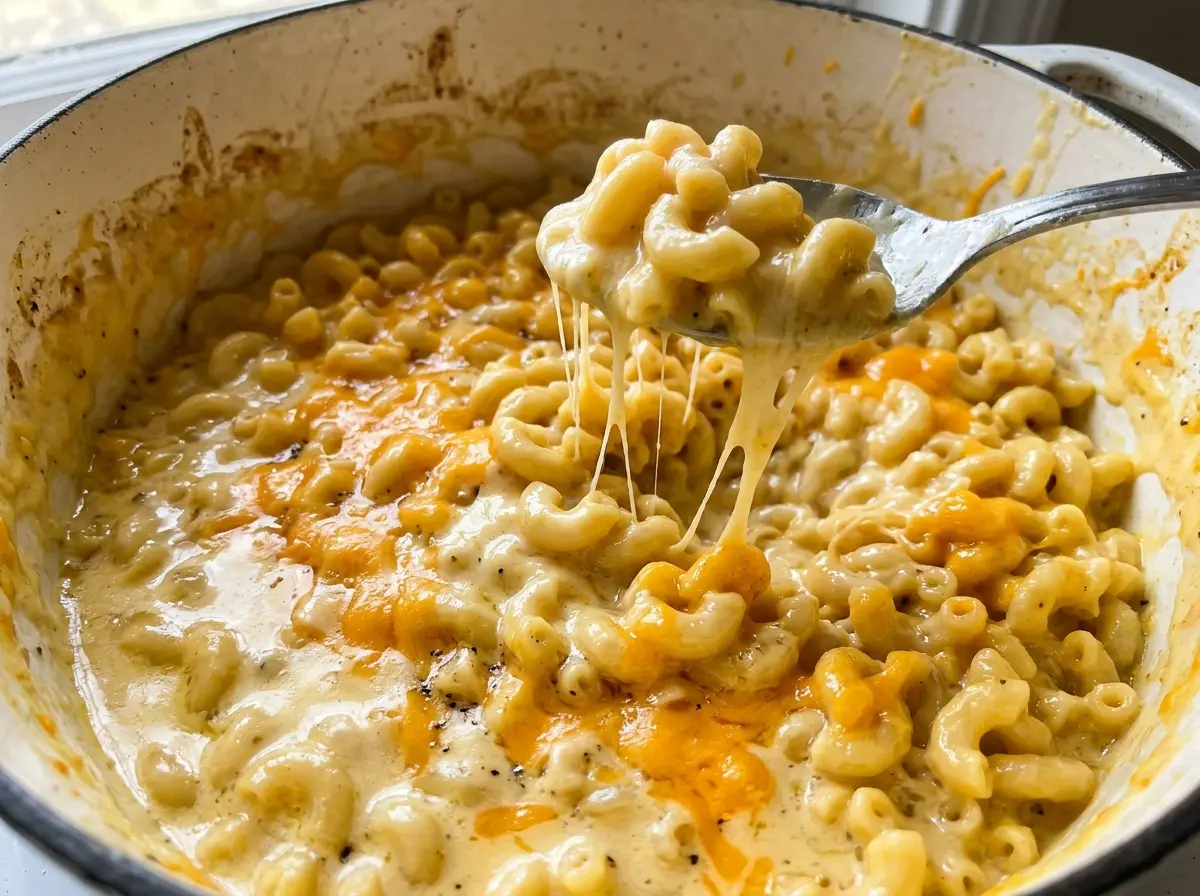
A whisk leaves little trails through the butter and flour before the milk smooths everything into a pale sauce. That’s the moment this stovetop mac and cheese starts to come together: a simple roux gives the sharp cheddar something to cling to, instead of leaving it in a pool at the bottom of the pot.
I use both Dijon and dry mustard here, not to make the sauce taste strongly of mustard, but to give the cheddar a gentle tang that keeps each bite from feeling heavy. Freshly shredded sharp cheddar melts into a much smoother sauce than a bag of pre-shredded cheese.
The macaroni cooks separately, then goes back into the same pot once the sauce is ready. You get tender elbows wrapped in a creamy cheddar coating, with no baking step and no browned crust to wait for.
Kitchen Note
Drain the elbows when they’re al dente, not soft. They’ll keep their shape when you fold them into the warm cheese sauce.
Save this homemade stovetop creamy mac and cheese for a weeknight craving—sharp cheddar sauce, tender elbows, and no oven required.
Why the Sauce Needs to Coat a Spoon Before the Cheese Goes In
A cheese sauce that looks thin in the pot won’t cling well to the elbows. The flour-and-butter roux gives the milk structure, but it needs time to thicken before the cheddar is added. Bring the milk mixture to a gentle simmer and keep stirring often; after 4 to 6 minutes, it should leave a visible coating on the back of a spoon.
That texture cue matters more than trying to rush the process with higher heat. A hard boil can reduce the milk too quickly around the edges while the middle is still loose. Keep the simmer gentle, and give the flour time to do its work. Once the cheese goes in, it will make the sauce thicker still, so aim for a sauce that coats a spoon but can still be stirred easily before adding the macaroni.
If the sauce seems a little looser than you expected, check whether it has reached that spoon-coating stage before moving on. The cheese and pasta aren’t a substitute for properly thickened milk; they need a sauce with enough body to hold onto them.
Why Freshly Shredded Sharp Cheddar Matters More Than a Fancy Milk

- Sharp cheddar — Its tangy, savory flavor holds its own against the milk and pasta. Buy a block and shred it just before cooking; pre-shredded cheese can make the sauce less smooth. White sharp cheddar works in the same role if you prefer a paler sauce.
- Whole milk — It gives the sauce richness while still letting the cheddar come through. Use fresh milk, and pour it in gradually so it blends into the roux without lumps.
- All-purpose flour and unsalted butter — Together, these form the base that thickens the milk. Whisk constantly while the flour cooks for its one minute, so the mixture stays smooth and doesn’t take on browned bits.
- Elbow macaroni — The curved, short shape catches sauce in its hollow centers. Cook it to al dente according to the package directions; a softer noodle can lose its bite once coated.
- Dijon and dry mustard — Dijon adds a rounded tang, while dry mustard gives the cheddar a little more lift. Keep both in the sauce; they support the cheese rather than turning this into a mustard-flavored pasta.
The Stovetop Cues That Take This Mac From Roux to Creamy
Boil and season the pasta water
Bring 4 quarts of water to a boil in a 6-quart pot, then stir in 1 tablespoon of the kosher salt. Add the elbow macaroni and cook it according to the package directions until al dente, usually 7 to 9 minutes. Start checking near the early end of the package’s timing so the pasta doesn’t turn soft. Drain it when it still has a slight bite.
Cook the roux until smooth
Melt the butter in the same pot over medium heat. Whisk in the flour and keep whisking as it cooks for 1 minute; it should look like a smooth, pale paste rather than a scattering of dry flour. Don’t let it sit unattended, because flour caught on the bottom can scorch before the minute is up. This short cook gives the roux time to come together without browning it.
Whisk in the milk and let it thicken
Pour in the milk gradually while whisking, smoothing out each addition before adding more. Bring the mixture to a gentle simmer and stir often for 4 to 6 minutes. Look for a sauce that coats the back of a spoon, not a watery mixture that runs straight off. If you see lumps forming as the milk goes in, whisk them out before the sauce reaches its simmer.
Finish the cheddar off the heat
Take the pot off the heat before stirring in the Dijon, dry mustard, remaining 1/4 teaspoon salt, pepper, and cheddar. Add the cheddar a handful at a time, stirring until each addition melts into the sauce before adding the next. If the sauce looks oily or grainy, high heat can be the culprit, so don’t return the pot to the burner while the cheese melts. Stir in the drained macaroni until every elbow is evenly coated.
Two Cheddar Choices That Change the Bowl Without Changing the Method
Use white sharp cheddar for a paler sauce
White sharp cheddar keeps the tangy cheddar character while giving the sauce a lighter color. Shred it fresh and melt it into the sauce the same way; the change is mostly visual, with the same creamy texture.
Choose extra-sharp cheddar for a bolder bite
Extra-sharp cheddar makes the cheese flavor more assertive and the finish tangier. It still fits the sauce’s cheddar base, though the flavor will stand out more against the milk and mustard.
Storage and Reheating
- Refrigerator: Refrigerate leftovers within 2 hours and keep them covered for 3 to 4 days. The sauce will firm up as it chills.
- Freezer: Freeze in an airtight container for up to 2 months for best quality. The sauce may separate or turn grainier after thawing, so the texture won’t be quite as silky.
- Reheating: Warm leftovers gently in a saucepan, stirring often, or heat them in short microwave intervals and stir between each. Heat until the center reaches 165°F; high heat can make the cheese sauce oily.
Questions I Get Asked About This Stovetop Mac
Homemade Stovetop Creamy Mac and Cheese
Ingredients
Equipment
Method
- Bring the water to a boil in a 6-quart pot.
- Stir in 1 tablespoon of the salt.
- Add the macaroni and cook according to package directions until al dente, usually 7 to 9 minutes.
- Drain the macaroni.
- Melt the butter in the same pot over medium heat.
- Whisk in the flour and cook for 1 minute, whisking constantly.
- Gradually whisk in the milk.
- Bring the mixture to a gentle simmer, stirring often, for 4 to 6 minutes, until thick enough to coat a spoon.
- Remove the pot from the heat.
- Stir in the Dijon mustard, dry mustard, remaining 1/4 teaspoon salt, and pepper.
- Stir in the cheddar a handful at a time until smooth.
- Add the drained macaroni and stir until evenly coated.