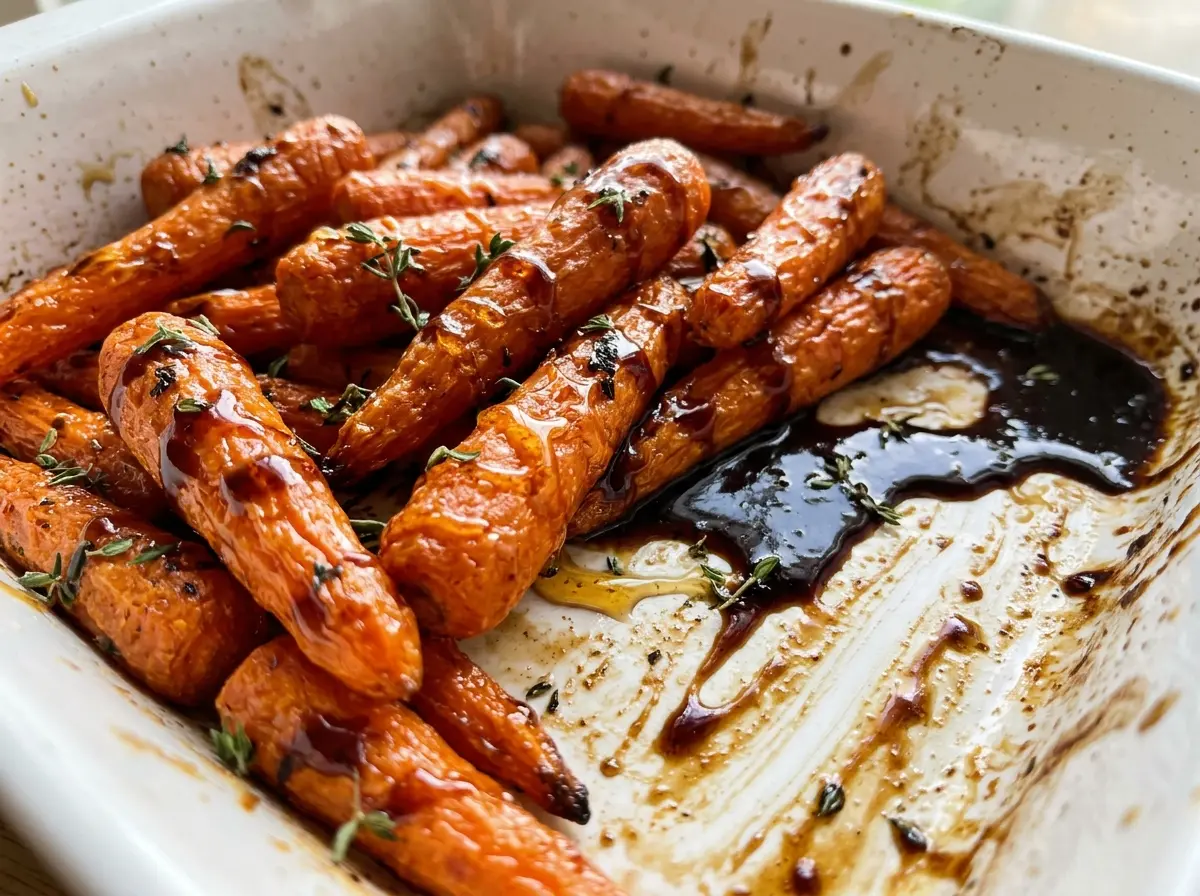
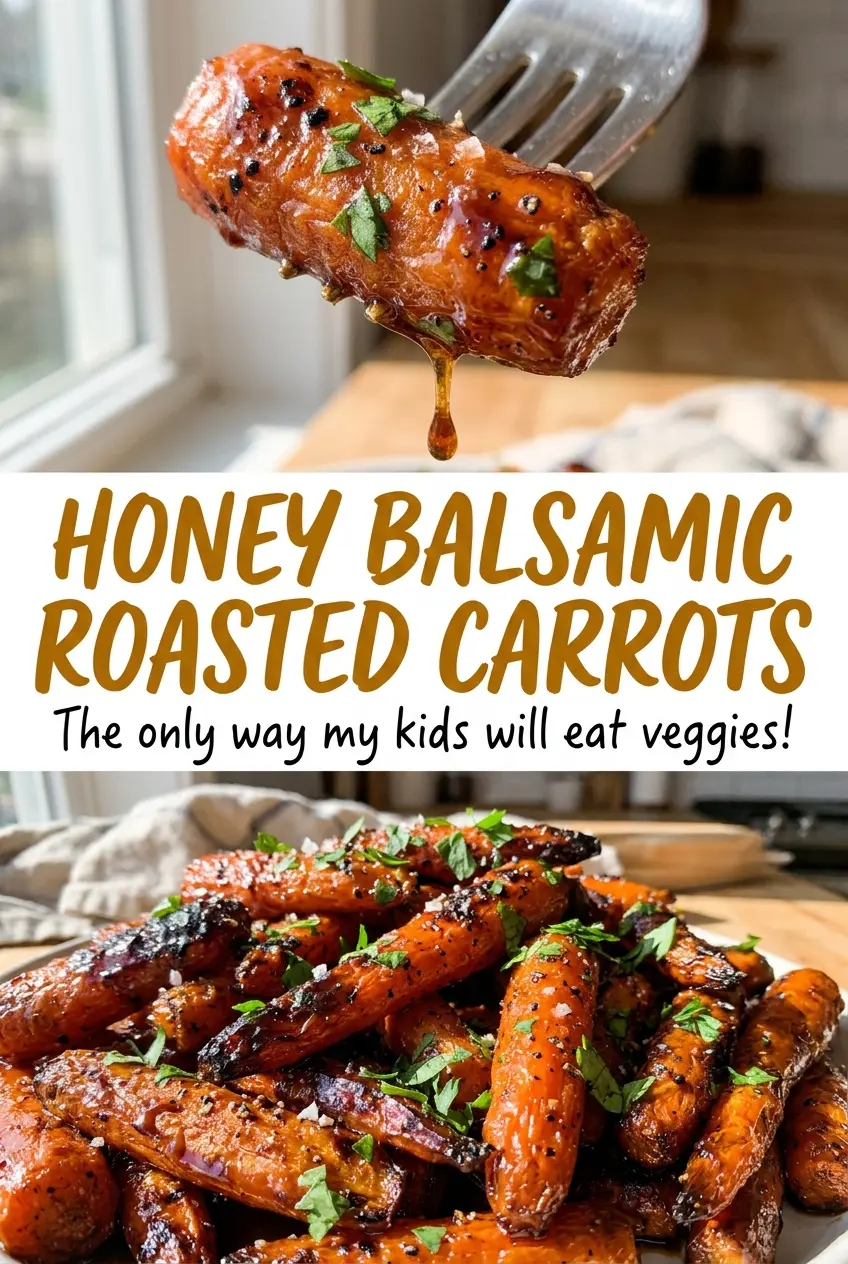
The carrots start to wrinkle at the edges before they turn tender, and that’s when I know the oven is doing its work. For honey balsamic roasted carrots, I cut them into 2-inch pieces and halve the thicker ones lengthwise so the whole pan cooks at a similar pace. The result is a side dish with soft centers and browned edges, coated in a sweet-tart glaze that clings instead of pooling on the plate.
I roast the carrots with olive oil, salt, and pepper first, then add the honey and balsamic vinegar near the end. That order lets the carrots soften before the sweet glaze hits the hot pan. The prep is simple, but the timing gives the carrots room to brown and keeps the honey from spending the entire roast in a very hot oven. Serve them warm, while the edges are still glossy and the vinegar gives the sweetness a clean finish.
Kitchen Note
Keep the carrot pieces close to the same thickness, not just the same length. Halving the thicker pieces lengthwise helps them turn tender along with the slimmer ones instead of leaving a firm center.
Save these honey balsamic roasted carrots for a side with browned edges, tender centers, and a glossy sweet-tart finish.
Why the Honey Goes on After the Carrots Have Already Roasted
Honey browns quickly in a hot oven, and a full roast with honey on the pan can take the glaze from golden to too dark before the carrots are tender. Giving the carrots their first 20 minutes with olive oil, salt, and pepper lets them begin softening and developing color without the sweet coating. Then the honey and balsamic vinegar go on for a shorter finish.
The timing also helps the glaze stay balanced. Honey brings sweetness and a light cling; balsamic vinegar adds acidity that keeps the carrots from tasting flat or candy-sweet. Tossing them together on the pan spreads that mixture over the pieces, so you get a thin coating rather than a puddle of sauce. When you pull the pan out, look for browned edges and check a thick piece with a fork. It should pierce easily, while the glaze looks shiny rather than watery or scorched.
This two-part roast is especially useful when the carrot pieces aren’t perfectly identical. The first stretch gives them time to cook through, and the final minutes finish the outside with the glaze. Don’t add the sweet-tart mixture at the beginning; its short turn in the oven is enough to coat the carrots and deepen the flavor.
What the Carrots, Oil, and Glaze Each Bring to the Pan
- Carrots — Choose firm carrots without limp tops or soft spots; fresh carrots hold their shape as they roast and give you a better contrast between tender middles and browned edges. Peeling gives the pieces a clean surface for the oil and glaze to coat. The cut matters more than choosing a particular color or variety.
- Olive oil — Oil helps the carrots roast rather than dry out and gives the salt and pepper a way to cling. A standard olive oil works well here; a delicate or expensive bottle doesn’t need to be saved for this hot-roasting job. The oil goes on before the first roast, not into the honey-balsamic finish.
- Honey — Honey provides the sweetness and glossy coating that define this dish. Its flavor comes through clearly, so use a honey you enjoy, but there’s no need to seek out a specialty variety. Replacing it changes both the flavor and the way the glaze behaves.
- Balsamic vinegar — Balsamic brings a mellow tang that offsets the honey and seasons the carrots beyond simple sweetness. A regular pourable balsamic vinegar is the right texture for tossing over the pan. Thick balsamic glaze is already reduced and sweetened, so it won’t behave like vinegar in this balance.
- Kosher salt and black pepper — These season the carrots before roasting, letting their savory flavor come through under the sweet-tart finish. Even distribution matters more than a specialty peppercorn or finishing salt; toss the pieces well with the oil and seasoning before spreading them out.
Roast the Carrots First, Then Give the Glaze Its Short Finish
Get the Pan Hot and Ready
Heat the oven to 425°F and line an 18×13-inch rimmed baking sheet with parchment paper. Give the oven time to reach temperature before the carrots go in, so the first roast starts with steady heat. The rim keeps the pieces on the pan when you toss them with the glaze. Set up the pan before cutting the carrots, and the seasoned pieces can go straight into a single layer.
Coat and Roast Until the Carrots Begin to Brown
Toss the carrots on the baking sheet with the olive oil, kosher salt, and black pepper, then spread them into one layer. Roast for 20 minutes. The carrots should be starting to soften, with a little color developing where they meet the hot pan. If the pieces are piled over one another, they won’t roast as evenly, so spread them out before the pan goes into the oven.
Toss on the Honey-Balsamic Finish
Drizzle the honey and balsamic vinegar over the carrots, then toss to coat. Return the pan to the oven for 8 to 12 minutes more. Start checking the thickest piece with a fork near the shorter end of that window; it should pierce without resistance, and the edges should be browned. If the center is still firm, give the carrots the remaining time and check again before serving.
Easy Ways to Adapt the Carrots Without Losing the Glaze
Use rainbow carrots for a more colorful side
Swap in rainbow carrots while keeping the same cut and roasting method. The colors make the platter more striking, while the honey-balsamic coating stays the same; check the thickest pieces for tenderness because size, rather than color, determines when they’re ready.
Make a vegan version with maple syrup
Replace the honey with the same amount of pure maple syrup for a plant-based glaze. Maple gives the carrots a woodsy sweetness instead of honey’s floral note, and it still works with the balsamic vinegar. Add it at the same point in the roast so the sweet coating spends only the final minutes in the oven.
Keep the color pale with white balsamic
Use white balsamic vinegar in place of regular balsamic if you’d rather keep the carrots’ color brighter. It still brings acidity to balance the honey, though the finished glaze won’t have the same deep brown tint or the exact same flavor as traditional balsamic.
Storage and Reheating
- Refrigerator: Store leftovers in a covered container for 3 to 4 days. The carrots soften as they sit, and the glaze may thicken in the cold.
- Freezer: Freeze in a sealed container for up to 2 months. They’ll be safe to eat, but thawed carrots are softer and won’t have the same browned-edge texture.
- Reheating: Warm them in a 350°F oven until heated through, or microwave in short intervals, stirring between them. Reheat leftovers to 165°F, and avoid leaving them in the oven long enough to dry out or darken the glaze.
Questions That Come Up While Making Honey Balsamic Carrots
Honey Balsamic Roasted Carrots
Ingredients
Equipment
Method
- Heat the oven to 425°F.
- Line an 18x13-inch rimmed baking sheet with parchment paper.
- Toss the carrots on the baking sheet with the olive oil, salt, and pepper.
- Spread the carrots in a single layer and roast for 20 minutes.
- Drizzle the carrots with the honey and balsamic vinegar, then toss to coat.
- Roast for 8 to 12 minutes more, until tender when pierced with a fork and browned at the edges.