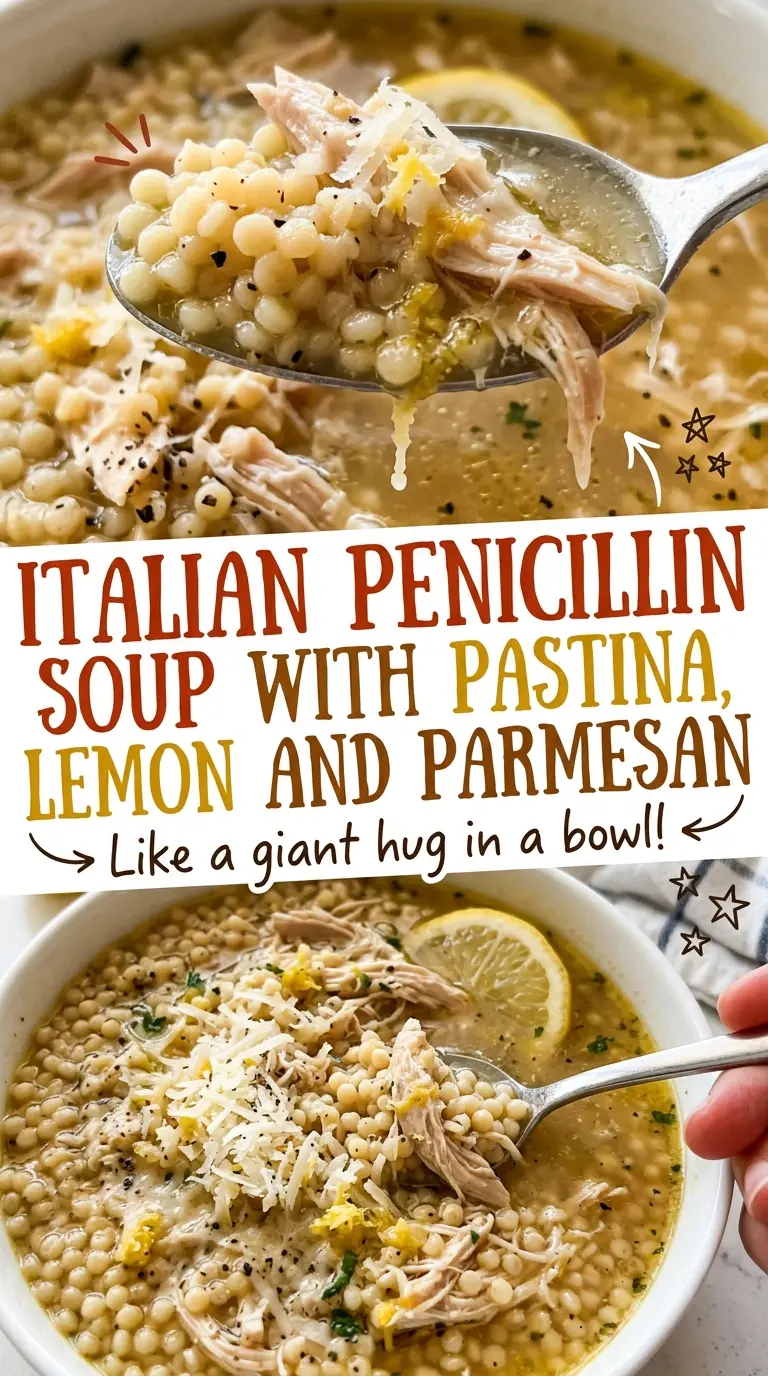
The first few minutes in the Dutch oven are quiet: the vegetables soften in olive oil, and the sharp edge of the onion fades. Once the broth goes in, boneless chicken thighs simmer right alongside them, so there isn’t a separate pot to manage. Italian Penicillin Soup with Pastina, Lemon and Parmesan turns that familiar chicken-soup base into a fuller bowl with tiny pasta and a fresh citrus finish.
I chop the vegetables finely so they settle into each spoonful rather than crowding out the pastina. The chicken comes out while the pasta cooks, then goes back in shredded, which keeps the meat tender and gives the little pasta room in the broth. A citrus-and-Parmesan finish keeps the savory broth lively without losing the comfort of chicken soup. The aroma shifts from sweet vegetables to a gently simmered, savory broth as the pot cooks. It’s a straightforward stovetop dinner, with a generous pot that serves six.

Kitchen Note
Pastina is small enough to settle quickly in the pot. Stir often while it cooks, sweeping the bottom so the pieces don’t stick together or catch before they’re tender.
Save this Italian Penicillin Soup for a cozy bowl of tender chicken, tiny pastina, and a bright lemon-Parmesan finish.
Why the Lemon and Parmesan Go In After the Pot Leaves the Heat
That final off-heat finish changes the bowl more than it might seem. Parmesan melts more smoothly into hot broth when it isn’t being boiled; if the pot is still bubbling hard, the cheese can gather in little clumps or turn oily instead of dispersing. Lemon has a different job: its juice gives the broth a clean acidity, while the zest contributes fragrant oils that read as fresh rather than sour. Both lose some of their liveliness if they cook for several minutes.
I take the Dutch oven off the burner first, then stir in the citrus and finely grated cheese so the residual heat does the work. The goal isn’t a sharply lemony soup; the citrus should sit behind the chicken and make the broth taste more awake. Parmesan adds savory depth, and its saltiness spreads through the pot instead of landing in pockets of unmelted cheese. Letting the soup stand briefly gives the finish a moment to settle before you ladle.
What the Thighs, Pastina, and Fresh Lemon Bring to This Soup
- Boneless, skinless chicken thighs — Thighs stay juicy through a gentle simmer and shred easily once cooked. Chicken breasts can replace them, but they’re leaner and may cook faster, so check them before relying on the thigh timing.
- Low-sodium chicken broth — A plain carton works well; the broth doesn’t need to be expensive to make a good soup. Low-sodium broth gives you more control over the final saltiness, while regular broth brings more salt from the start. Homemade unsalted stock also works in its place.
- Pastina — These tiny pasta shapes make each spoonful easy to eat and cook right in the broth. If you can’t find pastina, another small pasta works; use its package directions and expect a different shape and texture in the bowl.
- Fresh lemon — The juice brightens the broth, and the zest adds an aroma bottled juice can’t provide. Bottled lemon juice can stand in for the juice, but the soup will miss that fresh citrus fragrance if you don’t have zest.
- Finely grated Parmesan — Freshly grated cheese disperses readily into the hot broth, and a standard wedge is plenty; it doesn’t need to be a specialty purchase. Pecorino Romano is a useful swap if you want a sharper, saltier finish.
- Onion, carrots, celery, and garlic — These build the savory base, and ordinary fresh vegetables work well here. Chop them finely so they soften during the stated cooking time; there’s no need to buy unusually uniform or premium produce.
From Softened Vegetables to a Clean Lemon-Parmesan Finish
Soften the Vegetables Before the Garlic
Warm the olive oil in a 6-quart Dutch oven over medium heat, then add the onion, carrots, and celery. Stir occasionally for 6 to 8 minutes, until the vegetables have softened; they shouldn’t be browning heavily. Add the minced garlic and cook for 30 seconds, just until fragrant. Garlic can turn bitter if it sits too long on the hot bottom of the pot, so have the broth ready to follow.
Simmer the Chicken Gently
Stir in the broth, chicken thighs, bay leaf, salt, and black pepper. Bring the pot to a boil, then lower the heat until the broth holds a gentle simmer rather than a hard, rolling boil. Cook for 18 to 22 minutes, checking the thickest part of a thigh for 165°F. A vigorous boil can make the chicken tougher and churn the vegetables around; a steady simmer is what you want.
Give the Pastina Its Turn in the Broth
Lift the cooked chicken onto a plate and remove the bay leaf from the pot. Bring the broth back to a gentle simmer, stir in the pastina, and cook according to the package directions, usually 5 to 7 minutes. Keep the pasta moving with frequent stirs, and begin checking near the shorter end of the package range so it doesn’t soften past tender. While it cooks, shred the chicken with two forks; return it to the pot once the pastina is tender.
Finish Off the Burner
Take the Dutch oven off the heat before stirring in the lemon juice, lemon zest, and Parmesan. Fold them through gently so the chicken stays in pieces and the cheese blends into the broth. Let the soup stand for 2 minutes before serving. The broth should smell fresh and savory, with the lemon present but not taking over.
How to Keep This Pastina Soup on the Menu for Gluten- and Dairy-Free Eaters
Use Gluten-Free Pastina
Replace the regular pastina with gluten-free pastina or another small gluten-free pasta, and use gluten-free chicken broth as well. Follow the pasta package timing and start checking as it cooks, since gluten-free shapes can soften at a different rate and may absorb the broth differently.
Make the Finish Dairy-Free
Use a finely grated dairy-free Parmesan-style alternative in place of the Parmesan and stir it in off the heat. The soup will lose some of the cheese’s savory richness, but a Parmesan-style topping keeps a similar salty, savory note.
Storage and Reheating
- Refrigerator: Cool promptly in airtight containers and refrigerate within 2 hours. Keep for 3 to 4 days; the pastina will continue to absorb broth and become softer.
- Freezer: Freeze in airtight portions for up to 2 to 3 months for best quality. The soup freezes safely, though the pastina will be softer after thawing.
- Reheating: Warm on the stovetop over medium-low heat, stirring until steaming hot throughout. Add a splash of chicken broth if it has thickened, and avoid a hard boil, which can make the pasta mushy.
Questions That Come Up Once the Pastina Hits the Pot
Italian Penicillin Soup with Pastina, Lemon and Parmesan
Ingredients
Equipment
Method
- Heat the olive oil in a 6-quart Dutch oven over medium heat.
- Add the onion, carrots, and celery and cook for 6 to 8 minutes, stirring occasionally, until softened.
- Stir in the garlic and cook for 30 seconds.
- Add the broth, chicken thighs, bay leaf, salt, and pepper.
- Bring to a boil, reduce the heat to maintain a gentle simmer, and cook for 18 to 22 minutes, until the chicken reaches 165°F in the thickest part.
- Transfer the chicken to a plate.
- Remove the bay leaf from the pot.
- Bring the broth back to a gentle simmer.
- Stir in the pastina and cook according to the package directions, usually 5 to 7 minutes, stirring often.
- While the pastina cooks, shred the chicken with two forks.
- Return the shredded chicken to the pot once the pastina is tender.
- Remove the pot from the heat and stir in the lemon juice, lemon zest, and Parmesan.
- Let the soup stand for 2 minutes before serving.