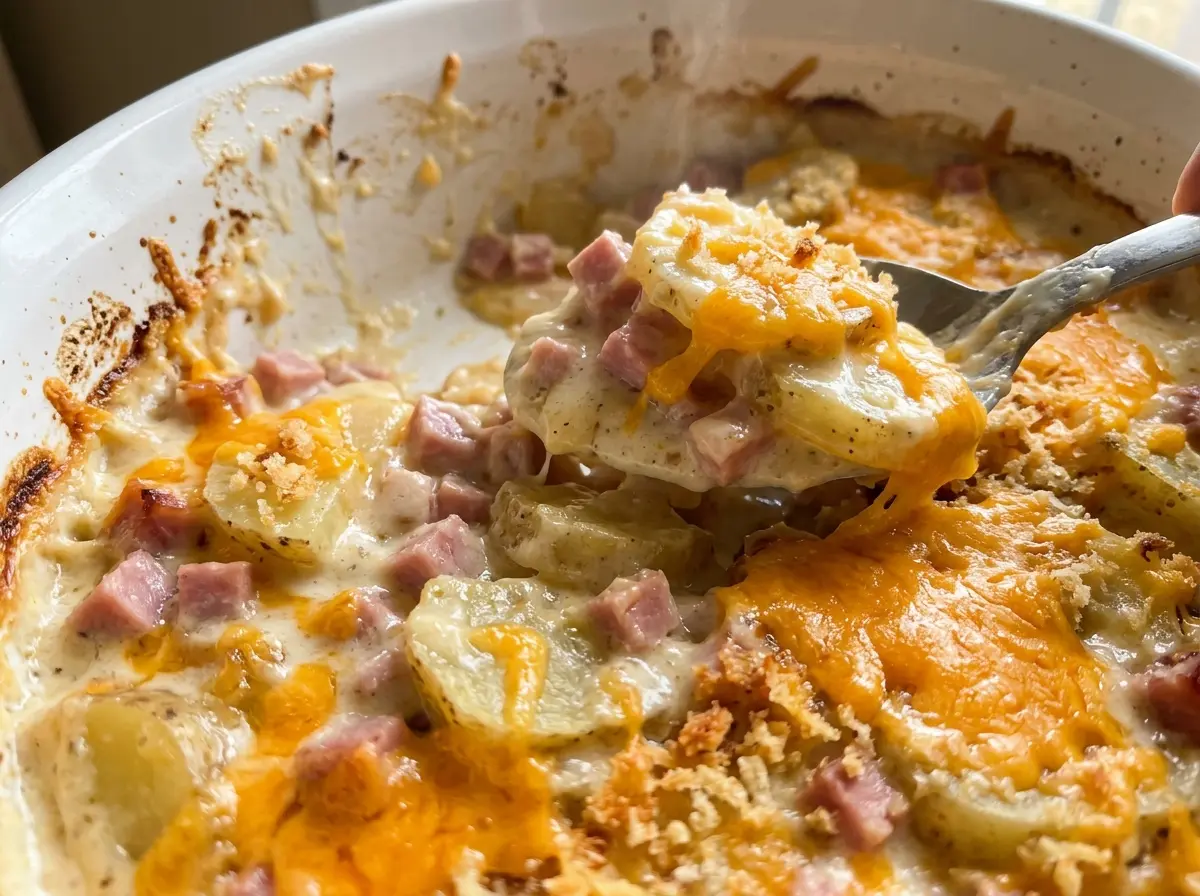
When the foil comes off, the edges are bubbling and the potatoes have softened, but the cheese still needs a little time uncovered. That last stretch gives the top a chance to melt fully while the sauce thickens around the layers. It’s the moment I watch most closely when I make leftover ham and potato casserole.
The layers are what make this more than a way to use up cooked ham. Thin potato slices sit between creamy sauce, bits of ham, and sharp cheddar, so each scoop gets a little of everything. I build the sauce on the stovetop first; that gives it time to thicken before it goes into the baking dish, instead of asking the potatoes to cook in a thin pool of milk. The finished casserole is bubbling, tender, and rich without losing its distinct layers.
Kitchen Note
Give the casserole its full 10-minute rest before serving. The sauce settles during that time, so scoops hold together better instead of sliding apart on the plate.
Save this leftover ham and potato casserole for a bubbling, cheesy way to turn cooked ham into dinner.
Why the Middle Layer Matters as Much as the Cheesy Top
A casserole can look generous on top and still taste uneven if all the ham and cheese end up in one place. Layering half the potatoes and ham first, then adding sauce and cheese before building the second layer, spreads those flavors through the dish. The middle cheese melts against the potatoes instead of sitting only on the surface, and the ham doesn’t all collect in the first few servings.
The overlapping potato slices matter for the same reason: they create a fairly even bed for the sauce to run between. A loose pile leaves some slices exposed and others buried, which makes it harder for them to cook at the same pace. Keep the layers broad and even rather than pressing the potatoes down hard. The casserole should have room for sauce to move through it as it bakes, while the cheese on top gives the final layer its own rich finish.
The Ingredients That Give These Layers Their Texture

- Yukon Gold potatoes — Their creamy texture works well in a layered bake, and they hold their shape better than a floury potato. Peel them and keep the slices even so they soften together. Their mild flavor also lets the ham and cheddar come through.
- Cooked ham — Leftover ham brings seasoning and a savory, meaty bite to each layer. Cut it into small, even pieces so it scatters across the potatoes rather than landing in a few large clumps. A strongly seasoned ham can make the finished casserole taste saltier, so keep that in mind when choosing the piece you use.
- Whole milk and flour — These are the base of the creamy sauce. Whole milk gives it a fuller texture, while flour thickens it before baking; skipping the flour would leave the sauce much looser. Whisk the milk in gradually to help the flour blend smoothly.
- Sharp cheddar — Its pronounced cheese flavor stands up to the potatoes and ham. A good-quality block shredded at home melts smoothly, though packaged shredded cheddar is convenient if that’s what you have. Dividing the cheese lets some melt between the layers and leaves the rest for the top.
- Butter and yellow onion — Butter carries the onion’s flavor and gives the flour a base for the sauce. Finely chopping the onion helps it soften evenly and keeps the pieces from interrupting the tender potato layers. Unsalted butter also lets the salt in the dish stay controlled.
Building the Casserole in Layers That Cook Evenly
Slice and Arrange the First Layer
Heat the oven to 375°F and grease a 9×13-inch baking dish with 1 tablespoon of butter. Peel the Yukon Gold potatoes and slice them 1/8 inch thick; consistent slices are more useful here than rushing through the prep. Arrange half of them in overlapping layers, then scatter half of the diced ham over the potatoes. Spread the ham out so it isn’t concentrated in one corner.
Cook the Onion and Thicken the Sauce
Melt the remaining 4 tablespoons of butter in a medium saucepan over medium heat. Add the finely chopped onion and cook for 4 to 5 minutes, until softened rather than browned. Stir in the flour and cook for 1 minute, then gradually whisk in the milk, salt, and pepper. Simmer for 3 to 5 minutes, whisking often; the sauce is ready when it thickly coats a spoon, not when it’s still milk-thin.
Build the Middle and Top Layers
Pour half of the sauce over the first layer of potatoes and ham, then scatter 3/4 cup of cheddar over it. Add the remaining potatoes and ham in another even layer, followed by the rest of the sauce. Finish with the remaining 1 1/4 cups of cheddar across the top. Try to cover the potato layer with sauce rather than pouring it all into the center.
Bake Until the Potatoes Give Easily
Cover the dish tightly with foil and bake for 45 minutes. Remove the foil and bake for 15 to 20 minutes more, until the casserole is bubbling, the potatoes are fork-tender, and the center reaches 165°F. If a fork meets resistance in the thickest potato slices, they need more time in the oven. Rest the casserole for 10 minutes before serving.
Simple Swaps and the Best Way to Keep Leftovers
Make the Roux Gluten-Free
Use a gluten-free all-purpose flour blend labeled as a 1:1 replacement for the flour. Cook it with the butter and onion just as you would regular flour, then whisk in the milk. The sauce should still thicken; choose gluten-free packaged ham as well if you’re preparing the casserole for someone who needs to avoid gluten.
Use Smoked Cheddar for a Deeper Cheese Note
Replace the sharp cheddar with smoked cheddar in both layers. It melts into the same creamy potato-and-ham casserole, but brings a distinct smoky edge that works especially well with cooked ham. The finished dish will taste less like classic sharp cheddar, so choose this swap when you want that change rather than a milder cheese flavor.
Storage and Reheating
- Refrigerator: Store covered for 3 to 4 days. The sauce will firm up as it chills, so the casserole may be less creamy straight from the refrigerator.
- Freezer: Freeze cooled portions in airtight containers for up to 2 to 3 months. Thaw them in the refrigerator before reheating for the most even texture.
- Reheating: Cover portions and warm them in a 350°F oven until hot throughout. Keep them covered so the cheese doesn’t dry out before the center warms; uncover briefly at the end if you’d like to loosen the chilled topping.
Questions That Come Up When Making Ham and Potato Casserole
Leftover Ham and Potato Casserole
Ingredients
Equipment
Method
- Heat the oven to 375°F.
- Grease a 9x13-inch baking dish with 1 tablespoon of the butter.
- Arrange half the potatoes in the baking dish in overlapping layers.
- Scatter half the ham over the potatoes.
- Melt the remaining 4 tablespoons butter in a medium saucepan over medium heat.
- Add the onion and cook for 4 to 5 minutes until softened.
- Stir in the flour and cook for 1 minute.
- Gradually whisk in the milk, salt, and pepper.
- Simmer for 3 to 5 minutes, whisking often, until the sauce thickens enough to coat a spoon.
- Pour half the sauce over the potatoes and ham.
- Sprinkle with 3/4 cup cheese.
- Layer on the remaining potatoes and ham.
- Pour over the remaining sauce.
- Top with the remaining 1 1/4 cups cheese.
- Cover the dish tightly with foil and bake for 45 minutes.
- Uncover and bake for 15 to 20 minutes until the potatoes are fork-tender, the casserole is bubbling, and the center reaches 165°F.
- Rest the casserole for 10 minutes before serving.