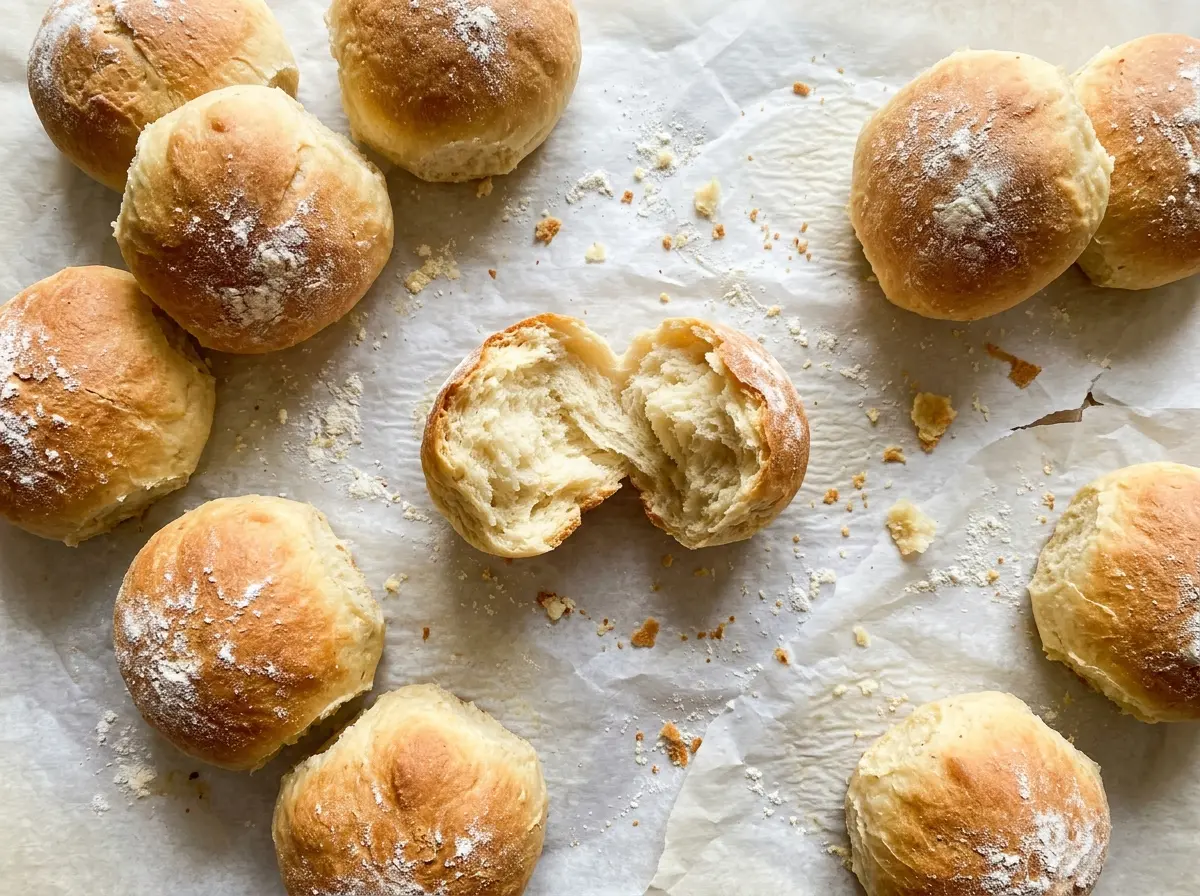
The dough feels softer than a standard dinner-roll dough once the mashed potatoes are mixed in, and that’s exactly what I want. These leftover mashed potato rolls bake up tender, with a fine, pillowy crumb and golden tops. They’re a good way to turn a scoop of cooled-down dinner leftovers into a pan of fresh rolls.
I keep the mashed potatoes and egg at room temperature so they mix into the dough without chilling it, and I add the softened butter a tablespoon at a time. That gradual addition lets the dough take on the butter without becoming slick or difficult to knead. After the first rise, the dough is easy to divide into 12 balls and bake together in a 9×13-inch dish. Set one warm roll on the table and pull it apart to see the soft, potato-rich middle.
Kitchen Note
Give the yeast the full 5–10 minutes to bloom. The surface should look foamy before you add the egg and potatoes; if it stays flat, don’t build the dough around it.
Save these leftover mashed potato rolls for a soft, golden batch that puts those dinner leftovers to good use.
Why the Mashed Potatoes Make These Rolls Tender, Not Heavy
Mashed potatoes bring starch and moisture into an enriched dough, which is why these rolls have a softer bite than plain dinner rolls. That tenderness depends on getting the dough to a smooth, elastic stage rather than stopping as soon as the ingredients come together. The dough starts shaggy, then the butter works in gradually as you knead. Give it the full kneading time so the dough has a chance to become cohesive.
Leftover mash varies from kitchen to kitchen. Some is smooth, while some has a looser texture or a little seasoning mixed in. That variation is one reason to measure the flour by spooning it into the cup and leveling it instead of scooping straight from the bag, which can pack in extra flour. If the dough feels soft, keep kneading until it looks smooth and elastic rather than reaching for extra flour right away. The potatoes should make the rolls tender, not turn the dough into a stiff lump.
There’s also a difference between soft dough and dough that hasn’t been kneaded enough. Before the first rise, look for a surface that feels smoother and stretches more readily than it did at the shaggy stage. This dough gets its structure from patient kneading, not from adding more flour. That balance gives the finished rolls their tender interior without making them heavy.
What the Potatoes, Milk, and Butter Bring to the Dough

- Leftover mashed potatoes — They add the characteristic softness and a gentle potato flavor. Use them at room temperature, as cold mash can cool the dough. Smooth or lightly seasoned mash works well; strongly seasoned leftovers will carry more of their original flavor into the rolls.
- Whole milk — Milk gives the dough richness and helps activate the yeast when warmed to the specified range. Use a thermometer if you have one; milk that’s too hot can interfere with the yeast. Whole milk is the choice for this dough, and I don’t recommend swapping in a different milk here.
- Active dry yeast — This yeast is stirred into the warm milk with sugar and given time to foam before the dough is mixed. Check that it’s within its date and look for visible foam rather than relying only on the clock. The recipe is built around active dry yeast, so I stick with it rather than changing the yeast type.
- All-purpose flour — Spoon the flour into the measuring cup and level it off; dipping the cup into the bag can compress the flour and leave you with a denser dough. All-purpose flour gives these rolls their structure. I don’t suggest a gluten-free or self-rising swap for this dough.
- Egg and unsalted butter — The egg adds richness, while softened butter makes the crumb tender. Room-temperature egg blends more easily with the potatoes, and softened butter kneads in more smoothly than cold butter. Unsalted butter keeps the salt level predictable; I use the listed butter rather than trying to adjust for salted butter.
From Foamy Yeast to a Pan of Golden Rolls
Wake the Yeast and Start the Dough
Warm the milk to 105–110°F, then stir it together with the sugar and active dry yeast in a large bowl. Let it stand for 5–10 minutes, until the surface looks foamy. Stir in the room-temperature egg and mashed potatoes, then mix in the flour and salt until a shaggy dough forms. If the mixture still looks uneven, keep mixing until there are no dry pockets of flour.
Knead Until the Butter Disappears Into the Dough
Add the softened butter a tablespoon at a time, kneading each addition into the dough before adding the next. It may look slick or uneven while the butter is going in, but continue kneading rather than adding flour. Knead on a clean work surface for 8–10 minutes, until the dough looks smooth and feels elastic. If it still tears easily and feels rough, it needs more kneading.
Let the Dough Rise, Then Shape the Rolls
Grease a large bowl with 1 teaspoon of the neutral oil, add the dough, and turn it so the surface is coated. Cover the bowl and leave it in a warm place for 1–1 1/2 hours, until the dough has doubled in size. Grease a 9×13-inch baking dish with the remaining oil, divide the dough into 12 equal pieces, and shape each into a ball. Arrange the balls in the dish with space to puff as they rise.
Give the Rolls Their Final Rise and Bake
Cover the shaped rolls and let them rise for 30–45 minutes, until they look puffy, while the oven heats to 350°F. Bake for 20–25 minutes, watching for golden-brown tops. Check the center rolls for an internal temperature of about 190°F; they’re the best place to judge the bake because they sit in the middle of the pan. Let the rolls rest in the pan for 10 minutes before serving.
Two Ways to Make the Most of Your Leftover Mash
Choose smooth mash for a finer crumb
Smooth leftover mashed potatoes blend evenly into the dough and give the rolls a more uniform interior. Keep the amount of mash the same and bring it to room temperature before mixing. This is the better choice when you want the potato flavor to stay subtle and the crumb to look even.
Use skin-on mash for a rustic roll
If your leftover mash includes potato skins, you can use it as part of the same measured portion. The rolls will have a slightly more rustic look and little flecks of potato skin through the crumb. Keep the mash at room temperature so it incorporates well with the egg and yeast mixture.
Storage and Reheating
- Refrigerator: Store cooled rolls in an airtight container for up to 4 days. They’ll firm up in the fridge compared with the day they’re baked.
- Freezer: Freeze the cooled rolls in a well-sealed freezer bag for up to 2 months. Thaw them before warming for the softest texture.
- Reheating: Warm the rolls gently in the oven until heated through, or warm an individual roll briefly in the microwave. Avoid prolonged heating, which can dry out the tender crumb.
Questions That Come Up When Baking Potato Rolls
Leftover Mashed Potato Rolls
Ingredients
Equipment
Method
- Warm the milk to 105–110°F.
- Stir the warm milk together with the sugar and yeast in a large bowl, then let stand for 5–10 minutes, until foamy.
- Stir in the egg and mashed potatoes.
- Mix in the flour and salt until a shaggy dough forms.
- Knead in the softened butter, a tablespoon at a time.
- Knead the dough on a clean work surface for 8–10 minutes, until smooth and elastic.
- Grease a large bowl with 1 teaspoon of the oil, add the dough, and turn it to coat.
- Cover and let rise in a warm place for 1–1 1/2 hours, until doubled in size.
- Grease a 9x13-inch baking dish with the remaining oil.
- Divide the dough into 12 equal pieces, shape them into balls, and arrange them in the dish.
- Cover the rolls and let rise for 30–45 minutes, until puffy, while the oven heats to 350°F.
- Bake for 20–25 minutes, until the rolls are golden brown and the center rolls reach about 190°F.
- Let the rolls rest in the pan for 10 minutes before serving.