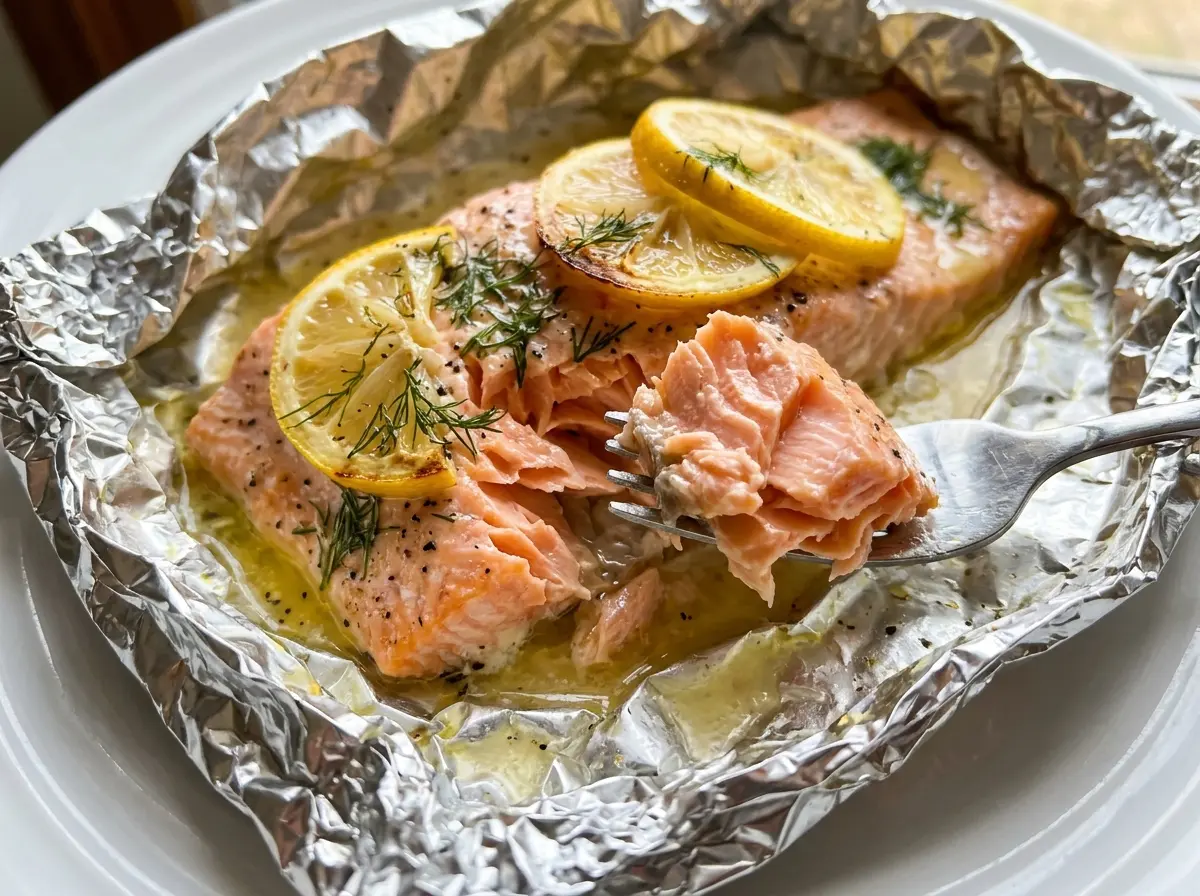
The foil puffs slightly in the oven, and when I open it, lemon-scented steam rolls up before the salmon does. That little packet is what keeps the fish surrounded by its own buttery juices instead of leaving them on the baking sheet. Lemon baked salmon in foil is a straightforward dinner, but the payoff depends on a couple of small details: a secure fold and checking the center rather than guessing by the edges.
I season the skinless fillet right on the foil, tuck thin lemon slices under and around it, then pour over melted butter, garlic, and fresh lemon juice. The slices perfume the fish from below while the juice and butter collect in the packet. There’s no separate sauce pan to wash, and the salmon comes out tender with a bright, savory finish.
Keep a thermometer nearby, especially if one end of your fillet is thinner than the other. Once the fish has rested and the parsley goes on, spoon some of the lemony juices over each piece while serving.
Kitchen Note
Give the salmon its full 3-minute rest before adding the parsley. The fish settles, and the parsley stays bright instead of wilting in the hottest steam from the packet.
Save this lemon baked salmon in foil for a low-fuss dinner with tender fish and buttery lemon-garlic juices.
Why salmon can look done at the edges and still need more time in the middle
A foil packet helps the fish stay moist, but it doesn’t tell you whether the thickest part has reached a safe temperature. Salmon fillets often taper, so the narrow end can look opaque and flaky while the center is still underdone. Going by color alone can lead to either an early pull or an overcooked tail.
Use an instant-read thermometer in the thickest part of the fillet and cook until it reaches 145°F. Slide the thermometer into the fish from the side if that makes it easier to reach the center without touching the baking sheet. If your fillet is uneven, check the thick section rather than relying on the thinnest edge as your cue.
The packet’s job is different: it keeps the lemon, butter, and garlic close to the fish as it bakes. Crimp the foil edges together so the juices stay inside, but let the temperature—not the puffiness of the foil or the appearance of the edges—tell you when the salmon is ready.
What lemon, butter, and garlic contribute inside the foil
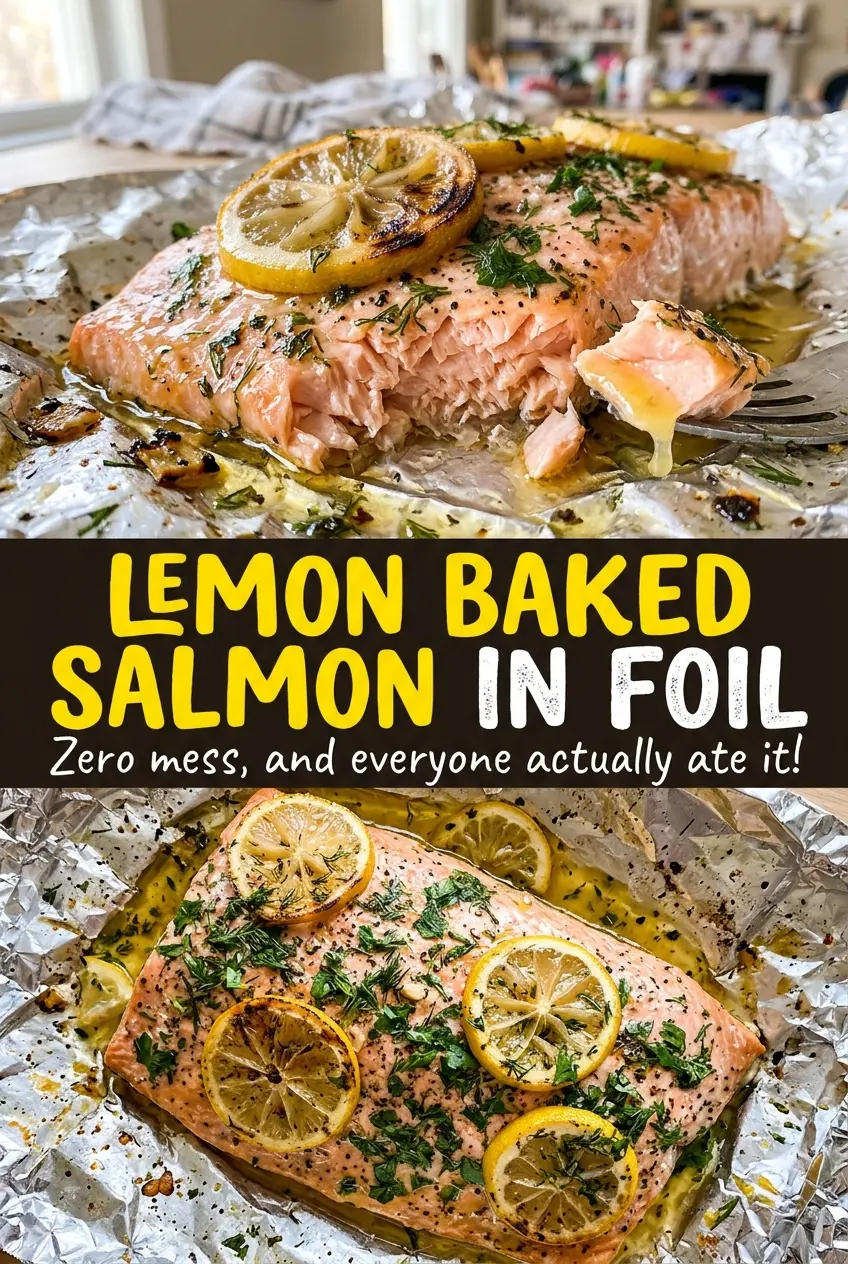
- Salmon — A skinless fillet is easy to season and serve, and a center-cut piece with an even thickness cooks more evenly than a sharply tapered one. You don’t need an especially premium fillet for this preparation; freshness and an even shape matter more. Keep it chilled until you’re ready to assemble the packet.
- Fresh lemon — One lemon does two jobs: the juice brightens the butter, while the thin slices add a softer citrus aroma as they bake. Fresh lemon matters most for the slices, which bottled juice can’t replace. If you’re short on fresh juice, bottled juice can stand in for the squeezed portion, but keep fresh slices for the packet.
- Unsalted butter — Melted butter carries the lemon and garlic over the surface of the fish, and unsalted butter lets you control the salt separately. A standard grocery-store butter works well here. For a dairy-free version, use the same amount of olive oil in its place; the result is less rich but still carries the garlic and lemon.
- Garlic — Mince fresh cloves finely so the pieces spread through the butter instead of landing in one concentrated spot. Jarred minced garlic can work in a pinch; use the jar’s conversion for the clove amount. The garlic is enclosed with the fish, so there’s no need to cook it separately first.
- Fresh parsley — Chopped parsley gives the finished salmon a clean, green note against the butter. Fresh parsley is worth choosing over dried here because it’s added at the end, not cooked into the sauce. If you don’t have it, leaving it off is better than adding dried parsley as a garnish.
From the first foil fold to the parsley finish
Season the fish and arrange the lemon
Heat the oven to 400°F, then set a large sheet of heavy-duty aluminum foil on a rimmed baking sheet. Put the skinless salmon in the center and season it with kosher salt and black pepper. Arrange the thin lemon slices beneath and around the fish so they’re spread through the packet rather than piled in one place. Leave enough foil around the edges to fold over the salmon and crimp closed.
Pour on the lemon-garlic butter
Stir the lemon juice, melted butter, and minced garlic together in a small bowl until the garlic is distributed through the liquid. Pour the mixture over the salmon, aiming to coat the top as well as the sides. If the butter starts to firm up before you pour, warm it just until melted again; you want it fluid enough to spread. Keep the lemon slices in place as you add the mixture.
Seal the packet and bake to temperature
Fold the foil over the fish and crimp the edges together to seal the packet. The seal should be closed all the way around so the juices don’t run out onto the baking sheet. Bake for 15–20 minutes, checking the thickest part with a thermometer as the end of that range approaches. The salmon is ready when that center reaches 145°F; don’t use a thin edge as your only check.
Release the steam and finish
Open the packet carefully, keeping your face and hands away from the first rush of steam. Rest the salmon for 3 minutes, then sprinkle the chopped fresh parsley over the top. The fish should separate into moist flakes when gently nudged with a fork. Spoon some of the buttery lemon juices from the foil over the salmon as you serve it.
Easy changes that keep the lemon-butter balance
Make it dairy-free with olive oil
Replace the melted butter with an equal amount of olive oil and stir it with the lemon juice and garlic as usual. The fish stays moist, though the sauce won’t have butter’s rounded richness. Choose a mild olive oil so it doesn’t overpower the lemon.
Trade parsley for fresh dill
Use chopped fresh dill in place of the parsley and sprinkle it over the salmon after the rest. Dill gives the finish a more pronounced herbal, slightly grassy note that suits the lemon. Keep it as a fresh finishing herb rather than baking it in the packet.
Leave out the garlic for a cleaner citrus finish
Skip the minced garlic and pour the lemon juice and melted butter over the seasoned salmon. You’ll lose the savory garlic note, but the fish still bakes in the same lemony butter. This is a useful adjustment when you want the citrus to come through more clearly.
Storage and Reheating
- Refrigerator: Transfer leftover salmon to an airtight container and refrigerate within 2 hours. It keeps for 3–4 days; the fish may be a little firmer after chilling.
- Freezer: Freeze cooled portions in an airtight freezer-safe container for up to 2–3 months for best quality. Thaw overnight in the refrigerator before reheating; the texture will be softer than freshly baked.
- Reheating: Warm covered in a 300°F oven until the center reaches 165°F, adding a spoonful of the saved juices if you have them. Avoid a high-temperature reheat, which can dry the fish, and never put foil in the microwave.
Questions that come up when baking salmon in foil
Lemon Baked Salmon in Foil
Ingredients
Equipment
Method
- Heat the oven to 400°F.
- Lay a large sheet of heavy-duty aluminum foil on a rimmed baking sheet and place the salmon in the center; season it with the salt and pepper.
- Arrange the lemon slices under and around the salmon, then stir the lemon juice, melted butter, and garlic together and pour the mixture over the fish.
- Fold the foil over the salmon and crimp the edges to seal the packet; bake for 15–20 minutes, until the thickest part reaches 145°F.
- Carefully open the packet to release the steam, rest the salmon for 3 minutes, and sprinkle it with the parsley.