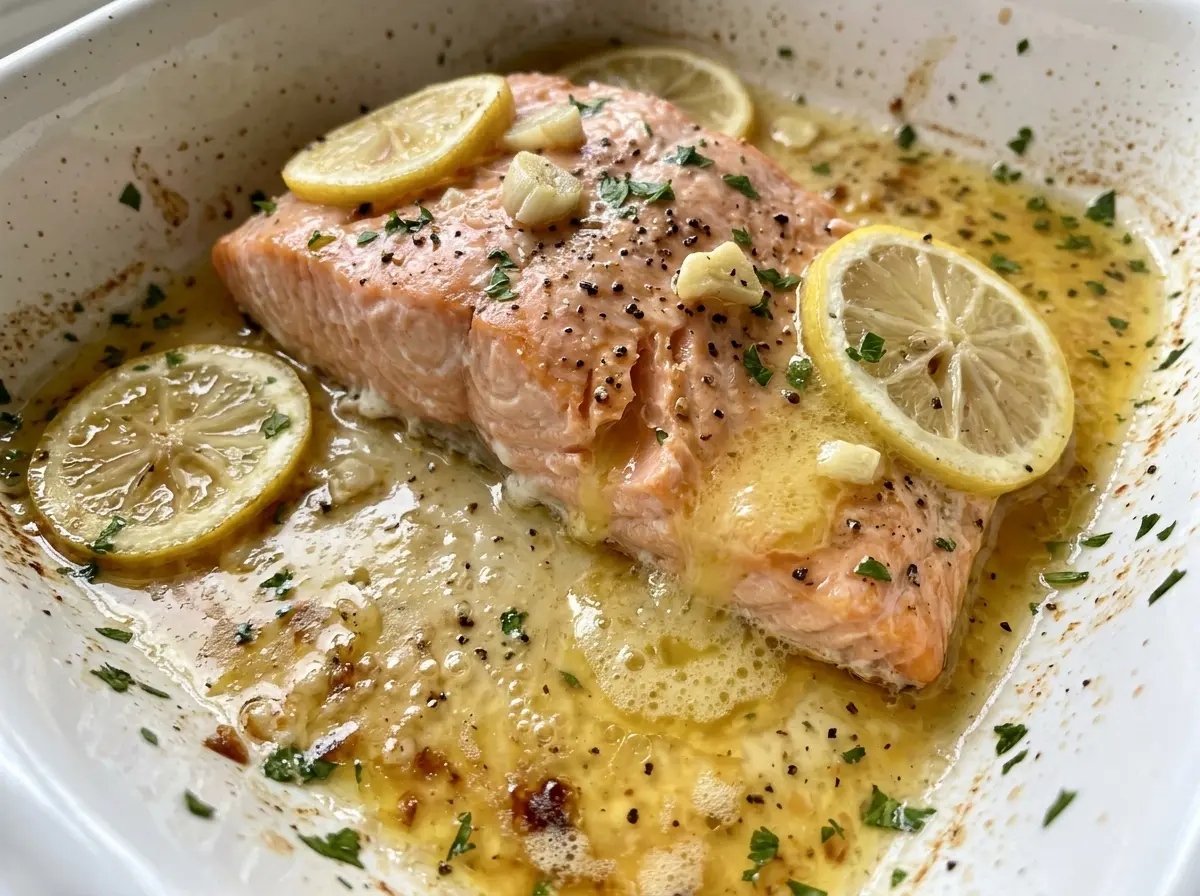
When I spoon the lemon-garlic butter over the salmon, I check that a little reaches every fillet instead of collecting in one spot. That simple move gives each piece the same buttery coating, and the garlic turns fragrant as the fish bakes. Lemon Garlic Butter Salmon is a quick oven dinner with a bright, savory finish and just enough sauce left in the dish to catch with each bite.
I mix the garlic, lemon juice, and finely grated zest directly into melted butter, so the lemon and garlic are spread through the topping before it goes on the fish. Similar-looking fillets can still vary in thickness, though, which is why I pay attention to the salmon itself rather than treating the timer as the only cue. The finished fish should be opaque, tender, and easy to flake, with parsley scattered over the top just before serving.
Kitchen Note
Zest the lemon before you juice it; it’s much easier to grate while the fruit is firm. I keep the zest fine so it blends into the melted butter instead of landing in coarse, bitter-tasting flecks.
Save Lemon Garlic Butter Salmon for a night when you want tender baked fish with a bright lemon-butter finish.
Why the Timer Isn’t the Best Doneness Test for Salmon
Fillets that weigh the same aren’t always the same thickness. A thinner piece cooks through sooner than a thick piece, even when both came from the same package, and oven temperatures can vary a little from one kitchen to another. That’s why a fixed number of minutes is useful as a guide but not a promise about the exact moment your fish will be ready.
Look at the thickest part of each fillet, not just the edges. The flesh should turn opaque and separate into moist flakes when gently tested with a fork; a thermometer gives you a more reliable check than appearance alone. If one piece is thinner, check it individually rather than waiting for every fillet to behave alike. Taking a moment to assess the fish this way helps avoid the most common disappointment with baked salmon: leaving it in the oven after it has already cooked through.
The butter topping helps keep the surface flavorful, but it can’t undo overcooked fish. Pulling the dish when the salmon reaches its proper doneness preserves its tender texture and leaves the lemon-garlic butter tasting fresh instead of reduced and overly browned.
What the Salmon, Butter, and Fresh Lemon Each Bring

- Salmon fillets — Similar thickness helps the portions finish at about the same time. Fresh or frozen fillets both work; if you’re shopping frozen, choose individually portioned pieces that are well sealed and free of heavy frost. The fish is the main event here, so look for fillets with a clean, mild smell and moist-looking flesh.
- Unsalted butter — Butter gives the topping a rounded, rich taste that carries the garlic and lemon across the fish. Unsalted butter also lets the seasoning stay balanced. A standard grocery-store butter works well; there’s no need to buy a specialty brand for this sauce.
- Fresh garlic — Minced garlic releases its flavor into the melted butter and softens as the salmon bakes. Fresh cloves are worth using here because garlic is one of the main flavors, while pre-minced garlic tends to taste less lively. Mince it finely so it disperses through the topping.
- Fresh lemon — The juice brings acidity, while the zest adds fragrant citrus oils that juice alone can’t supply. Choose a lemon with an unblemished peel that feels firm and heavy. Bottled juice can provide acidity in a pinch, but it won’t replace the aroma of freshly grated zest.
- Fresh parsley — Chopped parsley adds a clean, leafy finish against the buttery sauce. Flat-leaf or curly parsley both work; choose crisp, green leaves rather than bunches that look wilted. Dried parsley won’t give you the same fresh finish, so it’s better to leave it out than to expect an equal swap.
From Melted Butter to Flaky Salmon: The Four Stages
Set Up the Baking Dish
Heat the oven to 400°F and lightly grease a 9×13-inch baking dish. Arrange the salmon fillets in the dish, then season them with kosher salt and black pepper. Keep the portions in a single layer so the butter topping can reach each piece. Don’t skip greasing the dish; it makes serving the fillets easier once they’re cooked.
Stir Together the Lemon-Garlic Butter
Melt the butter in a small bowl, then stir in the minced garlic, fresh lemon juice, and finely grated lemon zest. Mix until the garlic and zest are distributed instead of clumping at the bottom. If the butter is piping hot, give it a brief moment to settle before stirring in the lemon; a gentle mix keeps the sauce together. Spoon the mixture evenly over the salmon.
Bake Until the Centers Are Opaque
Bake the salmon for 12–15 minutes, checking the thickest part rather than judging by the outside alone. The flesh should look opaque and flake easily when nudged with a fork, while still appearing moist. Insert a thermometer into the thickest part of a fillet; it should read 145°F. If the fish hasn’t reached that point, return it to the oven and check again shortly so it doesn’t go from tender to dry while you’re waiting.
Finish with Parsley
Sprinkle the chopped fresh parsley over the cooked salmon and serve. Add it at the end so its green color and fresh flavor stay distinct rather than baking away in the butter. Lift the fillets carefully with a wide spatula; cooked salmon can break along its flakes if you try to move it with a fork. Serve while the fish is hot and the butter is still fluid.
Three Small Changes That Give This Salmon a Different Finish
Make It Dairy-Free with Olive Oil
Replace the butter with an equal amount of olive oil, then stir in the garlic, lemon juice, and zest. The oil keeps the topping moist and dairy-free, though it won’t have butter’s creamy, rounded taste. Choose a mild olive oil so it doesn’t overpower the lemon.
Trade Parsley for Fresh Dill
Use chopped fresh dill in place of the parsley for a more distinctly herbal, slightly grassy finish. Keep the amount the same and scatter it over the fish after baking. Dill pairs naturally with both salmon and lemon, but its flavor is more noticeable than parsley’s.
Add a Gentle Chili Kick
Stir a pinch of red pepper flakes into the melted butter along with the garlic and lemon. The heat gives the rich topping a little edge without hiding the citrus. Start with a small pinch; it’s easy to add more heat at the table, but you can’t take it back out of the sauce.
Storage and Reheating
- Refrigerator: Refrigerate leftovers within 2 hours and keep them in a covered container for 3–4 days. The fish will firm up as it chills, and the butter will solidify.
- Freezer: Cooked salmon freezes well for best quality for 2–3 months. Wrap each cooled portion tightly, then place it in a freezer-safe container; thaw it in the refrigerator before reheating.
- Reheating: Cover the salmon and warm it in a 275°F oven until the center reaches 165°F. Gentle heat helps preserve moisture; reheating uncovered at high heat is the fastest way to dry out the edges.
Questions That Come Up When Baking Salmon
Lemon Garlic Butter Salmon
Ingredients
Equipment
Method
- Heat the oven to 400°F.
- Lightly grease a 9x13-inch baking dish.
- Arrange the salmon fillets in the dish.
- Season the salmon with the salt and pepper.
- Melt the butter in a small bowl.
- Stir in the garlic, lemon juice, and lemon zest.
- Spoon the mixture evenly over the salmon.
- Bake for 12–15 minutes, until the salmon is opaque and flakes easily with a fork, and a thermometer inserted into the thickest part reads 145°F.
- Sprinkle the salmon with parsley.
- Serve.