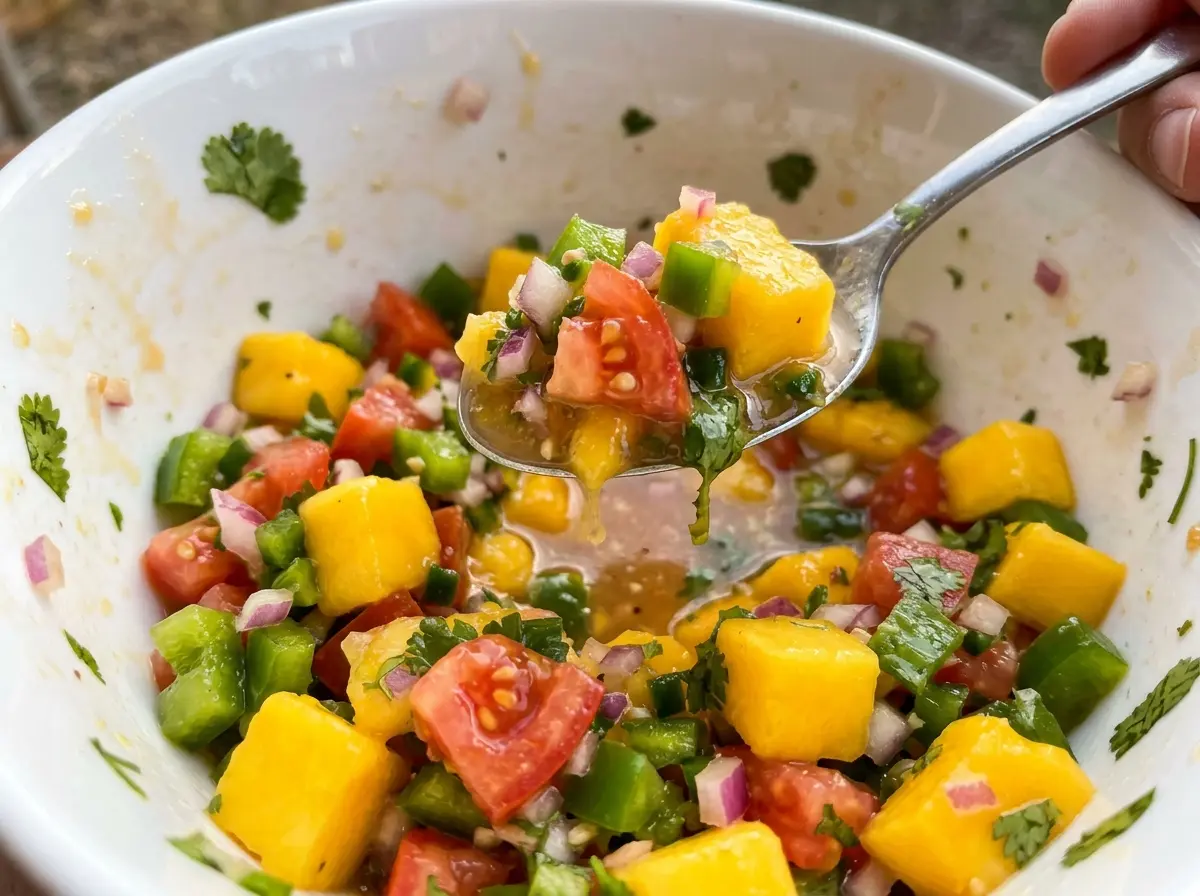
The first mango cube tells you whether this salsa will stay bright and spoonable or slump into a wet, sweet mash. A ripe fruit should yield a little when pressed, but the knife should still make clean edges. That balance is what I look for in Mango Salsa with Fresh Lime: mango stays at the center, red onion brings a sharp crunch, and a small seeded jalapeño adds heat without taking over. Fresh cilantro and lime keep each bite lively, while a little kosher salt makes the fruit taste fuller.
This isn’t a blended salsa; you want distinct little bites of fruit, onion, and herbs. I combine the chopped ingredients before adding the lime and salt, then toss just enough to coat without crushing the mango. After a short chill, the sweet fruit, crisp onion, green chile, and fresh lime come together in a bowl that’s bright from the first bite to the last.
Kitchen Note
Keep the mango cubes a similar size so they’re easy to scoop and don’t disappear among the finely chopped ingredients. If the cubes are tiny, even a gentle toss can turn the salsa soft.
Save this fresh mango salsa for a meal that needs a bright, juicy bite with just a little jalapeño heat.
Why the First Taste Is Sharper Than the Salsa After Its Short Chill
Right after mixing, the lime and raw onion can come through more sharply than the mango. That first taste isn’t the whole story. Give the salsa its 10 to 15 minutes in the refrigerator, and the lime juice and salt spread across the fruit while the onion and jalapeño settle into the mix. The salsa stays fresh and crisp; the brief rest doesn’t cook or soften it into a relish.
This short pause matters because there’s no heat or long marinade to blend the flavors. A quick taste straight from the bowl can make the lime seem too forward, or the onion seem a little loud. After chilling, taste another piece with mango, onion, and cilantro together. You’ll get a more balanced bite, with the fruit still leading and the sharper ingredients supporting it. Serve it chilled rather than leaving it to sit on the counter while you finish other tasks.
What Mango, Lime, and the Aromatics Each Bring to This Bowl

- Mango — Choose fruit that smells sweet and gives slightly to gentle pressure, but still feels firm enough to dice cleanly. The texture matters more than an unblemished peel; soft, overripe mango tends to collapse and release extra juice. There isn’t a close substitute that keeps the same ripe-fruit flavor and neat cubes.
- Red onion — Its crisp bite offsets the mango’s sweetness, and a fine chop spreads that bite through the bowl. Pick a firm onion; there’s no need to seek out a special variety. Finely chopped shallot can replace it in the same volume for a milder, less assertive onion flavor.
- Jalapeño — A small, fresh pepper adds green chile flavor as well as heat. Seed it and mince it finely so the warmth is distributed instead of landing in one big piece. The pepper doesn’t need to be a particular brand or size beyond the small jalapeño specified here.
- Cilantro — Fresh leaves bring a lively herbal note that dried cilantro can’t provide in this uncooked salsa. If cilantro isn’t available, use the same volume of chopped flat-leaf parsley; the salsa will taste greener and less citrusy.
- Fresh lime juice — Freshly squeezed juice has a brighter aroma than bottled juice, which is noticeable in a short ingredient list. Bottled lime juice works measure for measure in a pinch, though the finished salsa will taste less fragrant. Use the juice freshly squeezed from the lime for the cleanest citrus note.
- Kosher salt — It rounds out the sweetness and makes the lime and aromatics taste more distinct. Because this is a raw mixture, take care to distribute it evenly when you toss everything together.
How to Keep the Mango Cubes Intact While the Flavors Come Together
Cut the fruit and aromatics separately
Peel and dice the mango, then finely chop the red onion and cilantro and mince the seeded jalapeño. Keep the mango pieces distinct rather than cutting them into a fine mince. The onion and jalapeño should be small enough to spread through the fruit instead of dominating a single forkful. Set the prepared ingredients within reach before combining them.
Combine without crushing the fruit
Put the mango, red onion, jalapeño, and cilantro in a medium bowl. Use a gentle lift-and-turn motion to bring the ingredients together rather than pressing down or stirring vigorously. You should still be able to see separate cubes of mango, with the smaller bits of onion and herbs distributed between them. If the fruit starts to smear against the bowl, ease up on the tossing.
Add the lime and let the bowl rest
Add the fresh lime juice and kosher salt, then toss gently until the mango and aromatics are lightly coated. Refrigerate the bowl for 10 to 15 minutes before serving. The salsa should look glossy, not mashed, with a little juice collecting at the bottom. Keep the rest brief; this is a fresh salsa, not a long soak.
Three Small Changes That Shift the Heat, Salt, or Citrus
Make a gentler, no-heat bowl
Leave out the jalapeño for a mild version. You’ll lose the green chile warmth, but the mango, lime, onion, and cilantro still make a bright salsa with plenty of contrast.
Skip the salt for a lower-sodium version
Omit the kosher salt and keep the other ingredients unchanged. The salsa will taste less rounded, but the lime and fresh aromatics still give the mango a lively finish.
Use lemon when you’re out of lime
Replace the fresh lime juice measure for measure with fresh lemon juice. The result is still bright, but the citrus will taste a little less distinctly lime-forward.
Storage and Serving
- Refrigerator: Store the salsa covered at 40°F or below and use it within 3 days. The mango will soften and some juice may collect as it sits.
- Freezer: Freezing isn’t a good fit. Thawed mango loses its clean diced texture, and the onion and cilantro won’t stay crisp.
- Serving: Keep the bowl chilled until you’re ready to serve. Discard salsa that has sat at room temperature for more than 2 hours.
Questions That Come Up When Making Fresh Mango Salsa
Mango Salsa with Fresh Lime
Ingredients
Method
- Combine the mangoes, red onion, jalapeño, and cilantro in a medium bowl.
- Add the lime juice and salt, and toss gently to combine.
- Refrigerate for 10 to 15 minutes before serving.