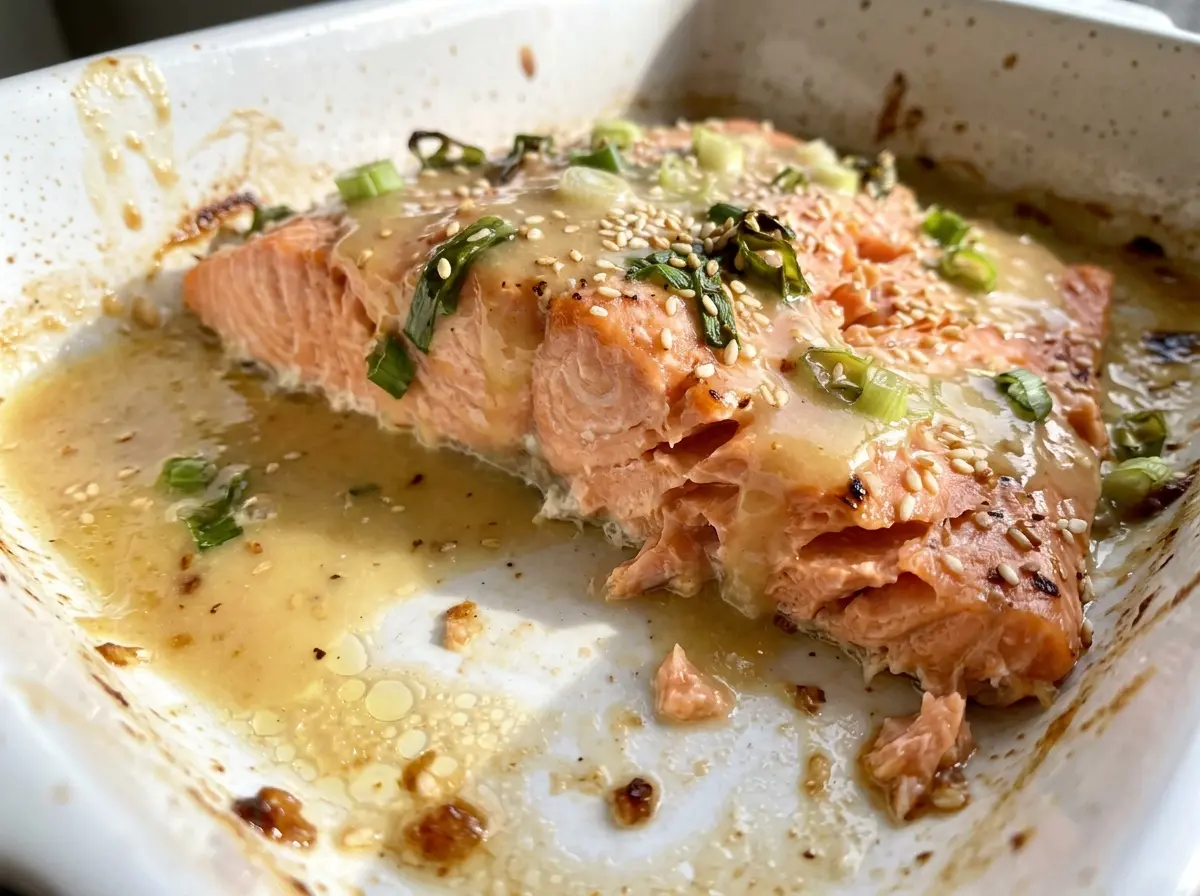
As the miso butter warms in the oven, it loosens into a glossy layer over the salmon instead of needing a separate sauce. I like that the whole pan goes from prep to table without a stovetop step or a last-minute scramble. The first time I made this, I was tempted to turn the fillets halfway through; keeping them skin-side down is simpler, and the butter stays on the exposed flesh where it belongs.
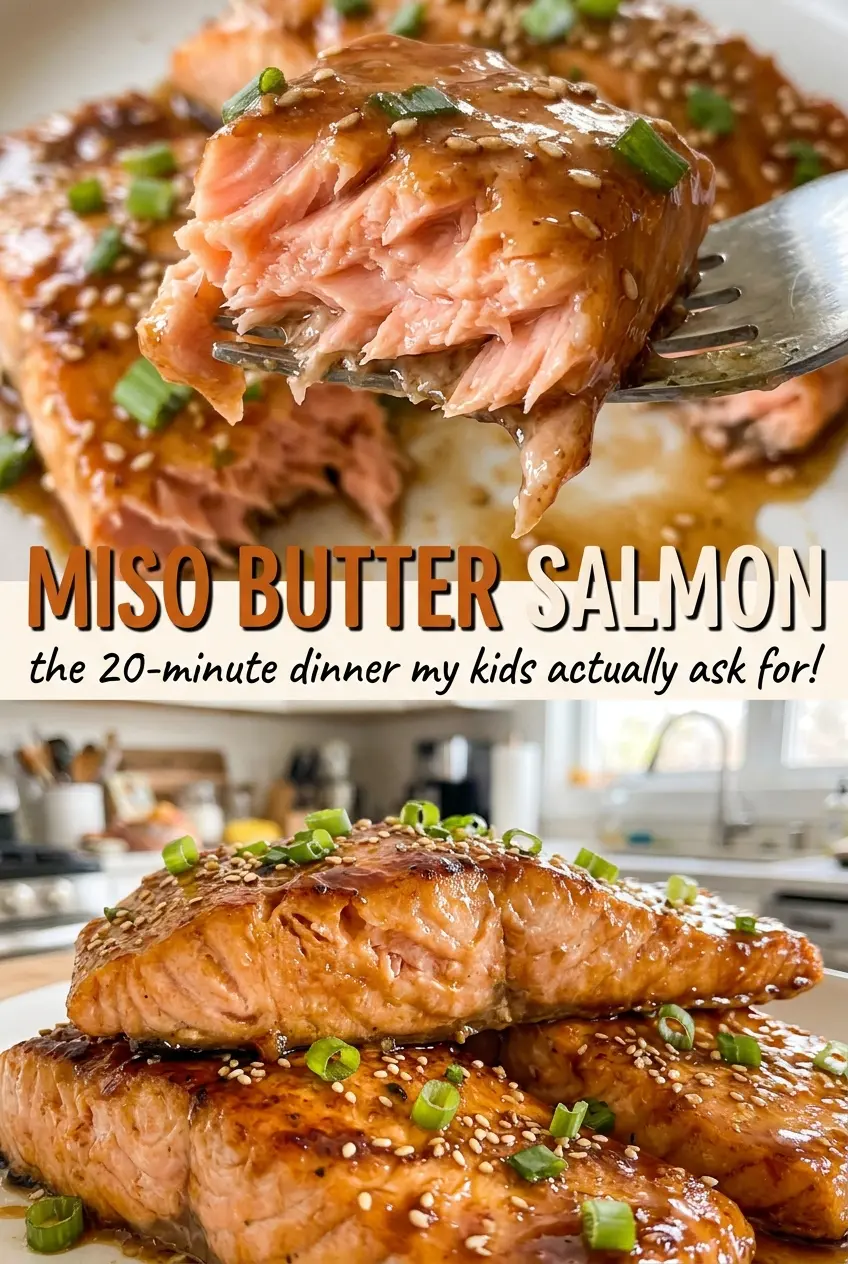
Softened butter makes a difference here. It blends smoothly with the white miso, honey, and soy sauce, so you can spread the mixture evenly without pressing hard on the fish. The salmon bakes at 400°F until it flakes easily and reaches the right temperature in its thickest part. Each piece comes out tender under a savory-sweet coating that clings to the top.
Kitchen Note
Let the butter soften until it yields easily when pressed, but don’t melt it. Soft butter stirs into the miso without lumps and spreads over the fillets without tearing the surface.
Save this Miso Butter Salmon for a no-fuss dinner with a glossy miso-honey topping and tender, oven-baked fillets.
Why the Skin Stays Down While the Miso Butter Bakes on Top
These fillets don’t need flipping. With the skin against the parchment and the flesh facing up, the miso butter has an open surface to spread across, and it stays there as the salmon cooks. Turning the fish would put that coating against the pan and make the timing harder to judge. The parchment also helps the skin release cleanly when you lift each portion off the baking sheet.
That top layer is doing more than adding flavor. Butter carries the miso, honey, and soy sauce across the fish as it melts, while the salmon cooks underneath. The honey rounds out the savory miso and soy, so the finish tastes balanced rather than simply salty. Keep the layer even from edge to edge; a thick mound in the center won’t cook at the same pace as the thinner sides. Once you see how the topping behaves, the rest of this dish is mostly about letting the oven do its work.
What White Miso, Honey, and Butter Each Bring to the Salmon
- Unsalted butter — It gives the mixture a creamy base and lets the miso and soy sauce provide the seasoning. Use it softened, not melted; a standard grocery-store butter works well, and there’s no need to buy a specialty brand. If you only have salted butter, the finished fish will taste saltier.
- White miso — White miso gives the topping its gentle fermented savoriness without overwhelming the salmon. A fresh tub from the refrigerated section is worth choosing, but an everyday grocery-store brand is fine. There isn’t a close substitute among the other ingredients here, so don’t try to replace it with extra soy sauce; that would make the topping saltier without the same depth.
- Honey — Honey brings a little sweetness and rounds off the miso’s savory edge. A regular pourable honey is all you need for a baked glaze; a delicate specialty honey won’t add much once it’s mixed into the butter.
- Soy sauce — This adds a second layer of savory seasoning alongside the miso. A standard soy sauce works; the more important thing is measuring it rather than adding a free pour, since both it and the miso contribute salt.
- Skin-on salmon — Fillets about 1 inch thick cook at a fairly even pace, and the skin gives each piece a sturdy base on the parchment. Choose pieces of similar thickness so they finish close together. The black pepper is a simple counterpoint to the sweet-savory butter; freshly ground or pre-ground both work.
A 400°F Bake That Needs No Flip
Get the pan and miso butter ready
Heat the oven to 400°F and line a rimmed baking sheet with parchment paper. In a small bowl, stir the softened butter, white miso, honey, and soy sauce until the mixture looks smooth and evenly colored. If streaks of plain butter remain, keep stirring before you move on; uneven mixing makes the coating harder to spread evenly. Set the bowl near the pan so the butter stays easy to work with.
Arrange the fillets and coat the flesh
Place the salmon skin-side down on the prepared sheet and season it with the black pepper. Spread the miso butter evenly over the top of each fillet, taking it close to the edges without pressing down on the fish. A thin, consistent layer is easier to manage than a thick patch in the middle. Keep the skin on the parchment; the fillets stay in this position through baking.
Bake until the thickest part is done
Bake for 10 to 15 minutes, checking the thickest part of each fillet rather than judging by the edges. The salmon is ready when that center reaches 145°F and the flesh flakes easily with a fork. Fillets can vary a little in thickness, so don’t assume every piece will finish at exactly the same moment. If one is ready before another, take that piece off the pan and let the thicker one continue.
Three Useful Ways to Adapt the Miso Butter Salmon
A less-sweet, more savory topping
Leave out the honey if you’d rather have the miso and soy come forward. The butter will still coat the salmon, but the finish will be less rounded and more directly savory. Keep the other ingredients as listed rather than compensating with extra soy sauce.
A dairy-free miso butter
For a dairy-free version, replace the unsalted butter measure-for-measure with unsalted, stick-style dairy-free butter. Choose one that softens and spreads like dairy butter; softer tub varieties can make a looser topping. The miso flavor remains, though the finish may taste a little less rich.
Skinless salmon portions
Skinless fillets work if that’s what you have. Keep them on the parchment and spread the topping gently, since the flesh can be more delicate to handle. Check them toward the earlier end of the baking window because thinner portions can finish sooner.
Storage and Reheating
- Refrigerator: Store leftovers in an airtight container for 3 to 4 days. The salmon will be firmer after chilling, and the butter topping will set.
- Freezer: Freeze portions tightly wrapped or in an airtight container for up to 2 to 3 months for best quality. Thaw overnight in the refrigerator; the topping may look less glossy after thawing.
- Reheating: Cover the salmon and warm it gently in a 300°F oven until the center reaches 165°F. Avoid high heat or a long reheat, which can dry out the fish.
Questions That Come Up While Baking Miso Butter Salmon
Miso Butter Salmon
Ingredients
Equipment
Method
- Heat the oven to 400°F.
- Line a rimmed baking sheet with parchment paper.
- Stir the softened butter, miso, honey, and soy sauce together in a small bowl until smooth.
- Arrange the salmon skin-side down on the prepared baking sheet.
- Season with the black pepper.
- Spread the miso butter evenly over the fillets.
- Bake for 10 to 15 minutes, until the thickest part of each fillet reaches 145°F and the fish flakes easily with a fork.