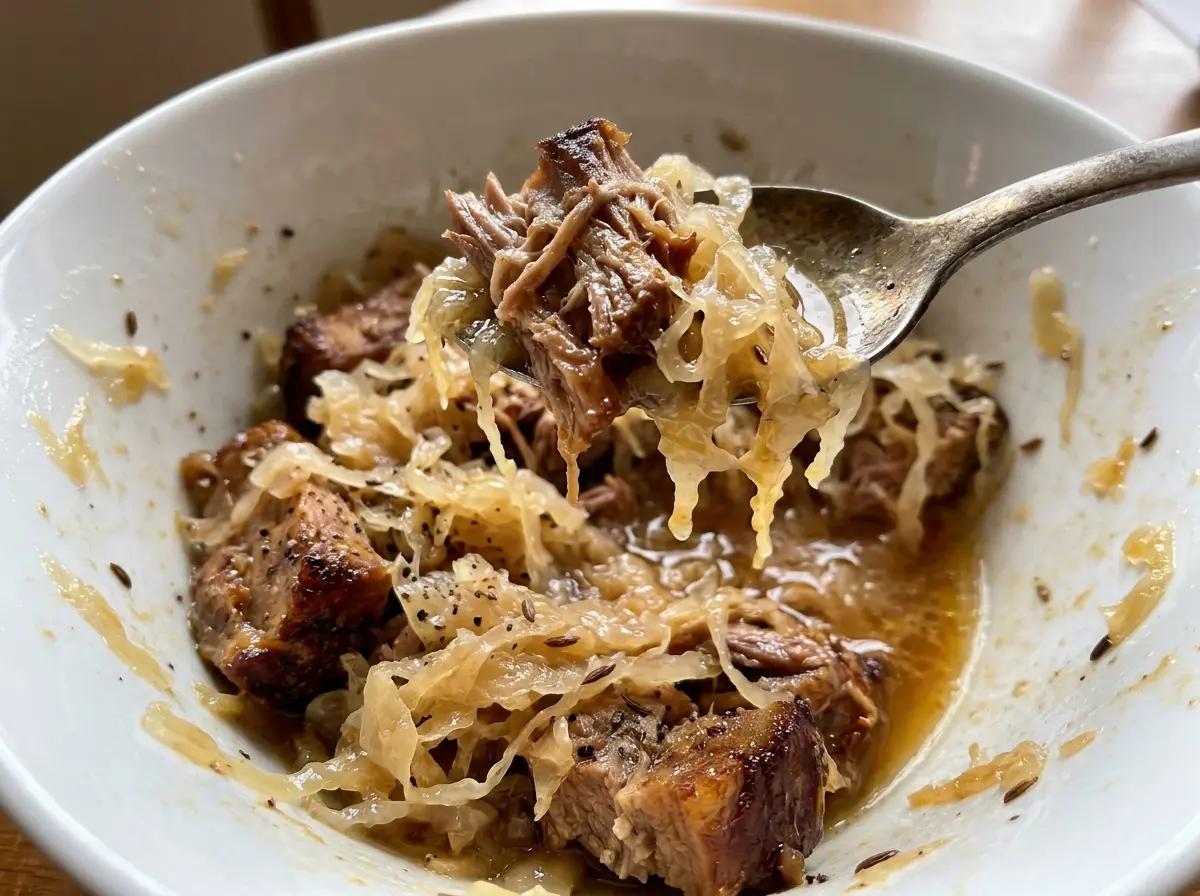
When the Dutch oven lid comes off, the sauerkraut has softened into a tangy bed and the pork gives way under a fork. That’s the moment I want from New Year’s Day Pork and Sauerkraut: a roast tender enough to slice or pull apart, with apple and brown sugar rounding out the kraut without turning it sweet.
I brown the pork first, then let it cook covered with the onion, garlic, sauerkraut, apple, caraway, and broth. The slow oven braise gives the shoulder time to turn tender while the flavors mingle in the same pot. Drain the sauerkraut before it goes in, and you’ll get the bright, savory taste of the kraut without bringing extra brine along for the ride. Serve the pork with plenty of that softened sauerkraut.
Kitchen Note
Drain the sauerkraut well before you add it to the pot. Excess brine can make the finished braise sharper than you want, and the kraut still brings plenty of tang after draining.
Save this New Year’s Day pork and sauerkraut for tender shoulder, tangy cabbage, and an easy one-pot oven braise.
Why Pork Shoulder Needs More Than a Quick Roast
Pork shoulder doesn’t become fork-tender at the same point a lean chop is ready to eat. It has connective tissue that needs sustained, gentle cooking to soften, so a roast that’s technically cooked through can still feel firm if you pull it too early. That’s why I use both a thermometer and a fork: the temperature gives you a useful check, and the fork tells you whether the texture has reached the point this dish needs.
The covered Dutch oven also matters. It holds moisture around the pork while the sauerkraut and broth cook together beneath it, so the roast doesn’t sit exposed to the oven’s dry heat. Keep the lid on during the braise; uncovering the pot for a long stretch lets moisture escape and can leave the top of the pork drier than the rest. The goal is tender meat and sauerkraut that’s softened but still has a little texture.
What Each Ingredient Brings to the Pork and Sauerkraut

- Pork shoulder — This cut’s fat and connective tissue are what give the finished roast its tender, pull-apart texture. Choose a boneless roast with an even shape so it cooks at a steady pace. Pork loin isn’t a good direct replacement; it’s leaner and won’t turn tender in the same long braise.
- Sauerkraut — Jarred sauerkraut works well here, and there’s no need to seek out an expensive brand. Drain it before adding it so the broth doesn’t get diluted with extra brine. The kraut supplies the dish’s signature tang and softens as it cooks.
- Tart apple and brown sugar — The apple keeps a little shape and brings fruity acidity, while the brown sugar takes the sharp edge off the kraut. A firm Granny Smith is an easy choice; if you don’t have one, use a firm Bosc pear in the same chopped form for a milder, less tart result. The brown sugar’s small role is balance, not sweetness.
- Caraway seeds — Caraway gives the braise its warm, earthy note and pairs naturally with sauerkraut. Use fresh, aromatic seeds if you have them; if you’re not fond of caraway, leave it out rather than replacing it with a different spice that will change the character of the dish.
- Onion, garlic, broth, and bay leaf — The onion softens into the base, and the garlic adds savoriness. Low-sodium chicken broth gives the pot enough liquid without making the finished dish too salty. A dried bay leaf is fine; remember to remove it before serving.
- Vegetable oil — A neutral oil lets the pork brown without adding a competing flavor. There’s no need to use a specialty oil for this first step.
The Dutch Oven Stages That Build Tender Pork
Brown the Roast Before Building the Pot
Heat the oven to 325°F, pat the pork dry, and season all over with kosher salt and black pepper. Heat the vegetable oil in a 6-quart Dutch oven over medium-high heat, then brown the roast on every side for 8 to 10 minutes total. If the surface is wet, the pork will steam instead of developing browned spots, so take a moment to pat it thoroughly dry. Transfer the browned roast to a plate.
Soften the Onion and Wake Up the Garlic
Reduce the heat to medium and add the sliced onion to the same pot. Cook it for about 5 minutes, stirring, until it softens and begins to look translucent. Stir in the minced garlic and cook for 30 seconds; garlic can turn bitter if it browns, so keep it moving and don’t leave it in the pot unattended. The onion and garlic pick up flavor from the browned bits left behind by the pork.
Layer the Sauerkraut Under the Pork
Stir the drained sauerkraut, chopped apple, brown sugar, caraway seeds, chicken broth, and bay leaf into the onion mixture. Scrape the bottom as you stir so the browned bits loosen into the liquid rather than sticking to the pot. Nestle the pork into the sauerkraut mixture, then cover the Dutch oven. The pork should sit down in the bed of kraut, with the lid fitted snugly.
Braise Until the Pork Yields Easily
Roast, covered, for about 3 to 3 1/2 hours, until the pork is fork-tender and registers 195°F to 205°F in the thickest part. Start checking the texture near the shorter end of the cooking range; a fork should slide in easily, not meet a tight or rubbery center. Transfer the roast to a cutting board and let it rest for 15 minutes before slicing or shredding. Discard the bay leaf and serve the pork with the sauerkraut mixture.
Easy Changes for a Different Take on This Braise
Make It Gluten-Free
Use the same amount of certified gluten-free, low-sodium chicken broth in place of regular chicken broth. The braising method and savory flavor stay much the same, so this is an easy adjustment when you need a gluten-free pot.
Keep the Kraut Extra Tangy
Leave out the brown sugar if you prefer a sharper, more savory finish. The pork and apple still braise with the sauerkraut, but you’ll notice more of the kraut’s sour edge in each bite.
Dial Back the Sauerkraut’s Bite
For a gentler, less salty-tasting result, rinse the sauerkraut briefly under cold water after draining, then drain it well again before adding it. You’ll lose some of the kraut’s punch, so the finished braise will taste milder and less sharply tangy.
Storage and Reheating
- Refrigerator: Store the pork and sauerkraut together in an airtight container for 3 to 4 days. The pork may firm up as it chills, but it softens again when gently reheated.
- Freezer: Freeze the pork with the sauerkraut and some of its cooking liquid in a freezer-safe container for up to 3 months. Thaw it in the refrigerator before reheating for the most even texture.
- Reheating: Warm it covered in a saucepan or Dutch oven over low heat, stirring the sauerkraut occasionally, until leftovers reach 165°F. Add a splash of broth if the mixture looks dry; high heat can dry out the pork before the center warms through.
Questions That Come Up When Making Pork and Sauerkraut
New Year's Day Pork and Sauerkraut
Ingredients
Equipment
Method
- Heat the oven to 325°F.
- Pat the pork dry and season it all over with the salt and pepper.
- Heat the oil in a 6-quart Dutch oven over medium-high heat.
- Brown the pork on all sides, 8 to 10 minutes total.
- Transfer the pork to a plate.
- Reduce the heat to medium and cook the onion in the pot until softened, about 5 minutes.
- Stir in the garlic and cook for 30 seconds.
- Stir in the sauerkraut, apple, brown sugar, caraway seeds, broth, and bay leaf.
- Nestle the pork into the sauerkraut mixture.
- Cover the pot.
- Roast until the pork is fork-tender and registers 195°F to 205°F in the thickest part, about 3 to 3 1/2 hours.
- Transfer the pork to a cutting board.
- Rest it for 15 minutes and discard the bay leaf.
- Slice or shred the pork and serve it with the sauerkraut mixture.